




Entrepreneur
Can a digital coach truly support menopause in the workplace?


By Gail MacLeitch, psychotherapist and VP of AI communications provider QuickBlox, and Leslie Taylor, co-founder of Half the Sky, the team behind BestYet—a digital platform which helps women take control of their menopausal journey.
Despite spending more than a third of their lives in menopause, most women face this transition with little support, personally or professionally. Instead, women tend to navigate menopause alone, often unclear on the full extent of what to expect, or when to expect it, until it arrives.
In 2024, nearly one-third of women said menopause impacted their job performance. Women reported reducing their work hours, turning down promotions, and quitting as outcomes of their symptoms. These numbers represent daily struggles playing out in the workplace.

Companies in 18 U.S. states, including Washington, California, Colorado, and New York, already offer their employees mandatory paid sick leave, but women have reported being penalized for using this time to cope with the side effects of menopause. Even in states with progressive leave policies, cultural stigma and managerial bias undermine their intended protection.
A UK study found that only a quarter of women taking sick leave felt able to tell their managers the real reason for their absence. While many wanted to protect their privacy, 34% said they were embarrassed, and another 32% said an unsupportive manager prevented them from speaking up.
Many of the symptoms women struggle with, such as self-doubt, low patience, heightened stress, and difficulty sleeping, can be helped with the right support.
Understanding Personal Symptoms
According to a survey of over 2,000 menopausal women in the UK, 84% experienced trouble sleeping, 73% experienced ‘brain fog’, and 69% experienced difficulties with anxiety or depression during menopause. However, the scale at which symptoms impact women varies and evolves over time.
What symptoms are your employees experiencing? How are these side effects influenced by controllable aspects of their lives, such as diet, exercise, and medication?
Companies can empower women with the tools to easily track and monitor their menopausal symptoms with secure and private daily logs. These tools help surface patterns in fatigue, mood, and concentration, correlated with sleep, food, and stress. Apps such as Health and Her and MENO already demonstrate similar solutions, providing individualized recommendations, such as meal guidance, mindfulness, and wellness nudges, based on symptom tracking and progress.
Gaining Confidential Guidance
Many women-centric midlife and menopause platforms are becoming available. Women who have used these report feeling more knowledgeable, confident, and in control of their menopause journey. The apps encourage self-reflection and build confidence around menopause discussions.
However, while menopause-at-work policies are becoming more common, conversations about accommodations remain deeply personal. Employers and managers should create safe pathways for private check-ins. Digital tools can help prep both parties with the right frameworks.
For example, a well-designed menopause support app might include pre-meeting reminders to ensure respectful, informed dialogue. Building guidance on how to handle disclosures and requests into the manager’s app user journey helps guarantee they see the right information when they need it. As menopause policies increasingly become mandatory, automated summaries that record what was discussed, what was agreed, and how confidentiality will be upheld provide a transparent data trail to protect both parties.
Companies can go a step further by using secure, no-code chatbot builders to provide 24/7 support. These tools, trained on medical research, HR policy, and expert guidance, can offer calm, evidence-based responses. When used responsibly, AI-enhanced chat tools become a supplemental layer of support and enable users to navigate to other pertinent workplace benefits and providers.
Building a Community
A problem shared is a problem halved, and this is especially true for menopause.
Women benefit from sharing what works and what doesn’t, from diet to hormone replacement therapy (HRT) to mindset. But often, just feeling understood can be transformative, especially in an isolating workplace context.
Features companies must consider for their female employees include:
- Community support: A private, judgment-free space to connect with other women navigating menopause, share stories, and exchange tips that actually work. Women can gain emotional and practical support by engaging in forum discussions.
- Daily prompts: Affirmations, meal suggestions, lifestyle tips, and wellness nudges that spark engagement.
- HR integration: Integrated menopause apps can give HR anonymized data on employee well-being and resource use. No or low-code tools can be embedded directly with no technical expertise, meaning HR teams can launch a wellness resource tailored to their workforce with minimal effort.
This support should extend across the organization. Menopause literacy for male employees, team leaders, and executives reduces stigma. Including resources and workshops directed at the company as a whole will help lead to a more empathetic workforce.
So, can a digital coach truly support menopause in the workplace? Yes, when it’s designed with empathy, grounded in science, and built to empower. The right digital tools don’t just track symptoms, they help women advocate for themselves, stay engaged, and thrive in their roles. The companies that design for midlife now won’t just support women. They’ll set the standard for what inclusive, intelligent, and future-ready health tech in the workplace can be.






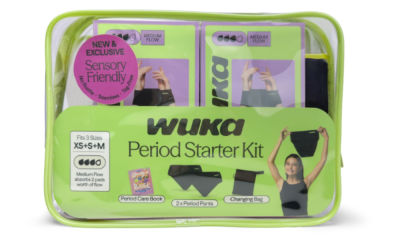






Medtech startup Peripear has won an Innovate UK award for developing a wearable designed to prevent perineal trauma during childbirth.
The Oxford-based company is developing a hands-free warm compress device for use on the perineum during the second stage of labour.
Peripear describes its product as the world’s first automated perineal thermotherapy wearable, designed to prevent perineal trauma during childbirth.

The device is intended to reduce severe tearing and episiotomies while improving maternal comfort.
Peripear has secured an Innovate UK Women in Innovation Award and a £74,974 grant.
The funding will support further product development ahead of the company’s planned first-in-human study.
Nina van Schaick, co-founder and chief operating officer of Peripear and midwife, said: “I’m sure I wasn’t the only one to see this gap.
“I was incredibly lucky to meet my co-founder, Eviatar Natan, right as my frustration about the lack of translation of evidence into practice had peaked.
“There was a proven mechanism that could reduce injuries occurring in up to 90 per cent of vaginal births, and it was being left out of clinical pathways simply because no standardised tool existed to deliver it.
“I’m a farmer’s granddaughter, and when I started practising over 14 years ago, I asked: where is the tool I need to implement this evidence? I looked around and realised we were still asking clinicians to improvise.
“Peripear is what happens when the person who has lived the problem, both personally and professionally, meets the person who can help her build the solution.”
Entrepreneur
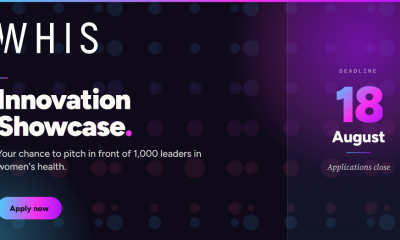
Applications close August 18 for Women’s Health Innovation Summit 2026 Innovation Showcase

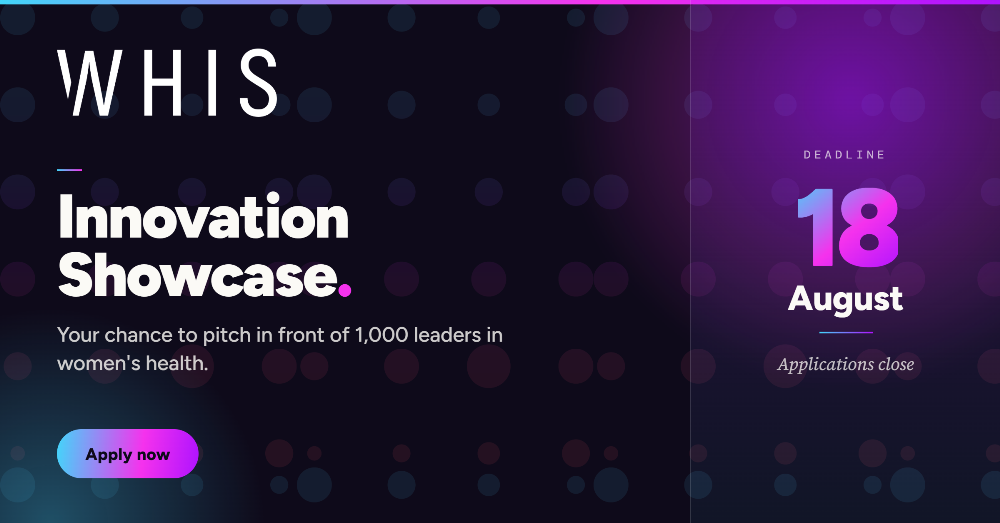
The Women’s Health Innovation Summit (WHIS) has reminded startups that applications for its 2026 Innovation Showcase close on Tuesday, August 18.
The Showcase gives early and growth-stage companies the opportunity to pitch live on stage to the most influential audience in women’s health, at a summit that convenes more than 1,000 senior decision-makers from across the ecosystem, including payers, providers, pharma, and investors.
Now in its eighth year, WHIS takes place October 13–15, 2026 at Encore Boston Harbor.
The event has built a reputation as the leading platform uniting the full women’s health ecosystem, from health systems and health plans to pharmaceutical leaders and the investors funding the next wave of innovation in the space.
A Direct Line to Funding, Partnerships and Adoption
Companies selected for the Innovation Showcase will present directly to an audience with the capital, clinical expertise and commercial relationships to move deals forward.
Past participants have gone on to secure investor introductions, commercial partnerships and clinical collaborations that started as presentations on the WHIS stage and turned into signed agreements.
Applications Reviewed by an Expert Selection Committee
Submissions are being reviewed by a selection committee of leading investors and industry operators, including:
- Parambir Bhangu, Executive Director, External Innovation & Emerging Science, Organon
- Elizabeth Bailey, Co-Founder & Managing Partner, Foreground Capital
- Karla Loken, Founder, Loken and Associates
- Mané Mikayelyan, Associate Partner, DeciBio
- Anna Valcheva, Founder, Managing Director & CEO, Astra Ventures
- Azin Radsan van Alebeek, Co-founder & General Partner, Emmeline Ventures
WHIS is where the women’s health ecosystem comes together to get deals done,” said Poppy Howard-Wall, Event Director of WHIS.
How to Apply
Early and growth-stage companies across digital health, therapeutics, diagnostics, med device and consumer health are encouraged to apply before the August 18 deadline.
Full details and the application form are available at whisusa.com/attend/start-ups.

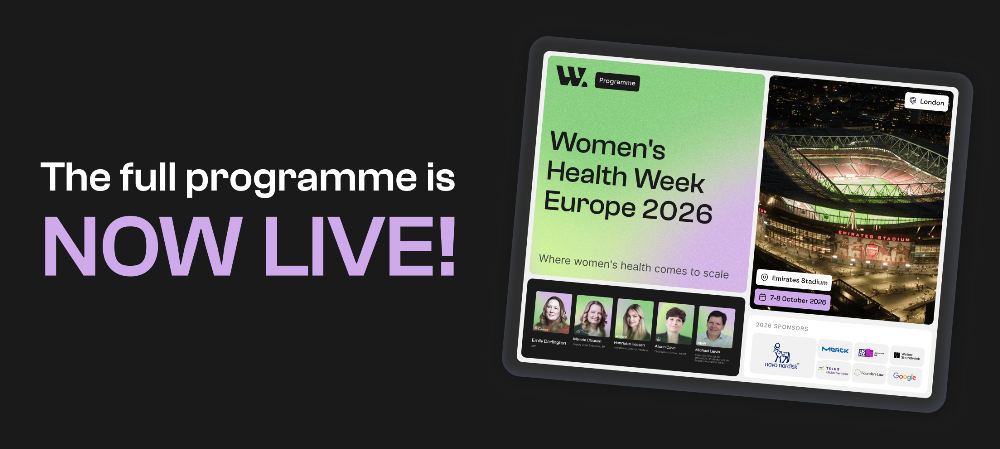
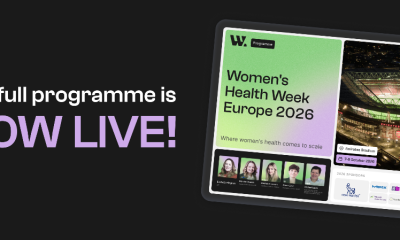
Women’s Health Week Europe 2026 has released its fully populated speaker and session lineup ahead of the event’s return to The Emirates Stadium in London on 7–8 October, with 80+ speakers now confirmed across two dedicated stages.
The programme
The agenda runs across two dedicated stages in parallel, plus two pitch competitions across both days.
The Global Stage opens with a keynote from Merete Clausen (EIF) before moving into sessions on funding trends, AI, the gender data gap, the wearable revolution, and European policy.
Standout sessions include The Age of Digital TransformAItion featuring Nichole Young-Lin (Google), Frida Polli (MIT), and Sapna Shah (Sie Ventures); Lone Wolf or Pack Leader on collaboration versus fragmentation, with Eirini Rapti (Inne), Tatum Getty (Thena Capital), Novo Nordisk, and Jen Roberts-Woods (Borski Fund); and a live debate on whether the women’s health label helps or hinders founders. Day one closes with a keynote from Alison Cave, Chief Safety Officer at the MHRA.
The Scale Stage runs a practical playbook track in parallel, with sessions covering regulatory approval pathways, international expansion, the founder’s legal playbook, PR strategy, and implementing AI into a women’s health business.
The Reverse Pitch flips the usual format: investors and corporates pitch the room on what they are actively looking to fund, acquire, or partner on right now.
Register here and receive a 15% discount on tickets. Redeem with code FEMTECHWORLD
Pitch competitions
The WHW Europe pitch competitions are back, taking place in front of the audience across both days on the mainstage. 16 finalists will compete across two categories: Consumer & Tech on day 1 and Medical Devices & Therapeutics on day 2.
Any company treating a condition that affects women exclusively, differently, or disproportionately is eligible to apply.
Applications and close 28 August 2026.
Previous alumni include Circe, who secured £100k from Innovate UK, BoobyBiome, who closed a £2.5M seed round post-WHW Europe, and Amilis, who secured £1M at London Tech Week after winning at WHW USA 2026.








 News2 weeks ago
UK femtech investment surges 194% in a decade, research finds

 Entrepreneur2 weeks ago
Cross-Border Impact Ventures raises US$58m for women and children’s health
 Entrepreneur1 week ago
Applications close August 18 for Women’s Health Innovation Summit 2026 Innovation Showcase

 Menopause1 week ago
Third of women unaware of perimenopause mental health impact

 Hormonal health2 weeks ago
Menstrual data is missing a critical layer: The mind
 Entrepreneur2 weeks ago
Women’s Health Week Europe 2026 releases fully populated agenda ahead of October summit

 Fertility3 days ago
Chelsea FC Women to launch first-of-its-kind player fertility fund

 Menopause1 week ago
Menopausal hormone therapy may lower dementia risk, study suggests