



Fertility in Focus
Solving for women isn’t niche. It’s how you build better tech

By Karishma Patel, Cofounder & Chief Brand Officer at Ema
Let’s get this out of the way:
Women’s health isn’t a niche. It’s the blueprint.
Not just for healthcare. For technology, period.
We’ve been sold the idea that designing for women is somehow “specialised,” when in reality it’s the most rigorous, emotionally complex, and systemically relevant design challenge we have.
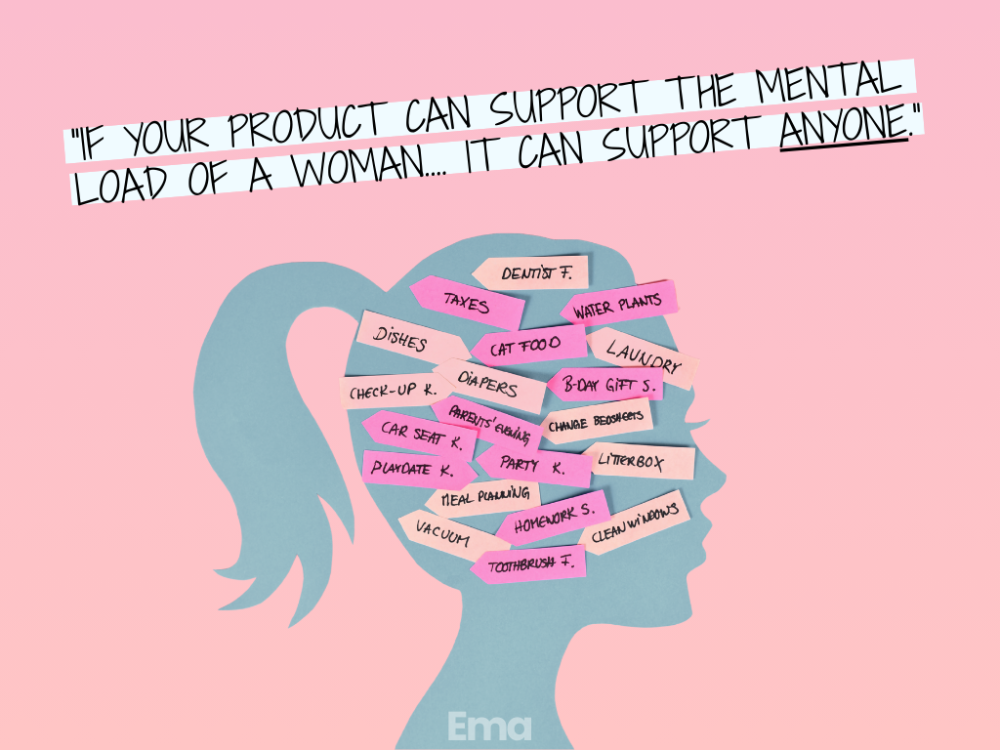
If your product can support the mental load of a woman in 2025, across her health, her schedule, her household, her job, and her identity, it can support anyone.
This isn’t a hypothetical. It’s my lived experience.
At any given moment, I’m juggling ten things minimum.
A work fire drill, school logistics, a forgotten birthday gift, my own hormonal shifts, plus whatever I’m pretending isn’t stressing me out. I’m not exceptional.
That’s normal for most women I know. And it’s exactly why I say:
If you solve for women, you don’t just solve for a demographic.
You solve for complexity. And complexity is the true test of good design.
When AI Meets the Mental Load
Watching how my husband uses AI versus how I do was a lightbulb moment.
He’s efficient, direct, and task-based. Give it a prompt, get an answer.
For him, it’s a tool. For me? It’s a lifeline.
I’m not asking AI to write a quick memo. I’m asking it to help me make 20 micro-decisions across five domains of my life, in the gaps between meetings, meltdowns, and a thousand open loops.
Tech built to be “neutral” ignores the layered realities of real life. At best, it’s incomplete. At worst, it’s lazy.
Because “neutral” still defaults to the dominant paradigm. And it usually doesn’t look like me.
The Brands That Get Her Are the Ones That Win
One of the best examples I’ve seen of someone truly building for women is Willow.
They took the standard breast pump, something that’s long been clinical, stationary, and honestly kind of dehumanising, and reimagined it as something mobile, wearable, and woman-centered.
They understood that postpartum women don’t have the luxury to sit still five times a day. They gave her the power to move. To parent. To be.
That’s what happens when you build from the inside out.
When you stop asking “how do we make this more efficient?” and start asking “what does this feel like for her?”
Now we get to take that even further.
With Ema powering AI inside Willow’s app, we’re going beyond supporting her pump experience.
We’re supporting her whole experience. Her questions about her baby, her emotions, and her own body. Because her life doesn’t show up in chapters, it shows up all at once.
If You’re Not Actively Solving for Women, You’re Actively Forgetting Them
Let’s be clear. Building for women isn’t just about branding or targeting.
It’s a product decision. An architecture decision. A data decision.
If you don’t start with women in mind, you solve for a simplified use case. You risk build something flat because you’ve ignored the edge cases that are actually the real cases.
And those who still see women’s health as niche?
I’m not here to convince them. The numbers speak for themselves.
Women drive 80 percent of healthcare decisions, hold trillions in spending power, and carry most of the emotional labor in families.
If that still doesn’t register as an opportunity, then we’re probably not building for the same future.
And that’s okay.
There’s a growing group of investors, founders, and operators who do get it.
They’re the ones shaping what comes next. They’re the ones we hand pick to sit at our table.
What We’re Really Building
At Ema, we’re not here to solve a “problem.” We’re here to support a person.
That’s why we built Ema on the biopsychosocial model. A tripod of physical, mental, and social health. Knock one leg out, and the whole system wobbles.
We want Ema to know when you’re headed for burnout before you do.
To see that your calendar is overloaded, and suggest shifting something. To understand that your weekly walk is more than just a habit. It’s how you decompress.
That kind of emotional intelligence isn’t extra. It’s essential.
Because so much of women’s health has been framed as a checklist of problems to fix.
Menstruation. Pregnancy. Menopause.
We treat each one like a fire to put out instead of what they are. Life stages to understand.
Ema’s job isn’t to fix you.
It’s to know you.
To grow with you.
To be there.
Beyond the moment of crisis, in the quiet middle, where so many women are left to figure it out alone.
Build Better or Get Left Behind
If you want to build better tech that is more resilient, more human, and more relevant, start here.
Start with the woman whose life doesn’t fit neatly into one use case.
Start with the mother, the founder, the daughter, the caregiver.
Start with her.
Find out more about Ema at emaapp.co










Femtech World explores the latest business developments in the world of women’s health.
NHS platform Evaro partners with period tracking app Clue in UK-first integration
Evaro, the NHS-licensed embedded healthcare platform, has announced a first-of-its-kind partnership with the period tracking app Clue.
The partnership will provide seamless access to NHS-funded contraception directly through Clue’s app.

This marks the first time a major cycle-tracking platform has integrated prescription healthcare services in the UK, creating a critical solution as the country grapples with an emergency contraception crisis.
2023 data shows the UK had the highest global search volume for emergency contraception and nearly half of UK women face contraception access barriers, with one in 20 patients having to wait at least four weeks to see a GP.
The partnership launches as women’s health takes center stage in the government’s NHS modernisation agenda, with digital medicine transformation identified as a key priority.
The integration brings together Clue’s UK user base with Evaro’s healthcare delivery platform.
Users can transition directly from tracking their cycle in Clue to ordering contraception through Evaro’s embedded pharmacy infrastructure – accessing free NHS-funded contraception with free delivery nationwide.
The service demonstrates how asynchronous healthcare – where consultations happen online at the patient’s convenience rather than requiring real-time appointments – can solve the UK’s healthcare accessibility challenge.
The partnership pioneers embedded healthcare – where consumer brands become healthcare access points by integrating Evaro’s full-stack solution with a single line of code.
The service is available immediately to Clue users in the UK.
US$5m to transform and scale menopause education and training worldwide
A US$5m grant from the Steven & Alexandra Cohen Foundation, led by philanthropist and New York Mets Owner Alex Cohen, will support the digital-innovation phase of the Menopause Society’s NextGen Now initiative.
The grant will create a comprehensive digital ecosystem to leverage cutting-edge digital technologies, ensuring seamless access and consistent updates of educational content.
The initiative supports comprehensive training programmes for current and next generation healthcare professionals to improve the care of midlife women.
Through the NextGen Now initiative, The Menopause Society has said it is committed to reaching 25,000 healthcare professionals within the next three years and ultimately improving the lives of millions of women navigating the complexities of menopause.
The donation will further support The Menopause Society’s vision for a digital strategy for NextGen Now, through an integrated digital-learning platform, advanced virtual- and augmented-reality modules, and a dynamic mobile app.
NextGen Now is a multiphase initiative spanning several years and many projects and programmes.
To continue its success, additional support is still needed. This includes funding for research and data collection.
Progyny expands to include pregnancy, postpartum, and menopause
Women’s health company Progyny has launched its pregnancy, postpartum, and menopause programmes for global employers, available starting January 1, 2026.
The company says that the offerings complement the availability of the company’s existing and marketing-leading global fertility and family building offering, providing multi-national employers with a continuum of integrated services.
The platform is purpose-built for global markets, supporting members in their country-specific environment, helping them with expert support through stages of pregnancy, postpartum, menopause, and midlife to optimise health, productivity, and retention.
Employees uniquely have access to personalised consultations and guided programmes with Global Care Advocates, with maternal health, menopause, and mental health expertise; a curated knowledge centre for evidence-based education on symptoms and more; a country-specific navigator support for local care, regulations, policies, and protections; and, a GDPR-compliant platform.
FDA approves first medical device for women with Asherman Syndrome
Uterine health company Womed has announced that the Food and Drug Administration approved the PreMarket Approval (PMA) application of the Womed Leaf for adult women undergoing hysteroscopic surgery for symptomatic moderate to severe intrauterine adhesions, also referred to as Asherman syndrome.
Womed Leaf is the first medical device to be approved for sale in the United States for that indication.
“This is the first FDA approved barrier for these patients and marks a significant improvement for their ultimate desired outcome.”
Intrauterine Adhesions (IUAs), which refer to the pathological binding of the uterine walls, are caused by scarring of the uterus after procedures such as dilation and curettage or fibroid removal, and can occur in 20 per cent to 45 per cent of those procedures.
IUAs are a major cause of infertility, recurrent miscarriages and pain. IUA treatment is plagued with a very high recurrence rate, leaving women unsure and very anxious about their chance to conceive.
Womed Leaf is intended to reduce the reoccurrence and severity of post-surgical adhesion formation inside the uterus. It consists of a soft thin film made from Womed’s innovative polymer, which is inserted like an IUD at the end of an adhesiolysis procedure.
It expands within the cavity, preventing contact between the uterine walls, and is then naturally and painlessly discharged.
The pivotal PREG2 randomised clinical study that enrolled 160 patients with severe or moderate IUA demonstrated that Womed Leaf significantly reduced the severity of intrauterine adhesion after hysteroscopic adhesiolysis compared with no prevention method and that Womed Leaf has an acceptable safety profile.
Prototype production begins on AI-enabled device for Vulvo-Vaginal Candidiasis
Femtech medical device company Zero Candida Technologies has commenced prototype production of ZC-001.
ZC-001 the first AI-enabled therapeutic device integrating blue light therapy, targeted drug delivery, and wireless diagnostics for the personalised treatment of Vulvo-Vaginal Candidiasis (VVC).
The company has initiated production of 50 prototype units, with completion expected by Q1 2026.
The ZC-001 device is designed to offer meaningful advantages for both physicians and patients by providing personalised, at-home treatment with real-time data transmission, reducing the need for frequent doctor visits while enabling individualised care protocols.
“Every design decision was made with patient comfort and usability in mind,” said Dr Asher Holzer, CTO of Zero Candida.
“It’s the foundation for our next phase of validation and defines the technical standards for how ZC-001 will be built and tested.”


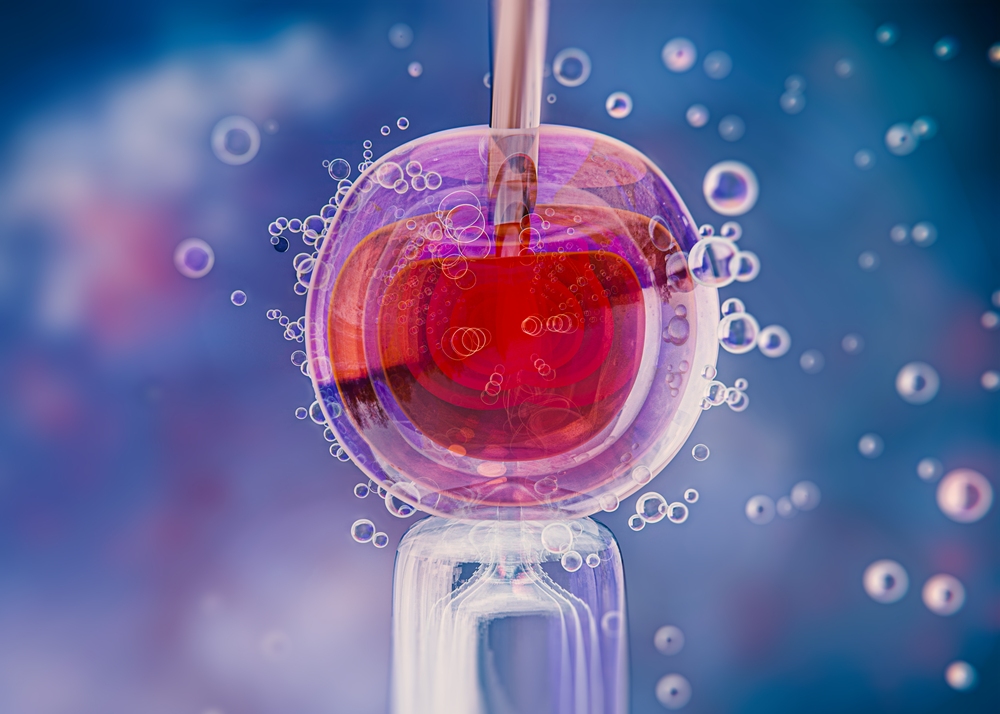
Alife Health’s AI-powered embryo selection software has received CE Mark certification under the European Medical Device Regulation (MDR), allowing it to be used in fertility clinics across Europe.
The San Francisco-based company said its Embryo Predict system, which supports embryologists in selecting the best embryo for transfer, can now be marketed across EU countries following MDR approval.
The software uses deep learning – a type of artificial intelligence that mimics how the brain processes information – to help embryologists assess embryos during IVF.
It captures embryo images, generates an AI score and ranks them according to their likelihood of resulting in a clinical pregnancy.
Traditional embryo assessment relies on manual observation of embryo morphology – the study of its shape and structure – which can vary between embryologists.
The AI tool aims to standardise this process by analysing large datasets and detecting subtle patterns beyond what the human eye can identify.
Melissa Teran, CEO of Alife Health, said: “Achieving CE Mark approval is a significant step in our mission to improve patient outcomes and expand access to fertility care.
“With Embryo Predict now available to clinics across Europe, we have moved one step closer to our goal of achieving global impact in reproductive medicine.
“We look forward to partnering with leading IVF centres across Europe to bring the benefits of AI to more patients.”
With MDR clearance secured, Alife plans to roll out Embryo Predict to selected IVF clinics across the EU, building on its existing momentum in the US, where it operates a clinical decision support platform and partners with leading fertility networks.
Alife Health develops AI-driven tools to modernise and personalise IVF.
The company has not disclosed pricing for the European market or timelines for individual country launches.
Dr Marcos Meseguer is global director of embryology research at IVIRMA, who is collaborating with Alife on innovative embryo research sponsored by the European Council.
Meseguer said: “I was impressed not only by Embryo Predict’s precision in scoring embryos, but also by the simplicity of its integration with existing laboratory hardware.
“Alife brings a level of standardisation and objectivity to embryo selection that our field needs.
“By combining human expertise with AI-driven insight we will reduce subjectivity and improve decision-making.”













 Entrepreneur2 weeks ago
Three sessions that show exactly where women’s health is heading in 2026

 Menopause4 weeks ago
California plans US$3.4m menopause care overhaul

 Pregnancy3 weeks ago
How NIPT has evolved and what AI NIPT means in 2026

 Menopause3 weeks ago
Watchdog bans five ads for women’s heath claims

 Entrepreneur4 weeks ago
WHIS USA 2026 announces first ticket release for landmark Women’s Health Innovation Summit

 Menopause4 weeks ago
Menopause has no lasting impact on cognition, research finds

 News2 weeks ago
Two weeks left to make your mark in women’s cardiovascular health

 Opinion3 weeks ago
Q1 momentum: Female founders are advancing, but the system still hasn’t caught up