



Wellness
US funding boost to lower barriers to sexual and reproductive care


Women’s digital health company Twentyeight Health has secures US$10m funding to expand its services in order to help lower barriers to sexual and reproductive care in the US.
Twentyeight Health provides telemedicine consultations, at-home deliveries, and ongoing access to providers for services like birth control and herpes treatments, particularly in underserved communities.
“45 per cent of American women seeking reproductive health services face significant challenges in accessing care, especially the 19 million living in contraceptive and maternity care deserts where options are few,” said Bruno Van Tuykom, CEO and co-founder of Twentyeight Health.
“Our new funding and payer partnerships will bridge this gap, helping women receive the essential care they need, regardless of geography, income, race, age, or coverage status.
“At an inflection point for women’s health, we are prepared to meet the moment by continuing to invest in our user experience and expanding our reach nationwide to deliver a real solution to a growing problem.”
The payer partnerships payer enable US women to access this care with a $0 co-pay and $0 prescriptions, and the company has confirmed it has further collaborations and services set to launch in 2025.
Its current family planning, maternity, and sexual health resources include access to multiple birth control options, abortion pills, the “morning after” pill, and pregnancy tests, as well as condoms, menstrual pads and tampons, prenatal vitamins, and more.
“Raising $10 million in this economic climate is no small feat, reflecting both the resilience and relevance of Twentyeight Health’s mission,” said Arianne Kidder, partner at investors Seae Ventures.
“With Medicaid spending US$200bn annually on women’s health for reproductive age women, we see real potential in the company’s platform and approach. But this isn’t just about the market opportunity; it’s about backing a company tackling an urgent problem in a smart, scalable, quality-driven way.
“As the team makes meaningful strides in increasing access to essential services, we’re confident Twentyeight Health will continue standing out as a leader in digital-first women’s healthcare.”





A new Female Health Hub launched by the English FA will support women and girls in grassroots football in England with trusted advice on health issues affecting play.
The hub brings together expert-backed guidance, practical tools and player insights in one place, giving women and girls practical advice and reassurance on female health in football.
It has four core aims: to help women and girls better understand their bodies and how female health affects performance and participation, to educate players on key health topics and when to seek further advice or support, to provide practical strategies to help navigate common female health challenges, and to help break down taboos and normalise conversations around female health in football.

Users of the hub will also be able to hear directly from members of the England women’s national team, who share their own experiences of navigating female health matters while playing at the highest level of the game.
“Our ambition is to create a game where women and girls can thrive,” said Sue Day, the FA’s director of women’s football.
“To achieve that, it’s essential that players feel supported in environments that understand and respond to their female health needs.
“We’ve heard directly from grassroots players that they want better information and support around female health, but that they often don’t know where to find it.
“The launch of the Female Health Hub marks an important step in changing the landscape.
“We want every player to feel confident in her own skin and supported without judgment, so she can feel empowered by her body, rather than held back by it.”
The platform was launched following research conducted by the FA that highlighted the need for better education and support around female health in football.
According to the FA, 88 per cent of adult players surveyed said their menstrual cycle has an impact on their ability to train or play, but 86 per cent reported they had never received education about the menstrual cycle in relation to football performance and training.
The research also found 64 per cent of women experience issues related to sports bras or breast health while playing football, despite sports bras being considered one of the most important pieces of playing kit.
Players also expressed strong interest in learning more about injury prevention, at 87 per cent, nutrition, at 84 per cent, and mental health, at 77 per cent, in relation to female health.
The first phase of the Female Health Hub focuses on three of the most requested topics: menstrual health, breast health and injury resilience, with further content to follow, including nutrition and pelvic health guidance.


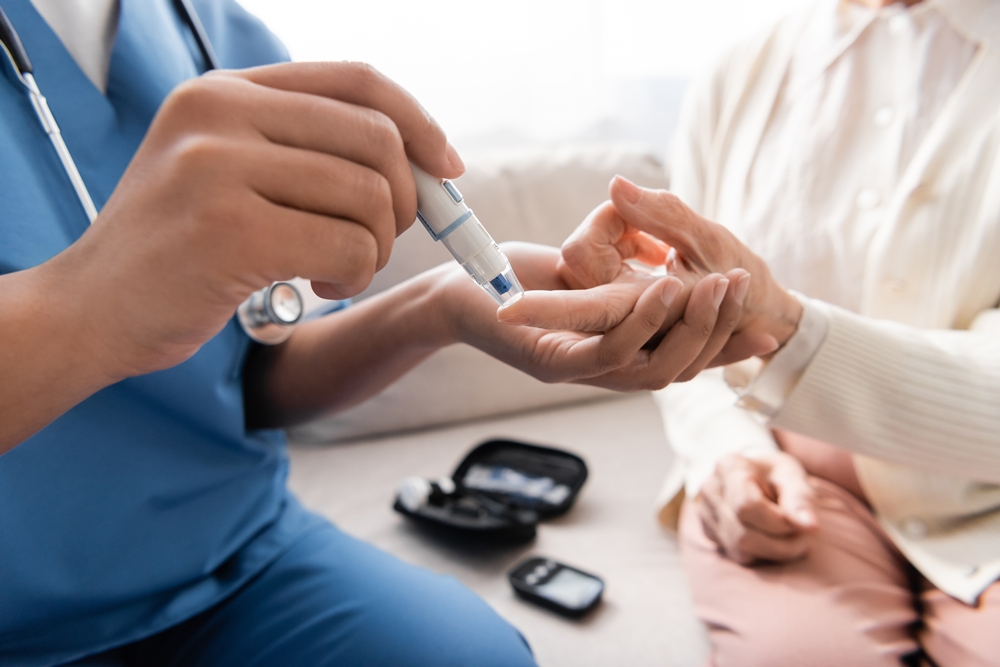
Women with diabetes are less likely to get preventive care than those without the condition, a UCLA-led study suggests.
The findings are based on an analysis of more than 40 studies from several countries.
They highlight how physicians largely overlook the importance of these routine services for women who have diabetes mellitus, or DM, putting them at risk of preventable medical conditions such as pregnancy complications.

Lauren Wisk is associate professor of medicine in the division of general internal medicine and health services research at the David Geffen School of Medicine at UCLA and senior author on the study.
She said: “These findings are important because they identify that women with diabetes are not receiving recommended well-woman care, which is essential to support both managing their diabetes and their overall health.
“Providers need to be aware that they should not forget to provide these essential services for women with diabetes.”
The researchers sifted through thousands of studies, focusing on the concepts of women, diabetes and women’s health services, and settled on 44 that addressed treatment services for women aged 15 to 49 with type 1 or type 2 diabetes, excluding those with diabetes insipidus or gestational diabetes.
They looked at four preventive health service categories: contraceptive counselling and use, breast and cervical cancer screening, pre-conception counselling, and screening for sexually transmitted infections.
One study found that 48 per cent of women with diabetes received contraceptive services compared with 62 per cent of women without the disease.
Nine papers showed cervical cancer screening rates ranging from 38 to 79 per cent for women with diabetes compared with 46 to 86 per cent for those without diabetes.
Four studies found that breast cancer screening rates for women with diabetes ranged between 38 and 69 per cent compared with 54 and 82 per cent for those without diabetes.
Fourteen studies found pre-conception counselling rates of just over 1 per cent compared with 46 per cent for women with diabetes who are planning to get pregnant.
The researchers did not identify any studies on screening for sexually transmitted infections, which they said represents “a substantial gap in the literature.”
The researchers wrote: “One of the more striking findings of this review is the importance of robust coordinated care teams in ensuring access to appropriate services for women with DM.
“Several of the identified studies provide support that a co-management model, or the concept of involving endocrinology, primary care, and other specialty care providers in the care of individuals with DM, as recommended by the American Diabetes Association, is associated with greater receipt of services.”
Within the time constraints of an office visit, primary care physicians are expected to address preventative health needs as well as chronic disease management, said Dr Lisa Kransdorf, an associate clinical professor of medicine at the Geffen School and a study co-author.
She said chronic disease management will often take priority.
“In cases where the patient has other providers such as specialists and clinical pharmacists actively involved in their chronic disease management, there is opportunity for primary care physicians to attend to preventative care gaps,” the researcher added:
There are some limitations to the findings.
The search yielded only 44 studies, many of which relied on patient recall, which can be unreliable, highlighting the need for further research.
In addition, most of the studies analysed had small sample sizes or were conducted at a single site, limiting how applicable the findings might be in other settings.











 Entrepreneur2 weeks ago
Three sessions that show exactly where women’s health is heading in 2026

 Menopause4 weeks ago
California plans US$3.4m menopause care overhaul

 Pregnancy3 weeks ago
How NIPT has evolved and what AI NIPT means in 2026

 Hormonal health3 weeks ago
Watchdog bans five ads for women’s heath claims

 Entrepreneur4 weeks ago
WHIS USA 2026 announces first ticket release for landmark Women’s Health Innovation Summit

 Menopause4 weeks ago
Menopause has no lasting impact on cognition, research finds

 News2 weeks ago
Two weeks left to make your mark in women’s cardiovascular health

 Opinion3 weeks ago
Q1 momentum: Female founders are advancing, but the system still hasn’t caught up