




Mental health
Periods cause students to miss six weeks of study


UK students lose around six weeks of academic time during their degrees due to menstrual health issues, with 70 per cent struggling to concentrate during assessments.
Students diagnosed with conditions such as endometriosis or polycystic ovary syndrome (PCOS) reported missing around 11 weeks across a three-year course.
Endometriosis causes tissue similar to the womb lining to grow elsewhere in the body, while PCOS affects hormone levels and ovary function.

The findings come from a Higher Education Policy Institute (Hepi) report into the “hidden impact” of menstruation in higher education.
Rose Stephenson, Hepi director of policy and report author, said: “The findings from this report demonstrate the hidden impact of periods and menstrual cycles on students’ higher education studies,” said
“This is a particularly serious issue for those who have been diagnosed with menstruation-related illnesses who miss, on average, 11 weeks of academic study over a three-year degree course.
“Menstrual health is not a niche concern. It is a structural issue that deserves thoughtful institutional and governmental responses.”
The research included 950 respondents who had menstruated in the previous year—mostly women, but also 1 per cent transgender men and 1 per cent non-binary individuals.
Taking this into account, along with the fact that some women do not menstruate due to contraception, the author noted the decision to use terms like “people who menstruate” or “students who menstruate”, acknowledging these may “appear clumsy” but reflect the data accurately.
While the majority reported negative impacts, 15 per cent said they experienced mental or physical boosts at certain points in their cycle, helping with focus and performance.
The report calls for clearer institutional and governmental policies, including explicit references to women’s health conditions when considering time off or assignment extensions.
It recommends raising awareness of menstrual health in the same way menopause is now addressed—with policies, training, and support plans to reduce stigma and signpost available help for both staff and students.
As part of the research, 1,571 people were asked about menstrual education.
Twenty-two per cent of male students said they had received no lessons on periods or the menstrual cycle. Women were more likely than men to rate their education as poor.
The report said school-based education may suit those without periods who need to understand them, but teaching for women “could and should be improved”.
Professor Dame Sally Mapstone, president of Universities UK, said: “Historically, menstruation has too often been framed as a source of embarrassment, invisibility, or disadvantage.
“That should no longer be the case.
“This report sets out a challenge to reflect on how systems, policies and assumptions may obscure the realities of those they serve and to shape a more intelligent, humane and responsive academic culture. That is a challenge well worth taking up.”
The Office of the Independent Adjudicator for Higher Education said it is important that providers clearly explain how students can seek support for personal circumstances, including menstruation.
It added that many institutions have recently adopted more flexible approaches, including self-certification and a focus on impact rather than formal medical diagnosis.
“We hope that this will encourage more students affected by the issues identified in this valuable research to seek appropriate support,” the organisation said.
A Department for Education spokesperson said: “Our new sex and health education guidance makes clear that pupils should learn the facts about the menstrual cycle, as well as the associated physical and emotional changes.
“Universities are expected to support students’ wellbeing, attendance and academic performance, and we encourage them to make free period products easily available across campus.”









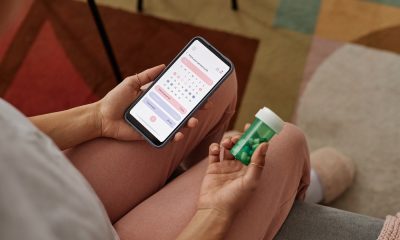


Nearly six in ten young women get health and wellness advice from influencers, new research shows.
Women aged 18 to 29 were more likely than young men to use online influencers for health information.
The topics included beauty, alternative medicine, mental health, weight loss and fitness.

The Pew Research study found that 57 per cent of women aged 18 to 29 said they get health and wellness information from online influencers, 10 percentage points higher than young men.
While Americans still mostly rely on healthcare providers, the research suggests social media influencers also play a major role in how young people find health advice.
Among women who get health and wellness information from influencers, 51 per cent said they often hear about beauty and appearance, compared with 18 per cent of men.
Young women were also around twice as likely as young men to say they see content about alternative medicine, meaning treatments or health practices used outside mainstream medical care.
A third or more of both young men and young women said they often hear about mental health and weight loss from influencers.
Around half or more of both groups said they often see fitness content.
When asked why they seek health and wellness information from influencers, around half of young women said they wanted to make a change to their health or lifestyle.
That compared with 37 per cent of young men.
The research also found that 23 per cent of young women said hearing from people who share their background or beliefs was one reason they used influencers, compared with 14 per cent of young men.
A further 19 per cent of young women said they learnt about things they did not want to ask their doctor, compared with 10 per cent of young men.
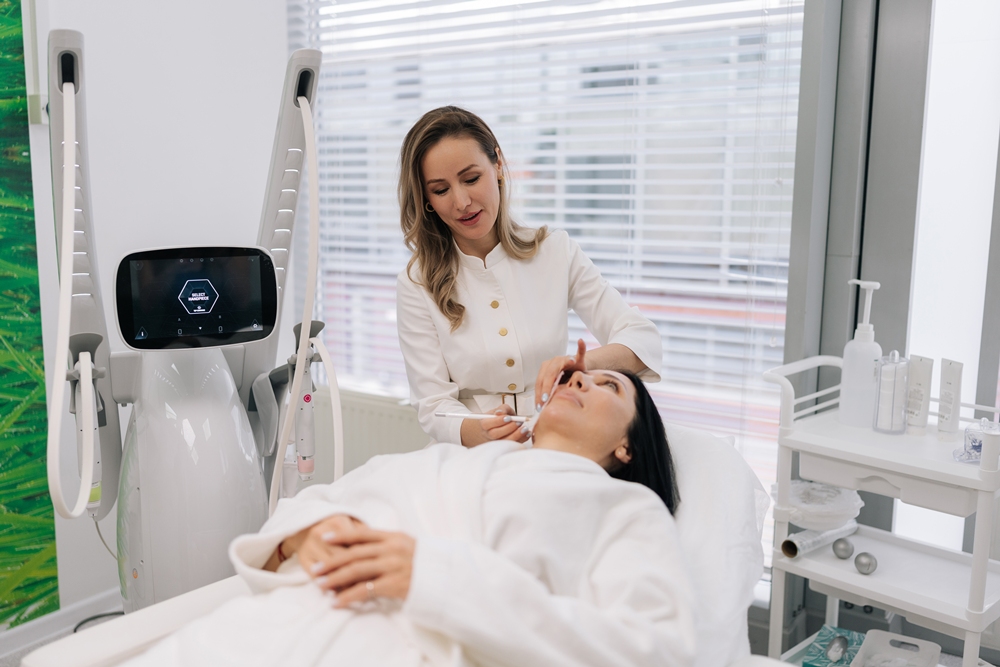
Cosmetic procedures may become addiction-like for some women, with low body esteem and problematic social media use linked to higher risk, new research suggests.
A study of 1,614 women aged 25 to 71 found that one in five who had undergone treatments met the threshold for moderate to severe risk of addictive cosmetic procedure use.
Low body esteem and problematic social media use emerged as the strongest risk factors.
Researchers from the Hebrew University of Jerusalem and the Israel Center for Addiction and Mental Health examined what they described as addictive cosmetic procedure use, or ACPU, among Jewish Israeli women.
ACPU refers to repeated cosmetic treatment behaviour that may resemble addiction, including feeling unable to stop, continuing despite negative effects or craving further procedures.
The study was led by Vera Skvirsky alongside Uri Lifshin, Dvora Shmulewitz and Mario Mikulincer, from the department of psychology at the Hebrew University of Jerusalem and the Israel Center for Addiction and Mental Health.
The researchers surveyed women from the general population rather than focusing only on patients at cosmetic clinics.
Among women who had undergone cosmetic procedures, 20 per cent met the threshold for moderate to severe lifetime risk, while more than 15 per cent reported symptoms within the previous year.
Across the full sample, nearly nine per cent of women showed moderate to severe signs of problematic cosmetic procedure use.
The researchers adapted questions based on mental health criteria used to assess substance-related disorders.
Participants were asked whether they had tried unsuccessfully to stop having cosmetic procedures, felt compelled to continue despite negative consequences or experienced cravings linked to treatment.
Previous research has linked cosmetic procedures with body-image concerns and body dysmorphic disorder.
Body dysmorphic disorder is a mental health condition in which a person becomes highly distressed by perceived flaws in their appearance, often flaws that others may not notice.
The new study examined whether repeated cosmetic procedures may, in some cases, resemble a behavioural addiction.
Women with lower body esteem were more likely to report addiction-like patterns, particularly when this was combined with high levels of problematic social media use.
Participants who reported problematic or excessive social media behaviour appeared especially vulnerable when they also felt dissatisfied with their appearance.
The researchers also found smaller links between addictive cosmetic procedure use and lower feminist attitudes, lower attachment security and more negative attitudes towards ageing.
However, those links were less consistent when several factors were analysed together.
The findings come amid a sharp global rise in cosmetic procedures, with international estimates cited by the researchers suggesting interventions increased by around 40 per cent between 2019 and 2023.
The researchers stressed that the study does not suggest cosmetic procedures are inherently harmful.
Instead, they said repeated engagement may, for some people, take on characteristics similar to behavioural addictions already recognised in mental health research.
The researchers said: “Cosmetic procedures have become deeply normalised in many societies, and for many people they may be a positive experience.
“But our findings suggest that for a meaningful minority, the behaviour may begin to resemble other compulsive patterns we see in addiction research, especially when low body esteem and problematic social media use are involved.”
The study was cross-sectional, meaning it captured a single point in time and cannot prove cause and effect.
Researchers said it remains unclear whether problematic social media use contributes to addiction-like cosmetic procedure behaviour, whether treatments influence body image and online engagement, or whether other psychological factors drive both.
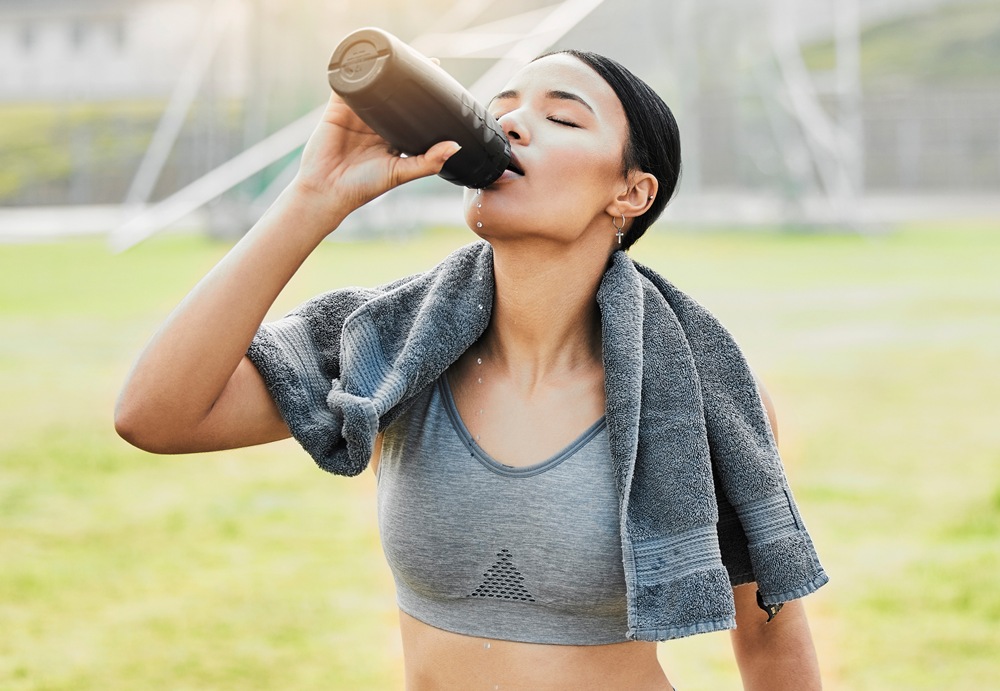
SSRIs may help women with depression tolerate extreme heat, with responses more like those without depression, a laboratory study suggests.
Selective serotonin reuptake inhibitors, or SSRIs, are medicines commonly used to treat mental health conditions including depression and anxiety.
Media reports, social media posts and the US Centers for Disease Control and Prevention have suggested SSRIs may increase vulnerability to heat-related illness.
However, researchers found that women with clinical depression who took an SSRI may withstand extreme heat better than those not treating their depression with medication.
The study was carried out by researchers in the Penn State Department of Kinesiology.
Kathleen Fisher, first author of the study, said: “The human body primarily cools itself in two ways, by sweating and by increasing blood flow to the skin so that heat can be released to the environment.
“This study showed that depression interferes with how women’s bodies regulate their temperatures in the heat. Fortunately, SSRIs seem to largely restore the body’s ability to respond to increases in internal temperature.”
The team compared women without depression with those diagnosed with the condition, including women taking different types of antidepressants.
When their body temperatures rose, women with untreated depression were slower to begin sweating and increasing blood flow to the skin.
Their bodies were also less efficient at pumping blood to the skin than those of women without depression and women taking an SSRI.
Depression affects about 10 per cent of the US population and is twice as common among women, the researchers said.
SSRIs, including sertraline and fluoxetine, and serotonin and noradrenaline reuptake inhibitors, or SNRIs, including duloxetine and venlafaxine, are commonly prescribed alongside counselling to treat depression.
Previous research suggests depression disrupts the body’s ability to regulate temperature.
Penn State researchers had previously found that blood vessels dilated less effectively in women with depression. Dilation allows blood vessels to widen, helping more blood reach the skin to cool the body.
Women taking SSRIs showed improved blood vessel dilation similar to that seen among people without depression.
The latest study examined whether the same improvement occurred during heat stress.
Researchers recruited 64 women, almost all in their 20s. The group included 16 without depression and 16 with depression who were not taking medication.
A further 16 had depression and were taking an SSRI, while 16 had depression and were taking an SNRI.
Participants swallowed a small capsule that transmitted their internal body temperature throughout the experiment.
They then wore a suit fitted with tubes that allowed researchers to pump heated water through it.
After 10 minutes of adjusting to water at 91°F, around 33°C, the temperature was raised to 125°F, around 52°C.
The experiment ended when each participant’s internal temperature had risen by 1.8°F, or 1°C. This took an average of 45 minutes.
Researchers also measured skin temperature on the arm, calf, chest and thigh, along with heart rate, blood pressure, blood flow to the skin and sweating.
Professor W Larry Kenney, a study co-author, said: “The water pumped into the suit was 125 F, causing skin temperature to rise to about 100 F.
“As the skin continued to be heated to temperatures similar to sitting in a hot tub, the women’s internal temperature continued to rise.”
Women with untreated depression were slower to begin sweating and increasing blood flow to the skin than women without depression.
When blood flow to the skin increased, it was less efficient. Despite beginning to sweat later, women with untreated depression did not sweat less overall.
Women taking SSRIs responded to heat in a similar way to women without depression.
By contrast, women taking SNRIs responded similarly to those with untreated depression. SSRIs therefore normalised responses to heat stress, while SNRIs did not.
Researchers found no differences in blood pressure between the four groups.
Fisher said: “Up until now, there has been very little data on how depression or any of these classes of antidepressive drugs affect people’s responses to heat stress.
“This study took the first step toward understanding how women with depression, whether taking medications or not, may respond to extreme heat.”
Kenney said the findings challenged common beliefs that SSRIs increase vulnerability to heat.
He said: “In prior studies, my collaborators and I have identified how several factors, especially age, sex, and activity level, contribute to risk from extreme heat.
“Additionally, there has been widespread concern that many medications contribute to heat vulnerability, but the research evidence behind the risks of many medicines is often thin or nonexistent.
“Both physicians and people taking SSRIs should be aware that these medications do not seem to contribute to heat vulnerability. Rather, SSRIs improve heat tolerance in depression.”











 Diagnosis2 weeks ago
Two “gamechanger” tests set to speed up endometriosis diagnosis on the NHS

 News6 days ago
New menopause drug approved for use by NHS in Scotland

 Cancer2 weeks ago
Thousands of women could avoid painful cancer exam with new AI blood test

 Entrepreneur2 weeks ago
Applications open for the third W Accelerate with Merck KGaA and M Ventures

 Fertility2 weeks ago
Older women face lower chance of fertility treatment working, even with donor eggs, study finds

 Opinion2 weeks ago
We built Ema like a nurse: Here’s why that matters
 Mental health2 weeks ago
SSRIs may lower heat intolerance in women with depression – study

 Wellness2 weeks ago
Alcohol and smoking linked to breast cancer and irregular heartbeat in women, study finds