Pregnancy
Pregnancy blood pressure linked to childhood seizure risk, study finds
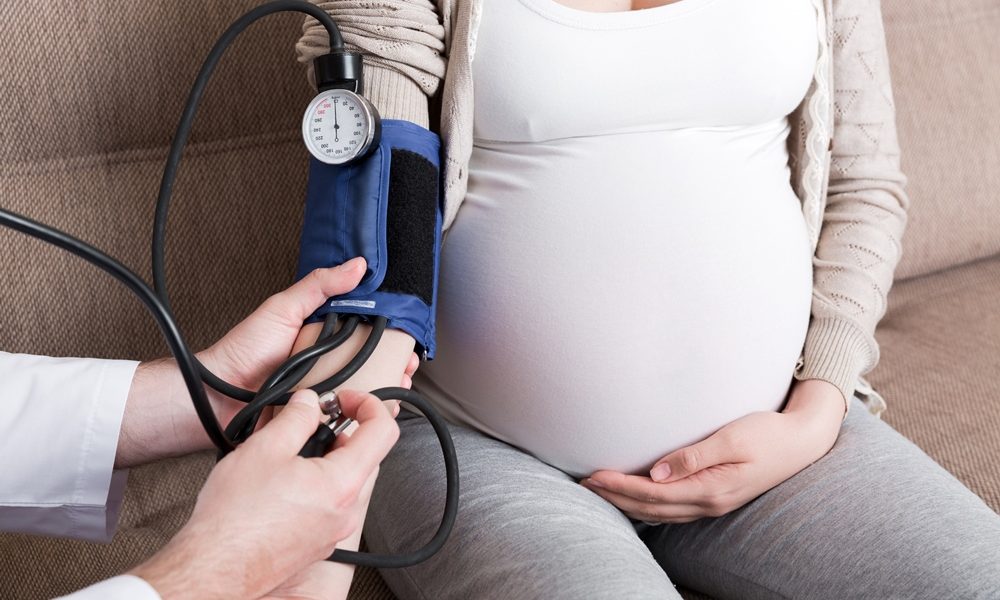
High blood pressure during pregnancy may raise the risk of seizures in children, according to new research.
The condition, known as gestational hypertension, affects nearly 16 per cent of pregnancies in the US.
It has previously been linked to complications such as stillbirth and premature birth, largely due to reduced blood flow through the placenta.
Researchers have now provided the first large-scale evidence linking gestational hypertension with an increased risk of seizures in children.

The findings come from a team at University of Iowa Health Care, which analysed data from more than 246 million patient records across the US and carried out additional studies in mice to support the results.
Children born to mothers with high blood pressure during pregnancy were significantly more likely to experience seizures compared with those whose mothers had normal blood pressure levels.
Dr Baojian Xue is senior research scientist in paediatrics at the university and lead author of the National Institutes of Health-funded study.
The researcher said: “The connection between high blood pressure in pregnant moms and seizures in children from these pregnancies had been postulated before, but never examined on a large scale, and never modelled in an animal.
“With these new mouse models and this new connection between gestational hypertension and seizures, we can now perhaps come up with new childhood anti-seizure therapies.”
Tests on mice confirmed that exposure to gestational hypertension in the womb increased both seizure sensitivity and death due to seizures.
Male offspring showed greater vulnerability to the condition than females.
The research team also identified brain inflammation as a significant factor in the disease process, suggesting it may have similar effects in human children.
According to the Cleveland Clinic, gestational hypertension can lead to complications for mothers, including seizures, stroke, temporary kidney failure, and liver and blood clotting problems.
Most people with the condition deliver healthy babies if it is detected early, but more severe cases can carry greater risk.
The condition can progress to preeclampsia – where high blood pressure develops after 20 weeks of pregnancy – or to eclampsia, which involves seizures due to untreated or under-treated preeclampsia.
Dr Vinit Mahajan is professor of ophthalmology at Stanford University and study co-author.
Mahajan said: “This study is unique because you have an association drawn from analyses of large clinical databases, but then we go on to prove the association with animal models.
“We were even able to reduce seizures in mice offspring with anti-inflammatory drugs based on what we learned from the model.”
The findings suggest that targeting brain inflammation could help prevent seizures in children exposed to gestational hypertension, offering new directions for treatment research.
The study was released alongside separate research from Columbia University, which found that low levels of arsenic in drinking water were linked to preterm birth and lower birthweight.
Fertility
Most NHS regions in England limit IVF to single cycle, research finds
Nearly 70 per cent of NHS regions in England fund only one IVF cycle for women under 40, breaking national guidelines, new research has found.
Twenty-nine of the 42 integrated care boards, which control local NHS budgets, now offer only one round of treatment, after four reduced access in the past year.
National Institute for Health and Care Excellence (Nice) guidelines recommend three full cycles for women under 40 who have been unable to conceive for two years.
Only two of England’s 42 integrated care boards have policies consistent with these guidelines, which they are not legally obliged to follow.
The research was conducted by the Progress Educational Trust, a fertility charity.
Sarah Norcross, the director of PET, said the impact was “devastating” for couples struggling with infertility.
She said: “Infertility is already incredibly stressful for people, and it puts them under even more pressure, because there is so much riding on whether that one NHS-funded cycle is going to work.
“And for some people, that will be their only chance, because private fertility treatment is so expensive.”
The data showed regional variations, with the whole of the north-west offering just one cycle.
“It’s a postcode lottery, and we’re seeing a race to the bottom,” said Norcross.
Of the 29 integrated care boards that offer a single cycle, 19 provide only a partial cycle, where not all viable embryos created are transferred.
There was just one recent example of improved services, from NHS South East London, which in July 2024 went from one partial to two full cycles.
The NHS estimates that about one in seven couples may have difficulty achieving a pregnancy. One cycle of IVF can cost from £5,000 at a private clinic.
Fertility rates in England and Wales have fallen since 2010 to 1.41 children per woman in 2024, the lowest on record and below the replacement level of 2.1 at which a population is stable without immigration.
Health minister Karin Smyth said in a written parliamentary answer last month that it was “unacceptable” that access to NHS-funded fertility services varied across the country.
Revised Nice fertility guidelines are due this spring, but Norcross said changing them seemed pointless.
She said: “Fertility treatment has always been a Cinderella service. It’s always been the one they’ve chosen to cut or to ignore.
“Nice has recommended three full NHS-funded cycles, for women under 40, for more than 20 years. This has never been implemented across England, unlike in Scotland.”
Norcross advocated centralised commissioning and replicating Scotland’s approach, which included financial modelling and a phased implementation starting with two cycles to avoid long waits, moving up to three once capacity was achieved.
“It is a tried and tested plan that England could follow,” Norcross added.
A Department of Health and Social Care spokesperson said: “We recognise access to fertility treatment varies across the country and we are working with the NHS to improve consistency.
“Nice provides clear clinical guidelines, and we expect integrated care boards to commission treatment in line with these.
“Updated Nice fertility guidelines are expected this spring and we will continue to support NHS England to make sure the guidance is fully considered in local commissioning decisions.”
An NHS England spokesperson said: “These clinical services are commissioned by integrated care boards for their area based on the needs of the local population and prioritisation of resources available.
“All ICBs have a responsibility to ensure services are provided fairly and are accessible by different population groups.”
Fertility
France urges 29-year-olds to start families now
France is urging 29-year-olds to have children as part of a 16-point plan to boost fertility and raise birth rates.
Health officials say the aim is to prevent men and women facing fertility problems later in life and thinking “if only I had known”.
The strategy comes as the country, like many western nations including the UK, faces tumbling birth rates.
The trend is creating concerns about how governments can fund pensions and healthcare for ageing populations with fewer younger working people paying taxes.
But policies to raise fertility rates globally have produced limited results, and critics of the scheme suggest better housing and maternity provision could be more effective.
The government will send out “targeted, balanced, and scientifically sound information” to young people on issues including sexual health and contraception.
The material “will also reiterate that fertility is a shared responsibility between women and men,” the country’s health ministry said.
The plan includes efforts to increase the number of egg-freezing centres from 40 to 70. The process involves extracting and storing a woman’s eggs for potential future use.
The country’s health system already provides free egg-freezing for people aged 29 to 37, a service that costs about £5,000 per round in the UK.
The country’s fertility rate of 1.56 children per woman is below the 2.1 needed to maintain a stable population.
However, it is higher than rates in China, Japan and South Korea, and the UK, where the latest figures show it dropped to a record low of 1.41 in England and Wales by 2024.
Professor François Gemenne, who specialises in sustainability and migration at HEC Paris Business School, told Sky News: “This is something that demographers had known for a long time, but the fact that there were more deaths than births in France last year created a shock effect.”
He said the country’s “demographic worry” is exacerbated by the design of its pensions system and its “obsession with immigration and the fear of being ‘replaced'”.
The plan also includes a new national communication campaign, a “My Fertility” website advising on the effects of smoking, weight and lifestyle, and school lessons for children about reproductive health.
The health ministry has acknowledged its maternal and infant mortality rates are higher than neighbouring countries and is beginning a review of perinatal care to address the “concerning” situation.
Channa Jayasena, professor in reproductive endocrinology at Imperial College London, told Sky News: “On the female side, societal changes leading to older age of motherhood are certainly important.
He said obesity was also a problem as it increased women’s risk of polycystic ovary syndrome and endometriosis.
Allan Pacey, professor of andrology (male reproductive health) at Manchester University, said for most people globally, deciding to have children was “down to [non-medical] factors such as better access to education, career opportunities, taxation, housing, mortgages, finance, etc.”
“Medicine can’t help with those things,” Pacey added.
Insight
Pregnancy and breastfeeding linked to higher cognitive ability in postmenopausal women
Pregnancy and breastfeeding are linked to stronger cognition in postmenopausal women, a long-term study suggests.
Greater cumulative time spent pregnant and time spent breastfeeding correlated with higher overall scores in the study, including verbal and visual memory, in later life.
Researchers analysed annual assessments of more than 7,000 women aged about 70 for up to 13 years using data from the Women’s Health Initiative Memory Study and the Women’s Health Initiative Study of Cognitive Aging.
On average, those who were pregnant for around 30.5 months were expected to have a 0.31 per cent higher global cognition score than those who had never been pregnant.
A lifetime average of 11.6 months of breastfeeding was linked to a 0.12 per cent higher global score.
Each additional month spent pregnant was associated with a 0.01-point rise in overall ability.
Each extra month of breastfeeding showed the same increase, and a 0.02-point gain in verbal and visual memory. Although small, these effects are similar to known protective factors such as not smoking and high physical activity.
The work was led by Molly Fox, an anthropology professor at the University of California, Los Angeles.
Fox said: “Any ways in which we can focus public health outreach or clinical interventions towards higher-risk populations leads to more effective and efficient efforts.”
Participants who had ever been pregnant scored, on average, 0.60 points higher than those who had never been pregnant.
Those who had breastfed scored 0.19 points higher overall and 0.27 points higher for verbal memory than those who had never breastfed.
Women are disproportionately affected by Alzheimer’s disease, a progressive condition that impairs memory and thinking skills, and this is not fully explained by life expectancy differences.
The authors say biology and social factors may both play roles.
They noted that more adult children could contribute to cognitive health by buffering stress, supporting wellbeing or encouraging healthy behaviour.
“If we can figure out, as a next step, why those reproductive patterns lead to better cognitive outcomes in old age, then we can work towards figuring out how to craft therapies, for example, new drugs, repurposed drugs or social programmes, that mimic the naturally occurring effect we observed,” said Fox.
The study team is now working to identify the mechanisms that link reproductive histories to cognitive resilience.
-
Hormonal health4 weeks agoWomen’s health enters a new era – the trends shaping femtech in 2026
-
Insight4 weeks agoDesigner perfumes recalled over banned chemical posing fertility risk
-
Features4 weeks agoBest menopause apps and products for 2026
-
Insight2 weeks agoParents sue IVF clinic after delivering someone else’s baby
-
Insight3 weeks agoWomen’s health could unlock US$100bn by 2030
-
Insight4 weeks agoHigher maternal blood pressure increases risk of pregnancy complications, study finds
-
Entrepreneur4 weeks agoXella Health closes US$3.7 million in pre-seed financing
-
Fertility3 weeks agoChina’s birth rate hits record low despite government fertility efforts


1 Comment