




Wellness
Newly-launched Female Health Hub will support grassroots football players


A new Female Health Hub launched by the English FA will support women and girls in grassroots football in England with trusted advice on health issues affecting play.
The hub brings together expert-backed guidance, practical tools and player insights in one place, giving women and girls practical advice and reassurance on female health in football.
It has four core aims: to help women and girls better understand their bodies and how female health affects performance and participation, to educate players on key health topics and when to seek further advice or support, to provide practical strategies to help navigate common female health challenges, and to help break down taboos and normalise conversations around female health in football.

Users of the hub will also be able to hear directly from members of the England women’s national team, who share their own experiences of navigating female health matters while playing at the highest level of the game.
“Our ambition is to create a game where women and girls can thrive,” said Sue Day, the FA’s director of women’s football.
“To achieve that, it’s essential that players feel supported in environments that understand and respond to their female health needs.
“We’ve heard directly from grassroots players that they want better information and support around female health, but that they often don’t know where to find it.
“The launch of the Female Health Hub marks an important step in changing the landscape.
“We want every player to feel confident in her own skin and supported without judgment, so she can feel empowered by her body, rather than held back by it.”
The platform was launched following research conducted by the FA that highlighted the need for better education and support around female health in football.
According to the FA, 88 per cent of adult players surveyed said their menstrual cycle has an impact on their ability to train or play, but 86 per cent reported they had never received education about the menstrual cycle in relation to football performance and training.
The research also found 64 per cent of women experience issues related to sports bras or breast health while playing football, despite sports bras being considered one of the most important pieces of playing kit.
Players also expressed strong interest in learning more about injury prevention, at 87 per cent, nutrition, at 84 per cent, and mental health, at 77 per cent, in relation to female health.
The first phase of the Female Health Hub focuses on three of the most requested topics: menstrual health, breast health and injury resilience, with further content to follow, including nutrition and pelvic health guidance.








Article produced in association with Spital Clinic
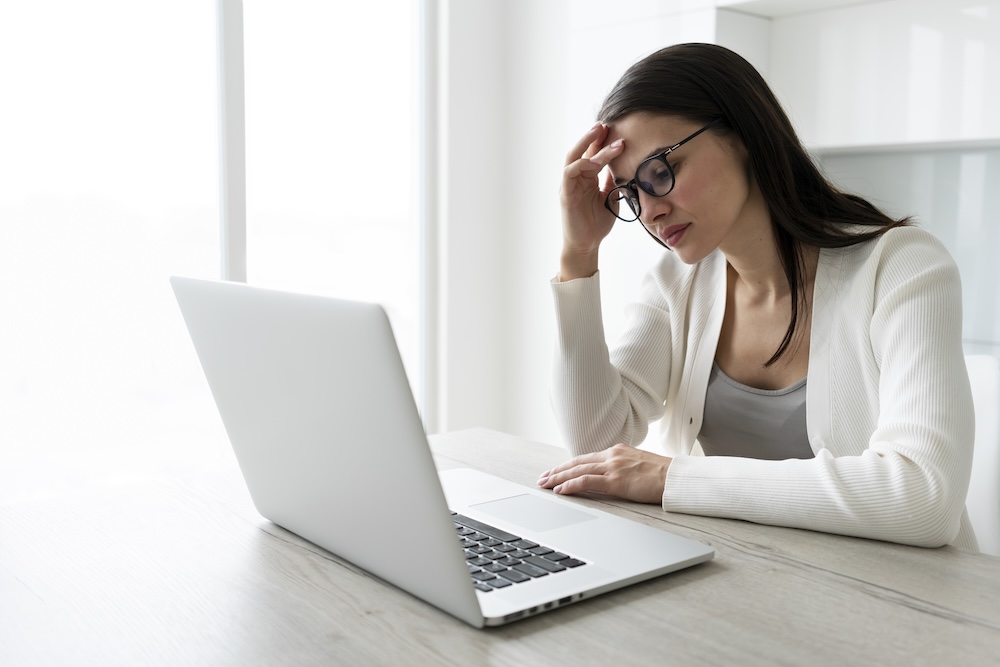
Feeling permanently tired has become so normal for so many women that most of us have stopped questioning it. But one of the most common reasons behind it is also one of the easiest to miss – and one of the most satisfying to fix.
The tiredness that gets explained away
There’s a particular kind of tired that a lot of women simply live with. The mid-afternoon slump that no amount of coffee touches. Needing an early night and still waking up flat. Putting it all down to work, kids, stress, age or hormones – anything except a cause you could actually do something about.
Often, though, that’s exactly what it is: a cause you could do something about. Low iron is one of the most common reasons women feel wiped out, and because it builds so gradually, it rarely announces itself. You don’t wake up one morning feeling different. You just slowly get used to running on less, until “exhausted” starts to feel like your baseline.
Why women are far more likely to run low
Iron is what your body uses to carry oxygen around in your blood. When levels fall, everything has to work a little harder to do the same job – which is why feeling tired is usually the very first thing you notice.
The reason this affects women so disproportionately is simple: periods. Every cycle carries a small iron cost, and over months and years that quietly adds up. Pregnancy adds to the demand too, when the body’s iron needs rise sharply.
But heavy periods are the big one – left unchecked, they can steadily drain your iron, which is why the NHS treats them as something worth looking into rather than just putting up with.
So if your periods sit on the heavier side, you’re not just dealing with the inconvenience in the moment – you may be slowly draining your iron stores at the same time, month after month.
The reassuring part is that heavy periods can be treated, so it’s worth having them looked at rather than soldiering on.
What low iron actually feels like
Tiredness is the headline, but it’s rarely the only clue. Low iron can show up as feeling breathless going up stairs you used to manage without thinking, a foggy, can’t-quite-focus feeling, looking paler than usual, or noticing your heart racing or thumping for no obvious reason.
Then there are the stranger signs people almost never connect to iron: brittle nails, more hair than usual collecting in the brush, restless legs at night, and – oddly – craving and crunching ice. On their own, each of these is easy to shrug off. Lined up together, they’re very often the same story.
Why it so often slips under the radar
Part of the problem is that none of these symptoms screams “iron.” They’re vague, they overlap with ordinary life, and they arrive slowly enough that you adjust without realising. Most of us are also remarkably good at minimising our own tiredness – we assume everyone feels like this, so there’s nothing to mention.
The result is that low iron can go unaddressed for years, not because it’s hard to find, but because nobody thinks to look. It’s a genuinely common, genuinely treatable issue that quietly chips away at how good you’re allowed to feel.
When “heavy” periods are actually heavy
Here’s the tricky bit: most women have no real benchmark for what counts as heavy, because the only period we ever experience is our own. A useful rule of thumb is needing to change a pad or tampon every hour or two, bleeding that lasts longer than seven days, or passing clots bigger than a 10p coin.
NICE frames it even more usefully: periods count as heavy if they’re getting in the way of your life – physically, emotionally or socially. You don’t have to measure anything. If you’re planning your week around your period, doubling up on protection, or it’s leaving you drained, that’s reason enough to take it seriously.
And the good part is they don’t have to be permanent. If yours have crept up over time, getting them under control is worth it in its own right – and it often tackles the iron problem at its source, rather than topping you up only to lose it again next month.
How you actually find out
You can’t tell your iron levels from how you feel. Plenty of women feel rough with results that look “borderline fine,” and some feel reasonably okay while their reserves are already running low.
The only way to know is a straightforward blood test that checks both your blood count and your ferritin – the marker that reflects how much iron you’ve actually got stored away.
Ferritin is the one that matters here, because it tends to drop first, before a standard anaemia test would flag anything as wrong. That’s exactly why a woman can be told her bloods are “normal” and still feel exhausted: the headline number looks acceptable, but the reserves sitting behind it have been running down for a while.
The good news: it’s very fixable
This is the part worth holding onto. Iron deficiency is one of the more rewarding things to put right. The NHS approach is usually a course of iron tablets over several months to rebuild your stores, paired with a source of vitamin C – even just a glass of orange juice – to help your body absorb them properly.
Alongside that, dealing with whatever’s causing the loss in the first place is what stops you ending up back at square one.
Most women start to notice the difference within a few weeks, often well before their levels are fully restored. The fog lifts, the stairs get easier, and the version of “normal” you’d quietly resigned yourself to turns out not to have been normal at all.
The takeaway
The exhaustion so many women treat as a fixed fact of life frequently isn’t one. Low iron is common, it’s quick to check, and it’s straightforward to put right – but only if someone actually looks for it.
If you’ve been tired for longer than you can remember, especially if your periods are heavy, it’s worth getting your iron checked rather than explaining it away for another year. Speaking to a GP is usually all it takes to get that started – and more often than not, the fix turns out to be far simpler than the months of tiredness would suggest.
Disclaimer: This article is produced for informational purposes only and does not constitute medical advice, diagnosis or treatment. Clinical guidance referenced reflects published NHS and NICE information as at May 2026. Individual circumstances vary; readers are advised to consult a qualified healthcare professional before acting on any information in this article. This piece was produced in association with Spital Clinic, which provided background clinical information for editorial purposes. Hyperlinks to external sources are included for reference only and do not represent an endorsement of any product, service or organisation.
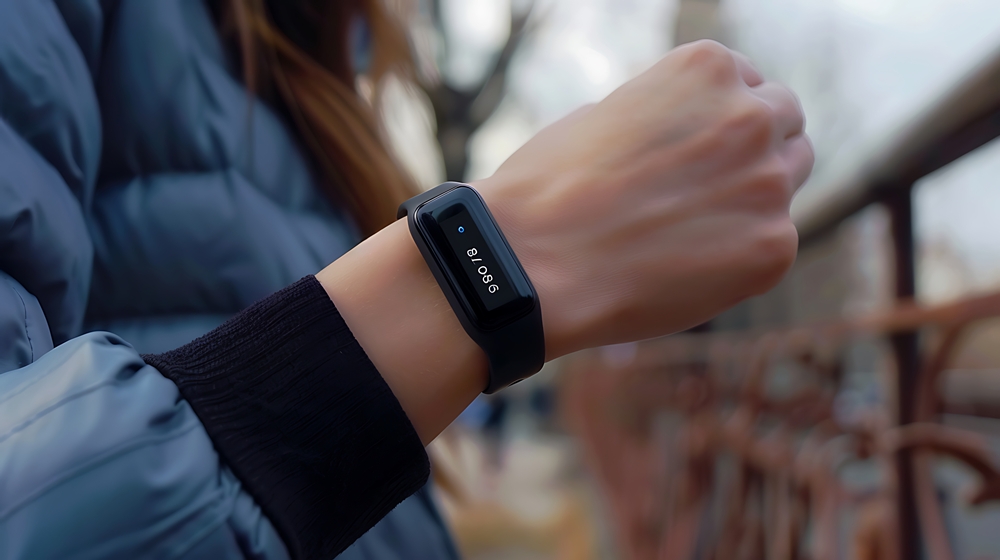
Wearable technology could revolutionise how women understand and manage their menstrual and hormonal health, according to a major new review that assessed dozens of studies involving data from millions of participants.
The review, which examined 40 studies with cohorts ranging from small pilot groups to nearly 19 million participants, found that devices such as the Oura Ring, Apple Watch, Fitbit, WHOOP band and Garmin watches are capable of detecting meaningful physiological changes across the menstrual cycle – and could one day help identify conditions far sooner than current methods allow.

The findings come as growing attention is being paid to the economic and personal toll of menstrual health problems.
Up to 90 per cent of women report cycle-related symptoms including pain, bloating and mood swings, while up to 40 per cent suffer from premenstrual syndrome.
A more severe condition, premenstrual dysphoric disorder, affects up to 8 per cent of women. In economic terms alone, menstrual and perimenopausal symptoms are estimated to cost the United States more than US$26 billion a year.
Researchers found that wearables were able to reproduce well-established hormonal patterns in real-world settings.
Skin temperature was found to be lower in the first half of the cycle before ovulation, and higher afterwards, consistent with known effects of progesterone.
Resting heart rate rose by around two to four beats per minute from the pre-ovulation phase to the days following it.
Heart rate variability, a marker of nervous system activity, was highest in the early cycle and lowest in the premenstrual phase, with lower readings linked to symptoms of PMS and PMDD.
The review also challenged some long-held assumptions.
Digital data suggested that ovulation tends to occur later and more variably than previously thought, with the pre-ovulation phase averaging 15 to 17 days rather than the 13 to 14 days typically cited.
Skin temperature was also found to dip most sharply more than five days before ovulation – not immediately before it – a finding the authors said could have practical implications for women using cycle tracking for contraception or conception.
Large datasets revealed that cycle patterns vary considerably between individuals and across a lifetime.
Nearly 20 per cent of women showed significant cycle-to-cycle variability, and both low and high body weight were linked to longer and less predictable cycles.
The data also pointed to racial differences in menstrual characteristics that had previously gone largely undetected in smaller laboratory studies.
On contraception, the review found that combined hormonal contraceptive users showed flatter, inverted heart rate variability patterns across the cycle, while progestin-only methods produced trends closer to natural cycles.
The authors cautioned that most research has been conducted in the United States and Europe, with predominantly white participants, and called for broader, more diverse studies.
They also flagged significant gaps in research on perimenopause, partly because many studies excluded women with irregular cycles.
Despite these limitations, researchers concluded that wearable devices hold genuine promise for helping women monitor their health and enabling earlier identification of conditions that might warrant medical attention – provided privacy safeguards and standardised research methods are put in place.












 Menopause1 week ago
Perimenopause misinformation ‘putting women at risk’

 News4 weeks ago
NIH Grant terminations disproportionately impact minority scientists, research finds

 Adolescent health4 weeks ago
WUKA brings Period-Positive Pool Party to London Aquatics Centre to keep girls swimming through puberty
 Insight3 weeks ago
PCOS renamed after decade-long campaign to end ‘cyst’ misconception

 Events4 weeks ago
WHIS 2026 unveils agenda and first speakers for the leading women’s health summit
 Menopause4 weeks ago
CBT shows promise for menopause insomnia and hot flashes
 Hormonal health2 weeks ago
NHS urged to update website following renaming of PCOS

 News6 days ago
Three menopause innovators shortlisted for Femtech World Award
6 Comments