Connect with us

Adolescent health

WUKA brings Period-Positive Pool Party to London Aquatics Centre to keep girls swimming through puberty
Published

on

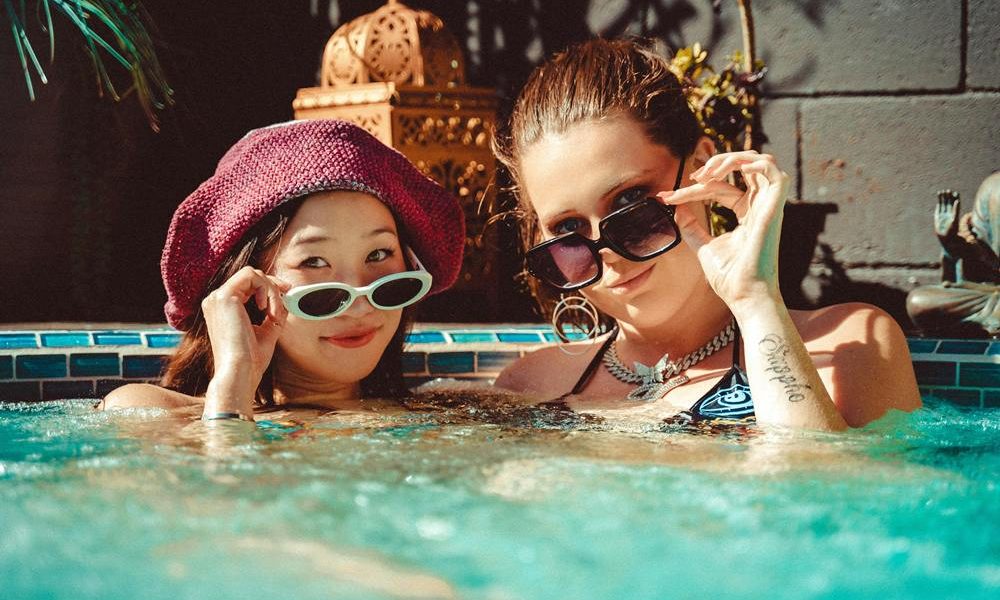
This summer, WUKA and triple Olympian Hannah Miley MBE are bringing their Period-Positive Pool Party to London Aquatics Centre with one clear mission: to prove that periods should never keep anyone out of the water

At a time when 84 per cent of teenage girls in the UK say their interest in sport declines after starting their period – and nearly 70 per cent report skipping sports or swimming due to menstruation – WUKA’s immersive community event is tackling one of the most overlooked barriers to girls’ participation head-on.

WUKA’s Period-Positive Pool Party was created as a safe, inclusive space for teens to swim on their periods with confidence.

Following a series of sold-out events across the UK, including Eastleigh and Stonehaven in Hannah Miley’s hometown of Aberdeen, the London-based Olympic venue is a result of growing demand from teens and parents seeking supportive, stigma-free spaces to stay active during menstruation.

Why This Matters?

For many young people – particularly those who are not ready to use tampons due to age, comfort, cultural reasons, or parental guidance – swimming during their period can feel inaccessible.

WUKA’s period swimwear offers an alternative designed to provide comfort, coverage, and confidence, helping ensure that periods don’t mean sitting on the sidelines.

The new one-hour London takeover combines swimming, education, and empowerment in one of the UK’s most iconic sporting venues.

Breaking The Stigma While Making A Splash

So much more than a product event, WUKA’s Period-Positive Pool Party is a fully immersive experience featuring a DJ-approved summer playlist, inflatable pool installations, and professional underwater photography capturing barrier-free swimming moments. Every teen will also receive a curated £80 wellness goodie bag, including free WUKA swimwear.

But more than anything, they’re about freedom, confidence, and belonging, ensuring the confidence to swim, period, or not, continues long after they leave the water.

Hannah Miley MBE says: “Being an athlete taught me that your cycle isn’t a weakness, it’s just something to manage.

“Partnering with WUKA for this Pool Party is about showing young swimmers that with the right support and the right kit, they don’t have to press pause on their lives or their sport because of their period.”

WUKA Founder Ruby Raut says: “This is about more than a pool party – it’s about changing what inclusion in sport actually looks like.

“Too many girls step back from swimming and physical activity because of period stigma or lack of options.

“Through community-led events like this, we’re breaking barriers, building confidence, and making sure no one feels excluded from sport because of their cycle.”

Saturday 30th May 2026 | 5–6pm | London Aquatics Centre

Want to join the pool party? Follow this link to buy your tickets

Opinion

Should men be talking about periods? Absolutely. Here is what every man should know

Published

on

By Ruby Raut, founder, WUKA

Every time we post a dad talking to his daughter about periods, the internet seems to split in two.

One side says: “This is brilliant. I wish my dad had spoken to me like this.”
The other says: “Why on earth are men talking about periods?”

And I always find that second reaction fascinating.

  • Because men might not menstruate, but they live in a world with people who do.
  • Your daughter might get her first period while you are the only parent at home.
  • Your teenage niece might bleed through her clothes while you are driving her somewhere.
  • Your girlfriend might wake up at 3am with cramps.
  • Your wife might suddenly realise she has run out of period products.
  • A colleague might bleed through her trousers during a meeting.
  • A girl you coach might quietly tell you she cannot play because she has started her period.

At some point in your life, there is a very good chance a woman or girl will have a period around you.

And at that moment, you have two options. You can be calm, informed and useful. Or you can stand there looking as if nobody ever taught you what a period actually involves.

So perhaps we need a Haynes manual for men and periods. Not a biology degree or a lecture.Just the information every man should probably know.

First: yes, men should know what a period actually is

Let us start with the basics. A period is not simply “a bit of blood once a month”.

Menstruation is part of the menstrual cycle. The lining of the uterus builds up and, if there is no pregnancy, that lining is shed.

That is the bleeding part. But for many women and girls, the experience can also involve cramps, back pain, headaches, bloating, tiredness, diarrhoea, tender breasts, mood changes and generally feeling pretty rotten.

Some barely notice their period. Others are completely floored by it. This is important because one of the least helpful things you can say to somebody struggling with their period is:

“Is it really that bad?”

You do not need to experience period pain to believe someone when they tell you they are in pain.

Second: if a girl tells you she has started her period, do not panic

This one is particularly important for dads.

Imagine your daughter gets her first period while Mum is out. What does she need from you? Probably not a horrified expression or you shouting across the house, “YOUR PERIOD HAS STARTED!”

She needs you to behave as though this is an entirely normal bodily function.

Because it is. Ask her what she needs. Find her a period product. If there is blood on her clothes, help her sort it out without making a huge fuss. If she does not know how to use a pad or period underwear, help her find clear instructions.

And please do not make jokes about her “becoming a woman”.

For a young girl, a first period can already feel confusing, embarrassing and frightening. Your job is not to make it into a ceremony but to make her feel safe. Sometimes the most useful sentence a dad can say is simply:

“Okay. No problem. What do you need?”

Third: learn what period products actually are

Pads.Tampons.Period underwear.Menstrual cups.Period swimwear. You do not have to develop strong opinions about all of them. You just need to know they exist.

If someone asks you to buy pads, do not behave as though you have been sent into a nuclear reactor without protective clothing.

Go to the period aisle. Text them a photo if you are unsure. Ask which absorbency they want. Buy the product. Come home.

And if you are the father of a daughter, having a few period products in the bathroom before she starts menstruating is a very sensible idea.

You keep toilet roll in your house before somebody needs it. Period products should not feel radically different.

Fourth: never announce a period stain

This should be basic human etiquette.

If you notice that a woman or girl has bled through her clothes, tell her quietly and discreetly.

Do not point, laugh, or whisper about it to someone else. And definitely never announce it to the room.

If you have a jumper or jacket she can tie around her waist, offer it. If there is somewhere she can clean up or change, help her get there. Then move on with your life.

Period leaks happen. The embarrassment surrounding them is often far worse than the actual blood.

Fifth: stop using periods as an explanation for every emotion

“Are you on your period?”

Four words capable of making almost any disagreement significantly worse.

Sometimes a woman is angry because she is angry and sometimes she disagrees with you because she disagrees with you. Sometimes you genuinely are being annoying.

Hormonal changes can affect mood for some people, but using menstruation to dismiss a woman’s feelings is patronising and incredibly unhelpful.

If your partner says she feels emotional before her period, listen to her. That does not permit you to diagnose every future disagreement as PMS.

Sixth: period pain is not something every woman should simply put up with

There is an extraordinary tendency to tell girls from a young age that painful periods are just part of being female. For some, mild cramps are manageable.

For others, period pain can be severe enough to disrupt school, work, sleep, exercise and everyday life. So if your daughter is doubled over in pain every month, repeatedly missing school, fainting, vomiting or unable to function normally, do not tell her to toughen up.

Take her seriously and help her seek medical advice.

Being a supportive dad does not require you to know what is causing her symptoms. It requires you to believe her when she says something is wrong.

Seventh: men talking about periods does not take anything away from women

This is perhaps the strangest objection to our Dads and Periods campaign. The idea that periods somehow belong in a conversation that only women are allowed to have.

Women should absolutely lead conversations about their own bodies and experiences. But understanding periods should not be restricted to people who menstruate.

We teach children about digestion even though they are not gastroenterologists and about first aid even though most people are not doctors.

We teach boys about pregnancy even though they will never be pregnant. Knowledge is not ownership. A father understanding periods does not make periods less female. It makes him a better prepared father.

A boy understanding periods does not mean he suddenly understands exactly what menstruation feels like. It means he is less likely to laugh when a girl gets a stain on her skirt.

A male coach understanding periods does not make him an expert on women’s bodies.

It means a teenage player might feel able to tell him why she needs five minutes off the pitch instead of inventing an excuse.

A male partner understanding periods does not mean he has to track every detail of his girlfriend’s cycle. It might simply mean that when she says, “My cramps are awful today,” his response is not, “Again?”

So should men talk about periods?

Yes.

But perhaps “talk” is not even the most important word.

Men should know about periods. Men should be comfortable hearing about periods. Men should know what to do when someone starts one unexpectedly. Men should know how to buy period products. Men should know not to make somebody feel ashamed about bleeding.

And fathers, in particular, should be able to talk about periods with their daughters without embarrassment.

Because there is a bigger point here. Girls learn very quickly which subjects make adults uncomfortable.

If Dad goes silent every time periods are mentioned, she notices. If he leaves every period conversation to Mum, she notices. If he wrinkles his nose at period products, she notices. And she may quietly absorb the message that this part of her body is something men find disgusting or embarrassing.

That is exactly the message we should be trying to dismantle.

At WUKA, we started our Dads and Periods campaign because we want fathers to feel capable of having these conversations.

Not perfectly. Not scientifically. Not with a PowerPoint presentation about the uterus over Sunday lunch. Just normally. Periods happen.

Roughly half the population will experience them at some point in their lives. The other half should probably know what they are.

And if the choice is between a dad who knows what a period is, knows where the period products are kept and can calmly help his daughter when she needs him, or a dad hovering helplessly outside the bathroom shouting, “SHALL I CALL YOUR MUM?”

I know which one I would rather have.

Learn more about WUKA at wuka.co.uk

Continue Reading

Adolescent health

HPV vaxx ‘almost eliminates’ risk of death in young women – study

Published

on

The HPV vaccine has cut the risk of dying from cervical cancer before age 30 to almost zero among those vaccinated at 12 or 13, research suggests.

The first study of its kind found that deaths have fallen sharply since school-age girls began being offered the jab in 2008, with around 200 lives saved in England so far.

Between 2020 and 2024, no cervical cancer deaths were recorded among women aged 20 to 24, the first time this had happened over a five-year period.

Without vaccination, around 23 deaths would have been expected.

Professor Peter Sasieni, lead researcher at Queen Mary University of London, said: “It’s incredible to think that a single jab can almost eliminate a particular type of cancer.”

Around 3,300 people are diagnosed with cervical cancer each year in the UK, making it the 14th most common cancer among women.

Human papillomavirus, or HPV, is thought to cause 99 per cent of cervical cancer cases. The virus is spread through close skin-to-skin contact.

Most HPV infections clear up without causing problems, but some can cause abnormal cell changes that may lead to cancer years later.

The study’s authors expect deaths from cervical cancer to continue falling as more people receive the jab and vaccinated generations grow older.

Cancer Research UK, which funded the research, called the findings an “incredible milestone” but warned that vaccination rates in England remained below recommended levels.

Michelle Mitchell, chief executive of Cancer Research UK, said: “We know the HPV vaccine is extremely effective at stopping cervical cancer before it starts and for the first time these findings show it is saving lives.”

Professor Sasieni, who specialises in cancer epidemiology at Queen Mary University of London, described the reduction in deaths since the vaccine was introduced as the “tip of the iceberg”.

Cancer epidemiology examines patterns of cancer and how the disease affects different groups of people.

He said: “As vaccinated generations grow older, we’ll see many more lives saved from cervical cancer.

“New research shows just how vital it is to keep HPV vaccination levels high so more people are protected.”

The UK government has pledged to eliminate cervical cancer as a public health problem by 2040.

However, the latest figures show vaccination rates have fallen below recommended levels.

UK Health Security Agency data shows that 76 per cent of girls in England were vaccinated by the age of 15 in 2024-25, well below the 90 per cent level the World Health Organization says is needed to eliminate cervical cancer.

Mitchell said: “It’s essential that the UK Government and health systems urgently address this with targeted action to reach communities where uptake is the lowest.”

Continue Reading

Adolescent health

WUKA launches UK’s first heavy flow period-proof competition swimwear range

Published

on

WUKA has announced the launch of the UK’s first heavy flow period-proof competition swimwear collection, designed specifically for competitive swimmers, club athletes and  intensive training.

Introducing the NEW WUKA Competition Swim Range, designed specifically for competitive swimmers, club athletes and intensive training – engineered with integrated period-proof technology and designed to meet the rigorous demands of club athletes, divers, and fitness swimmers, this collection enables swimmers to train and compete throughout their cycle without compromising performance, comfort or confidence.

Developed in collaboration with three-time Olympian and Commonwealth Champion Hannah Miley MBE, the new WUKA Competition Swim Range introduces the UK’s first Period-Proof Competition Legsuit alongside a Racer Back Swimsuit, Tie Back Swimsuit and Bikini Top and Bottom  Set.

WUKA Founder and CEO Ruby Raut, says: “This is one of the most significant innovations we’ve introduced for athletes.

“Young swimmers told us they wanted swimwear that looked and performed like a serious training kit while giving them confidence during their period.

“The result is a collection that delivers both.

“From the outside, it looks like high-performance competition swimwear; inside, it contains invisible protection designed specifically for life in the water.”

For too long, competitive swimmers have been forced to choose between uncomfortable internal disposables or missing training entirely.

With this collection WUKA expands their mission to ensure no girl or woman is sidelined by her period.

Built for Performance

The WUKA Competition Swim Range introduces four high-performance styles, setting a new standard and industry first in performance swimwear.

Each piece features WUKA’s exclusive Lunafly™ print, designed to stand out on poolside while maintaining a premium competition aesthetic, and WUKA’s  “invisible” innovations.

● Heavy Flow: integrated gusset holds 20ml of flow, the equivalent of three pads or four tampons, for up to four hours of continuous training.

● Quick-Dry Integrated Absorbent Technology: features a patented ultra-thin absorbent layer with a compression-inspired fit.

● Hydrodynamic Support: streamlined fits reduce drag, with built-in bust shelf liners for support during high-impact movement.

● High performance recycled materials: 100% Chlorine Resistant, UV50+protection, quick-dry technology and designed to maintain shape and compression 20x longer than standard elastane.

● Sustainability in the fast lane: One WUKA competition suit replaces the need for over 200 disposable tampons and is reusable for up to two years.

The WUKA Competition Swim Collection:

● Competition Legsuit (£70): The gold standard for racing and intensive training, offering

maximum coverage and compression (thigh-skin design).

● Competition Racer Back Swimsuit (£70): A classic athletic silhouette for freedom of movement.

Racerback cut, full-compression support and a leakproof gusset that keeps you protected through your heaviest training days – perfect for club training, galas, master meets and any session where

you’d normally pick a one-piece.

● Competition Tie Back Swimsuit (£70): An adjustable performance fit developed for club swimmers and athletes seeking a personalised fit.

● Competition Bikini Bottom & Top Set (£80): Versatile performance wear for pool and open water.

Available in sizes XXS-L (Adult & Teen)

Hannah Miley MBE said: “As swimmers, we spend countless hours training and building confidence in the water.

“No athlete should feel their period is a reason to miss a session or step away from the sport they love.

“Having period swimwear specifically designed for intensive swimming can make a huge difference to confidence, particularly for younger athletes navigating puberty while balancing training and competition.”

wuka.co.uk | @wukawear

Continue Reading

Trending

Copyright © 2025 Aspect Health Media Ltd. All Rights Reserved.