




Hormonal health
Dozens of women report suffering painful burns after using Always sanitary towels

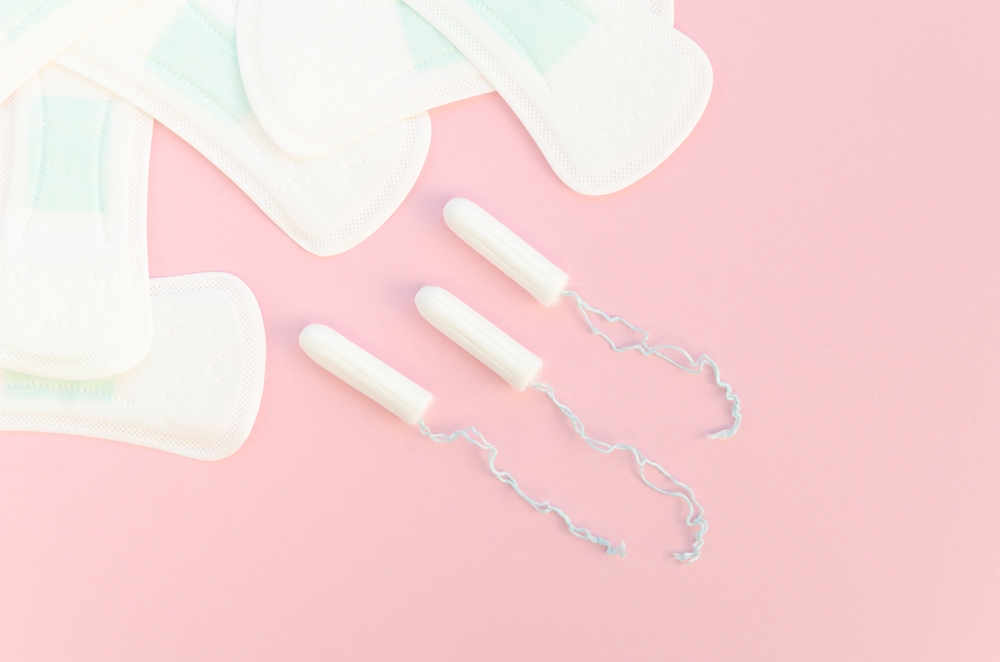
Dozens of women have claimed online that Always sanitary towels caused painful burns, prompting a response from the Procter & Gamble-owned brand.
Several TikTok users have posted videos describing reactions to the company’s products in recent days.
The clips, which have gained thousands of views, include complaints of itching, rashes and what users describe as chemical burns — skin damage caused by contact with irritating substances.
In one video viewed 45,000 times, user @ratqueen910 said the pads gave her “the worst chemical burns ever” in her groin area, where underwear meets the leg.
“When I looked at the burn with the flash on it really looked like my skin was gooey! I was scared af,” she told commenters.
She said she first thought the pain was chafing or an allergic reaction to spandex in her underwear, before seeing other women online describe the same symptoms.
“I realised that so many people have had problems the last few months with these pads,” she said.
“It’s not like, ‘oh, I switched over to Always pads’ — no, I’ve used them since I was in like sixth grade.
“So they must have changed the formula, messed something up, put some extra chemicals in that sh**t because it messed me up. I had chemical burns. I had issues and I didn’t know what it was.”
She said a doctor suggested another cause for the irritation, but she believes the pads were to blame, noting she had never been sensitive to scents or suffered urinary or yeast infections before.
Her post drew hundreds of comments, with many women saying they too had reactions to Always’ Flexfoam pads.
One wrote: “The whole area that the pad touched gave me a chemical burn after only a few hours. It was the Flexfoam.”
The original poster replied: “Mine was Flexfoam as well.”
While users did not specify exact product types, Always sells both day and night versions of its Infinity Pads with Flexfoam, which appear to be those mentioned.
Another commenter said: “Just a few days ago I was on my period using Always pads and I was f**king itching and it was burning. I never itch or have pain down there. I took the pad off so quick.”
A third wrote: “I switched to Honey Pot and had been fine. When my coworker gave me an Always pad, I was hesitant but used it — and got a chemical burn.”
Others described repeated irritation.
One said: “I use another brand for the first half of my period, then Always for the last two days, and I’ve had this burn for three months in a row. Stopped using them last month and no issue.”
Some also reported rashes or itching. One wrote: “In real time I am itching and getting a rash. I wore an Always pad earlier today.”
An Always spokesperson told the Daily Mail: “Our pads are used safely by millions of women every day around the world.
“Their safety is our top priority, and we carefully evaluate every component of our Always products to minimise the chances of skin irritation or allergic reactions.”













Weight loss surgery was linked to more regular periods and fewer polyendocrine metabolic ovarian syndrome (PMOS) symptoms in women aged 18 to 45 living with obesity in a recent study.
The researchers recommend that women undergoing the procedure have access to preconception care and reproductive counselling to support their reproductive health.

Researchers at the University of Surrey analysed data over 24 months from 84 women who underwent bariatric surgery and 18 women living with obesity who did not have surgery.
Of those who underwent surgery, 49 had gastric bypass procedures and 35 had gastric sleeve surgery.
Women who underwent metabolic bariatric surgery lost more than 30kg on average at 12 and 24 months after the procedure.
Among women with polycystic ovaries, the condition persisted in only 10 per cent after 24 months.
Women also reported a resolution of clinical hirsutism, or excess body hair, by 12 months.
Women who had previously experienced irregular periods reported more regular menstrual cycles after surgery.
Professor Martin Whyte, co-author of the study and professor of metabolic medicine at the University of Surrey, said: “A large proportion of those undergoing bariatric surgery are women of reproductive age, who may be planning a pregnancy in the coming years.
“So much remains unknown about the impact of this type of surgery on women who are planning to have children.
“This raises the question of when the ideal time after surgery is to conceive.”
Women have a higher prevalence of obesity than men, with 57 per cent of women in the UK classified as overweight and 27 per cent living with obesity, which can affect fertility and the health of an unborn baby.
The researchers said 17 women had healthy pregnancies following surgery.
Although this was not specifically examined in the study, no difference in birth weight was observed between babies conceived within or after the first year.
Dr Kathryn Hart, co-author of the study and associate professor in nutrition and dietetics at the University of Surrey, said: “What we have found is that bariatric surgery positively affects the reproductive health of women living with obesity and can improve the likelihood of them having a healthy pregnancy after surgery.
“Dysregulated hormone levels, irregular periods and conditions such as polycystic ovaries are affected by obesity.
“By reducing this, what we have seen is that it can lead to improvements without the need for medication.
“We would suggest that clinicians consider medical intervention for obesity to treat irregularities in the menstrual cycle and issues with fertility.”


Estriol treatment may ease menopause brain fog and other cognitive symptoms, according to a small observational study of 20 menopausal women.
The study involved menopausal women with an average age of 53.
They underwent an initial assessment of their cognitive symptoms before receiving a customised regimen of estriol and progesterone for 12 months.
Estriol is a natural form of oestrogen that occurs during pregnancy and has been used in Europe and Asia to treat menopausal symptoms including hot flushes and genitourinary symptoms.
It differs from estradiol, the most commonly used oestrogen hormone therapy in the US, by binding primarily to a different oestrogen receptor in the brain.
Previous research has shown that estriol may help protect brain cells and reduce brain atrophy in the hippocampus, the region responsible for learning and memory.
After 12 months of treatment, participants reported significant reductions in brain fog, concentration problems, working memory problems, slower processing speed, verbal memory problems and problem-solving difficulties compared with before treatment.
Senior author Dr Rhonda Voskuhl, a neurologist and member of the Comprehensive Menopause Center at UCLA Health, said: “Oestrogen plays a well-documented role in protecting the brain, yet there are still no approved type and dose of treatment that specifically targets the cognitive symptoms so many women experience during menopause.
“Women are often told to simply live with brain fog, when in fact there is a neuroscience basis for it, and potentially a way to address it. That gap in care is what motivated us to look more closely at estriol.”
Researchers also examined estriol treatment in midlife female mice to investigate how the hormone treatment might work.
Estriol reduced markers of brain pathology in the hippocampus and improved measures of working and spatial memory in the animals.
The findings are preliminary. The study was a small case series with no placebo group or randomisation, meaning the results may not apply to broader populations.
The researchers said larger placebo-controlled clinical trials using brain imaging and standardised cognitive testing are needed to confirm the findings on cognitive symptoms.
The treatment used in the study was invented by Voskuhl and is patented by UCLA. UCLA licenses the patent to CleopatraRX, which sells the treatment as PearlPAK. Voskuhl serves as a medical adviser to CleopatraRX.










 Hormonal health2 weeks ago
Major UK study could be a ‘game-changer’ for heavy periods and endometriosis

 Entrepreneur7 days ago
KOVE Medical raises €1.7 million to improve safety of foetal surgery

 Fertility2 weeks ago
One week left to apply: W Accelerate with Merck KGaA and M Ventures

 Pregnancy1 week ago
UK study aims to transform maternity care for high-risk pregnancies

 Hormonal health2 weeks ago
Quarter of women miss work due to menstual symptoms, survey finds

 Mental health2 weeks ago
PMDD after SSRIs or hormones: Why the brain may be the missing treatment target
 Cancer2 weeks ago
Ark Surgical secures further institutional backing to accelerate US expansion

 Hormonal health5 days ago
Menopause hormone treatment may ease brain fog, study suggests
12 Comments