




Connect with us

Hormonal health

Wearables may help detect menstrual health changes earlier, study suggests
Published

on

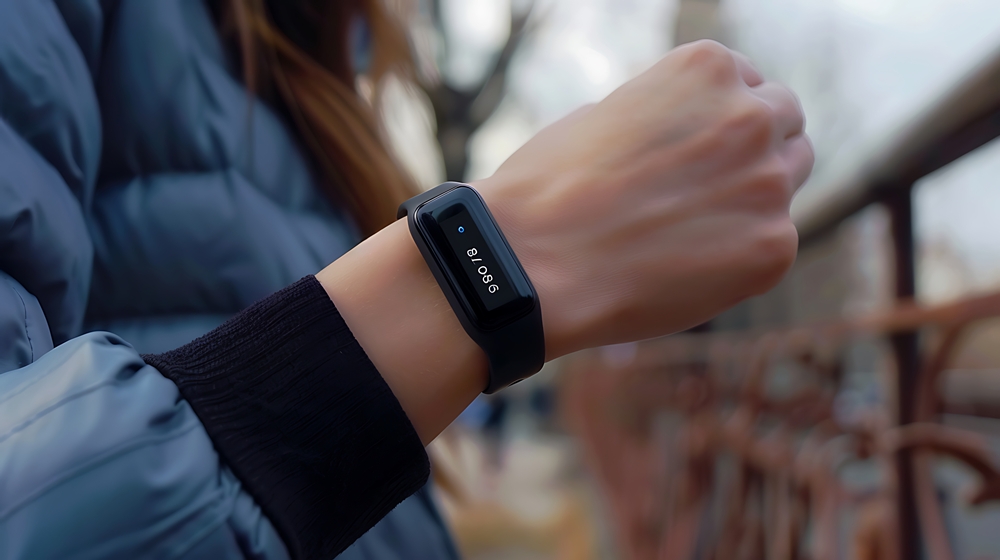
Wearable technology could revolutionise how women understand and manage their menstrual and hormonal health, according to a major new review that assessed dozens of studies involving data from millions of participants.

The review, which examined 40 studies with cohorts ranging from small pilot groups to nearly 19 million participants, found that devices such as the Oura Ring, Apple Watch, Fitbit, WHOOP band and Garmin watches are capable of detecting meaningful physiological changes across the menstrual cycle – and could one day help identify conditions far sooner than current methods allow.

The findings come as growing attention is being paid to the economic and personal toll of menstrual health problems.

Up to 90 per cent of women report cycle-related symptoms including pain, bloating and mood swings, while up to 40 per cent suffer from premenstrual syndrome.

A more severe condition, premenstrual dysphoric disorder, affects up to 8 per cent of women. In economic terms alone, menstrual and perimenopausal symptoms are estimated to cost the United States more than US$26 billion a year.

Researchers found that wearables were able to reproduce well-established hormonal patterns in real-world settings.

Skin temperature was found to be lower in the first half of the cycle before ovulation, and higher afterwards, consistent with known effects of progesterone.

Resting heart rate rose by around two to four beats per minute from the pre-ovulation phase to the days following it.

Heart rate variability, a marker of nervous system activity, was highest in the early cycle and lowest in the premenstrual phase, with lower readings linked to symptoms of PMS and PMDD.

The review also challenged some long-held assumptions.

Digital data suggested that ovulation tends to occur later and more variably than previously thought, with the pre-ovulation phase averaging 15 to 17 days rather than the 13 to 14 days typically cited.

Skin temperature was also found to dip most sharply more than five days before ovulation – not immediately before it – a finding the authors said could have practical implications for women using cycle tracking for contraception or conception.

Large datasets revealed that cycle patterns vary considerably between individuals and across a lifetime.

Nearly 20 per cent of women showed significant cycle-to-cycle variability, and both low and high body weight were linked to longer and less predictable cycles.

The data also pointed to racial differences in menstrual characteristics that had previously gone largely undetected in smaller laboratory studies.

On contraception, the review found that combined hormonal contraceptive users showed flatter, inverted heart rate variability patterns across the cycle, while progestin-only methods produced trends closer to natural cycles.

The authors cautioned that most research has been conducted in the United States and Europe, with predominantly white participants, and called for broader, more diverse studies.

They also flagged significant gaps in research on perimenopause, partly because many studies excluded women with irregular cycles.

Despite these limitations, researchers concluded that wearable devices hold genuine promise for helping women monitor their health and enabling earlier identification of conditions that might warrant medical attention – provided privacy safeguards and standardised research methods are put in place.
Menopause

Sweden eyes domestic production of oestrogen patches amid menopause treatment shortage

Published

on

Sweden is exploring domestic production of oestrogen patches as shortages continue to disrupt menopause treatment.

Two government agencies have been asked to examine whether transdermal oestrogen patches could be made in the country.

Transdermal treatments deliver medicine through the skin, most commonly through patches, gels or sprays. They provide a continuous low dose of hormones.

The move follows a long-running shortage of oestrogen treatments that has left women struggling with menopause symptoms and forced pharmacists to look for alternatives.

Hot flushes, mood swings and depression are among the well-documented effects of menopause.

Jakob Forssmed, the health and social affairs minister, has asked the Swedish Medical Products Agency and the Dental and Pharmaceutical Benefits Agency to examine whether the patches could be produced in Sweden.

Speaking to Dagens Nyheter, Forssmed described the assignment as “very urgent”, citing recurring shortages affecting women who “need these medications to lead a functional life”.

The Swedish Medical Products Agency will examine whether a national operator could produce bulk transdermal formulations of oestrogen medicines and, where possible, prepare a process for production.

One possible manufacturer is the state-owned Apotek, Produktion & Laboratorier, which makes medicines tailored to the needs of the Swedish health system.

In 2025, about 205,000 women aged over 45 in Sweden were using systemic oestrogen treatment, according to a report from the Board of Health and Welfare.

That represents 8 per cent of women in the age group.

Transdermal oestrogen has become increasingly popular among menopausal women in Sweden. When patches are unavailable, some women switch to sprays and gels, which can then also run out of stock.

There is no shortage of oestrogen pills. However, experts say they are not a suitable option for everyone because of side effects that patches, sprays and gels do not have.

Angelica Lindén Hirschberg, professor of obstetrics and gynaecology at Karolinska Institutet, told Läkemedelsvärlden: “The pills affect the liver’s production of proteins and increase the risk of blood clots. For many women, the transdermal option, administered through the skin, is the only medically appropriate choice.”

Demand for hormone treatment has risen sharply in Sweden and globally, contributing to shortages.

Manufacturing constraints, supply chain bottlenecks and rising production costs are also said to play a role.

Läkemedelshandlarna, the Swedish association for parallel importers, has said access could be improved by allowing importers to buy hormone patches from other European countries at higher prices.

In response, representatives of the Swedish Medical Products Agency and the Dental and Pharmaceutical Benefits Agency said the causes of shortages needed to be seen “in a more nuanced light”.

They said: “The price level in Sweden is not the only explanation for the shortage of transdermal oestrogens, that is, oestrogen medications administered through the skin, most commonly via patches, gels, or sprays.

“Increased global demand and production issues are also affecting international supply.”

Estradot is among the oestrogen patches affected by shortages.

Some dosage strengths have been removed from Swedish benefit schemes by manufacturer Sandoz after authorities did not approve higher prices.

Under the government’s instruction, the Medical Products Agency will also consider whether access could be secured through EU mechanisms, including public procurement.

The Dental and Pharmaceutical Benefits Agency will examine whether more companies could hold marketing authorisations for transdermal oestrogen medicines, as well as whether parallel trade could be promoted.

The agencies are due to report back to the government by 30 October.

The Board of Health and Welfare report also found disparities in access to hormone patches across areas with different socioeconomic conditions.

In areas facing major socioeconomic challenges, 3.2 per cent of women collected hormone replacement therapy. In areas with very good socioeconomic conditions, the figure was 12.1 per cent.

Maja Österlund, an investigator at the agency, said: “These differences reflect a healthcare system that is currently unequal, and where we also know there is a shortage of certain medicines.”

Continue Reading

Menopause

Post-menopause memory decline linked to loss of oestrogen production in brain tissue – study

Published

on

Oestrogen loss in brain tissue may help explain memory decline after menopause and women’s higher Alzheimer’s risk, a preclinical study suggests.

The findings suggest females may be especially sensitive to the loss of brain oestrogen in old age.

Scientists said the work could point to future treatments focused on restoring the brain’s supportive environment before memory loss develops.

Dr Hong Zhao, research professor of obstetrics and gynaecology in the division of reproductive science in medicine at Northwestern University Feinberg School of Medicine, said: “This study tells us that females, but not males, may be uniquely sensitive to loss of brain oestrogen at old age, potentially contributing to an increased risk of Alzheimer’s disease.”

Researchers at Northwestern University studied young and old male and female mice, with and without loss of brain oestrogen.

The study focused on the extracellular matrix, or ECM, a network of molecules in the space between brain cells. It helps support communication between cells and is important for memory, brain development and brain health. The ECM makes up nearly 20 per cent of the brain’s volume.

The ECM is especially abundant in the hippocampus, a part of the brain involved in learning and memory.

Scientists found that oestrogen loss, ageing and female sex were closely linked to changes in the ECM. The study is the first to examine oestrogen loss in the ECM.

The findings may help explain why women are at higher risk of Alzheimer’s disease, although the research was carried out in mice and further work is needed to understand whether the same mechanisms apply in humans.

Nearly two-thirds of people with Alzheimer’s disease in the US are women, but the reasons for this higher risk remain unclear.

Scientists have long suggested that falling oestrogen levels after menopause may reduce the brain’s natural protection against memory loss and neurodegeneration. Neurodegeneration means the gradual damage or loss of nerve cells in the brain.

Dr Serdar Bulun, chair of the department of obstetrics and gynaecology at Feinberg and a Northwestern Medicine physician, said: “We have provided some of the most compelling evidence that oestrogen is so important for memory function and other mood functions in the female brain.

“This should motivate clinicians to be more aware of the essential role of oestrogen for women’s brains, because once memory is gone, it’s gone.”

Before menopause, the ovaries are the main source of oestrogen in women. After menopause, oestrogen levels drop sharply, and only small amounts are produced in other parts of the body, including the brain, fat tissue, bone, muscle, blood vessels and breast tissue.

In mice, oestrogen is produced locally in the brain and gonadal fat in males, whereas in females it is produced mainly in the brain.

Research has shown that women with Alzheimer’s disease may have even lower oestrogen levels in the brain than women without the disease. The study further supports that.

The researchers used genetically engineered mouse models that lacked aromatase, an enzyme needed to produce oestrogen, either throughout the whole body or only in the brain.

They examined how the loss of oestrogen affected memory, behaviour and social function in male and female mice at young and old ages.

They also analysed changes in gene expression across the entire genome in the hippocampus in mice with brain-specific oestrogen loss at young and old ages in both sexes.

The authors said the findings suggest the ECM could become a target for future treatments.

Current Alzheimer’s treatments such as lecanemab and donanemab are designed to remove amyloid, an abnormal protein build-up in the brain that is one of the main signs of the disease.

However, researchers said it is still unclear how much these treatments help to slow memory loss or improve everyday functioning. Some studies suggest small benefits, while others show little meaningful improvement.

The study suggests a different approach could focus on restoring the brain’s supportive environment to help protect memory.

Zhao said: “Our findings will hopefully motivate future studies to better understand how this matrix is altered in postmenopausal women, and how it could potentially induce susceptibility to Alzheimer’s disease.”

Hormone replacement therapy, or HRT, has also been studied as a possible way to protect women from Alzheimer’s disease by restoring oestrogen levels.

However, clinical studies have produced mixed results, with some suggesting benefits for memory and cognitive function while others show little benefit or possible harm.

Zhao said differences may depend on the type of hormone treatment used, the age at which it begins and differences in study design.

She said: “More research is needed to understand how oestrogen affects the female brain and why oestrogen loss increases AD risk in women.

“Understanding these mechanisms could help researchers develop safer and more effective HRT strategies to prevent or slow the progression of AD in women.”

Continue Reading

Menopause

Perimenopause misinformation ‘putting women at risk’

Published

on

Perimenopause misinformation on social media is putting women at risk of unintended pregnancies, unnecessary medication and missed diagnoses, experts have said.

Awareness of menopause and treatments such as hormone replacement therapy, or HRT, has been raised by efforts including a prominent documentary by Davina McCall.

But as a growing number of women encounter misleading information on social media, there are concerns that some could be led to false conclusions that can obscure real underlying health difficulties.

“Everyone thinks they’re menopausal,” said Dr Paula Briggs, a consultant in sexual and reproductive health.

“So we are seeing younger and younger women asking for HRT when what they need is hormonal contraception, as they’re still fertile.

“I work in an abortion service and we’re seeing more women over 35 now who believe themselves to be menopausal and are gobsmacked when they become pregnant.”

According to the British Menopause Society, more than 80 per cent of women will be menopausal by the age of 54, meaning they have not had a period for 12 months or more, with about 5 per cent reaching menopause before the age of 45.

But menopause is not a sudden stop. Instead, women go through a transition known as perimenopause over months or years.

During this time, hormone levels fluctuate and can cause symptoms such as changes in menstrual patterns, hot flushes and difficulty sleeping.

Briggs said misinformation around perimenopause is concerning.

“I look at things like Instagram to see what they are exposed to and I am horrified,” she said, citing examples of women in their 30s being told to demand HRT if they are unable to sleep or are struggling with migraines, and to switch GPs if denied.

Or women being told they should seek testosterone treatment.

“I’m not anti any of these things in the right person, but females produce their own testosterone lifelong, even women without ovaries, so the idea that everybody has to demand testosterone is bonkers,” Briggs said.

Dr Channa Jayasena, an expert in reproductive endocrinology at Imperial College London, also raised concerns.

“It’s great that there’s better [public] awareness [about perimenopause]. And I think many doctors are completely unaware about how debilitating the symptoms of perimenopause can be,” he said.

“But the flipside of that, I think there’s a risk that some women are being mislabelled as having perimenopause when they have other things that are wrong.”

Prof Janice Rymer, chair of the British Menopause Society, agreed.

“[If you are] having regular periods naturally, then you’re not perimenopausal, end of story. You’ve got good hormone levels,” she said.

Rymer added that there is a perception that any symptom affecting women between the ages of 40 and 60 is due to perimenopause or menopause and that HRT is required.

“I think HRT is completely wonderful,” Rymer said. But, she added, “it’s not for women who don’t need it,” noting that in such situations it can cause heavy bleeding.

Briggs said a key concern arising from misinformation around perimenopause is that women are stopping contraception, thinking it is no longer needed.

Jayasena suggested that could be because of messaging around how fertility declines with age.

“I think we’ve got a real awareness about the timelines for optimum fertility and optimum response for IVF. IVF stops working well beyond the age of 42. It’s easy to translate that to an assumption that you can’t get pregnant naturally, when actually you can,” he said.

Experts have also raised concerns over a pushback against hormonal contraception, something that is particularly acute among younger women, even though demand for HRT is growing.

While they stress contraception is not a one-size-fits-all issue, Briggs noted there are many progestogen-only contraceptives, which use a synthetic version of the hormone progesterone, that can be used alongside HRT to protect against pregnancy while managing symptoms associated with perimenopause.

In addition, she said, there are modern forms of the combined pill that are safer for use in women experiencing perimenopause than traditional combined pills, as they contain a natural form of oestrogen.

Essentially, said Jayasena, “it’s a mini pill plus a bit of HRT.”

Dr Zara Haider, president of the College of Sexual and Reproductive Healthcare, said misinformation is a significant issue, particularly around fertility and hormone use.

She said: “We still see women stopping contraception too early because they assume they can’t get pregnant, when in reality contraception is needed until menopause is confirmed or until age 55.

“There’s also been a lasting impact from outdated or flawed studies around risks like breast cancer, which has understandably made some women cautious about hormones.

“At the same time, it’s positive that public conversations, including high-profile campaigns, have helped bring menopause into the mainstream.

“The challenge now is making sure women are getting accurate, evidence-based information to make informed decisions.”

Continue Reading

Trending

Copyright © 2025 Aspect Health Media Ltd. All Rights Reserved.

