



Menopause
New Women’s Employment Ambassador role targets workplace health




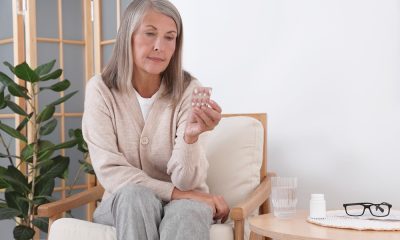






Brain fog in menopause is common but still poorly understood, with researchers calling for more work to explain the link and how best to support women.
For a new perspective article published in The Lancet Obstetrics, Gynaecology, & Women’s Health, researchers based in the UK and Australia reviewed the evidence on menopause-related cognitive symptoms. They found that symptoms such as forgetfulness, reduced concentration and brain fog are common during the menopause transition, but are still poorly recognised and under-researched.
More than two-thirds of women report difficulties with memory or concentration over the menopause transition. Multiple factors may contribute to these cognitive symptoms, including hormonal changes, sleep disturbances and psychological and psychosocial stress. Yet, because cognitive symptoms are not widely discussed, they can cause considerable worry, with some fearing they are signs of dementia or undiagnosed neurodevelopmental conditions.

The review paper emphasises that overall cognitive performance for women experiencing menopause-related brain fog typically remains within expected ranges and, importantly, that cognitive symptoms are not linked to an increased risk of dementia.
Professor Aimee Spector of UCL Division of Psychology and Language Sciences, co-author on the paper, said: “Cognitive symptoms such as forgetfulness and ‘brain fog’ are incredibly common during menopause, yet they are often overlooked. Our findings highlight just how complex menopause-related cognitive symptoms are, and how much we still don’t know about what drives them. More targeted research is essential if we are to identify which biological, psychological or lifestyle factors contribute most, and what types of support or treatment are likely to be effective.”
The authors argue that clinicians can play a key role in understanding and validating women’s experiences by asking about the duration of cognitive symptoms, impacts on day-to-day functioning and any other medical or psychosocial factors that could be contributing to cognitive symptoms.
The review also discusses a range of approaches that may ease cognitive symptoms, such as improving sleep quality, engaging in regular aerobic exercise and eating a balanced diet. There is also little but promising research into the impact of psychological therapies targeting cognitive symptoms, with a recent meta-analysis of three cognitive behavioural therapy-based studies showing significant improvements in memory and concentration. The evidence is more mixed for the benefits of hormone therapy on cognitive symptoms during menopause.
The authors identify cognitive symptoms as a major area of unmet need in menopause research. They call for a unified definition of menopause-related cognitive changes and for prospective, longitudinal studies that can track women from pre- to post-menopause. Better understanding of the biological, psychological and social factors that contribute to cognitive symptoms will be crucial for developing effective treatments.
Lead researcher Dr Caroline Gurvich of Monash University said: “There’s a lot of pressure to use objective measures of cognitive decline, like a memory test, for example, in a clinical trial, but the key symptom of brain fog is a subjective experience. So having a definition that acknowledges the key cognitive symptom is critical.”
This is not without precedent – we already use subjective or self-report measures for depression, anxiety and other mental health conditions with great success.
Dr Gurvich said the proposed definition would also validate women’s individual experiences while empowering them through the reassurance that any objective decline in their cognitive ability is subtle.
She added: “This is a decrease in cognitive or learning efficiency, not functionality or capacity. For many women, the perception they are losing capacity is what drives them to stop work or lose the confidence to live fulfilling lives during and after menopause. I hear all the time from women who have gone through menopause that validation would have made a significant difference to their resilience and the approach they took to living with menopause.”
Co-author Professor Martha Hickey of the University of Melbourne and Royal Women’s Hospital said: “Our analysis of the best available research shows that many women experience some degree of cognitive symptoms, such as brain fog, during the menopause transition.”
“But there’s a lack of long-term data, which means that there’s a gap in our knowledge about how the brain fog symptom develops and changes from peri-menopause to after menopause ends. It’s a real gap in our understanding.”
Professor Spector added: “We increasingly see women, typically at the peak of their careers, losing confidence in the workplace, often translating to leaving work or reducing work hours. Having simple strategies to support and retain them at work is also a broader economic issue.”


Article produced in association with Spital Clinic
Genitourinary syndrome of menopause (GSM) affects around one in two women after the menopause — and fewer than one in three of those affected ever bring it up with a doctor.
The condition covers a cluster of vaginal, urinary, and sexual symptoms caused by falling oestrogen levels during and after the menopause transition.
It is one of the most common and most treatable consequences of that hormonal shift, and yet it remains one of the least likely topics to come up in a clinical consultation.
What Is Genitourinary Syndrome of Menopause?
The term genitourinary syndrome of menopause replaced older descriptions like atrophic vaginitis and vulvovaginal atrophy because those names missed the point — this condition is not confined to the vagina.
It affects the entire lower genitourinary tract: the vulva, vagina, urethra, and bladder neck, all of which depend on oestrogen to maintain their structure and function.
As oestrogen levels fall during the perimenopause and drop further after the menopause, these tissues change in tangible ways.
The vaginal lining thins; mucus production decreases; vaginal pH rises, making bacterial imbalance more likely; and the cushioning fat tissue around the vulva diminishes.
Crucially, these changes are progressive — without treatment, they continue to worsen rather than settling on their own.
NICE guideline NICE guideline NG23: Menopause — identification and management, updated in November 2024, defines genitourinary symptoms as a core part of the menopause syndrome. The guidelines support active treatment across all severity levels — not just when symptoms are severe.
The Full Symptom Picture: Genital, Urinary and Sexual
Genital symptoms are the most widely recognised.
Vaginal dryness is the most common, affecting up to 93 per cent of women with GSM — and described as moderate to severe in 68 per cent of those affected.
Other symptoms include burning, itching, soreness, and unusual or offensive discharge caused by changes in the vaginal environment.
The tissue can become fragile enough to bleed from minor friction, including during a gynaecological examination.
Urinary symptoms arise because the urethra and bladder neck are equally dependent on oestrogen.
These include needing to urinate more often or urgently, waking in the night to urinate, pain or burning when urinating, recurrent urinary tract infections, and stress incontinence — leakage triggered by coughing, sneezing, or exercise.
Many women with recurrent UTIs are treated again and again with antibiotics without the underlying GSM ever being identified or addressed.
Sexual symptoms complete the picture: painful intercourse from reduced lubrication and tissue fragility, spotting or bleeding after sex, and reduced arousal, lubrication, and ability to orgasm.
These changes are physical in origin, not psychological — though if symptoms go unmanaged for long enough, the two often start to reinforce each other.
Prevalence data from North Tees and Hartlepool NHS Foundation Trust shows that vaginal dryness affects around one in four women in the lead-up to the menopause, rising to one in two after it, and approximately seven in ten women in their seventies.
Symptoms can begin during the perimenopause — well before periods have stopped.
Anyone noticing these changes can seek assessment through a GP or NHS sexual health service — or through a private gynaecology specialist.
Why GSM Does Not Improve Without Treatment
Unlike hot flushes and night sweats — which typically ease over two to five years — genitourinary symptoms do not improve over time and return once treatment stops.
They are chronic and progressive: the longer they go untreated, the more entrenched the underlying tissue changes become.
This makes the gap between prevalence and treatment especially significant.
Around 70 per cent of women with GSM symptoms never raise them with a healthcare professional, and only 4 per cent to 35 per cent use any form of treatment — partly from embarrassment, partly because many assume nothing can be done.
A condition with safe, effective, NICE-recommended treatments goes largely unmanaged.
First-Line Self-Care: Moisturisers, Lubricants and OTC Options
Vaginal moisturisers — such as Replens, Regelle, and Sylk gel — differ from vaginal lubricants: they are for regular, ongoing use (typically two to three times per week) to maintain tissue hydration.
They do not treat the underlying hormonal cause, but are effective at reducing dryness and discomfort and are NICE NG23-supported as first-line non-hormonal management.
Vaginal lubricants are for use during sexual activity. Water-based lubricants are compatible with latex condoms and diaphragms; oil-based products are not. Both are available over the counter and are a reasonable first step for mild or early symptoms.
NICE NG23 supports their use alongside vaginal oestrogen, and recommends them as the primary option when hormonal treatment is not suitable.
Vaginal Oestrogen and Prescription Treatments
For symptoms that persist beyond a few weeks of self-care, or that are moderate to severe from the outset, NICE NG23 sets out the evidence-based first-line treatment: offer vaginal oestrogen to anyone with genitourinary symptoms associated with the menopause — including those already using systemic HRT — and review regularly.
Vaginal oestrogen restores oestrogen levels in local tissue without significant absorption into the wider body.
NHS information on vaginal oestrogen confirms it does not carry the same risks as systemic HRT — the dose is low and very little reaches the general circulation, which matters for women who have been advised against systemic treatment. It comes as a tablet, pessary, cream, gel, or ring.
NICE NG23 specifically recommends vaginal oestrogen for women already using systemic HRT as well as those who are not — recognising that between 10 per cent and 25 per cent of women on systemic HRT still experience genitourinary symptoms that systemic treatment alone does not fully address.
Two further prescription options are available for women who cannot use vaginal oestrogen or have not responded to it.
Prasterone — a DHEA vaginal pessary — is recommended by NICE NG23 when vaginal oestrogen or non-hormonal treatments have not worked or are not tolerated.
Ospemifene, an oral tablet, is recommended where locally applied treatments are not practical — for example, due to physical disability.
Choosing between these options involves a clinical review of individual history, any contraindications, and personal preference.
A BMS-accredited private menopause assessment can provide that review alongside a full discussion of treatment options.
On laser therapy: the RCOG Scientific Impact Paper No. 72 concluded that vaginal laser treatment for GSM should not be offered outside of randomised controlled trials, and NICE NG23 takes the same position.
For women with a history of breast cancer, non-hormonal moisturisers and lubricants come first; vaginal oestrogen may be considered if those are ineffective, but only with the involvement of the treating oncologist.
When to See a Doctor
The NHS recommends seeking assessment when genital menopause symptoms have persisted for more than a few weeks despite self-care, when they are affecting daily life or sexual function, or when they involve post-menopausal bleeding, unusual discharge, or recurrent urinary tract infections.
Post-menopausal bleeding always warrants prompt GP review. It should not be assumed to be friction-related or attributable to GSM without a clinical examination — it is a red flag symptom that requires investigation to rule out other causes.
Recurrent UTIs in a postmenopausal woman — particularly without an obvious cause — are worth assessing for an underlying GSM component, rather than treating with repeated antibiotic courses alone.
A GP can initiate first-line treatment; for more complex presentations or where initial management has not helped, a menopause specialist can offer a more thorough evaluation.
The shift from terms like atrophic vaginitis to genitourinary syndrome of menopause reflects something important: these are medical symptoms, not a normal inconvenience to be quietly endured.
Effective treatment exists at every level of severity — from OTC moisturisers through to NICE NG23-recommended prescription options.
Anyone whose symptoms are affecting quality of life can see an NHS GP, or book a private menopause assessment with a BMS-accredited specialist.
The gap is not in what medicine can offer — it is in how reliably those options reach the women who need them.
This article is produced for informational purposes only and does not constitute medical advice, diagnosis or treatment. Clinical guidance referenced reflects published NHS and NICE standards as at March 2026. Individual circumstances vary; readers are advised to consult a qualified healthcare professional before acting on any information in this article. This piece was produced in association with Spital Clinic, which provided background clinical information for editorial purposes. Hyperlinks to external sources are included for reference only and do not represent an endorsement of any product, service or organisation.












 Entrepreneur2 weeks ago
Three sessions that show exactly where women’s health is heading in 2026

 News4 weeks ago
Luna and Kindbody partner to bring data-driven insight to women’s health and fertility care

 News4 weeks ago
Femtech World Awards announces deadline extension

 Fertility4 weeks ago
Menstruation costs £20,359 a lifetime, sparking calls for Government action

 Menopause3 weeks ago
California plans US$3.4m menopause care overhaul

 News4 weeks ago
Halogen Ventures surpasses 100 investments in female-founded startups

 Menopause3 weeks ago
Watchdog bans five ads for women’s heath claims

 Pregnancy2 weeks ago
How NIPT has evolved and what AI NIPT means in 2026