





By Claire Pettengill, science intern and Jade Anstine, clinical AI intern, Ema EQ
Every year, Gallup asks Americans which professions they trust most. Every year, nurses win. Not doctors. Not scientists. Nurses. And if you spend any time thinking about why, the answer is not hard to find.
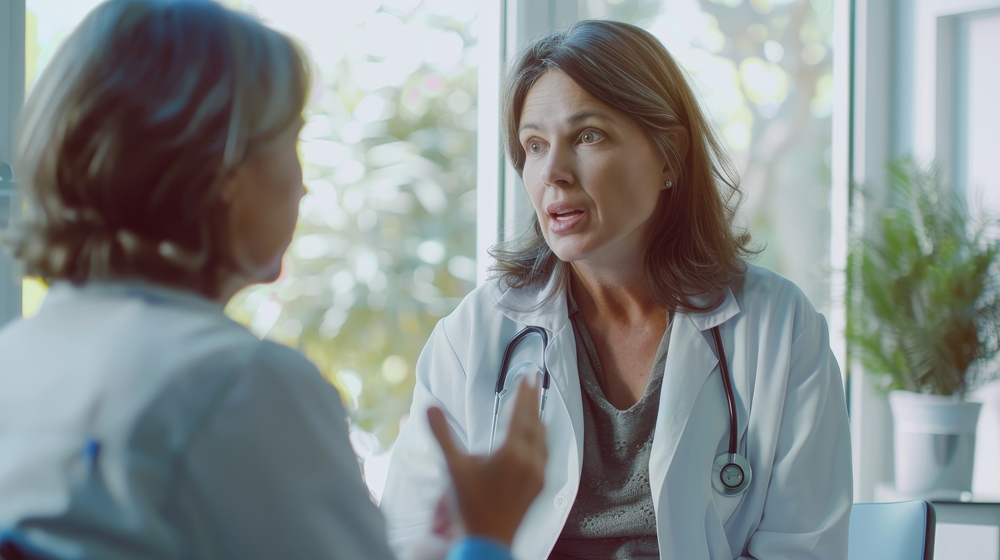
Medicine runs on the nurse noticing first. In other words, the diagnosis follows the nurse sounding the alarm. They ask questions that feel human, not procedural. They explain what is happening in language you can understand.
And, critically, they know when something is beyond their scope and get you to the right person without making you feel like a burden for needing more.
That is the model we built Ema on.
When we set out to build an AI companion for women’s health, we could have just built something that answers questions efficiently. Pattern matching. Fast retrieval. Clinically accurate outputs.
Those things matter, and Ema does all of them. But accuracy alone does not build trust, and trust is the entire game in healthcare.
A woman asking about her postpartum recovery, her fertility, or her breastfeeding supply is not looking for a search engine. She is looking for someone who will take her seriously.
Women’s concerns don’t just need to be ‘validated’; they also need to be believed. Dismiss a woman’s pain as anxiety once, and you’ve taught her to doubt her own body.
The nursing model of care is built on exactly that premise. It is care that is shaped by her story. It asks about context and symptoms.
It treats the person as a whole, and it recognises that the right answer is sometimes a referral, not a response.
We trained Ema to escalate. That may sound like a small thing, but in AI, it is a deliberate design choice.
Most AI systems are optimised to answer and maintain engagement. Ema is optimised to help, and sometimes helping means saying “you need to speak to a clinician” and making that path easy.
This matters especially in women’s health, where the clinical trust gap is well-documented.
In a 2022 nationally representative survey of over 5,000 women, nearly 1 in 3 reported that their doctor had dismissed their concerns, and 15 per cent said a provider simply didn’t believe them.
Women are more likely to have their symptoms dismissed, their concerns minimised, and their pain undertreated. Among women under 35, nearly half reported at least one of these experiences.
They have had to learn how to advocate within systems designed for efficiency, built on men’s health.
With Ema, every conversation is an opportunity to make a woman feel heard, informed, and directed to the right level of care, neither over-triaged nor undertreated.
The goal is not to replace clinicians. It is to create a trustworthy first point of support that listens carefully, explains clearly, recognises limits, and helps women move toward appropriate care.
The nurses who top those Gallup rankings every year earn that trust through consistency. They show up, listen, follow through, and know their limits.
Ema is simply that trust, built into technology. That is the standard we hold Ema to: a trustworthy presence that knows when to answer and when to hand off.
Medicine spent a long time teaching women not to expect to be believed. Ema is built by the people who never stopped listening.
Bios
Claire Pettengill is a psychiatric nurse and DNP-PMHNP candidate at Columbia University School of Nursing, specialising in women’s mental health across the lifespan and algorithmic justice – ensuring the AI tools shaping women’s care are built to actually listen. She joined Ema EQ as a science intern focusing on clinical safety standards for evaluating AI in women’s health.
Jade Anstine is a senior nursing student at Gustavus Adolphus College looking to bridge the gap between frontline medicine and digital health innovation. He joined Ema EQ as a Clinical AI Intern to assess the Ema AI model across different clinical populations, specifically pediatrics and LGBTQ+.

Newsletter
Sign up for free weekly updates
The latest femtech news, research and investment, straight to your inbox.




