



News
What 100k+ journalled words reveal about women’s mental load

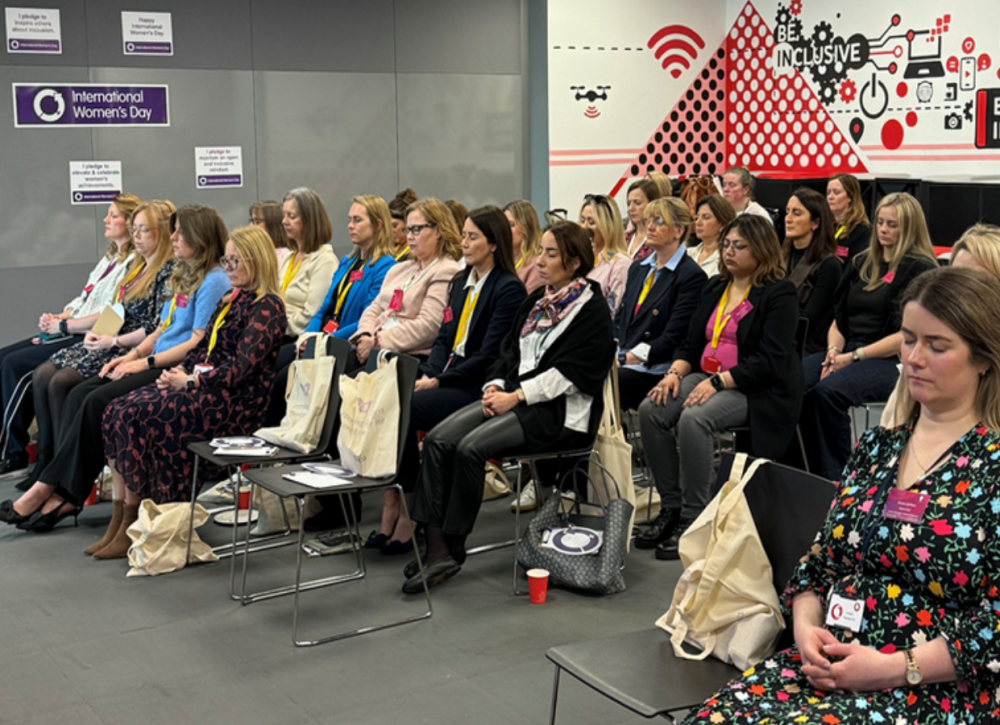
By Katrina Zalcmane, co-founder of Véa
101,000 journalled words. That’s what it took to make women’s mental load measurable – and what it revealed was not what we expected.
We can track a woman’s cycle to the hour, map her hormones, her fertility window, her sleep habits.
But we have had remarkably little structured visibility into the cognitive and emotional load running underneath all of it – the layer that shapes how she makes decisions, takes risks, recovers from pressure and moves through her day.
That’s where the data gets interesting.
Across those 101,000 anonymously journalled words, Véa identified the cognitive signatures of how pressure gets metabolised – not into symptoms, but into patterns.
Overgeneralisation, fortune-telling, catastrophising: the interpretive architecture through which strain quietly becomes self-doubt, avoidance and reduced capacity.
This is not a wellness story – it’s a data story. And it points to a layer of women’s health that has been consistently underinstrumented.
Véa is an neuroscience-backed AI journal that uses semantic embeddings and a state classifier trained on emotional data to read language the way a clinician might – not for keywords but for interpretive patterns.
Each entry is stored as an emotional vector, building a longitudinal map of how a user’s inner state shifts over time.
That is what made this dataset possible.
What the Data Shows
Mental load is often described in domestic terms – the remembering, the planning, the anticipating. But in practice it is also deeply interpretive.
It lives in the ongoing internal work of pre-empting what might go wrong, reading emotional atmospheres, managing self-presentation and correcting internally before anything external has even happened.
That is not just emotional strain. It is a form of continuous cognitive expenditure.
To make that visible, Véa analysed 101,000 anonymously journalled words across 150+ beta testers over 6 months.
These were not a homogenous group: new mothers, neurodivergent women, career-switchers, high performers navigating demanding roles – different lives, different pressures, same underlying patterns.
That breadth matters – it means what we found is not a niche signal. It is structural.
Across that dataset, Véa identified more than 3,000 separate instances of cognitive distortions – recurring interpretive patterns that emerge under pressure.
The five most frequently detected were overgeneralisation, fortune-telling, “should” statements, catastrophising and black-and-white thinking.
On paper these may sound like standard CBT terminology. But taken together they reveal something more significant than stress.
They show that a large part of women’s mental and emotional load is not only what women are carrying externally – it is how rapidly and repeatedly that load gets cognitively organised into threat, failure and self-correction.
What drains women is not just the event. It is the meaning-making around the event.
The Cost of Cognitive Distortions
Overgeneralisation: when one setback becomes a self-story
The most frequent pattern was overgeneralisation: turning one event into a broader conclusion.
One awkward meeting becomes “I’m not good enough”. One rejection becomes “this always happens to me”.
Under stress, the prefrontal cortex loses flexibility, making it harder to hold context and alternative interpretations.
The brain defaults to faster, simplified conclusions, often collapsing a single event into a broader narrative.
For high-performing women, this matters because it directly affects risk-taking and recovery. If one setback becomes a signal of incompetence, the cost of visibility increases.
This aligns with workplace data showing women are more likely to self-deselect from opportunities after negative feedback or perceived underperformance.
Overgeneralisation is not just negative thinking. It is a reduction in cognitive flexibility that limits forward movement.
Fortune-telling: managing problems before they exist
The second pattern was: predicting negative outcomes without evidence, e.g. “It’s going to go badly” or “They’re not going to respond” when you have no facts to back that up.
The brain operates on predictive models, continuously forecasting outcomes.
Under stress, these predictions become threat-biased and less accurate, prioritising avoidance over exploration.
For women, this overlaps with documented anticipatory mental load – the cognitive work of planning, monitoring and pre-empting problems.
The result is inefficiency: energy is spent solving for outcomes that have not occurred.
For high performers, this reduces focus, presence and execution quality because attention is allocated to imagined scenarios rather than current tasks.
“Should” statements: the language of self-surveillance
“Should” statements reflect top-down self-monitoring where behaviour is continuously evaluated against internalised standards. Under sustained pressure, this shifts from regulation to self-criticism, increasing cognitive load.
For women, these standards are often compounded. Performance, emotional regulation and relational behaviour are all being evaluated simultaneously.
Workplace data shows women face higher expectations to balance competence with likability and are more likely to experience competence-based microaggressions.
This creates a loop of self-surveillance, splitting attention between doing and evaluating.
That split is cognitively expensive.
Catastrophising: when the system defaults to threat
Catastrophising reflects rapid escalation to worst-case scenarios.
Under cognitive load, the brain shifts toward amygdala-driven threat processing, reducing the ability to hold ambiguity and increasing urgency-based interpretation.
For high-performing women managing multiple demands, even small uncertainties can trigger escalation because they are processed on top of existing load.
The outcome is distorted prioritisation. Attention is redirected toward perceived threats rather than actual strategic work.
Black-and-white thinking: the rigidity behind perfection
The final major pattern was black-and-white thinking: interpreting situations in binaries, e.g “I’m either doing well or failing”.
It reflects reduced cognitive flexibility, a key function of the prefrontal cortex that allows for nuance and adaptive thinking.
It makes recovery harder and leaves very little room for partial progress, mixed feelings or ordinary human inconsistency.
For high-performing women, this often intersects with perfection pressure. Partial progress is discounted and anything below optimal performance is interpreted as failure.
This creates rigidity. It limits iteration, slows decision-making and makes sustained performance harder, not better.
What This Actually Means
Clinical surveys can tell you a woman is stressed. Journalling treated as longitudinal data tells you something different – it shows you how that stress is being interpreted, repeated and compounded over time.
A survey captures a moment. Language tracked across weeks and months captures a pattern.
That distinction is what makes this dataset structurally different from existing research: it surfaces the cognitive layer that self-report instruments are not designed to reach.
For corporate health and wellbeing
These patterns do not stay at home.
Overgeneralisation after a difficult meeting, fortune-telling before a high-stakes presentation, black-and-white thinking under performance pressure – these are showing up in the workplace every day, invisibly.
For organisations investing in women’s development and retention, this data reframes the conversation.
It is not enough to offer resilience training or mental health days.
The question is whether your wellbeing infrastructure is designed to address the interpretive load that sits underneath performance and whether the interventions you offer are actually built around how women experience that load.
Because that is where capacity is actually being lost.
For clinical and health frameworks
The most widely used depression screener in the world is nine questions long. It captures a snapshot.
What longitudinal language data offers is something clinical instruments have never been designed to provide – continuity.
A running record of how cognitive patterns shift, accumulate and respond to pressure over time, before they become a diagnosis.
That has real implications for how we screen, how we intervene early and how we build a picture of women’s mental health that goes beyond the biological and into the cognitive.














A new Female Health Hub launched by the English FA will support women and girls in grassroots football in England with trusted advice on health issues affecting play.
The hub brings together expert-backed guidance, practical tools and player insights in one place, giving women and girls practical advice and reassurance on female health in football.
It has four core aims: to help women and girls better understand their bodies and how female health affects performance and participation, to educate players on key health topics and when to seek further advice or support, to provide practical strategies to help navigate common female health challenges, and to help break down taboos and normalise conversations around female health in football.

Users of the hub will also be able to hear directly from members of the England women’s national team, who share their own experiences of navigating female health matters while playing at the highest level of the game.
“Our ambition is to create a game where women and girls can thrive,” said Sue Day, the FA’s director of women’s football.
“To achieve that, it’s essential that players feel supported in environments that understand and respond to their female health needs.
“We’ve heard directly from grassroots players that they want better information and support around female health, but that they often don’t know where to find it.
“The launch of the Female Health Hub marks an important step in changing the landscape.
“We want every player to feel confident in her own skin and supported without judgment, so she can feel empowered by her body, rather than held back by it.”
The platform was launched following research conducted by the FA that highlighted the need for better education and support around female health in football.
According to the FA, 88 per cent of adult players surveyed said their menstrual cycle has an impact on their ability to train or play, but 86 per cent reported they had never received education about the menstrual cycle in relation to football performance and training.
The research also found 64 per cent of women experience issues related to sports bras or breast health while playing football, despite sports bras being considered one of the most important pieces of playing kit.
Players also expressed strong interest in learning more about injury prevention, at 87 per cent, nutrition, at 84 per cent, and mental health, at 77 per cent, in relation to female health.
The first phase of the Female Health Hub focuses on three of the most requested topics: menstrual health, breast health and injury resilience, with further content to follow, including nutrition and pelvic health guidance.

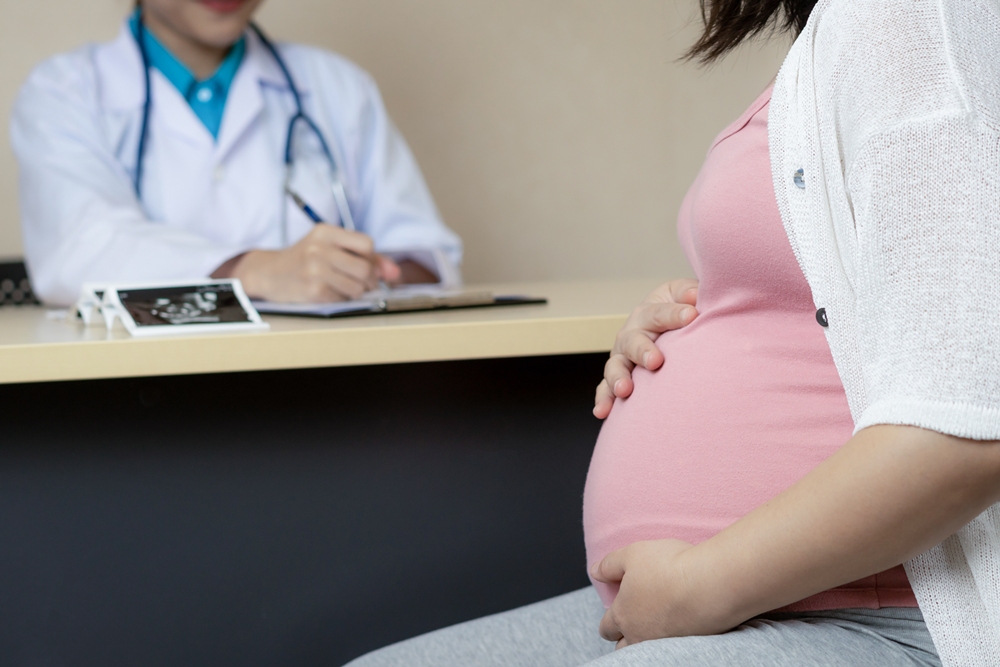


Article produced in association with London Pregnancy Clinic and Jeen Health
For the majority of couples planning a pregnancy, genetic testing is not something they think about until a problem arises.
Pre-conception genetic carrier screening challenges this approach by identifying risk before pregnancy begins.
As panel sizes have grown and at-home testing options have become widely available, carrier screening is transitioning from a niche clinical referral into a mainstream component of reproductive planning.
What Carrier Screening Tests For
Being a carrier of a genetic condition means carrying one copy of a variant in a gene associated with that condition, without being affected by it.
In most cases, carriers are entirely unaware of their status.
The clinical significance of carrier status emerges when both members of a couple carry a variant in the same gene: in this scenario, each pregnancy carries a one in four chance of resulting in a child who inherits two copies of the variant and is affected by the condition.
The conditions most frequently included in expanded carrier screening panels include cystic fibrosis, spinal muscular atrophy (SMA), fragile X syndrome, sickle cell disease, and a range of metabolic and enzyme deficiency disorders.
The Beacon 787 carrier test, offered by Jeen Health, screens for 787 conditions from a single sample, making it one of the most comprehensive panels currently available to UK families.
Who Is Most Likely to Benefit
Any couple planning a pregnancy can consider carrier screening. It is particularly relevant for:
- Couples with a family history of a known inherited condition
- Those from populations with higher carrier frequencies for specific conditions, including Ashkenazi Jewish, South Asian and African communities
- Couples pursuing fertility treatment, where genetic information informs treatment planning
- Those who wish to have the most complete picture of their reproductive health before conception
Importantly, being a carrier of a condition does not mean a child will be affected. It means there is a defined statistical risk that can be quantified, discussed and planned for with appropriate clinical support.
How the Test Is Performed
Carrier screening is typically carried out on a blood or saliva sample.
For at-home options such as the testing offered by Jeen Health, a cheek swab collection kit is dispatched to the patient, the sample is returned by post, and results are delivered digitally within a defined turnaround period.
In-clinic carrier testing may use a blood draw and provides the advantage of immediate access to a clinical consultation at the point of result delivery.
London Pregnancy Clinic offers genetics counselling through its partnership with Jeen Health, allowing couples to receive and contextualise carrier test results with expert support.
Genetic counselling before and after testing is recommended by Genomics England as a standard component of any genomic testing pathway.
What Happens If Both Partners Are Carriers
If both partners are identified as carriers for the same autosomal recessive condition, they are typically offered further counselling to discuss their options.
These may include proceeding naturally with an awareness of the risk, using prenatal diagnosis (CVS or amniocentesis) during pregnancy to test the fetus, or pursuing preimplantation genetic testing (PGT) in the context of IVF, which allows unaffected embryos to be selected before transfer.
The purpose of identifying carrier status before pregnancy is to give couples time to consider these options without the added pressure of an ongoing pregnancy.
Knowledge of carrier status does not remove reproductive choices; it expands the information available when making them.
The Role of Pre-Conception Services
Carrier screening sits within a broader category of pre-conception care that includes fertility assessments, general health optimisation and, where relevant, management of existing conditions before pregnancy begins.
London Pregnancy Clinic offers pre-conception services encompassing fertility investigations, genetics counselling and carrier testing as part of an integrated 0th trimester approach, allowing couples to address genetic and clinical risk factors before their pregnancy starts rather than after.
Disclaimer: This article is produced for informational purposes only and does not constitute medical advice, diagnosis or treatment.
Clinical guidance referenced reflects published NHS, NICE and RCOG standards as at March 2026. Individual circumstances vary; readers are advised to consult a qualified healthcare professional before acting on any information in this article.
This piece was produced in association with London Pregnancy Clinic and Jeen Health, which provided background clinical information for editorial purposes.
Hyperlinks to external sources are included for reference only and do not represent an endorsement of any product, service or organisation.











 Entrepreneur2 weeks ago
Three sessions that show exactly where women’s health is heading in 2026

 Menopause4 weeks ago
California plans US$3.4m menopause care overhaul

 Menopause3 weeks ago
Watchdog bans five ads for women’s heath claims

 Pregnancy2 weeks ago
How NIPT has evolved and what AI NIPT means in 2026

 Entrepreneur3 weeks ago
WHIS USA 2026 announces first ticket release for landmark Women’s Health Innovation Summit

 Menopause4 weeks ago
Menopause has no lasting impact on cognition, research finds

 News2 weeks ago
Two weeks left to make your mark in women’s cardiovascular health

 Opinion3 weeks ago
Q1 momentum: Female founders are advancing, but the system still hasn’t caught up