



News
‘It ignores the reality’: experts react to controversial US maternal health study
Experts have questioned a new study challenging the extent of the US maternal health crisis

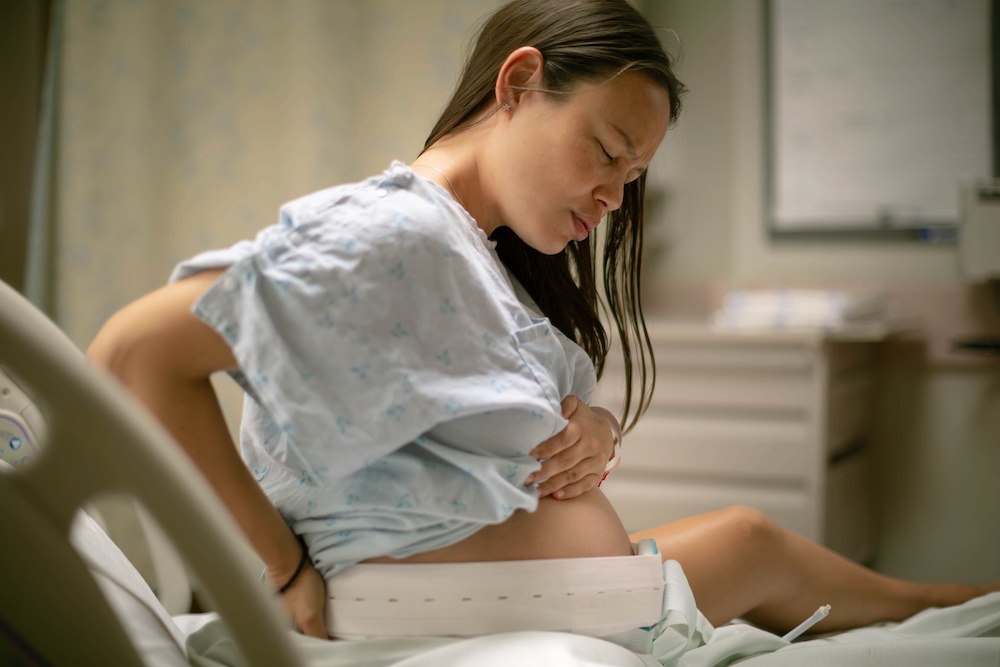
One study alone does not reverse a body of research, experts have warned, after a new paper has called into question the high maternal mortality rates in the US.
The report has challenged the scale of the maternal health crisis in the US, claiming that data classification errors have “inflated” maternal death rates for two decades.
It said that a change in the way pregnancy was noted on death certificates 21 years ago to improve the detection of maternal deaths led to “substantial misclassification” and an “overestimation of maternal mortality”.
Instead of the maternal death rate more than doubling since 2002, it has remained flat, the paper found.
However, experts have told Femtech World that blaming methodology differences around how mortality calculations are done ignores the harsh reality of what women giving birth in the US face.
“The reality is that mortality rates are a very narrow representation of the maternal health crisis in the US — they simply do not reflect the severity of the problem,” said Anu Sharma, founder and CEO of California-based maternity clinic Millie.
“Regardless of whether or not this specific data has been miscalculated, we undoubtedly have high rates of maternal morbidity, with nearly 50,000 near misses a year, as well as high rates of C-sections, preterm births, NICU stays and poor maternal mental health. On top of that, racial disparities for Black birthing people are significant, as this study continues to affirm.
“None of this is getting better in the face of the massive OB/GYN shortages we’re seeing nationwide, with labour and delivery unit closures happening daily.
“Reducing the US maternal health crisis to methodology differences around how mortality calculations are done, ignores the harsh reality of what mothers giving birth in the US face today.”
Dr Alison Cowan, OB/GYN and head of medical affairs at Mirvie, said: “The Centers for Disease Control and Prevention (CDC) and American College of Obstetrics and Gynecologists publicly disagreed with this analysis. The CDC specifically stated that they feel the paper underestimates maternal mortality.
“What no one is disputing is maternal health is in crisis and we need to devote more resources, not fewer, to solve these challenges.”
Dr Linda Genen, chief medical officer at ProgenyHealth, described the world of data analysis and reporting as challenging, and said that it is frequently hard to have consensus around methodology.
“The article and resulting statements by the CDC and ACOG are case in point. One study alone does not reverse a body of research,” she explained.
Regardless of the various reporting approaches, she said, the United States continues to have a problem that it should strive to solve.
“Having a stable maternal mortality number versus a rising maternal mortality number is not the key issue. The primary issue is that we have maternal death rates in a developed nation that is higher compared to other wealthy countries.”
Dr Sarah Oreck, reproductive psychiatrist and co-founder of Mavida Health, said what is inferred when evidence like this comes out is that maternal deaths are really not a problem. In reality, the findings paint a different picture.
“When you look under the hood of this study, the authors are arguing that maternal mortality only rose slightly over a 20-year period, but the trend that is hidden in those averages is a 17 per cent decrease in direct obstetrical deaths, from complications such as preeclampsia, corresponding with improvements in obstetrical care, but also a 45 per cent increase in indirect obstetrical deaths, from mental health disorders such as substance use and suicide, and a 329 per cent increase in late maternal deaths.
“These data points suggest that while we have been doing a better job of catching and treating physical disorders of pregnancy and birth in the last 25 years, our attention to mother’s mental health and the ongoing care of mothers following a delivery has been precipitously declining.”
Oreck said any movements towards better data collection should be celebrated but she warned that it is vital not to lose sight of how much still needs to change to better support mums and children.
To receive the Femtech World newsletter, sign up here.











You have until Friday to nominate your femtech company of the year.
The award is one of 10 featuring at Femtech World’s third annual awards event, which attracts entries from across the UK, EU and Europe.
The Company of the Year Award is for companies that have demonstrated exceptional leadership in tackling women’s health needs through groundbreaking products, services or platforms that are shaping the future of global femtech.

If your company is driving innovation, impact and growth in this space, this award was made for you.
About the sponsor: Femovate
The category is backed by Femovate, the global femtech incubator using design to fuel innovation across every stage of a woman’s health journey, from proactive prevention through to personalised treatment.
Femovate has invested over US$2 million in design capital, working side-by-side with founding teams to bring market-ready solutions to life.
The startups it supports have collectively raised US$120 million, launched 30 products, and secured seven FDA clearances.
Why enter?
The Femtech World Awards are free to enter.
Winners and shortlisted companies receive extensive coverage across all Femtech World platforms.
Winners will also receive a trophy and the opportunity to be featured in an interview for the publication.
Find out more about the Femtech World Award and enter here by 4pm BST on Friday 17.

Women with osteoporosis may be more likely to carry a gene linked to Alzheimer’s, according to new research.
Scientists found that APOE4, the most common genetic risk factor for Alzheimer’s, can weaken bone quality in women, even when standard scans appear normal.
The study, carried out by researchers at the Buck Institute for Research on Ageing in California, US, and UC San Francisco, suggests the gene may damage bone at a microscopic level long before any visible signs.
These changes can emerge as early as midlife and remain invisible to routine imaging tests used to assess bone strength.
The findings suggest a link between Alzheimer’s risk and skeletal health and could help pave the way for earlier detection of both conditions.
Professor Birgit Schilling, a senior author of the study, said: “What makes this finding so striking is that bone quality is being compromised at a molecular level that a standard bone scan simply will not catch.
“APOE4 is quietly disrupting the very cells responsible for keeping bone strong – and it is doing this specifically in females, which mirrors what we see with Alzheimer’s disease risk.”
Doctors have long observed that people with Alzheimer’s suffer higher rates of bone fractures, while osteoporosis in women is known to be one of the earliest predictors of the disease.
Now scientists believe they may have uncovered why.
Researchers led by Dr Charles Schurman carried out a detailed analysis of proteins in aged mouse bone and found that tissue was unusually rich in molecules linked to neurological disease, including those associated with Alzheimer’s.
In particular, long-lived bone cells known as osteocytes showed elevated levels of APOE, with levels twice as high in older female mice compared with younger or male animals.
Further experiments using genetically modified mice revealed that APOE4 had a strong and sex-specific impact on both bone and brain tissue.
The disruption at the protein level was even greater in bone than in the brain.
However, the bone structure itself appeared completely normal under scans.
Instead, the gene interfered with a key maintenance process inside bone cells, preventing them from repairing microscopic channels that keep bones strong and resilient.
When this process breaks down, bones become more fragile even if they look healthy on standard imaging.
These results suggest bone cells could potentially act as early biological warning signs of cognitive decline in women carrying APOE4.
Professor Lisa Ellerby, another senior author, said: “We think targeting these cells may open a new front in preserving bone quality in this population.”
Experts say the findings highlight the need to view the body as an interconnected system rather than treating diseases in isolation.
Dementia, of which Alzheimer’s is the most common form, remains one of the UK’s biggest health challenges.
Around 900,000 people are currently living with the condition, a figure expected to rise to 1.6 million by 2040.
It is already the leading cause of death, responsible for more than 74,000 deaths each year.













 Entrepreneur2 weeks ago
Three sessions that show exactly where women’s health is heading in 2026

 News4 weeks ago
Luna and Kindbody partner to bring data-driven insight to women’s health and fertility care

 News4 weeks ago
Femtech World Awards announces deadline extension

 Fertility4 weeks ago
Menstruation costs £20,359 a lifetime, sparking calls for Government action

 Menopause3 weeks ago
California plans US$3.4m menopause care overhaul

 News4 weeks ago
Halogen Ventures surpasses 100 investments in female-founded startups

 Hormonal health3 weeks ago
Watchdog bans five ads for women’s heath claims

 Pregnancy2 weeks ago
How NIPT has evolved and what AI NIPT means in 2026
3 Comments