




Diagnosis
At-home cervical cancer screening device demonstrates comparable performance to clinic-based testing in major US trial
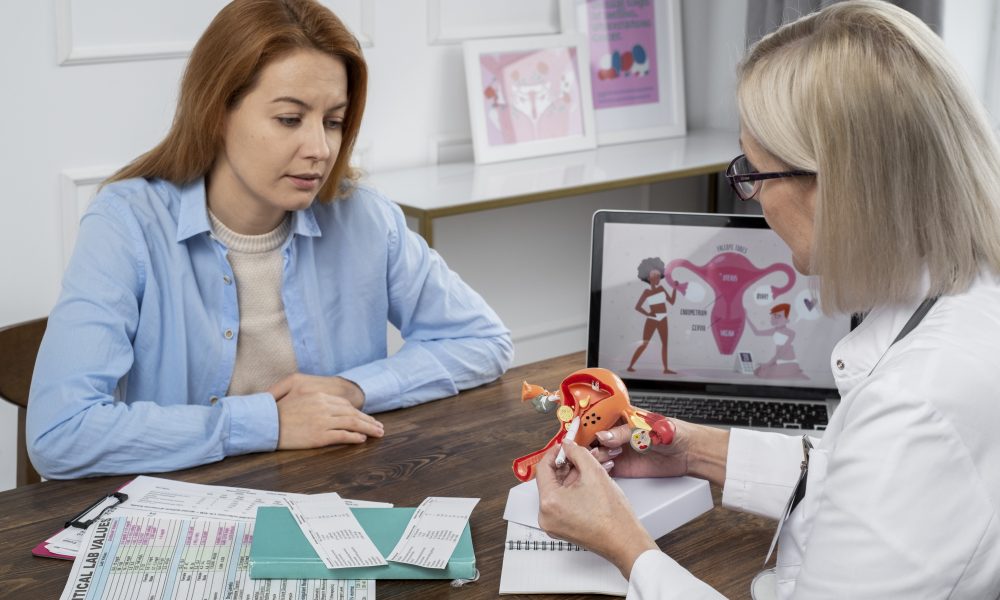
A self-collection device for cervical cancer screening has shown equivalent effectiveness to traditional clinic-based testing, according to new research that could help address screening gaps affecting women’s health outcomes.
The SELF-CERV trial, which validated the Teal Wand device across 16 medical sites in the United States, found that self-collected samples detected precancer 96 per cent of the time with comparable performance to clinician-collected samples.
The study was led by researchers at the University of Colorado School of Medicine.
Christine Conageski is associate professor of obstetrics and gynaecology and principal investigator for the trial.
Conageski said: “Studies have shown that half of new diagnoses of cervical cancer are those that were not screened in the preceding five years.
“That tells us that cervical cancer has really become a disease of access: access to the vaccine for prevention, access to cervical cancer screening, and follow up management of the first abnormal screen.”
The US Food and Drug Administration approved the Teal Wand in early May following completion of the trial, which involved more than 600 participants who received mailed kits with instructions for easy sample collection and return to laboratories.
Researchers estimate that a quarter of women are not up to date on their cervical cancer screening, commonly known as a pap smear.
Current US guidelines recommend screening every three years for women aged 21 to 29 years and every five years for women aged 30 to 65 years.
Conageski, who is also a physician at the CU Cancer Center, said: “We’ve not seen the number of cervical cancer cases in the US budge in the better part of five years, and it’s because screenings are not reaching those who are at greatest risk.”
The trial revealed significant barriers to clinic-based testing, with 32 per cent of participants reporting delays due to time constraints, 32 per cent citing discomfort with examinations, and 32 per cent noting financial issues as reasons for delay.
The at-home device appeared to address many of these concerns, with 86 per cent of participants saying they would be more likely to stay up to date with screening if they could complete it at home. Over 90 per cent said they preferred the self-collection method.
Conageski said: “With the Teal Wand, it took 90 per cent of patients less than five minutes to complete the sample collection and 60 per cent of patients less than two minutes, so it’s a quick and easy process.
“You can fit this into your schedule, whenever that may be, and avoid having to schedule an appointment,”
Cervical cancer is typically linked to certain types of human papillomavirus (HPV), which is transmitted through sexual contact.
“While many people are infected with HPV, only a small percentage develop cervical cancer, making early screening crucial for detection and intervention.
Conageski said: “If we can make screening more accessible to those that we’re not currently reaching, that is ultimately going to drive cervical cancer rates down, because cervical cancer is an almost 100 per cent preventable cancer,”
The researchers suggest that widespread implementation could benefit both patients and healthcare systems, allowing physicians to focus on other aspects of patient care during visits whilst maintaining confidence in screening reliability.
Diagnosis
FDA approves AstraZeneca breast cancer drug
Pregnancy
New universal heart attack definition could transform care for women
Diagnosis
Ark Surgical secures further institutional backing to accelerate US expansion

Women’s health medical device company Ark Surgical has secured further institutional backing from JNF and the Israel Innovation Authority (IIA) as it accelerates the US commercial expansion of its surgical tissue containment technology.
Both organisations have previously backed Ark, making the renewed support a significant vote of confidence in the company’s technology, leadership team and commercial strategy as it moves into its next stage of growth.
The new backing comes alongside Ark Surgical’s ongoing Series A financing round, which has also attracted investment from physicians and experienced medical device executives, adding further industry validation as the company builds its US commercial presence.
The Israel Innovation Authority, Israel’s public agency supporting technological innovation, selected Ark Surgical for additional non-dilutive funding following an extensive evaluation process.
The assessment examined the unmet clinical need addressed by Ark’s technology, its clinical results, business and US go-to-market strategy, Israeli and US teams, execution against milestones and future product pipeline.
JNF, which supports economic development and community-building initiatives in Israel, has also increased its previous backing of Ark Surgical.
The relationship has particular significance given Ark’s roots in northern Israel. The company is headquartered near Nazareth in the Galilee and plans to continue strengthening its manufacturing capabilities in the region as its commercial presence in the US grows.
Together, the continued institutional support and investment from experienced healthcare leaders reflect growing confidence in Ark’s technology and its strategy for US expansion.
Stav Tori, CEO of Ark Surgical, said: “Having organisations that already know Ark, our technology and our team choose to support us again is particularly meaningful.
“It reflects our ability to consistently achieve the clinical, regulatory and commercial milestones we set and gives us additional resources to accelerate our expansion in the US.
“Our ambition goes beyond bringing another medical device to market.
“We want to help establish a higher standard of surgical safety for women undergoing minimally invasive procedures.”
Addressing an overlooked risk in women’s surgery
At the centre of Ark’s expansion is LapBox, the company’s FDA-cleared dual-wall tissue containment system developed to address an important safety challenge in minimally invasive gynecologic surgery.
Procedures such as hysterectomy and myomectomy can require large uterine specimens or fibroids to be divided into smaller pieces so they can be removed through small laparoscopic incisions.
This process, known as morcellation, carries a risk of disseminating tissue within the abdominal cavity.
In rare cases where an unsuspected malignancy is present, morcellation can spread malignant tissue and potentially worsen a patient’s prognosis.
But the risk is not limited to cancer.
Even benign uterine tissue can implant elsewhere in the abdominal cavity and grow, potentially resulting in complications such as parasitic fibroids and the need for additional treatment.
LapBox was developed as a dual-wall, bag-in-bag containment system that creates a secured chamber for tissue extraction. The device is FDA-cleared for use with both manual and power morcellation.
From clinical innovation to US adoption
Ark Surgical is now moving beyond its clinical and regulatory milestones to focus on broader commercial adoption.
LapBox™ has already been used in hundreds of procedures, while Ark has been expanding its presence within US hospitals and building relationships with leading minimally invasive gynecologic surgeons.
The latest institutional backing will support the next stage of that strategy, including additional hospital partnerships, key opinion leader engagement, sales leadership and clinical support.
Joseph LaBruzzo, President and CEO of U.S. Operations at Ark Surgical, said: “Ark has reached an important point in its development.
“We have the regulatory clearance, growing clinical experience and increasing engagement from US surgeons and hospitals.
“The focus now is execution and scale.
“What makes this continued backing particularly meaningful is that these are organizations that have followed Ark’s development and seen the team deliver against its objectives.
“Their decision to support the company again provides further validation as we build the commercial and clinical infrastructure needed for broader US adoption.”
That growing adoption is also being reflected in the experience of surgeons using LapBox.
Dr Ramon Yera, a minimally invasive gynecologic surgeon with more than 35 years of experience, said: “Once surgeons use LapBox, they realize this is the bag they should be using for their bread-and-butter procedures.”
Yera believes this reflects a broader shift in expectations around tissue containment in gynecologic surgery.
“Containment is no longer optional. It is an expectation.”
Ark Surgical is continuing its Series A financing round, with additional capital intended to support the next phase of US commercial expansion and development of its broader product pipeline.
Further information for prospective investors is available at ark-surgical.com/investment
Hormonal health2 weeks agoMajor UK study could be a ‘game-changer’ for heavy periods and endometriosis
Entrepreneur5 days agoKOVE Medical raises €1.7 million to improve safety of foetal surgery
Events2 weeks agoOne week left to apply: W Accelerate with Merck KGaA and M Ventures
Pregnancy6 days agoUK study aims to transform maternity care for high-risk pregnancies
Menopause2 weeks agoQuarter of women miss work due to menstual symptoms, survey finds
Mental health1 week agoPMDD after SSRIs or hormones: Why the brain may be the missing treatment target
Diagnosis1 week agoArk Surgical secures further institutional backing to accelerate US expansion
Insight2 weeks agoStudy to tackle years-long delays in endometriosis diagnosis



