




Wellness
Common fatty acid may help restore healthy vaginal bacteria after infection

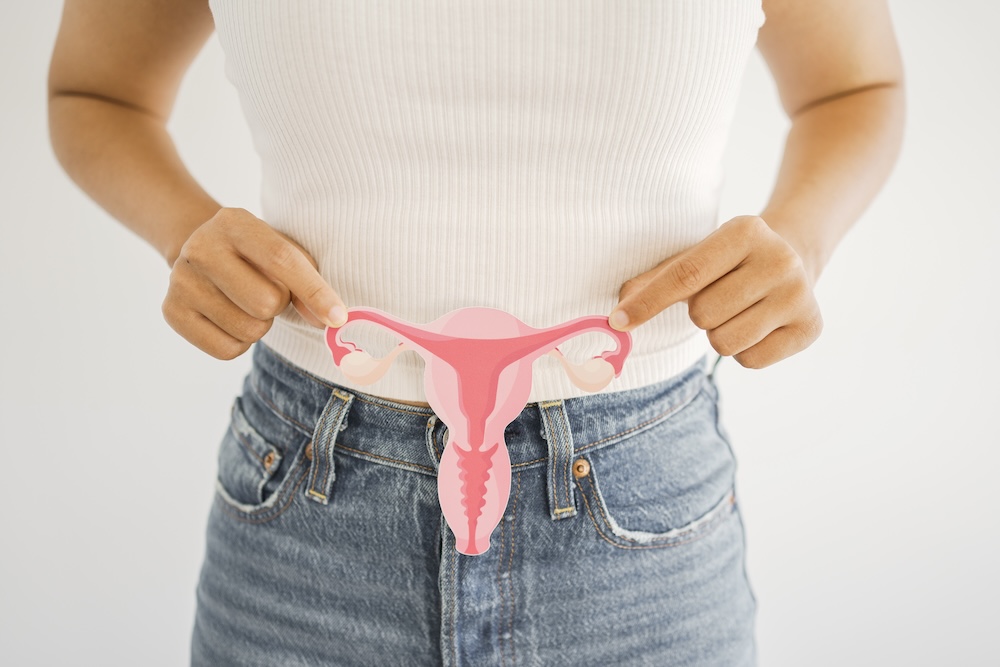
More than half of women globally experience bacterial vaginosis (BV) — an imbalance of naturally occurring microbes in the female genital tract — at least once in their life.
The condition can cause painful symptoms and vaginal discharge, and although treatable with antibiotics, it frequently comes back within a short time. If left untreated, BV can lead to problems with pregnancy and an increased risk of sexually transmitted infections, including HIV.
A team of researchers at the Broad Institute of MIT and Harvard; the Ragon Institute of Mass General Brigham, MIT, and Harvard; and St. Jude Children’s Research Hospital have discovered that oleic acid, one of the most abundant fatty acids in the body, restores a healthy balance of vaginal microbes in a laboratory model of BV.
Their findings, published in Cell, demonstrate that oleic acid and several other unsaturated long-chain fatty acids (uLCFAs), which are critical components of cell membranes and can have antimicrobial properties, simultaneously inhibit the growth of vaginal microbes associated with negative health effects and promote other species associated with a healthier female genital tract.
Treatments that promote this balance of microbes could one day help prevent repeat vaginal infections in people.
“Current treatment methods work as well as a coinflip, and that hasn’t changed in more than 40 years of medical practice, so new methods are needed to help patients” said first author Meilin Zhu, who recently graduated with a PhD from the labs of Paul Blainey, a Broad core institute member and MIT professor, and Doug Kwon, a core member of the Ragon Institute, associate professor of medicine at Harvard Medical School, and an infectious disease physician at the Massachusetts General Hospital, both co-senior authors on the paper.
“I’m so proud of this team and the partnership we formed to follow the science and set up some major positive impacts on women’s health,” Blainey said.
“This is an amazing story of keen observation, serendipitous discovery, and the hard work that real scientific rigour demands.”
Metabolic differences
The human female genital tract is naturally colonized by microbial species in the Lactobacillus genus. Treating BV with antibiotics can shift the balance of lactobacilli toward an overabundance of Lactobacillus iners, a bacterial species that creates an environment that is more susceptible to BV recurrence.
Zhu sought methods of promoting Lactobacillus crispatus, a species that creates a more stable microbiome than L. iners. She planned to use a large-scale screen developed in the Blainey lab to study the impacts of different compounds on the bacteria.
But Zhu discovered an important clue even before she began the screening. A component of the culture medium used to grow lactobacilli in the lab was disrupting the screening tool, but the bacteria would not grow in culture without it.
While troubleshooting the issue, Zhu found that many of the lactobacilli required an ingredient in the medium — oleic acid — to thrive. When she cultured different strains of lactobacilli with oleic acid, she found that oleic acid inhibited growth of L. iners, the detrimental bacteria, and simultaneously promoted the growth of strains associated with healthier microbiota such as L. crispatus.
Using RNA sequencing and working with the Broad’s Metabolomics Platform and collaborators at St. Jude’s, the team identified a group of genes involved in processing uLCFAs that are present only in the non-Lactobacillus iners species.
One of these genes encodes the enzyme oleate hydratase, which sequesters uLCFAs, a scarce resource, into a form only bacteria with this enzyme can use. Another of the genes encodes a fatty acid efflux pump that is necessary for bacteria to withstand high concentrations of oleic acid.
“We used state-of-the-art genetics tools that a lot of researchers in vaginal microbiology haven’t had access to, even though they’re the gold standard for any mechanistic study,” Zhu said.
“It’s a good step forward for the field.”
She added that the field of vaginal microbiology does not receive the same resources as other areas of microbiology.
The team also modeled how oleic acid might affect the vaginal microbiome of BV patients by culturing bacteria associated with BV together with L. iners and L. crispatus. Oleic acid effectively inhibited growth of L. iners as well as most BV-associated bacteria, including some strains resistant to standard antibiotic treatment.
This indicates oleic acid may be an effective way to restore a stable, healthy microbiome in the female genital tract after BV.
“This study is an important example of how understanding core metabolic requirements and functions of key bacteria can lead directly to new therapies that allow us to modify the microbiome for improved health,” said co-senior author Seth Bloom, an infectious diseases instructor at the Massachusetts General Hospital.
At the Ragon Institute, Kwon’s lab is working to move this research toward a human clinical trial.
“We believe there is exciting potential to translate these findings to durably alter the vaginal microbiome to improve BV treatment and reduce adverse health outcomes for women globally,” Kwon said.











Weight loss surgery was linked to more regular periods and fewer polyendocrine metabolic ovarian syndrome (PMOS) symptoms in women aged 18 to 45 living with obesity in a recent study.
The researchers recommend that women undergoing the procedure have access to preconception care and reproductive counselling to support their reproductive health.

Researchers at the University of Surrey analysed data over 24 months from 84 women who underwent bariatric surgery and 18 women living with obesity who did not have surgery.
Of those who underwent surgery, 49 had gastric bypass procedures and 35 had gastric sleeve surgery.
Women who underwent metabolic bariatric surgery lost more than 30kg on average at 12 and 24 months after the procedure.
Among women with polycystic ovaries, the condition persisted in only 10 per cent after 24 months.
Women also reported a resolution of clinical hirsutism, or excess body hair, by 12 months.
Women who had previously experienced irregular periods reported more regular menstrual cycles after surgery.
Professor Martin Whyte, co-author of the study and professor of metabolic medicine at the University of Surrey, said: “A large proportion of those undergoing bariatric surgery are women of reproductive age, who may be planning a pregnancy in the coming years.
“So much remains unknown about the impact of this type of surgery on women who are planning to have children.
“This raises the question of when the ideal time after surgery is to conceive.”
Women have a higher prevalence of obesity than men, with 57 per cent of women in the UK classified as overweight and 27 per cent living with obesity, which can affect fertility and the health of an unborn baby.
The researchers said 17 women had healthy pregnancies following surgery.
Although this was not specifically examined in the study, no difference in birth weight was observed between babies conceived within or after the first year.
Dr Kathryn Hart, co-author of the study and associate professor in nutrition and dietetics at the University of Surrey, said: “What we have found is that bariatric surgery positively affects the reproductive health of women living with obesity and can improve the likelihood of them having a healthy pregnancy after surgery.
“Dysregulated hormone levels, irregular periods and conditions such as polycystic ovaries are affected by obesity.
“By reducing this, what we have seen is that it can lead to improvements without the need for medication.
“We would suggest that clinicians consider medical intervention for obesity to treat irregularities in the menstrual cycle and issues with fertility.”


Young women are more likely than young men to get health and wellness information from social media influencers, a US survey has found.
Among adults aged 18 to 29, 57 per cent of women said they received health and wellness information from influencers, compared with 47 per cent of men.
The Pew Research Center study surveyed 5,023 US adults and examined how young people consume health and wellness content online.
Local university students said influencer content frequently appeared in their social media feeds.
Kabija Koroma, a local university student, said: “It’s more exercise stuff, more like protein and like meals and like how to get ready and like the outfits of the day of videos on TikTok or lately. My favourite ones.”
About 51 per cent of women under 30 said they often consumed influencer content focused on beauty and personal appearance, compared with 18 per cent of men.
The study also found that 21 per cent of women often saw content about therapies outside mainstream medicine, compared with 10 per cent of men.
At least one-third of both young women and young men often encountered influencer content about mental health and weight loss. Around half or more of both groups regularly saw fitness-related content.
Another local university student, Ania Davis, said: “I see a lot like how to meal prep and how to get your morning started. Affirmations stuff. But I do also ask the adults around me because sometimes the internet is not right.”
Researchers also looked at why young adults sought health and wellness information from influencers.
About 51 per cent of young women said they watched the content because they wanted to change their health or lifestyle.
Women were also more likely than men to say they enjoyed hearing from people who shared their background or beliefs, at 23 per cent compared with 14 per cent.
Nineteen per cent of young women said they used influencer content to learn about topics they did not want to ask their doctors about, compared with 10 per cent of young men.
Despite regularly using social media, some students said they did not rely solely on influencer content when making decisions about their health and wellness.
Koroma said: “I’m always on TikTok 24/7 and Instagram, but I also like to ask people older than me because I don’t know everything.”







 Hormonal health2 weeks ago
Major UK study could be a ‘game-changer’ for heavy periods and endometriosis
 Entrepreneur6 days ago
KOVE Medical raises €1.7 million to improve safety of foetal surgery

 Fertility2 weeks ago
One week left to apply: W Accelerate with Merck KGaA and M Ventures

 Pregnancy1 week ago
UK study aims to transform maternity care for high-risk pregnancies

 Menopause2 weeks ago
Quarter of women miss work due to menstual symptoms, survey finds

 Mental health2 weeks ago
PMDD after SSRIs or hormones: Why the brain may be the missing treatment target
 Diagnosis2 weeks ago
Ark Surgical secures further institutional backing to accelerate US expansion
 Menopause4 days ago
Menopause hormone treatment may ease brain fog, study suggests