Connect with us

Menopause

Menopausal women posing as men to buy testosterone amid NHS access issues
Published

on

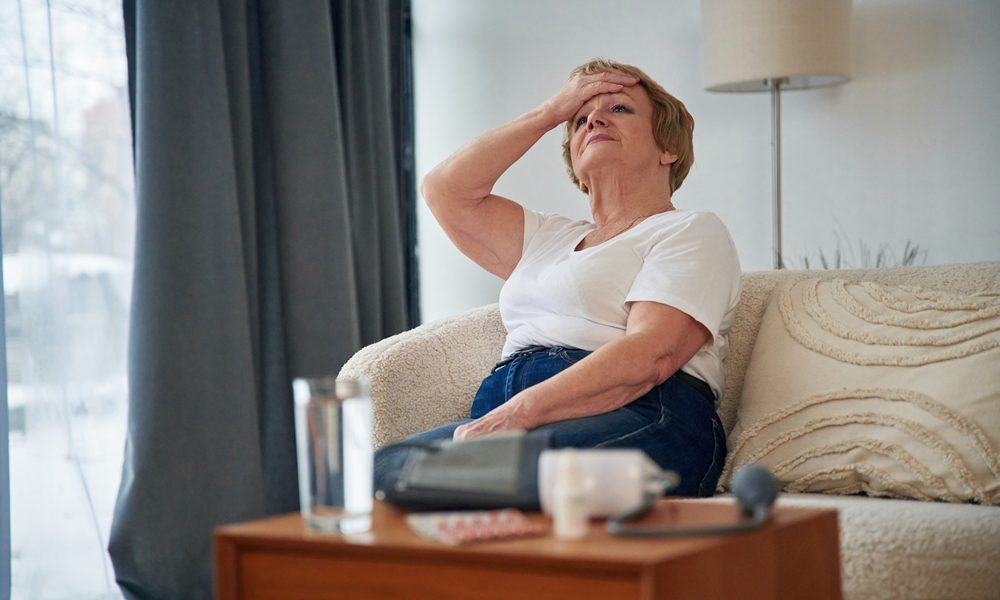
Menopausal women in Wales are posing as men to buy testosterone online amid difficulties accessing NHS prescriptions, a consultant has said.

Access to testosterone for postmenopausal women varies between Welsh health boards despite a “very sharp increase” in referrals, according to menopause specialist Dr Michelle Olver.

Olver said she had seen women with testosterone levels up to 12 times the safe level after they bought the hormone online, putting them at risk of permanent side effects.

She said it was “incredibly sad” to see women lying to obtain the drug online because they were being “denied access to something they need”, but said proper counselling and monitoring were needed.

Olver, a consultant in sexual and reproductive health, said: “We want to maintain women in female physiological range for testosterone. We don’t want them to have sky-high levels.

“When you persistently have very high testosterone levels you can get undesirable permanent side effects.

“Nobody wants to have baldness, deepening of the voice or enlargement of the clitoris.”

Testosterone occurs naturally in women, but levels decline with age.

It is prescribed after menopause to help with reduced libido, while research is under way in Wales into whether reported effects on cognition and energy can be scientifically supported.

Women are advised to have a baseline blood test and regular tests afterwards to ensure levels remain within the female range.

Emma Thomas, co-founder of menopause support group Menopals Cardiff and Vale, said members had reported difficulties accessing testosterone through the NHS.

She said: “We hear a lot of women saying their GP thinks there’s no need for it or their surgery won’t prescribe it.”

Prescribing arrangements differ across Wales’ seven health boards, which use a traffic light system. In some areas testosterone is classified as red, meaning only specialists can prescribe it.

There are two amber options.

One involves a GP seeking support or agreement from a hospital specialist that testosterone is appropriate for a patient.

The other requires a hospital specialist to start and monitor treatment under a shared care agreement, with GPs continuing to prescribe it.

The Welsh government said: “All health boards are expected to adhere to the NICE guidelines on identification and management of menopause including providing individualised care when prescribing HRT.

“We are aware this may include some practitioners prescribing testosterone for some women.

“We expect all health boards to conform to any recommendation made by NICE in relation to prescribing testosterone when its guidance is published.”


Menopause

Menopause hormone treatment may ease brain fog, study suggests

Published

on

Estriol treatment may ease menopause brain fog and other cognitive symptoms, according to a small observational study of 20 menopausal women.

The study involved menopausal women with an average age of 53.

They underwent an initial assessment of their cognitive symptoms before receiving a customised regimen of estriol and progesterone for 12 months.

Estriol is a natural form of oestrogen that occurs during pregnancy and has been used in Europe and Asia to treat menopausal symptoms including hot flushes and genitourinary symptoms.

It differs from estradiol, the most commonly used oestrogen hormone therapy in the US, by binding primarily to a different oestrogen receptor in the brain.

Previous research has shown that estriol may help protect brain cells and reduce brain atrophy in the hippocampus, the region responsible for learning and memory.

After 12 months of treatment, participants reported significant reductions in brain fog, concentration problems, working memory problems, slower processing speed, verbal memory problems and problem-solving difficulties compared with before treatment.

Senior author Dr Rhonda Voskuhl, a neurologist and member of the Comprehensive Menopause Center at UCLA Health, said: “Oestrogen plays a well-documented role in protecting the brain, yet there are still no approved type and dose of treatment that specifically targets the cognitive symptoms so many women experience during menopause.

“Women are often told to simply live with brain fog, when in fact there is a neuroscience basis for it, and potentially a way to address it. That gap in care is what motivated us to look more closely at estriol.”

Researchers also examined estriol treatment in midlife female mice to investigate how the hormone treatment might work.

Estriol reduced markers of brain pathology in the hippocampus and improved measures of working and spatial memory in the animals.

The findings are preliminary. The study was a small case series with no placebo group or randomisation, meaning the results may not apply to broader populations.

The researchers said larger placebo-controlled clinical trials using brain imaging and standardised cognitive testing are needed to confirm the findings on cognitive symptoms.

The treatment used in the study was invented by Voskuhl and is patented by UCLA. UCLA licenses the patent to CleopatraRX, which sells the treatment as PearlPAK. Voskuhl serves as a medical adviser to CleopatraRX.

Continue Reading

Menopause

Deaf women “excluded” from menstrual health conversations at UK unis

Published

on

Deaf women face barriers to menstrual health information and support at UK universities, according to a study involving 12 BSL users.

Researchers believe it is the first study of its kind.

Participants described difficulties discussing sensitive health issues because universities and healthcare services often rely on hearing-centred communication systems.

The study was led by Professor Jemina Napier from Heriot-Watt’s School of Social Sciences and involved interviews and co-design workshops with 12 deaf women who use British Sign Language (BSL) and work or study in UK universities.

Napier said: “Our findings show that deaf women face many of the same menstrual health challenges as hearing women, but they also encounter additional barriers because information and support are rarely designed around their language and communication needs.

“The burden of constantly adapting to hearing-centred systems can leave deaf women feeling excluded from conversations about their own health.”

Participants reported a lack of accessible information about menstruation, endometriosis, fibroids, perimenopause and menopause, despite working in highly educated environments.

They also reported feeling excluded from informal conversations where hearing colleagues often share experiences and learn about menstrual health.

Researchers identified four main issues affecting participants: communication, access to information, interpreter dynamics and factors including ethnicity, geography and additional disabilities.

Many participants said they preferred discussing menstrual health directly in BSL but rarely had that opportunity because managers and healthcare professionals did not sign.

Instead, they often communicated through interpreters or written English, which some said reduced privacy, comfort and confidence when discussing personal health issues.

Napier said: “A recurring theme was that of the ‘deaf tax’, which refers to the additional emotional and practical effort deaf women need to continually undertake to explain their needs or secure support.

“It’s ongoing emotional labour and fatigue and reduced participation in menstrual-health related activities.”

BSL interpreters were seen as essential, but participants said their involvement could raise concerns about confidentiality, trust and accuracy, particularly when discussing sensitive topics.

Several highlighted that male interpreters appeared uncomfortable discussing menstrual health.

The researchers also found that existing menstrual health information is largely produced in English and then translated into BSL, rather than being created in BSL from the outset.

Abigail Gorman, deaf independent facilitator, health policy consultant and co-author of the report, said: “To be in charge of your own health, you need to be able to recognise when something’s wrong, name it, and ask for help – in an appointment where you can actually be understood. That’s the whole chain.

“But if the information was never accessible in the first place, deaf women can’t even get to step one. If the appointment itself isn’t accessible either, that breaks the chain all over again, when it matters most.

“BSL-first health resources aren’t a nice-to-have; they’re how deaf women get to be equal participants in decisions about our own health.”

Napier said: “The deaf women we interviewed want more visual, culturally appropriate resources designed specifically for them – not a crude translation of existing material.

“BSL accessibility should be the default for menstrual health information and events.

“We need improved interpreter policies and BSL-first educational resources.

“The university sector should also establish a UK-wide, deaf-led health and wellbeing network.

“All these changes would reduce communication barriers and improve access to menstrual health support for deaf women working in higher education.”

Continue Reading

News

Spanish agency criticised for menopause guidelines based on male studies

Published

on

Spain’s food safety agency will review menopause guidance after women researchers criticised recommendations based on studies conducted only on men.

The Spanish Agency for Food Safety and Nutrition (AESAN) has asked its scientific committee to review its report on diet and healthy habits during the menopause.

Published last March, the document uses values from European Food Safety Authority (EFSA) research without explicitly stating that the reference studies involved male populations.

AESAN has acknowledged there was an “omission of a warning” and said more research focused specifically on women during the menopause is needed.

The report includes recommendations aimed at reducing risks associated with menopause, including loss of bone and muscle mass and cardiovascular problems.

It recommends a diet rich in protein, omega-3, fibre, calcium, iron and vitamins, alongside regular exercise, with particular emphasis on strength training.

Spanish equality minister Ana Redondo has also called for the document to be reviewed and urged in a post on X that situations like this “do not happen again”.

She said: “It is about time women were present in health agendas and studies, and the male body stopped being the universal reference point for everything, even for issues related to the menopause.”

The criticism reflects concerns about the longstanding under-representation of women in clinical trials and other scientific studies, where men have been over-represented for decades.

As a result, some knowledge about diseases, symptoms, treatments and doses has been based on the male body as the standard, despite biological differences that can influence the onset of certain conditions and responses to medicines and treatments.

This can result in less accurate diagnosis, prevention and healthcare for women.

Continue Reading

Trending

Copyright © 2025 Aspect Health Media Ltd. All Rights Reserved.