




Menopause
Abdominal obesity may lead to more severe menopause symptoms – study


Abdominal obesity may lead to worse menopause symptoms, including forgetfulness, irritability and night sweats, a new study suggests.
The findings point to a possible link between fat stored around the waist and more severe midlife symptoms.
Researchers said waist-to-height ratio could help identify women who may benefit from more targeted support.

Dr Monica Christmas is associate medical director for The Menopause Society.
Christmas said: “Unintended weight gain during the menopause transition, especially in the midsection, is one of the most commonly reported complaints, with the most significant gains experienced in the years leading up to the final menstrual period and a couple of years after.
“This not only affects self-image but also imposes negative health risks and, as the study highlights, is associated with higher prevalence and severity of menopause symptoms.”
The study used data from more than 1,100 women who took part in the Study of Women’s Health Across the Nation.
Abdominal obesity is a build-up of fat around the waist. It often includes visceral fat, which is deep, active fat surrounding internal organs.
This type of fat releases inflammatory proteins and toxic fatty acids that can contribute to insulin resistance, cardiovascular disease, high blood pressure and a higher risk of some cancers.
Insulin resistance means the body does not respond properly to insulin, the hormone that helps control blood sugar.
The Menopause Society said abdominal obesity is estimated to affect more than 60 per cent of menopausal women.
As oestrogen levels fall during menopause, women tend to store more fat around the waist rather than the hips, even if their overall weight does not change.
The researchers noted that obesity patterns and menopause symptom burden can vary by region, but research into the effect of abdominal obesity on these symptoms remains limited.
They also said earlier studies have mainly looked at single symptoms, rather than how symptoms connect with each other.
In this study, researchers used network analysis, a method that looks at how symptoms are linked, to compare symptom patterns in women with and without abdominal obesity.
They identified abdominal obesity using waist-to-height ratios, which compare waist size with height and can be used as a simple measure of health risk linked to body fat around the middle.
The researchers concluded that women with abdominal obesity had both a higher prevalence and greater severity of a range of symptoms, as well as a distinct symptom network structure.
In particular, women with abdominal obesity reported a higher prevalence and greater severity of dizziness, hot flashes and night sweats than women without abdominal obesity.
Sleep disturbances and palpitations were also reported more often in women with abdominal obesity. Palpitations are feelings of a fast, fluttering or pounding heartbeat.
The researchers said assessment of abdominal obesity using waist-to-height ratios may help stratify women who are likely to benefit from targeted, network-based interventions rather than isolated symptom management.
Christmas said: “Educating women early about healthy lifestyle interventions to prevent midlife weight gain is key to improving mental and physical well-being during a tumultuous time frame.”















Osteoporosis may raise the risk of death in postmenopausal women by up to 47 per cent, a new study suggests.
The findings point to an inverse relationship between femoral bone mineral density and mortality risk, especially within certain ranges.
Femoral bone mineral density is the amount of mineral in the thigh bone, which is often measured to assess bone strength and osteoporosis risk.

Dr Monica Christmas is associate medical director for The Menopause Society.
She said: “Osteoporosis often remains a silent threat after menopause, despite its profound effect on women’s lives—from loss of height, poor balance, and reduced mobility to disfigurement, pain, and even premature death.
“Early screening and preventive measures, including a calcium-rich diet (preferably from food sources), regular weight-bearing exercise, and hormone therapy when appropriate, can significantly improve bone health and reduce risks not only of fractures but also cardiovascular disease, certain cancers, and dementia.
“It’s time we bring this conversation to the forefront.”
In the study involving nearly 3,000 postmenopausal women, bone mineral density at four femoral sites was assessed using dual-energy x-ray absorptiometry, a scan commonly used to measure bone strength and fracture risk.
The analysis found that mortality risk was significantly higher when femoral bone mineral density reached the osteoporotic threshold or when osteoporotic fractures were present.
After full adjustment, osteoporosis was associated with a 47 per cent increased risk of mortality.
A stronger inverse association between increased bone mineral density and mortality risk was seen within specific ranges, suggesting bone mineral density could serve as a prognostic marker of wider health.
The relationship appeared especially notable within the range of 0.46 to 0.71 g/cm² for total femur bone mineral density.
Previous research has shown that postmenopausal women face a significantly higher risk of death within one year of hip or vertebral fractures.

A new study will investigate why women’s hearts may be affected differently by type 2 diabetes before and after menopause.
The researchers are among a cohort of leading mid-career scientists to receive a total of almost €6m, about £5.2m, through a partnership between the British Heart Foundation, the Dutch Heart Foundation, the German Centre for Cardiovascular Research and the Lefoulon-Delalande Foundation to support international research collaborations over four years.

The menopause project will be led by Dr Lisa Heather, from the University of Oxford, Dr Miranda Nabben, from Maastricht University and Dr Annie Turkieh, from the Pasteur Institute.
Professor Metin Avkiran is director of international partnerships and special programmes at the British Heart Foundation.
Avkiran said: “We’re delighted to be supporting these ambitious research programmes alongside our European partners, and to welcome CNIC and CIBER-CV to this pioneering partnership,” said
“By joining together, we can make the money donated by BHF’s generous supporters go further to drive more lifesaving research.
“By placing mid-career researchers at the heart of this scheme, we’re backing emerging leaders in cardiovascular science.
“These partnerships are designed to last well beyond the lifetime of the awards and help address the biggest unmet needs in cardiovascular research.”
Before menopause, women are largely protected from diabetic cardiomyopathy, a type of heart muscle damage linked to diabetes, yet after menopause they become more vulnerable than men and more susceptible to heart failure.
Researchers do not yet fully understand why this happens, but believe changing hormone levels after menopause may disrupt cell signals sent out by fat tissue.
This may lead to diabetic cardiomyopathy and trigger damage to the heart.
The study will examine how the hearts and fat tissue of women with type 2 diabetes differ before and after menopause, using animal models, human cells, computer modelling and patient data.
The team says this could lead to a blood test for earlier diagnosis and better treatments for women living with type 2 diabetes.











 Entrepreneur3 weeks ago
Future Fertility raises Series A financing to scale AI tools redefining fertility care worldwide

 Entrepreneur2 weeks ago
Women’s digital health market set to reach US$5.28 billion in 2026 – report
 Diagnosis4 weeks ago
Future Fertility partners with Japan’s leading IVF provider, Kato Ladies Clinic
 Diagnosis3 weeks ago
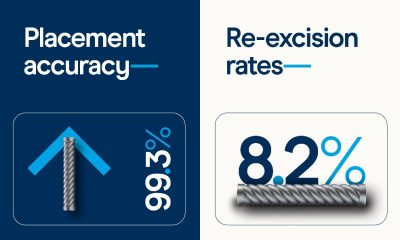
New meta-analysis further supports low re-excisions and high placement accuracy with the Magseed marker

 Mental health3 weeks ago
Lifting weights shows mental health and cognitive benefits in older women, study finds

 News3 weeks ago
Resistance training has preventative effects in menopause, study finds

 Pregnancy3 weeks ago
NIPT or NT scan? Why the 2026 evidence supports doing Both

 News4 weeks ago
Relaunched women’s health strategy aims to tackle ‘medical misogyny’