




Insight
Common cancer marker may play active role in preventing the disease, study finds

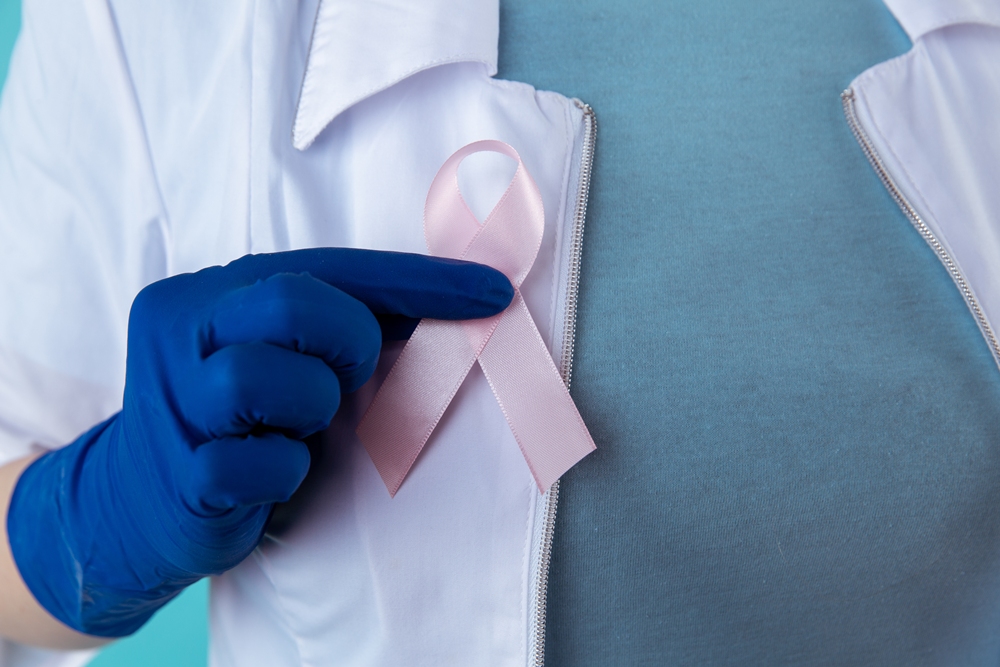
Ki-67, a protein used to measure tumour growth, may also help prevent chromosome errors that drive cancer, a study suggests.
The findings could change how scientists view Ki-67, a marker commonly used in breast cancer and other tumours to assess how quickly cancer cells are growing.
Researchers found the protein may help preserve genome stability by maintaining the structural integrity of centromeres, key parts of chromosomes that help ensure DNA is shared correctly during cell division.
The research was led by professor Paola Vagnarelli at Brunel University of London in collaboration with scientists at the University of Edinburgh and the Technical University of Berlin.
Professor Vagnarelli said: “Doctors already measure Ki-67 to see how aggressive a cancer might be. But our results suggest it is actually helping maintain genome stability.
“That means it may be more than a marker. It could potentially also be a therapeutic target.”
The study examined three proteins that attach to chromosomes during cell division and help rebuild the molecular system that tells each new cell what kind of cell it is.
Every human cell carries identical DNA. What makes a liver cell different from a brain cell is which genes are switched on and which are kept inactive.
When a cell divides, that entire system of switches must be rebuilt. The three proteins involved in this process were Ki-67, Repo-Man and PNUTS.
Vagnarelli’s team developed a method that individually removes each protein from a living cell at the precise point of division. Older techniques could not isolate that moment cleanly.
They found that cells rely on all three proteins to reset themselves after division, but each failed in a different way when removed.
Without PNUTS, gene activity spiralled out of control and thousands of genes switched on at once.
Without Repo-Man, cells escaped safety checkpoints that usually stop damaged or abnormal cells from continuing to divide.
“What we didn’t expect was how clean the separation was,” said Vagnarelli.
Each protein fails in its own specific way. There is no redundancy, no safety net. Which means there are three separate points at which this process can go wrong.
“When the system breaks down, cells can emerge with the wrong number of chromosomes. That condition, called aneuploidy, is seen in disorders such as Down syndrome and in many cancers.
“We also found that these chromosome errors can trigger inflammatory signals inside the cell.”
Aneuploidy means a cell has too many or too few chromosomes, which can disrupt normal growth and function.
Inflammatory signals are chemical messages that can make a cell behave as if it is responding to injury or infection.
“These cells behave almost as if they are under attack,” said Vagnarelli.
“The immune response switches on because the genome is unstable.
“That link between chromosome imbalance and inflammation could help explain patterns we see in several diseases.”
The researchers said the findings may help cancer scientists better understand how chromosome instability, loss of gene regulation and cells dividing before they are ready contribute to tumour growth.
They said understanding the normal machinery that prevents these errors may help researchers find ways to push cancer cells into making mistakes they cannot survive.
“We now have a clearer map of the machinery that resets the cell after division,” said Vagnarelli.
“That knowledge gives us a starting point for thinking about new therapeutic approaches.”











Women accounted for 71.4 per cent of global health workforce growth between 1990 and 2023, according to a study covering 204 countries and territories.
The global workforce almost tripled over the period, rising from 40.9m to 122.1m workers.
Women represented 68.9 per cent of all health workers in 2023, but remained concentrated in professions that generally offer lower pay and fewer leadership opportunities.

The study analysed 20 groups of specially trained health personnel, including doctors, nurses, midwives, pharmacists, dentists and community health workers.
Between 1990 and 2023, the workforce grew by more than 81m people, including an additional 18.9m nurses and 8.7m doctors.
In 2023, there were 33.2m nurses, 15.1m doctors, 7.6m community health workers, 6.8m pharmacists and pharmaceutical assistants, and 6.1m dentists and dental assistants worldwide.
Women made up 80.7 per cent of nurses, 96 per cent of midwives and 89.5 per cent of community health workers, while fewer than half of doctors were women.
A similar pattern was seen in dentistry and pharmacy, where women were more likely to work as assistants than as dentists or pharmacists.
Megan Knight, lead author of the study and researcher at the Institute for Health Metrics and Evaluation, said: “Women have transformed the global health workforce over the past three decades, but they continue to be concentrated in professions that generally offer lower pay and fewer opportunities for leadership.
“Building stronger health systems will require not only expanding the workforce, but also creating equitable opportunities for career advancement, leadership, and safe, supportive working environments.”
Despite the growth, researchers estimated that an additional 34.4m doctors, nurses, midwives, dentists and pharmacists would be needed to achieve moderate levels of universal health coverage.
Universal health coverage means people can access essential health services without experiencing financial hardship.
The estimated global shortage includes 23.9m nurses and midwives, 7.1m doctors, 1.8m dentists and 1.6m pharmacists.
South Asia had the largest estimated shortages, requiring an additional 2.6m doctors and 10m nurses and midwives to reach the study’s benchmark for moderate universal health coverage.
Sub-Saharan Africa also had substantial shortages. Nursing density was estimated at 14.5 nurses per 10,000 people, compared with 121.8 per 10,000 in high-income countries.
At country level, there were 3.2 nurses per 10,000 people in Chad and 3.3 in Madagascar, compared with 171.7 in Belgium and 161.4 in the US.
Dr Annie Haakenstad, senior author of the study and assistant professor of health metrics sciences at the Institute for Health Metrics and Evaluation, said: “Health workers are the foundation of every health system.
“Although the global workforce has expanded dramatically, millions more doctors, nurses, midwives, dentists, and pharmacists will be needed to ensure people everywhere can access essential health services.
“These findings provide countries with minimum thresholds for planning the workforce needed to strengthen health systems and move toward universal health coverage.”
The study estimated that moderate universal health coverage was associated with minimum workforce densities of 23.8 doctors and 64.5 nurses and midwives per 10,000 people, alongside 5.2 dentists and 5.6 pharmacists per 10,000.
Researchers said closing workforce gaps would require continued investment in education, recruitment, retention and working conditions.
They also highlighted gender-responsive policies, including leadership development, workplace protections, paid parental leave and flexible work arrangements, as measures that could support a predominantly female workforce.

Women using PIEDs reported difficulty accessing reliable information, testing and clinical expertise, according to a qualitative study.
Researchers interviewed nine women who used performance- and image-enhancing drugs, primarily to enhance body composition, physical appearance or sporting performance.
Participants reported problems accessing comprehensive blood and hormone testing and finding clinicians familiar with health concerns linked to women’s use of these drugs.
This has been a male-dominated area of research for a long time, so there are significant gaps in understanding women’s health care needs.
The research, led by University of Queensland School of Psychology PhD candidate Hannah Schuurs, explored how the women managed their health while using PIEDs, which include substances such as steroids and peptides.
Schuurs said: “We interviewed nine women who use PIEDs about how they managed their health throughout their PIED use.
“They reported difficulty accessing reliable information and a lack of clinical expertise and formal health care support.
“The study participants were all active in self-monitoring, tracking changes in their bodies, and actively sought formal health care support.
“But they found it hard to access comprehensive blood and hormone testing, or clinicians who were familiar with the unique health concerns associated with women’s PIED use.”
The study found participants spent considerable time educating themselves about the drugs and their potential risks.
“They often found themselves educating healthcare professionals rather than receiving guidance tailored to their circumstances.
Schuurs said: “The participants had spent considerable time educating themselves about PIEDs and their risks and found they were often educating their health care providers, rather than receiving guidance tailored to their circumstances.”
“Structural and systemic barriers shifted a disproportionate level of responsibility for harm reduction and care coordination onto the women themselves.”
Participants were also aware of sex-specific risks, including hormonal disruption and virilisation. Virilisation is when masculine physical traits develop due to high levels of androgens.
However, the women did not necessarily expect healthcare professionals to have all the answers.
Schuurs said: “Participants were often understanding of gaps in clinical knowledge, provided they were met with openness and a willingness to work collaboratively.
“They emphasised that respectful, nonjudgmental health care relationships were just as important as technical expertise.”
The findings also challenged stereotypes that people using PIEDs are uneducated or indifferent to their health.
Participants reported actively managing their health while navigating stigma, uncertainty and gaps in healthcare.
Schuurs said: “The participants actively managed their health and navigated stigma, uncertainty and gaps within health care.”
“We need health care responses that are collaborative rather than judgmental, as those narratives can oversimplify people’s experiences and make it harder for them to seek support.”
She said the research showed PIED use could form part of wider goals relating to health, wellbeing, performance and self-management.
Schuurs said: “Better understanding women’s experiences is critical if we want health care systems to respond effectively and ensure women can access the support they need.”
“There is a real opportunity to improve education, clinical guidance and support for health care professionals in this space that values and draws from the lived experience of women themselves.”


Women are being urged to seek evidence-based advice and avoid menopause misinformation shared on social media.
A seminar co-hosted by the World Health Organization (WHO) mainly examined what is known about the cognitive effects of menopause and current research in the field worldwide.
Dr Nicole Jaff, a South African academic and certified menopause practitioner, said research into menopause and its effects was now at a peak.
She said: “There’s a lot of information out there.
“But I would say please look for the evidence-based information, not for the influencers and the misinformation, but those who are giving guidelines, who are giving information.”
Jaff highlighted research into cognitive changes during menopause and how some women experience brain fog, a term for difficulties with memory, concentration and clear thinking.
She said: “I’m very excited about the non-hormonal treatments that are now available, especially for women who could never take hormone therapy because of breast cancers and various cancers, who can now take it.
“I’m extremely excited about people who are standing up for evidence-based medicine, for science, who are actually fighting back against a lot of the social media and influencers who are not giving evidence-based information and making life very difficult for women because they think they should be forever young or buying this or buying that.”
Jaff advised women and healthcare workers to read new guidelines recently issued by the International Menopause Society. They are available free to download from its website.
The seminar also heard from Professor Aimee Spector, professor of clinical psychology of ageing at University College London.
She raised similar concerns about misinformation, particularly claims linking hormone replacement therapy, known as HRT, to dementia. Some claims suggest HRT reduces dementia risk, while others suggest it increases the risk.
Spector said: “I think there’s also lots of misinformation.
“And I think that there’s huge variations in how even professionals and doctors interpret this information.”
She was part of an international research team commissioned by the WHO last year to assess published studies on the issue.
The institutions involved also included the Global Brain Health Institute at Trinity College Dublin.
Spector said: “The first thing to say is that the quality of evidence was very low.
“Nine out of the 10 studies we looked at were observational, which means that you’re observing patterns over time. But you don’t necessarily know whether that’s due to the hormone therapy or not.
“Our overall recommendation was that there’s insufficient evidence for menopause hormone therapy in terms of either increasing or reducing the risk of dementia. In other words, we don’t know either way.”
Spector said women should therefore decide whether to use HRT to treat menopause symptoms rather than based on concerns about dementia.
She said: “It’s recommended for menopause symptoms, but it’s not recommended to reduce dementia. And I think a lot of people are saying that.”
The Menopause on the Brain webinar was part of an ongoing series hosted by the WHO and other global health agencies.









 News2 weeks ago
UK femtech investment surges 194% in a decade, research finds

 Entrepreneur2 weeks ago
TidalSense raises £14m to expand five-minute COPD test across NHS

 Entrepreneur2 weeks ago
Cross-Border Impact Ventures raises US$58m for women and children’s health

 Entrepreneur1 week ago
Applications close August 18 for Women’s Health Innovation Summit 2026 Innovation Showcase

 News2 weeks ago
Cultural stigma is a barrier to menopause help, black women say

 Menopause1 week ago
Third of women unaware of perimenopause mental health impact

 Motherhood2 weeks ago
One in eight mothers diagnosed with gestational diabetes, research finds

 Hormonal health2 weeks ago
Menstrual data is missing a critical layer: The mind