




Diagnosis
Mounjaro shows potential to slow breast cancer growth


Mounjaro may significantly reduce breast cancer tumour growth in obese patients, according to early-stage research in mice.
The weight loss drug, which contains tirzepatide, showed what researchers described as a “beneficial impact” on cancer outcomes, though they stress more testing is needed.
In a study involving 16 nine-week-old mice with breast cancer tumours who were fed a high-fat diet to induce obesity, those treated with the drug had substantially smaller tumours than those given a placebo.

At 32 weeks of age – roughly middle age for a mouse – the obese animals were split into two groups.
One group received tirzepatide injections every other day for 16 weeks, while the other received a placebo. Scientists monitored the mice’s weight and tumour growth twice a week.
The mice given tirzepatide lost around 20 per cent of their body weight – similar to average long-term weight loss in humans using the medication.
The fat loss occurred mainly in adipose tissue, the body’s fat-storing cells.
More notably, their tumour size was significantly reduced compared to the control group.
Amanda Kucinskas, research fellow in obesity and breast cancer risk, said: “While it is very preliminary data, our studies in mice suggest that these new anti-obesity drugs may be a way to reduce obesity-associated breast cancer risk or improve outcomes.”
The study found a clear association between lower body weight and reduced tumour size.
Total fat mass was also “strongly linked” to tumour growth, researchers said.
However, scientists said it remains unclear how tirzepatide may be slowing tumour growth, and human trials would be needed to test the effect.
They add to growing evidence that GLP-1 agonists – the class of drugs that includes tirzepatide – may have cancer-related benefits beyond weight loss.
Data presented in May at the American Society for Clinical Oncology conference suggested GLP-1s could reduce the risk of 14 obesity-related cancers – including breast cancer – in people with diabetes.
That study found diabetes patients taking GLP-1s had a 7 per cent lower risk of developing obesity-related cancers than those on DPP-4 inhibitors, another diabetes medication.
When other health benefits were factored in, they were also 8 per cent less likely to die over a 10-year period.
Separate research from the University of Texas, presented in December at the San Antonio Breast Cancer Symposium, found obese patients who took GLP-1s for just over a year after finishing breast cancer treatment had a “significantly improved” chance of living longer.
However, the same study noted that patients taking hormone drugs such as tamoxifen still gained weight despite using the jabs – possibly because hormone therapy typically causes weight gain that counteracts the drug’s effects.















Women’s health medical device company Ark Surgical has secured further institutional backing from JNF and the Israel Innovation Authority (IIA) as it accelerates the US commercial expansion of its surgical tissue containment technology.
Both organisations have previously backed Ark, making the renewed support a significant vote of confidence in the company’s technology, leadership team and commercial strategy as it moves into its next stage of growth.
The new backing comes alongside Ark Surgical’s ongoing Series A financing round, which has also attracted investment from physicians and experienced medical device executives, adding further industry validation as the company builds its US commercial presence.
The Israel Innovation Authority, Israel’s public agency supporting technological innovation, selected Ark Surgical for additional non-dilutive funding following an extensive evaluation process.
The assessment examined the unmet clinical need addressed by Ark’s technology, its clinical results, business and US go-to-market strategy, Israeli and US teams, execution against milestones and future product pipeline.
JNF, which supports economic development and community-building initiatives in Israel, has also increased its previous backing of Ark Surgical.
The relationship has particular significance given Ark’s roots in northern Israel. The company is headquartered near Nazareth in the Galilee and plans to continue strengthening its manufacturing capabilities in the region as its commercial presence in the US grows.
Together, the continued institutional support and investment from experienced healthcare leaders reflect growing confidence in Ark’s technology and its strategy for US expansion.
Stav Tori, CEO of Ark Surgical, said: “Having organisations that already know Ark, our technology and our team choose to support us again is particularly meaningful.
“It reflects our ability to consistently achieve the clinical, regulatory and commercial milestones we set and gives us additional resources to accelerate our expansion in the US.
“Our ambition goes beyond bringing another medical device to market.
“We want to help establish a higher standard of surgical safety for women undergoing minimally invasive procedures.”
Addressing an overlooked risk in women’s surgery
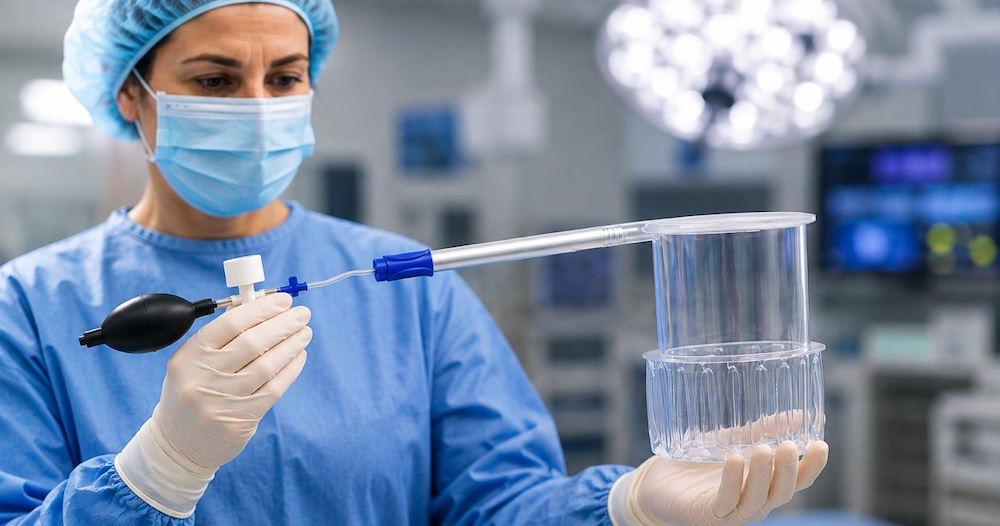
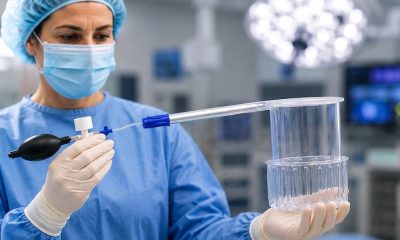
At the centre of Ark’s expansion is LapBox, the company’s FDA-cleared dual-wall tissue containment system developed to address an important safety challenge in minimally invasive gynecologic surgery.
Procedures such as hysterectomy and myomectomy can require large uterine specimens or fibroids to be divided into smaller pieces so they can be removed through small laparoscopic incisions.
This process, known as morcellation, carries a risk of disseminating tissue within the abdominal cavity.
In rare cases where an unsuspected malignancy is present, morcellation can spread malignant tissue and potentially worsen a patient’s prognosis.
But the risk is not limited to cancer.
Even benign uterine tissue can implant elsewhere in the abdominal cavity and grow, potentially resulting in complications such as parasitic fibroids and the need for additional treatment.
LapBox was developed as a dual-wall, bag-in-bag containment system that creates a secured chamber for tissue extraction. The device is FDA-cleared for use with both manual and power morcellation.
From clinical innovation to US adoption
Ark Surgical is now moving beyond its clinical and regulatory milestones to focus on broader commercial adoption.
LapBox™ has already been used in hundreds of procedures, while Ark has been expanding its presence within US hospitals and building relationships with leading minimally invasive gynecologic surgeons.
The latest institutional backing will support the next stage of that strategy, including additional hospital partnerships, key opinion leader engagement, sales leadership and clinical support.
Joseph LaBruzzo, President and CEO of U.S. Operations at Ark Surgical, said: “Ark has reached an important point in its development.
“We have the regulatory clearance, growing clinical experience and increasing engagement from US surgeons and hospitals.
“The focus now is execution and scale.
“What makes this continued backing particularly meaningful is that these are organizations that have followed Ark’s development and seen the team deliver against its objectives.
“Their decision to support the company again provides further validation as we build the commercial and clinical infrastructure needed for broader US adoption.”
That growing adoption is also being reflected in the experience of surgeons using LapBox.
Dr Ramon Yera, a minimally invasive gynecologic surgeon with more than 35 years of experience, said: “Once surgeons use LapBox, they realize this is the bag they should be using for their bread-and-butter procedures.”
Yera believes this reflects a broader shift in expectations around tissue containment in gynecologic surgery.
“Containment is no longer optional. It is an expectation.”
Ark Surgical is continuing its Series A financing round, with additional capital intended to support the next phase of US commercial expansion and development of its broader product pipeline.
Further information for prospective investors is available at ark-surgical.com/investment










 pain conditions2 weeks ago
Major UK study could be a ‘game-changer’ for heavy periods and endometriosis
 Pregnancy6 days ago
KOVE Medical raises €1.7 million to improve safety of foetal surgery

 Fertility2 weeks ago
One week left to apply: W Accelerate with Merck KGaA and M Ventures

 Pregnancy7 days ago
UK study aims to transform maternity care for high-risk pregnancies

 Menopause2 weeks ago
Quarter of women miss work due to menstual symptoms, survey finds

 Mental health2 weeks ago
PMDD after SSRIs or hormones: Why the brain may be the missing treatment target
 Cancer2 weeks ago
Ark Surgical secures further institutional backing to accelerate US expansion

 Diagnosis2 weeks ago
Study to tackle years-long delays in endometriosis diagnosis
1 Comment