To receive the Femtech World newsletter, sign up here.
News
Remote monitoring improves postpartum assessment in patients with hypertensive disorders of pregnancy, study finds
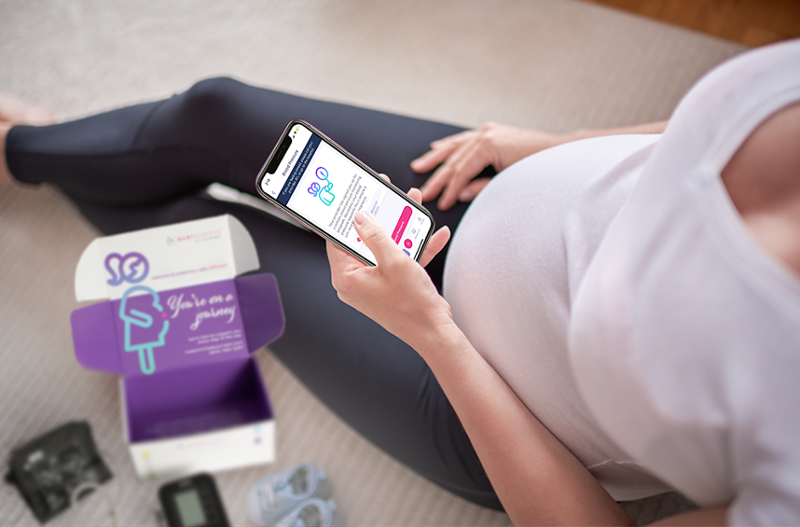
Remote monitoring has the potential to identify those at risk of severe complications from hypertensive disorders of pregnancy in postpartum

Remote monitoring is effective at improving postpartum assessment in patients with hypertensive disorders of pregnancy, a new study has shown.
The study, published in The American Journal of Maternal/Child Nursing, found that Babyscripts, a solution for remote management of pregnancy and postpartum, is capable of improving postpartum assessment in patients with hypertensive disorders of pregnancy.
The research demonstrated that remote monitoring with an automatic blood pressure cuff via the Babyscripts programme resulted in high levels of patient engagement and had the potential to identify those at risk of severe complications from hypertensive disorders of pregnancy (HDP) in postpartum.
“The postpartum period is one of the most dangerous for a woman’s health, and much of that danger comes from lack of access to care,” said Anish Sebastian, co-founder and CEO of Babyscripts.

“Around 10 per cent of women have incidents of critically high blood pressure in postpartum that may be missed because they don’t make it to their postpartum follow-up appointments.
“This study shows that solutions like Babyscripts have the power to reach and empower these women to manage their risks, regardless of access.”
The research, which was conducted at WellSpan Health, was initiated in September 2020, with 1,260 patients enrolled in the Babyscripts myBloodPressure module between September 2020 and July 2022 across five maternity hospitals.
Prior to discharge postpartum, all patients with a diagnosis of a hypertensive disorder of pregnancy were enrolled in Babyscripts myBloodPressure and given an automatic blood pressure cuff and instructions on how to monitor and track their blood pressure daily in the app.
The group used Babyscripts myBloodPressure to record their blood pressure levels, capturing data and communicating it back to the provider team through an internet-connected blood pressure cuff and Babyscripts’ smartphone app.
The paper found that of those enrolled, 74 per cent were highly engaged with monitoring, entering seven or more blood pressures
Additionally, it showed that of those who entered at least one blood pressure, nine per cent entered at least one critical range blood pressure.
Julia Wheeling, programme director of the women and children service line at WellSpan Health, said: “At WellSpan Health, we are committed to improving maternal health outcomes and we continuously seek innovative ways to meet the unique needs of our patients, particularly those grappling with hypertensive disorders.
“Their wellbeing is not just a priority but a driving force behind our relentless pursuit of excellence in care.”
Fertility
Hormone sensor could streamline IVF process
Motherhood
Pregnancy complications and stress linked to long-term cardiovascular risk

Pregnancy complications may leave women more vulnerable to the long-term heart effects of stress, a recent study suggests.
A study of more than 3,000 women in their first pregnancy found persistently higher stress levels were associated with higher blood pressure after pregnancy, specifically in women who had adverse pregnancy outcomes including preeclampsia, preterm birth, having a baby that was small for gestational age, meaning smaller than expected for that stage of pregnancy, or stillbirth.
Among women who experienced these complications, higher stress levels over time were associated with blood pressure that was 2 mm Hg higher than that of the low-stress group during the years two to seven after delivery.
This was not the case among women who did not experience adverse pregnancy outcomes.
Virginia Nuckols, lead author of the study and a postdoctoral fellow in the University of Delaware’s department of kinesiology and applied physiology, said: “For women who were having babies for the first time and had complications, referred to as adverse pregnancy outcomes, we found that higher stress levels over time were associated with higher blood pressure levels 2-to-7 years after delivery.
“This suggests that women who had pregnancy complications may be more susceptible to the negative effects of stress on their heart health, and taking steps to manage and reduce stress could be important for protecting long-term heart health.”
The researchers analysed records of 3,322 first-time mothers aged 15 to 44 who did not have high blood pressure before pregnancy.
The women were enrolled at 17 medical centres in eight US states, were pregnant with one baby and were having their first child. According to the authors, 66 per cent of participants self-identified as white, 14 per cent as Hispanic and 11 per cent as Black.
Blood pressure and stress levels were measured during the first and third trimesters, and again two to seven years after delivery.
Stress was assessed using the Perceived Stress Scale, a standard questionnaire that asks how often people feel situations are uncontrollable, unpredictable or overwhelming.
Those who experienced moderate to high stress levels were often younger, between 25 and 27 years of age, had higher body mass index, a measure based on height and weight, and lower educational attainment.
The authors said it is not yet clear exactly how higher stress leads to higher blood pressure in women who had pregnancy complications, and that several factors are likely to be involved.
Nuckols added: “Future studies should examine why women with a history of adverse pregnancy outcomes may be more susceptible to stress-driven increases in blood pressure and test whether stress reduction interventions can actually lower cardiovascular risk for these women.”
High blood pressure during pregnancy can have lasting effects on maternal health, including preeclampsia, eclampsia, stroke or kidney problems, according to the American Heart Association’s 2025 guideline for the prevention, detection, evaluation and management of high blood pressure in adults.
Monitoring blood pressure before, during and after pregnancy is crucial to help prevent and reduce the risk of long-term complications.
Laxmi Mehta is chair of the American Heart Association’s Council on Clinical Cardiology and director of preventive cardiology and women’s cardiovascular health at The Ohio State University Wexner Medical Center, and was not involved in the study.
Mehta said;’ “This study highlights the powerful connection between the mind and heart, emphasising the importance of stress management, particularly for those who have experienced adverse pregnancy outcomes.
“For the clinical care team, it reinforces the need to proactively assess and address stress as part of the comprehensive care we provide to our patients.
“Future research on whether targeted interventions to reduce or manage stress has a meaningful impact on long-term cardiovascular outcomes will be important as well.”
Diagnosis
Heart disease risk found in mammograms
Pregnancy4 weeks agoFrance urges 29-year-olds to start families now
Menopause4 weeks agoWomen with ADHD almost twice as likely to experience perimenopause symptoms, study finds
Entrepreneur2 weeks agoOura launches women’s health AI model
Entrepreneur4 weeks agoKindbody unveils next-gen fertility platform
Menopause4 weeks agoMenopause specialist Haver joins Midi Health
Opinion4 weeks agoThe $128b paradox: Corporate wellness vs women’s burnout
Entrepreneur4 weeks agoKate Ryder headlines Women’s Health Week USA 2026 as full agenda goes live
Insight2 weeks agoWomen’s HealthX launches in Boston this December to transform women’s health through data and science


5 Comments