Connect with us

Features

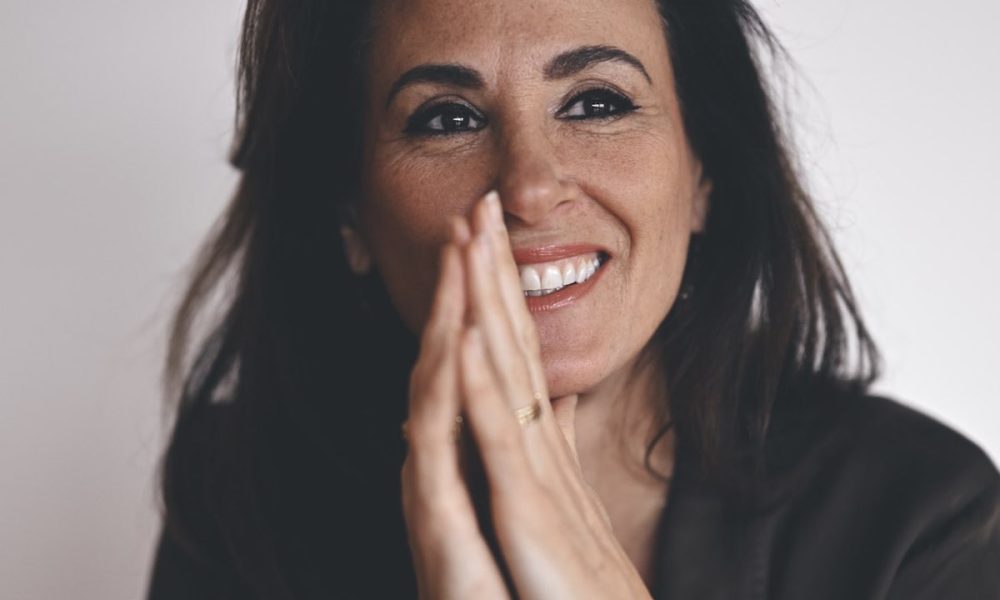
“Tennis can wait”: How Pregnancy+ founder Amber Vodegel is building the blueprint for equity in women’s health

Published

on

Founder of the globally-renowned Pregnancy+ app, Amber Vodegel, is on a mission to address inequity in women’s health. 

With her latest venture, the founder of the globally-renowned ‘Pregnancy+’ app, Amber Vodegel, is on a mission to address inequity in women’s health. 

After building one of the world’s biggest women’s health apps—and selling it to one of the world’s biggest tech companies— Amber Vodegel thought about retiring and spending her days playing tennis.

“I’ve definitely thought about slowing down, but I couldn’t walk away knowing how much still needs to change in women’s health,” she tells Femtech World. 

“Tennis can wait.”

Vodegel began building Pregnancy+ in 2012 as a side-hustle, while continuing in her day job at an advertising agency. She bootstrapped the business for five years, investing back into developing and improving the app, eventually reaching 10 million users before being acquired by Phillips in 2017.

During her time at Philips, she continued to expand Pregnancy+’s user base to over 150 million users in more than 100 countries. With two million daily active users globally, it has become the number one pregnancy app in almost all countries. In the UK it serves 70 per cent of first-time mums.

“Building Pregnancy+ taught me the true value of trust and showed me how technology, when designed thoughtfully, can meet people exactly where they are in their lives,” she says.

“But being in mobile app development for nearly 15 years, also revealed how many people are still excluded from basic health education. In menstrual health, it’s even more apparent.” 

She continues: “After building Pregnancy+ and seeing the impact that trusted, accessible digital tools can have, it became clear to me that the menstrual health space was failing millions of women and girls globally.”

“The scale of inequity”

A total of 800 million people menstruate each day, yet many are unable to access even the most basic products and education. Even in the UK, 17 per cent of women and girls lack essential menstrual health information, according to evidence from the Women’s Health strategy in 2022.

While tech can educate and empower women by giving them more insight into their health—over 100 million women are using period trackers every month—many apps are paywalled, and some have been linked to privacy and data handling concerns. 

Research from 2023 found that 59 per cent of women and girls have concerns about the use of their health data in existing apps, and many have come across age and culturally-insensitive content.

Having had the opportunity, and experience, that comes with building global platforms, Vodegel says she feels a sense of responsibility to address some of these inequities. 

“This is personal, and it’s urgent,” says Vodegel.

“Once you see the scale of inequity, you can’t unsee it. Health information and support should not be a privilege, but for many, it still is. I’ve had the opportunity to build global platforms before, and I feel a duty to use that experience to create something that serves people who’ve been underserved for far too long. It’s about fairness, but also about what’s possible when we design with care.  

“People talk about how the future of health, powered by AI, is going to be incredible. They point to integrations with expensive wearables like smart watches and the Oura ring. But who is that future really for? Most women can’t afford a £400 ring or a £50 annual app subscription. So, my question is this: who’s looking after the other 80 percent? Who is serving the 12 year old girl, or the women in lower and middle income countries, the neurodiverse, or just those who simply can’t afford a subscription?”

Redefining how women access health education 

This has become the driving force behind her new venture, 28X, preparing to launch later this year. With 28X, she is striving to create not just a women’s health app, but an impact venture which could redefine how women access information about their health. 

“28X is my way of using everything I’ve learned to build something that truly serves women and girls who are being left behind,” says Vodegel.

“Especially by the current period apps that store user data on external cloud servers and charge expensive subscriptions, which most women and girls can’t afford.”

28X is a global period tracking app that is free-at-the-point-of-use and privacy-safe, putting women in control of their health and data, Vodegel says. 

It uses on-device AI to process and store data, which unlike traditional cloud-based processing, ensures that sensitive user data never leaves the device. To avoid data-sharing with third parties, it will use fine-tuned open-source GenAI models with suitable guardrails, such as on-device Tiny Language Models in combination with a headless CMS. 

Set to be available in more than 100 countries, and 33 languages, the app automatically adapts its educational content to suit the linguistic, neurodiverse, cultural, and educational needs of its user base. 

Meanwhile, its circular business model will see revenues flow back into social impact foundations, ensuring that profits are reinvested into education, clinical research, and women’s health equity. A partnership with Biograd, the company behind Europe’s first women’s health-focused research tissue bank, will also see 28X contribute to much-needed menstrual health research which aims to advance innovation and treatments in immunotherapy, regenerative medicine, and diagnostics.

Building the blueprint

Vodegel’s aim is for this to become a blueprint for other tech companies, showing that it is possible to be scalable and sustainable, without compromising on ethics, but also making the back-end technology open-source to allow other health-related app developers to use and build on it.

“Our aim is not just to build the largest women’s health app, but to demonstrate a new way forward. We’re creating a privacy-first, inclusive, clinically trusted solution that proves you don’t need to compromise ethics to scale,” she says.

“We’re showing that it’s possible to prioritise the user, protect their data, and still be sustainable. If that encourages others to rethink how they build, we’ll have achieved more than just our own mission.” 

Passionate about women’s health, inclusion and ethical innovation?`

Vodegel is looking for those with shared values to help shape the long-term vision, impact and governance of 28X, including impact investors with an interest in becoming founding members. Other ways to get involved at this stage, include as an ambassador helping connect 28X with communities such as schools and youth organisations or clinical teams, sharing with your network, or participating in its user research and testing programme. 

We are looking for people who share our values,” she says. 

“People who believe in access, trust, privacy and equity in health. People who believe we can do better, and who want to be part of building something that serves, not excludes.”

She adds: “[We want to] ensure we are building with, not just for, our community. If you are passionate about women’s health, inclusion and ethical innovation, there is a place for you in this movement.”

To learn more about how you can support 28X email joinus@28x.com 


Features

The hidden cost of “business as usual” in gynecologic surgery

Published

on

A Common Surgery with Outsized Consequences

Hysterectomy and myomectomy are among the most frequently performed surgeries worldwide.

Minimally invasive and robotic approaches have delivered clear benefits at the point of care, including shorter hospital stays, faster recovery, and fewer complications.

To remove the uterus or fibroids through small incisions, surgeons use a technique known as morcellation, in which tissue is cut into smaller pieces for extraction during surgery.

However, when tissue is cut without containment, those short-term gains can be offset by downstream harm.

The risks fall into three interconnected categories:

  • dissemination of undiagnosed malignancy
  • spread of benign tissue, including endometriosis and parasitic fibroids
  • legal and financial exposure linked to off-label device use

Crucially, these costs often surface years after the original procedure and rarely where the original cost savings were realized.

Cancer Dissemination: A Known and Preventable Risk

The risk of occult uterine malignancy in women undergoing surgery for presumed benign fibroids is well documented.

The U.S. Food and Drug Administration has estimated this risk at approximately 1 in 350 women, prompting repeated safety communications recommending tissue containment during morcellation.

When morcellation is performed without containment, undiagnosed cancer will be dispersed throughout the abdominal cavity, effectively upstaging disease from localised to disseminated.

The clinical implications are profound, and so are the economic consequences.

Treatment costs for early-stage uterine cancer typically range from $40,000 to $60,000. Once disease becomes disseminated, costs can exceed $150,000 to $300,000, excluding indirect costs such as lost productivity, long-term disability, and caregiver burden.

Beyond treatment expenses, litigation related to morcellation-associated cancer spread has resulted in multi-million-dollar settlements, particularly during the power morcellation litigation wave of the mid-2010s. Several cases explicitly tied disease progression to tissue dissemination during surgery.

From a system perspective, a single preventable dissemination event can negate the cost savings of hundreds of minimally invasive procedures.

Benign Tissue Seeding: The Long Tail of Surgical Cost

Cancer is not the only concern.

Uncontained morcellation has also been associated with the spread of benign tissue, including parasitic fibroids and iatrogenic endometriosis, conditions that may present years after the index surgery.

Endometriosis alone represents one of the most expensive chronic gynecologic conditions. Multiple health economic studies estimate annual per-patient costs of $12,000 to $16,000, with lifetime costs exceeding $100,000, driven by repeat surgeries, chronic pain management, hormonal therapy, and fertility interventions.

While the financial impact may surface years later, downstream harm is increasingly traced back to the index procedure, including the choice between FDA-cleared containment and off-label alternatives used during tissue extraction.

Off-Label Use and the Quiet Accumulation of Liability

One of the least visible, but most consequential, dimensions of morcellation risk lies in off-label device use.

Many tissue bags currently used during morcellation are not FDA-cleared for prevention of tissue spillage during organ cutting and removal. While off-label use is common in medicine, it carries distinct legal and financial implications when complications occur.

Risk management guidance from MedPro Group, one of the largest medical malpractice insurers in the United States, has repeatedly warned that off-label use increases professional liability exposure in three key ways:

1. Burden of justification

When an FDA-cleared alternative exists, the legal burden shifts to the surgeon to prove that off-label use met the standard of care.

2. Informed consent vulnerability

Standard consent language may be insufficient for off-label device use, increasing exposure to failure-to-warn claims if complications arise.

3. Changed liability dynamics

Off-label use alters traditional liability dynamics, increasing scrutiny on clinical decision-making at the hospital and surgeon level.

Legal scholarship published in Clinical Orthopaedics and Related Research has echoed these concerns, noting that courts increasingly allow off-label status to be considered in malpractice cases, particularly when patient harm occurs and safer alternatives were available.

Recent U.S. court decisions have further reinforced that while off-label use is generally permitted, it is not immune from civil liability and, in rare but serious circumstances, criminal consequences when tied to demonstrable patient harm.

FDA Guidance Exists, Adoption Lags Behind

Regulatory expectations around morcellation are no longer ambiguous. The FDA has consistently called for tissue containment during tissue cutting to mitigate the risks of cancer and tissue dissemination.

Yet real-world adoption remains inconsistent.

A 2025 survey reported by News-Medical found widespread gaps in safe tissue containment during laparoscopic gynecologic surgery.

Respondents cited variability in training, institutional protocols, and access to FDA-cleared containment systems. Many surgeons reported reliance on improvised or non-cleared solutions despite growing awareness of regulatory and legal risk.

The result is a widening gap between guidance and practice, one that is increasingly visible to regulators, insurers, and hospital leadership.

Who Ultimately Pays?

The economic impact of uncontained morcellation does not fall on a single stakeholder.

  • Hospitals face litigation exposure, rising malpractice premiums, re-operations, and reputational risk.
  • Surgeons shoulder personal liability, heightened scrutiny around informed consent, and evolving standards of care.
  • Payers absorb downstream oncology costs, chronic disease management, and repeat interventions.
  • Patients bear the heaviest burden, including preventable morbidity, fertility loss, financial toxicity, and erosion of trust.

Taken together, these costs far exceed the price of prevention.

From Clinical Risk to Market Response

This growing recognition of risk has begun to reshape the market.

Before regulatory scrutiny intensified, power morcellation was widely adopted because it saved time, reduced operating room burden, and supported high procedural throughput.

It represented a multi-billion-dollar global market, supported by major surgical device manufacturers and deeply embedded in minimally invasive gynecologic practice.

The withdrawal of power morcellation from many hospitals did not eliminate the clinical need for efficient tissue extraction. Instead, it created a prolonged gap between surgical efficiency and acceptable risk.

That gap is now beginning to close.

With the emergence of FDA-cleared tissue containment systems designed specifically for morcellation, hospitals are reassessing whether power morcellation can be responsibly reintroduced in a manner aligned with regulatory guidance, patient safety, and liability mitigation.

This has significant implications for operating room efficiency, surgeon ergonomics, and system-wide cost management.

One example is Ark Surgical, a U.S.-focused surgical technology company advancing safety-first approaches to tissue extraction.

Its double-wall, airbag-like LapBox containment chamber was developed to support FDA-aligned morcellation while integrating into existing laparoscopic workflows, an increasingly important consideration as hospitals evaluate not just procedural efficiency, but long-term risk exposure.

Ark Surgical is currently in an active investment round, reflecting broader investor interest in technologies that address regulatory-driven risk while unlocking previously constrained markets.

More broadly, capital is flowing toward solutions that make it possible to restore clinical efficiency without reintroducing legacy risk.

The Cost Question Is No Longer “If,” but “When”

Healthcare systems already absorb the cost of uncontained morcellation through litigation, chronic disease management, repeat interventions, and loss of trust.

What has changed is visibility.

As clinical data, regulatory expectations, and market solutions converge, the question is no longer whether containment matters, but whether healthcare systems can afford to continue treating it as optional.

Continue Reading

Insight

Innovation cuts ovarian cancer risk by nearly 80%

Published

on

A surgical procedure developed in Canada reduces the risk of the most common and deadly form of ovarian cancer by nearly 80 per cent.

The strategy, known as opportunistic salpingectomy (OS), removes the fallopian tubes during routine gynaecological surgery such as hysterectomy (womb removal) or tubal ligation (having one’s tubes tied).

The study analysed population health data for more than 85,000 people who had gynaecological surgeries in British Columbia between 2008 and 2020, comparing rates of serous ovarian cancer with those who had similar operations without the procedure.

Researchers at the University of British Columbia found that people who had opportunistic salpingectomy were 78 per cent less likely to develop serous ovarian cancer, the most common and deadly subtype.

In the rare cases where ovarian cancer occurred after the procedure, those cancers were found to be less biologically aggressive.

Co-senior author Gillian Hanley is an associate professor of obstetrics and gynaecology at the University of British Columbia.

She said: “This study clearly demonstrates that removing the fallopian tubes as an add-on during routine surgery can help prevent the most lethal type of ovarian cancer,.

“It shows how this relatively simple change in surgical practice can have a profound and life-saving impact.”

British Columbia became the first jurisdiction in the world to offer opportunistic salpingectomy in 2010, after researchers discovered that most ovarian cancers originate in the fallopian tubes rather than the ovaries.

The procedure leaves the ovaries in place, preserving hormone production so side effects are minimal.

The approach was initially developed by Dianne Miller, an associate professor emerita at the University of British Columbia and gynaecological oncologist with Vancouver Coastal Health and BC Cancer.

“If there is one thing better than curing cancer it’s never getting the cancer in the first place,” said Miller.

Since its introduction in British Columbia in 2010, opportunistic salpingectomy has been widely adopted, with approximately 80 per cent of hysterectomies and tubal ligation procedures in the province now including fallopian tube removal.

Professional medical organisations in 24 countries now recommend the procedure as an ovarian cancer prevention strategy, including the Society of Obstetrics and Gynaecology of Canada, which issued guidance in 2015.

“This is the culmination of more than a decade of work that started here in B.C.,” said co-senior author David Huntsman, professor of pathology and laboratory medicine and obstetrics and gynaecology at the University of British Columbia.

“The impact of OS that we report is even greater than we expected.”

British Columbia recently became the first province to expand opportunistic salpingectomy to routine surgeries performed by general and urological surgeons through a project supported by the Government of British Columbia and Doctors of BC.

Continue Reading

Features

AI mammography leads to fewer advanced breast cancers, study finds

Published

on

AI mammography finds more cancers at screening and cuts diagnoses between screens by 12 per cent, a major trial has found.

The study involving over 100,000 Swedish women is described as the first randomised controlled trial investigating the use of AI in a national breast cancer screening programme.

Women who underwent AI-supported screening were less likely to be diagnosed with more aggressive and advanced breast cancer in the two years following, compared with standard mammography read by two radiologists.

The research was led by Lund University in Sweden.

Lead author Dr Kristina Lång said: “Our study is the first randomised controlled trial investigating the use of AI in breast cancer screening and the largest to date looking at AI use in cancer screening in general.

“It finds that AI-supported screening improves the early detection of clinically relevant breast cancers which led to fewer aggressive or advanced cancers diagnosed in between screenings.

“Widely rolling out AI-supported mammography in breast cancer screening programmes could help reduce workload pressures amongst radiologists, as well as helping to detect more cancers at an early stage, including those with aggressive subtypes.

“However, introducing AI in healthcare must be done cautiously, using tested AI tools and with continuous monitoring in place to ensure we have good data on how AI influences different regional and national screening programmes and how that might vary over time.”

Between April 2021 and December 2022, women who were part of mammography screening at four sites in Sweden were randomly assigned to either AI-supported screening or standard double reading by radiologists without AI.

In the AI-supported group, a specialist system analysed the mammograms and triaged low-risk cases to single reading and high-risk cases to double reading performed by radiologists. AI was also used to highlight suspicious findings in the image.

During the two-year follow-up, there were 1.55 interval cancers per 1,000 women in the AI-supported group, compared with 1.76 per 1,000 women in the control group.

Interval cancers are those diagnosed after a negative screen and before the next scheduled appointment, and are often more aggressive than cancers detected during routine screening.

Additionally, there were 16 per cent fewer invasive cancers, 21 per cent fewer large cancers, and 27 per cent fewer aggressive sub-type cancers in the AI group. The rate of false positives was similar for both groups.

Jessie Gommers is first author and PhD student at Radboud University Medical Centre in the Netherlands, said:

Gommers said: “Our study does not support replacing healthcare professionals with AI as the AI-supported mammography screening still requires at least one human radiologist to perform the screen reading, but with support from AI.

“However, our results potentially justify using AI to ease the substantial pressure on radiologists’ workloads, enabling these experts to focus on other clinical tasks, which might shorten the waiting times for patients.

Dr Lång added: “Further studies on future screening rounds with this group of women and cost-effectiveness will help us understand the long-term benefits and risks of using AI-supported mammography screening.

“If they continue to suggest favourable outcomes for AI-supported mammography screening compared with standard screening, there could be a strong case for using AI in widespread mammography screening, especially as we face staff shortages.”

Continue Reading

Trending

Copyright © 2025 Aspect Health Media Ltd. All Rights Reserved.