




News
Copper coil vs Mirena: Which is right for you?


Article produced in association with Spital Clinic
Both the copper coil and the Mirena are more than 99 per cent effective as contraceptives — but they work in completely different ways, have opposite effects on periods, and suit very different people.

With the FSRH’s May 2024 licence extension for the Mirena now in effect, this guide covers the five key differences using up-to-date UK evidence, not the older guidance that many sources still repeat.
How Each Device Works
The FSRH March 2023 guideline set out the terminology now used across UK clinical practice: the copper intrauterine device (Cu-IUD) and the levonorgestrel intrauterine system (LNG-IUD).
The copper coil works by releasing copper ions that are toxic to sperm, preventing fertilisation. It contains no hormones at all, making it a strong option for women who cannot or do not want hormonal contraception.
The Mirena — the most widely prescribed 52mg LNG-IUD in the UK — thickens cervical mucus to block sperm, thins the uterine lining, and may suppress ovulation, though most users continue to ovulate normally.
According to Hull University Teaching Hospitals NHS Trust, the hormone levels it produces are lower than those from the combined contraceptive pill — relevant for women advised to avoid higher-dose hormonal methods.
The hormone-free nature of the Cu-IUD is its defining advantage for some; the localised hormonal action of the LNG-IUD is its defining advantage for others.
According to NHS guidance on the copper coil, neither device interacts with medicines or herbal remedies, and both can be fitted in women who have never been pregnant.
The way each device works also determines what it does to periods — often the deciding factor.
Effectiveness and Duration
The NHS confirms both devices prevent pregnancy in more than 99 per cent of users. When it comes to contraceptive effectiveness, there is no meaningful difference between them.
Where they differ significantly is duration. The copper coil lasts up to 10 years, and one fitted in a woman aged 40 or over can remain in place until menopause under FSRH March 2023 guidance.
For the Mirena, the picture changed in May 2024: the FSRH CEU statement on extended LNG-IUD use confirmed that all 52mg LNG-IUDs — including the Mirena, Levosert, and Benilexa — are now licensed for eight years of contraceptive use, up from five under previous guidance.
When the Mirena is used as part of HRT, it protects the uterine lining for up to five years before requiring replacement. Smaller-dose devices such as Kyleena (20mcg) are licensed for five years, and Jaydess for three.
Both are long-acting reversible contraceptives — fertility returns immediately after removal, with no delay or washout period. Both are available without a GP referral through the coil insertion and removal service at Spital Clinic.
What Each Device Does to Periods
The most important practical difference is what each device does to periods — and they go in opposite directions.
The copper coil typically makes periods heavier, longer, and more painful; the NHS notes this may ease after a few months, but heavier bleeding is one of the most common reasons for early removal.
Both devices can cause irregular spotting in the first three to six months after fitting.
The Mirena does the opposite.
According to Hull University Teaching Hospitals NHS Trust, it reduces monthly blood loss by 86 per cent at three months and by 97 per cent at twelve months.
Nine in ten women who use it for heavy periods see a significant reduction; around 20 per cent have no bleeding at all; and 80 per cent report meaningful pain relief.
NHS information on the hormonal coil confirms that periods often become lighter, shorter, and less painful — with many users finding they stop entirely after the initial settling-in period.
For women whose choice of contraception is being shaped by troublesome periods, those statistics make the direction of the decision clear.
For women with already disrupted cycles, it is worth booking a private specialist assessment before deciding — for this group, the choice of coil is as much a treatment decision as a contraceptive one.
Unlike the copper coil, the Mirena is licensed as a first-line treatment for menorrhagia — heavy or prolonged bleeding defined as losing more than 80ml per cycle or periods lasting longer than seven days.
In around half of cases, heavy periods have no identifiable structural cause, making the Mirena’s targeted local action particularly useful: it reduces bleeding at the endometrial level without surgery, general anaesthesia, or high-dose systemic hormones, and offers a non-surgical alternative to procedures such as endometrial ablation.
Side Effects, Risks, and Who Cannot Use Each Device
Both devices carry the same procedural risks. Pelvic infection affects around 1 in 100 women in the first three weeks; expulsion happens in roughly 1 in 20; and uterine perforation occurs in approximately 2 in 1,000 fittings — slightly higher in women breastfeeding within six months of delivery. Ectopic pregnancy, though rare, is a risk if either device fails.
The side-effect profiles diverge beyond those shared risks.
The copper coil carries no hormonal side effects — heavier periods are its main downside. The
Mirena may cause acne, headaches, mood changes, breast tenderness, and ovarian cysts; most resolve without treatment, but they are worth considering for anyone sensitive to progestogen.
The Mirena is also unaffected by vomiting, diarrhoea, or most drug interactions.
Each device has its own contraindications. Neither should be fitted in the presence of an active sexually transmitted infection or unexplained uterine bleeding.
The Mirena is not suitable for women with a history of breast cancer, certain liver conditions, serious cardiovascular disease, or certain uterine abnormalities.
The copper coil, meanwhile, can be used as emergency contraception if fitted within five days of unprotected sex — the only intrauterine option for post-coital protection.
The Fitting Procedure and What to Expect
The fitting procedure is the same for both devices: a 10 to 15 minute clinical appointment, ideally towards the end of a period, though it can happen at any point in the cycle.
The full appointment takes around 30 minutes. Local anaesthetic gel or spray is used to manage discomfort, and the NHS advises taking ibuprofen or paracetamol about an hour beforehand.
No surgery or general anaesthetic is needed. Some cramping and light spotting in the days after fitting is normal and usually settles within a week. Neither device requires you to have had children previously.
Fertility returns immediately after removal of either device — there is no waiting period before trying to conceive.
For most women, the choice between the copper coil and the Mirena comes down to one question: are hormones acceptable or not?
The copper coil suits women who want hormone-free contraception, those who cannot use progestogen, and those who need emergency post-coital protection.
The Mirena suits women who want lighter or absent periods, those managing menorrhagia, and those using it as the progestogen component of HRT.
Both offer equivalent contraceptive effectiveness and full reversibility.
The FSRH’s May 2024 extension of the Mirena’s licence to eight years makes it a stronger long-term option than many comparisons suggest — worth knowing if the information you have found is based on older guidance.
This article is produced for informational purposes only and does not constitute medical advice, diagnosis or treatment. Clinical guidance referenced reflects published NHS and FSRH standards as at March 2025. Individual circumstances vary; readers are advised to consult a qualified healthcare professional before acting on any information in this article.
This piece was produced in association with Spital Clinic, which provided background clinical information for editorial purposes. Hyperlinks to external sources are included for reference only and do not represent an endorsement of any product, service or organisation.















We are excited unveil the three finalists competing for one of the Femtech World Awards’ most coveted honours: the Startup of the Year Award, sponsored by Future Fertility.
This award celebrates an early-stage company making a bold impact in women’s health through innovation, vision and execution.
The winner will be announced at our virtual ceremony on 19 June, with the decision made by a representative from category sponsor Future Fertility.
Congratulations to the shortlist and thank you to everyone who entered or nominated.
Startup of the Year Shortlist

Hello Inside is the first women’s health AI company to turn daily metabolic signals into outcomes women feel and healthcare systems reimburse.
Women’s health has long been under-researched, and current AI benchmarks fail on women’s health questions roughly sixty percent of the time.
Hello Inside built the architecture to close that gap.
Across four years and 12,000+ validated metabolic profiles, three in four women improve at least one symptom within ninety days.
They lose four kilograms in three months, moving from overweight into the healthy range. In a clinical study with Alisa Vitti’s Flo Living, 91.9 per cent reduced PMS burden within sixty days.


U-Ploid is an early-stage biotechnology company tackling one of the most fundamental challenges in fertility care: the sharp, age-related decline in egg quality that limits outcomes across IVF and egg freezing.
While much of the field focuses on improving assessment and selection, U-Ploid is developing a first-in-class therapeutic approach designed to improve egg quality itself by addressing the biological causes of age-related chromosomal errors.
Supported by strong preclinical evidence and now advancing into human studies, U-Ploid combines scientific rigour, regulatory discipline and long-term vision to help redefine what is possible in fertility care.

Gestational diabetes is a strong risk factor for future type 2 diabetes, even in women with normal pre-pregnancy weight, according to a study at the University of Gothenburg.
The researchers call for earlier testing and better follow-up.

“Our results show that gestational diabetes functions as a kind of stress test for the body’s ability to manage blood sugar, and identifies women with a greatly increased risk of future type 2 diabetes”, said Jon Edqvist, PhD and affiliated to research at the University of Gothenburg, and operating room nurse at Sahlgrenska University Hospital.
Gestational diabetes is a special type of diabetes that can affect pregnant women.
The condition is defined as elevated blood sugar levels, without previously known diabetes. Treatment involves self-monitoring of blood sugar, advice on lifestyle habits and, if necessary, medication.
Identifying gestational diabetes is important because the disease increases the risk of complications such as preeclampsia, the need for a cesarean section and high birth weight for the baby.
Those who have had gestational diabetes are also at higher risk of later developing type 2 diabetes.
In the current study, published in eClinicalMedicine, researchers now show that gestational diabetes is a strong indicator of future risk of developing type 2 diabetes, even in women with normal weight before pregnancy.
Elevated risk even with normal weight
The study is based on data from the Medical Birth Registry on just over 1.15 million first-time mothers in Sweden, who gave birth between 1987 and 2019. 16,870 women with confirmed gestational diabetes were compared with age-matched women without the diagnosis. The median follow-up period was nine years.
The results show that women with a BMI of 35 and above, i.e. severe obesity, had an almost tenfold increased risk of developing gestational diabetes compared to women with normal weight.
The risk of subsequent type 2 diabetes also increased with higher BMI, but it was significantly increased even with normal weight, which the researchers describe as particularly worrying.
More follow-up and more studies
The researchers behind the study welcome the recently updated recommendations on gestational diabetes in Sweden, where a higher proportion of pregnant women at increased risk are expected to be offered testing earlier in pregnancy, and if necessary, interventions.
“Diagnostics and care of gestational diabetes have looked very different in different parts of the country,” said Annika Rosengren, professor at the University of Gothenburg.
“There is a need for both improved follow-up after gestational diabetes, and more studies that investigate how such follow-up affects future health and prognosis”


By Misbah Mahmood, CXIO & Clinical Safety Officer, Bradford District Care Trust, (Former digital midwife at Leeds Teaching Hospitals and long-standing K2/HHA customer and collaborator)
Across the NHS, digital governance is frequently misunderstood.
It is often seen as a bureaucratic necessity or a technical, administrative process that becomes invisible once a system goes live or as a barrier to innovation when services are under pressure to change quickly.
However, digital systems do far more than document care. They shape how care is delivered, how risk is identified and interpreted, and how clinical decisions are made.
When systems are well designed and well governed, they support clinical judgement and safe practice.
When they are not, the impact is felt directly at the bedside, as illustrated by recent concerns over an AI discharge summary tool trialled at Chelsea and Westminster.
Here, unresolved questions about regulatory status and assurance exposed the consequences of deploying clinically influential technology without sufficient clarity or oversight.
In maternity services in particular, care is complex, unpredictable, and deeply dependent on context. Rapid decision making and information continuity across settings are essential.
As digital systems increasingly influence day-to-day practice, the way they are designed, governed, and used can either reinforce safe care or quietly undermine it.
Digital governance distinguishes technology that protects women and babies from technology that introduces hidden risk.
The myth of “invisible infrastructure”
When people hear the word “governance”, they often think of forms, meetings and compliance. For clinicians, it can feel like a tick box exercise that sits in the way of getting things done.
But governance decisions show up at the most critical moments of care, often without being named as such.
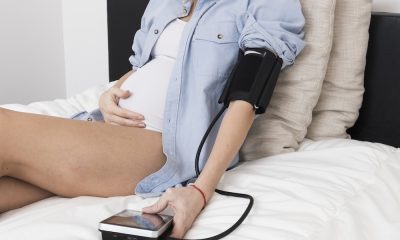
As clinicians, we instinctively understand safety in physical terms. If a blood pressure machine stops working, that’s immediately recognised as a patient safety issue. It gets escalated, reported and fixed.
But for a long time, digital issues have not been treated the same way. Slow systems, unreliable access, or inability to view the EPR were often accepted as “just one of those things”. Yet the impact on safety can be just as significant.
If you can’t see the record, you can’t see the risks. If you can’t trust the system, you start working around it.
Electronic patient records are no longer passive repositories of information. They influence what clinicians notice, how quickly they escalate concerns and what decisions they make.
That means the way these systems are governed, and how they are designed, tested and introduced, has direct consequences for patient safety.
A good example of this is central foetal monitoring. Used well, it can support situational awareness. But without clear governance and shared understanding, it can also create a false sense of security.
Being explicit that central monitoring does not replace bedside assessment or escalation is essential. If staff assume “someone else is watching”, the technology has unintentionally weakened safety.
Why safe digital infrastructure matters more than ever in maternity
Maternity care is non‑linear. Risk changes rapidly, and plans change, as women move between community and hospital settings.
Many digital systems are built around rigid templates and linear workflows that do not reflect this reality. When systems don’t fit practice, practice adapts.
Parallel notes, paper diaries, and reliance on free text are not resistance to digital tools; they are practical responses to keep care safe.
Operational realities add further challenge. Community midwives work across geography with unreliable connectivity, making offline access a safety requirement rather than a technical convenience.
Systems that support secure offline working reduce rushed documentation and missed safety checks.

Misbah Mahmood
On the labour ward, pressures intensify. Emergencies escalate quickly and staff are often fatigued. Here, usability becomes inseparable from safety.
Systems that add unnecessary steps increase cognitive load precisely when attention must remain on the patient. At four in the morning, design can either support safe decision‑making or work against it.
When the safest decision is saying “not now”
Digital governance is as much about preventing unsafe change as enabling innovation. Not every system that is technically ready is clinically ready.
Introducing change during periods of strain, limited training, or inadequate testing increases risk.
Pausing a rollout is rarely comfortable as delivery pressures create momentum to proceed. Effective governance, however, gives organisations permission to prioritise safety over speed.
Delaying implementation to allow further testing or clinical engagement often leads to safer adoption and greater staff trust.
Saying “not now” is not resistance to change. It is a mature safety response, as introducing change at the wrong time can cause harm that is far harder to undo.
Co‑design, not configuration: new models for supplier partnerships
Safe digital transformation depends on genuine partnership between NHS teams and suppliers, with shared responsibility for clinical risk.
Effective collaboration starts early, with meaningful clinical involvement, transparency about system constraints, and shared understanding of risk.
It continues through testing in real clinical environments and shared accountability for safety outcomes after go‑live.
Working with Harris Health Alliance and the K2 maternity tool made these conversations more effective.
Responsiveness to safety feedback was faster, and small design changes, such as surfacing critical risk information or adding validation checks to reduce error under fatigue, had significant impact on usability and safety.
Every change, however minor it appears, is a clinical safety decision. Digital governance provides the structure to recognise this and ensure changes are designed and implemented accordingly.
People, process and technology are an interdependent system
Technology does not fail in isolation. Risk emerges when people, processes, and digital systems are misaligned. Even the most sophisticated EPR will struggle if staff are unsupported, processes have not evolved, or workflows do not reflect clinical reality.
Technology can also obscure risk by embedding unsafe or outdated practices into systems that appear efficient when governance focuses only on technical delivery.
Effective digital governance recognises that patient safety depends on the interaction between people, processes, and technology.
Skills, confidence, and behaviours matter, as do evidence‑based, consistent processes and systems that are usable, reliable, and aligned with real clinical work.
Safety improves when these elements are deliberately aligned and governance focuses on learning rather than blame.
Design matters and systems must be fast, predictable, and forgiving of human fatigue. The same principle is evident in data quality.
A yes/no field relating to cord prolapse produced alarming figures due to human factors rather than practice.
Introducing a simple validation check prompting confirmation improved data quality and reduced risk by addressing system design, not individual behaviour.
This is digital governance in practice. It is recognising where design and reality collide and fixing the system rather than blaming clinicians.
From invisible to essential
Digital governance should no longer be invisible. It must be recognised, valued, and treated as a core component of patient safety.
That means involving clinical safety expertise from the outset, listening to frontline concerns, designing for real-world conditions, and being willing to pause when something does not feel safe.
The absence of incidents does not mean the absence of risk; often, it means the system has not yet failed under the wrong circumstances.
Maternity services, with their complexity and sensitivity, have much to teach the wider NHS about safe digital transformation.
When governance is shared, practical, and grounded in real clinical experience, digital systems can genuinely support safer care and not just record it.











 News4 weeks ago
Women’s digital health market set to reach US$5.28 billion in 2026 – report

 Insight4 weeks ago
Why the UK’s fertility rate keeps falling – and what it means if you’re trying now

 Wellness3 weeks ago
Women’s HealthX unveils Northwell Health, Corewell Health, Biogen & more to headline Chronic Disease stage

 Opinion3 weeks ago
What Maternal Mental Health Month reveals about where postpartum support actually breaks down

 Hormonal health4 weeks ago
Toxins and climate harms having ‘alarming’ effect on fertility, research warns

 News2 weeks ago
NIH Grant terminations disproportionately impact minority scientists, research finds

 Events2 weeks ago
WUKA brings Period-Positive Pool Party to London Aquatics Centre to keep girls swimming through puberty

 Fertility4 weeks ago
Researcher explores weight loss jab impact on PCOS