




News
Low insulin diet and avoiding four food groups may prevent menopause weight gain












Entrepreneur
Last chance to save on Women’s Health Week and Women’s Sport Summit: Early Bird pricing ends 11 September
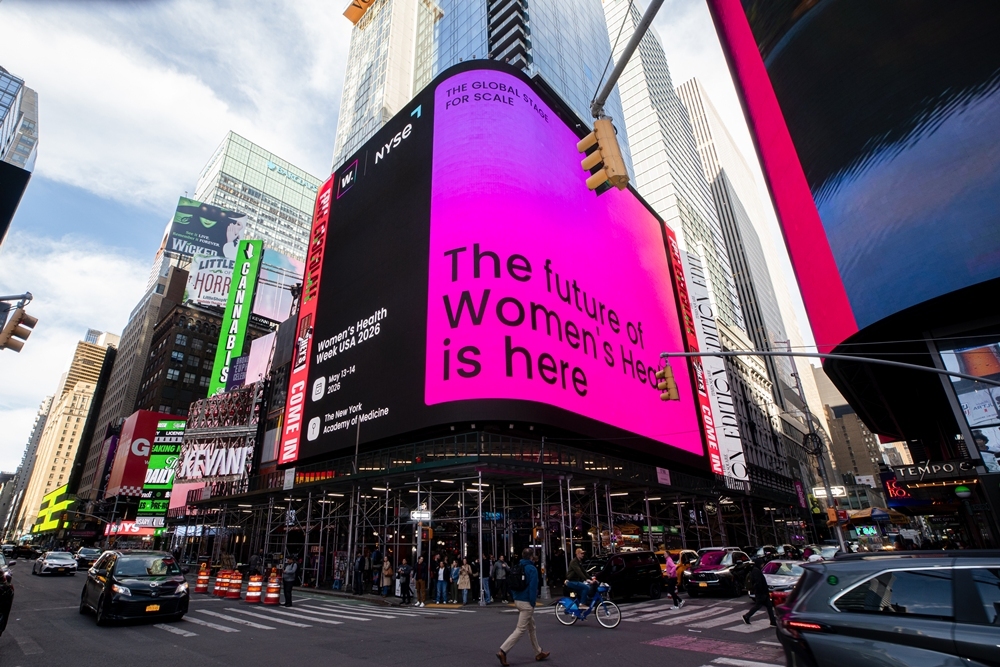
Early bird pricing for W Group’s two flagship October summits – Women’s Health Week Europe 2026 and Women’s Sport Summit Europe 2026 – closes on 11 September.
Both events take place at Emirates Stadium, London, bringing together founders, investors, corporates, and industry leaders shaping the future of women’s health and sport.
Women’s Health Week Europe 2026
7-8 October | Emirates Stadium, London
This year’s edition will be Women’s Health Week Europe biggest one yet: with 700+ attendees, 80+ speakers, and 20+ sponsors, it will also feature two stages – a Global Stage covering market trends and policy, and a Scale Stage focused on company-level growth and commercialisation. WHW takes place across two days of content, business matchmaking, and dealmaking.
Agenda highlights include:
- Where Capital Flows: Funding Trends in Women’s Health – with Merete Clausen (EIF), Ekaterina Gianelli (Calm/Storm), Henriette Hessen (Verdane), Jemma Day (British Business Bank), Ravit Warsha Dor (Telus Global Ventures), Tim Davis (LSEG)
- Six Feet Under-funded: Surviving the Valley of Death in Women’s Health – with Patric Stenberg (Gesynta Pharma), Valentina Milanova (Daye), Amber Vodegel (28x)
- The Women’s Health Label – Gift or Curse? · Live Debate – with Juan Camilo Arjona Ferreira (organon), Marissa Fayer (DeepLook Medical), Christian Lautner (Heal Capital), Annie Theriault (CBIV), Ida Tin (Clue)
- Passport to Scale: Taking Your Women’s Health Business Global – with Vanessa Carpenter (Femtech Across Borders), Annie Theriault (CBIV), Victorine Lançon (Daya Ventures), Dr Mridula Pore (Peppy)
Early bird pricing (ends 11 September):
| Ticket type | Early bird | Standard |
| Startups, Scaleups, Investors, Non-Profits, Government | £599 + VAT | £699 + VAT |
| Corporates, Payors & Providers | £1,799 + VAT | £1,999 + VAT |
| Service Providers & Consultants | £3,299 + VAT | £3,499 + VAT |
Register for Women’s Health Week Europe | See the full agenda for WHW
Women’s Sport Summit Europe 2026
6 October | Emirates Stadium, London
The first-ever Women’s Sport Summit expands W Group’s expertise in connecting key decision-makers to the sports industry.
WSS brings together rights holders, brands, investors, athletes, and media to accelerate commercial growth across the sector.
Agenda highlights include:
- From capital to crowd: the women’s sport cycle at scale – with Omar Shaikh (Arsenal FC), Nicole McWilliams (Google), Kerstin Lutz (Mercury13), Jo Currie (BBC Sport)
- Women’s sport through the investor lens: what gets funded – and why – Hugo Sever (APEX Capital)
- Rethinking ROI: what are we measuring that doesn’t actually matter? – Fi Watherston (Metro Bank), Silvia Keiser (Billie Jean King Cup), Gabriel Akin-Odujobi (Crux Football), Tammy Parlour (WST)
- Beyond the 90 minutes: matchday as a commercial product, not just a fixture – Maggie Murphy (Aston Villa Women FC), Sam Feasey (Diageo/Guinness), Molly Miller (OneFootball), Megan Feringa (The Athletic/The New York Times)
Early bird pricing (ends 11 September):
| Ticket type | Early bird | Standard |
| General Pass | £299 + VAT | £399 + VAT |
| Service Providers & Consultants | £1,799 + VAT | £1,999 + VAT |
Register for Women’s Sport Summit Europe | See the full agenda for WSS
Attending both events?
For group tickets or to attend both summits this October, contact Callum, W Group’s Client Success Lead, at [email protected].


Young women are more likely than young men to get health and wellness information from social media influencers, a US survey has found.
Among adults aged 18 to 29, 57 per cent of women said they received health and wellness information from influencers, compared with 47 per cent of men.
The Pew Research Center study surveyed 5,023 US adults and examined how young people consume health and wellness content online.

Local university students said influencer content frequently appeared in their social media feeds.
Kabija Koroma, a local university student, said: “It’s more exercise stuff, more like protein and like meals and like how to get ready and like the outfits of the day of videos on TikTok or lately. My favourite ones.”
About 51 per cent of women under 30 said they often consumed influencer content focused on beauty and personal appearance, compared with 18 per cent of men.
The study also found that 21 per cent of women often saw content about therapies outside mainstream medicine, compared with 10 per cent of men.
At least one-third of both young women and young men often encountered influencer content about mental health and weight loss. Around half or more of both groups regularly saw fitness-related content.
Another local university student, Ania Davis, said: “I see a lot like how to meal prep and how to get your morning started. Affirmations stuff. But I do also ask the adults around me because sometimes the internet is not right.”
Researchers also looked at why young adults sought health and wellness information from influencers.
About 51 per cent of young women said they watched the content because they wanted to change their health or lifestyle.
Women were also more likely than men to say they enjoyed hearing from people who shared their background or beliefs, at 23 per cent compared with 14 per cent.
Nineteen per cent of young women said they used influencer content to learn about topics they did not want to ask their doctors about, compared with 10 per cent of young men.
Despite regularly using social media, some students said they did not rely solely on influencer content when making decisions about their health and wellness.
Koroma said: “I’m always on TikTok 24/7 and Instagram, but I also like to ask people older than me because I don’t know everything.”

 Hormonal health2 weeks ago
Major UK study could be a ‘game-changer’ for heavy periods and endometriosis
 Pregnancy5 days ago
KOVE Medical raises €1.7 million to improve safety of foetal surgery
 Pregnancy2 weeks ago
One week left to apply: W Accelerate with Merck KGaA and M Ventures

 Pregnancy6 days ago
UK study aims to transform maternity care for high-risk pregnancies
 Menopause2 weeks ago
Quarter of women miss work due to menstual symptoms, survey finds

 Hormonal health1 week ago
PMDD after SSRIs or hormones: Why the brain may be the missing treatment target
 Diagnosis1 week ago
Ark Surgical secures further institutional backing to accelerate US expansion
 Insight2 weeks ago
Study to tackle years-long delays in endometriosis diagnosis
1 Comment