Connect with us

Entrepreneur

Korea’s Femtech Industry Goes Global as Vespexx Hosts Korea Femtech Summit 2026
Published

on

From AI embryo analysis in India to couples fertility care launching in the US, Korea’s women’s health startups are going global, and US investors are taking notice.

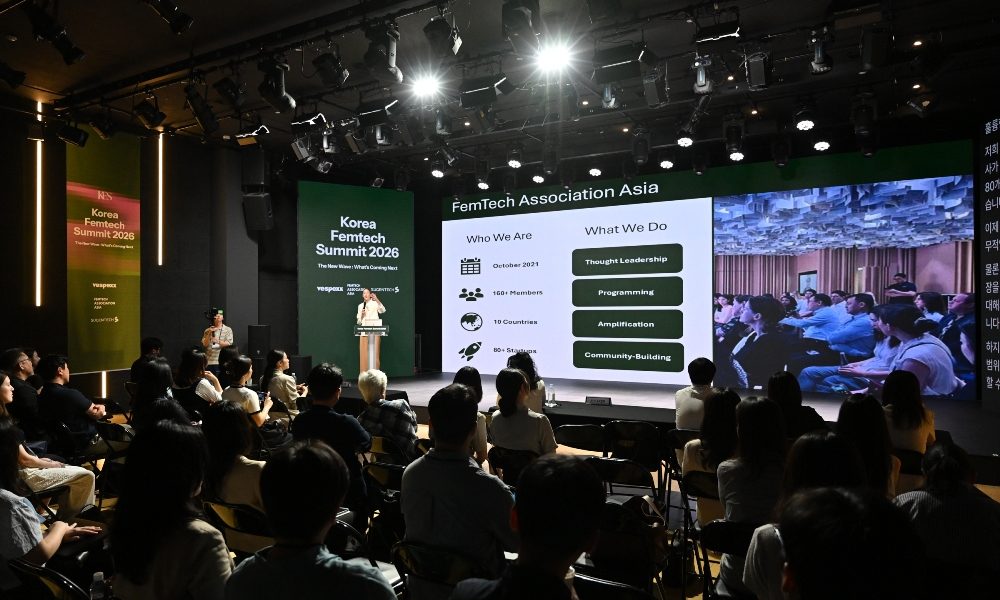
Vespexx, the femtech company behind couples preconception health platform Soonr, hosted Korea Femtech Summit 2026 on June 30 in Seoul, convening founders, clinicians, and investors from Korea, Singapore, Canada, and Japan to map the global expansion of women’s health technology.

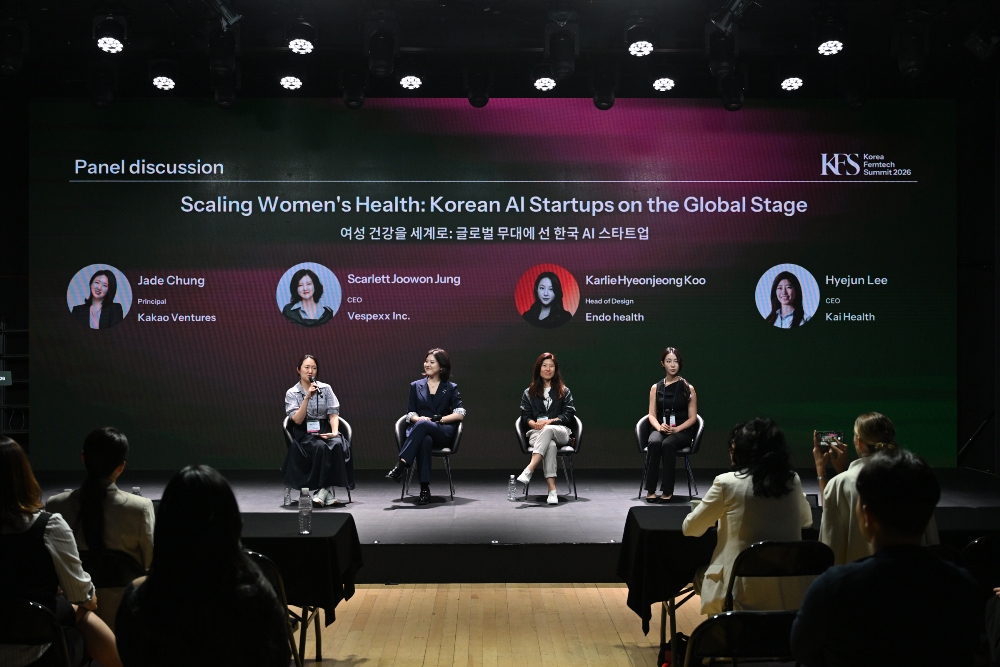
A panel moderated by Kakao Ventures’ Jade Chung, an OB/GYN-turned-investor, captured the summit’s central theme: Korean startups taking on the world. On stage were three companies already building well beyond Korea. Vespexx, led by Co-CEO Scarlett Joowon Jung, is entering the US with Soonr; Kai Health, founded by CEO Hyejun Lee, has deployed its AI embryo-analysis software across more than 120 fertility clinics in India; and Endo Health, represented by the Head of Design Karlie Hyeonjeong Koo, has built Glow, an AI coaching app whose user base is 98% women and which is backed by US investors including a16z. Together they discussed what it takes for Korean startups to compete globally, where AI creates a real edge, and whether “K-femtech” can follow the path of K-beauty onto the world stage.
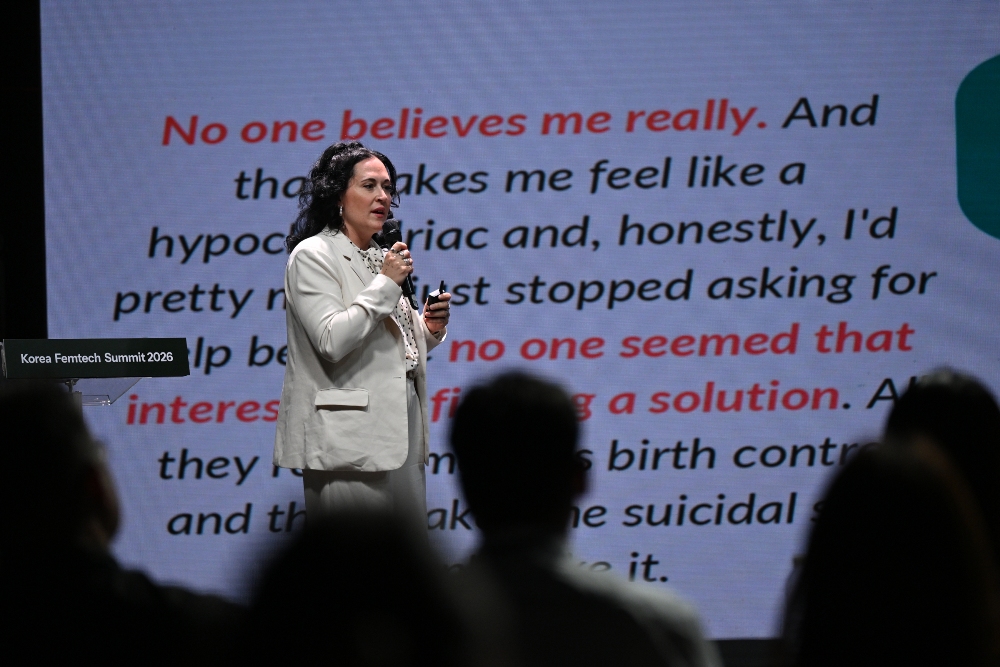
The program spanned the full arc of women’s health technology. Lindsay Davis, founder of FemTech Association Asia, opened with a look at where Asia’s femtech stands today. Dr. Juhye Lee of Ewha Womans University Mokdong Hospital offered a clinician’s view of how patient needs are shifting, arguing that women’s health is expanding beyond pregnancy and treatment toward care across the entire life course. Boram Bae, Head of Digital Health PM Part at Samsung Electronics spoke to how a consumer platform at global scale can connect women’s everyday health data with life-stage care. And Rimi Lee, head of the Femtech Center at KOSDAQ-listed diagnostics company Sugentech, traced the evolution of hormone testing from results read by eye to AI-assisted analysis, and pointed toward wearable continuous hormone monitoring as the next frontier.

Vespexx Co-CEO Scarlett Joowon Jung presented the company’s “dyadic health” approach on their ‘Soonr’ app, which brings both partners into fertility and preconception care rather than tracking a woman’s data alone, an approach validated by their legacy product, Signaling’s 800,000 users across Asia, as the company prepares for US launch.

The summit also featured Rachel Bartholomew, the Canadian founder of Hyivy Health and Femtech Across Borders, who built her pelvic-health company, and Megumi Kimura of the Japan Women’s Health Innovation Association, who outlined the investment and business models driving Japan’s fast-growing femtech market.
At the summit, Vespexx also announced the launch of Femtech Korea, an industry network intended to connect Korean femtech companies with global markets and partners, and to serve as a bridge for cross-border collaboration.

“Korea has world-class healthcare technology, but femtech has been one of its best-kept secrets,” said Scarlett Joowon Jung, Co-CEO of Vespexx. “The companies on this stage are proof that’s changing. We’re not just building for Korea anymore, we’re building for the world, and we want US partners and investors to be part of that.”

Korea Femtech Summit 2026 was hosted by Vespexx and co-hosted by FemTech Association Asia. The summit was sponsored by Sugentech, with additional support from Innerness and Octolabs.

About Vespexx
Vespexx is a Korean femtech startup and subsidiary of KOSDAQ-listed biotech Sugentech. The company operates Soonr Health, a couples-focused preconception health platform, and its earlier product Signaling has accumulated over 800,000 users. Vespexx is currently expanding into the North American market.

About Femtech Association Asia
FemTech Association Asia is the region’s first and largest specialist advisory and industry network for founders, investors, corporate partners, and ecosystem contributors, with a core focus on improving women’s health through technology solutions.


News

Juno Bio secures US$3.8m for precision diagnostics

Published

on

Juno Bio has secured US$3.8m to expand its diagnostics platform for vaginal health and reproductive care.

The funding round was led by Ada Ventures, with participation from Artesian, Entrepreneur First and Illumina Accelerator.

The women’s health startup said the seed funding will support the launch of its first CLIA-certified sequencing laboratory in Oakland, California, and a new clinical vaginal microbiome and STI test for healthcare providers.

CLIA certification refers to US laboratory standards for testing human samples used in diagnosis, prevention or treatment decisions.

Dr Leighton Turner, co-founder and chief scientific officer of Juno Bio, said: “The vaginal microbiome is still one of the least understood systems in the body at a clinical scale.

“With our lab, we’re starting to build a measurement standard that clinicians can actually use.

“We believe the level of detail from this kind of testing can meaningfully improve how vaginal healthcare is provided.”

The company is developing precision diagnostics for vaginal health, where patients can experience recurring symptoms, inconsistent diagnoses and treatments based on trial and error.

Juno Bio said bringing testing in-house gives it greater control over the process, from sample handling to results, while allowing it to refine its technology and build what it says is one of the largest datasets focused on the vaginal microbiome.

The vaginal microbiome is the community of bacteria and fungi that naturally live in the vagina. Changes in this balance can be linked to infections, symptoms and wider reproductive health issues.

Juno Bio’s newly launched clinical test examines the wider vaginal microbiome and screens for four common sexually transmitted infections, or STIs.

Rather than looking for a single cause, the test is intended to give clinicians a broader picture of what may be contributing to symptoms.

Juno Bio says this matters because multiple infections can occur at the same time and microbiome changes may be linked to fertility, menopause or recurrent infections.

Dr Anna Powell of Johns Hopkins said: “Vaginal microbiome testing has the potential to significantly reshape how we understand and manage vaginal health, particularly for patients with recurrent or unexplained symptoms.

“While the field is still evolving, advances in sequencing and data interpretation are moving us closer to a future where more personalised, microbiome-informed care can complement existing diagnostic approaches.”

Check Warner, co-founding partner at Ada Ventures, added: “Juno Bio is setting a new standard for how vaginal health is understood and managed.

“What they’ve built at this stage, with this level of capital efficiency, is exceptional.

“We’re proud to support the team as they scale their clinical infrastructure and continue leading innovation in this critically underserved category.”

Continue Reading

Insight

Women’s health draws record $1.55bn in equity as capital spreads beyond the mega-rounds

Published

on

Women’s health companies raised a record $1.55 billion in disclosed equity in 2025, up 41 per cent year on year, according to W Group’s first Global Women’s Health Investment Report, The Road to the Era of Scale.

The report tracks over 500 funding stories and 164 equity rounds across 15 categories and 30+ countries.

Eighty-five companies raised equity in 2025, the highest single-year count on record. But according to the report, the headline figure isn’t the most significant one.

The bigger shift is in where that capital went and how concentrated it was at the top compared to the year before.

The report also points to a brand new investment category that didn’t exist twelve months ago.

SheMed closed a $50 million Series A this year to build a women-specific GLP-1 and metabolic health platform, the first dedicated raise of its kind.

Alongside the momentum, the report identifies one structural risk that could determine whether 2025’s growth holds: a bottleneck at Series A that’s leaving a number of promising seed-stage companies stuck.

Molly Taylor, head of content at W Group, said: “2025 was the biggest year women’s health has ever had, and the most important finding isn’t the headline number.

“It’s that the money has stopped pooling at the top.

“Capital is reaching more companies, more categories and more countries than ever before. The Era of Scale is real. It’s just not finished, and the Series A gap is where it could stall.

“Closing that gap is the highest-leverage move this ecosystem can make in 2026.”

Read the full report: https://wplatform.co/forms/womens-health-equity-funding-trends-report-2026?utm_source=advocacy&utm_medium=ext_email&utm_campaign=2026-q3-health-report-femtech-world

Continue Reading

Entrepreneur

Onto Health acquires diagnostics software company Levy Health

Published

on

Onto Health has acquired Levy Health, a fertility software company providing precision diagnostics and patient intake for reproductive medicine.

The acquisition, fuelled by Onto Health’s US$20m Series A fundraise in April, supports its plan to build scalable, tech-enabled infrastructure for reproductive medicine.

Onto founder Roohi Jeelani, MD, called it the first of several moves in the company’s expansion strategy in a LinkedIn post, adding that there was “more coming soon”.

She said: “This isn’t just an acquisition, it’s proof of how we’re building Onto: physician-led, tech-enabled, and built to scale without losing the personal touch fertility patients deserve.”

Headquartered in Chicago, Onto Health combines evidence-based fertility care with artificial intelligence-driven diagnostics, clinical automation and longevity science.

AI-driven diagnostics use software to analyse patient information and support clinical decision-making, rather than replace clinicians.

Levy Health, founded in Berlin with US offices in San Francisco, helps medical providers identify endocrine disorders more quickly and helps clinics streamline fertility workups.

Endocrine disorders affect the body’s hormone system, which can influence ovulation, menstrual cycles and fertility.

Co-founder Caroline Mitterdorfer said joining Onto would expand Levy Health’s fertility care tools to more clinics and patients, helping physicians focus on patient care.

Onto opened its first clinic in Chicago in February, with plans for three more in the greater Chicago area.

The company said in April that it would use its new funding, led by Artis and Humania, to support additional operations in the US and expand into the Gulf Cooperation Council.

The Gulf Cooperation Council includes six Arab states bordering the Persian Gulf.

Continue Reading

Trending

Copyright © 2025 Aspect Health Media Ltd. All Rights Reserved.