




Pregnancy
How Pouch Health is giving pregnant patients access to scan images and clinical records


Article produced in association with London Pregnancy Clinic and Pouch Health
A woman attending a private pregnancy scan will often leave her appointment with a printed photograph and a verbal summary of findings.
The detailed report, together with the full image set, may follow by email days later, or may require a login to a clinical portal that is not accessible from a mobile device.
For women managing their antenatal care across multiple providers, including both private clinics and NHS community midwifery, accessing a coherent record of their pregnancy health has historically required considerable effort.
Pouch Health is a digital health platform that was developed specifically to address this problem.
Where Pouch Health Came From
The idea for Pouch Health emerged from direct clinical experience at London Pregnancy Clinic, a private fetal medicine and pregnancy scanning centre that sees hundreds of patients per month across its City of London and West London sites.
The clinical team identified a recurring pattern: patients arriving without their previous scan reports, results being held in disconnected systems, and families unable to share imaging with other members of their care team at key moments.
The app was built as a practical response to these observed gaps, not as a standalone consumer product.
What the Platform Does
Pouch Health is an all-in-one pregnancy companion app.
Its central feature is the Digital Pouch, a personal health record where users can store and access their scan reports, blood test results, appointment summaries and clinical correspondence from any internet-connected device.
The platform is designed to be the single place where a woman’s complete antenatal record lives, accessible to her and shareable with whoever is involved in her care.
The app also includes a week-by-week pregnancy development tracker and a moderated community forum where users can connect with other expectant parents.
These features extend its role beyond records management into broader pregnancy support, though its clinical records function is the most significant from a healthcare perspective.
Tricefy Integration and Real-Time Image Access
London Pregnancy Clinic uses Pouch Health in conjunction with Tricefy, a secure cloud-based imaging platform, to deliver scan images and reports to patients immediately after their appointment.
When a scan is completed at the clinic, images are transferred to Tricefy and made accessible to the patient through Pouch Health, typically within minutes.
This means that patients leave their appointment with their full image set already accessible on their phone rather than waiting for a physical copy or a delayed digital delivery.
The clinical significance of this goes beyond convenience.
When a patient attends a subsequent appointment at a different provider, such as an NHS community midwife or a hospital consultant, having immediate access to their imaging enables more productive clinical conversations and reduces the risk of information being lost at care transitions.
Patient Data Ownership in Antenatal Care
The shift towards patient-held records in the NHS has been a stated goal of digital health policy for some years. NHS England’s digital health commitments include expanded access to patient records through the NHS App.
In the private sector, Pouch Health represents a parallel development: a patient-first approach to data that does not depend on institutional systems granting access, but gives patients control of their own record as a default rather than an exception.
For women receiving care across private and NHS settings simultaneously, this has practical value.
Rather than each provider holding a fragment of the clinical picture, the patient holds the whole record and shares it selectively with whoever needs it.
This model reduces duplication, improves continuity and aligns with the direction of travel in both NHS and private digital health.
A Reported Gap in the Care Experience
An article published by Future Female Health described Pouch Health as a direct response to the fragmented nature of the pregnancy care journey, noting that the app was developed by a team with first-hand clinical experience of the problem it was designed to solve.
This grounding in clinical reality distinguishes Pouch Health from technology products developed without a primary care context.
What This Means for Patients at London Pregnancy Clinic
Patients attending London Pregnancy Clinic receive access to Pouch Health as part of their clinical experience. 3D scan images, anomaly scan reports, NIPT results and fetal wellbeing assessments are all made available through the platform.
For patients who also access care through NHS pathways, the ability to present a complete and current clinical record at every appointment improves care coordination and reduces the administrative burden that typically falls on the patient.
For the wider FemTech sector, Pouch Health illustrates a broader trend: the most effective digital health tools are frequently those built by practitioners who have experienced the clinical problem they are trying to solve.
Technology that emerges from the consultation room rather than the conference room tends to address the right problems.
Disclaimer: This article is produced for informational purposes only and does not constitute medical advice, diagnosis or treatment. Clinical guidance referenced reflects published NHS, NICE and RCOG standards as at March 2026. Individual circumstances vary; readers are advised to consult a qualified healthcare professional before acting on any information in this article. This piece was produced in association with London Pregnancy Clinic and Pouch Health, which provided background clinical information for editorial purposes. Hyperlinks to external sources are included for reference only and do not represent an endorsement of any product, service or organisation.




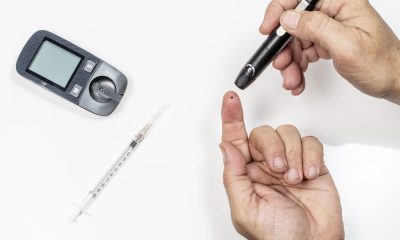











Pregnancy complications may increase women’s risk of peripheral artery disease later in life, new research suggests.
The study analysed data from more than two million women in Sweden who gave birth to single babies between 1973 and 2015.
Led by Casey Crump, the research examined the long-term risk of peripheral artery disease among women who experienced preterm delivery, pre-eclampsia, gestational diabetes or other adverse pregnancy outcomes.

Crump, professor in the department of family and community medicine at McGovern Medical School at UTHealth Houston, said: “Our prior work has already shown that adverse pregnancy outcomes are associated with long-term risks of heart disease, stroke, and heart failure.
“This study builds on that work by showing that these women have an increased risk of peripheral artery disease, an important but understudied cardiovascular condition.”
Peripheral artery disease is often a precursor to long-term cardiovascular complications, including stroke, ischaemic heart disease and premature death.
The condition affects millions of people worldwide and occurs when narrowed arteries reduce blood flow, most commonly to the legs and feet.
Ischaemic heart disease occurs when the heart does not receive enough blood and oxygen, usually because the arteries have narrowed.
Symptoms of peripheral artery disease can include leg pain, cramps while walking, numbness, cold feet and sores on the feet or legs that are slow to heal.
Crump said women who experience pregnancy complications have an important opportunity after giving birth to make plans with their primary care doctor to monitor long-term risks.
Women who have experienced complicated pregnancies should speak with their doctor about possible future cardiovascular health risks.
Checks for blood pressure, diabetes and cholesterol are important.
While the period after childbirth is an important time for women to monitor their health, Crump said it is never too late to lower the risk of peripheral artery disease.
He said: “Women with a history of adverse pregnancy outcomes who seem to be doing well may still have a higher risk that can emerge later in life.”
Crump also suggested preventive steps such as avoiding smoking, maintaining a healthy weight and following a healthy lifestyle.
He stressed the importance of long-term follow-up care and conversations with healthcare providers to help protect cardiovascular health later in life.

A high-powered ultrasound treatment could help identical twins affected by a rare and serious condition during early pregnancy, an initial study suggests.
Twin-to-twin transfusion syndrome, or TTTS, causes uneven blood flow between identical twins who share a placenta.
The imbalance can leave one baby dangerously small and the other too large, putting both babies’ survival at risk.

Brioney Garrett’s daughters were in danger before doctors used the world-first treatment to seal the blood vessels causing the problem without an operation.
Nancy and Margo were born healthy and, now aged four, are due to start school.
Researchers from Queen Charlotte’s and Chelsea Hospital tested the non-invasive procedure in 10 women from the UK and elsewhere in Europe after scans detected TTTS during early pregnancy.
Five women needed further treatment, while 12 of the 20 babies survived following the procedure.
The researchers described having a treatment that did not require a needle or telescope to be inserted into the mother’s abdomen as “extremely exciting”.
However, they said larger studies involving more pregnant women were needed before the procedure could be offered more widely.
Garrett described her daughters as “my miracle twins”.
She said: “We were in a very dire situation and I don’t forget that.
“It stays with me always how things could have been. Every day I still count my blessings.”
TTTS affects between 10 and 15 per cent of identical twins who share a placenta, representing around 300 to 400 pregnancies in the UK each year.
The uneven blood flow causes excess fluid to build up around the larger recipient baby, while leaving dangerously little fluid around the smaller donor baby.
Treatment usually involves inserting a needle into the womb to drain some of the fluid or using a laser to seal the connecting blood vessels.
Garrett’s procedure took about 20 minutes. She lay flat while a specially designed machine directed high-powered ultrasound waves at small blood vessels in her placenta.
She said: “It was very quick and pretty painless.”
Christoph Lees, head of fetal medicine at Imperial College Healthcare NHS Trust and professor of obstetrics at Imperial College London, described the research as “very promising”.
He said: “If this could work in a fully-fledged study, it could give hope to a lot of women who otherwise might have to have quite invasive treatment.”
Ultrasound is commonly used during medical scans to produce images of the body, but this procedure uses much more focused waves.
Heat generated by the waves can seal blood vessels about 2mm in diameter and located around 5cm to 6cm beneath the skin.
The procedure blocked blood flow in 90 per cent of the vessels treated during the study, with no unwanted side-effects reported.
Twins Trust, which supported the study, said the approach could make a significant difference for families affected by TTTS.
Helen Peck, head of healthcare engagement and research, said: “Any procedure that is non-invasive and can potentially identify TTTS earlier and improve outcomes for our families with this life-threatening condition could be a turning point.”
Scans carried out weeks after Garrett’s procedure showed that blood flow between the babies had been rebalanced, although other problems developed during the pregnancy.
Garrett said Margo, who had too little fluid around her, “was in a much better position” and that “the strain on Nancy’s heart had eased”.
Nancy and Margo were born at nearly 34 weeks, weighing 3lb 7oz and 3lb 3oz respectively.
Garrett said: “They were both healthy, and Margo wasn’t as small as we worried she was going to be.”
The twins are due to start primary school in September.
Garrett said: “They’re funny, smart, energetic little girls that just fit right in with their age group.”

A new reporting tool built specifically for obstetrics and maternal-fetal medicine has launched, aimed at teams managing increasingly complex pregnancies with limited time and resources.
Trice Imaging has released Trice Workspace Reporting, which connects imaging, reporting and longitudinal patient data in a single workflow to support faster clinical decision making.
Birth rates are falling worldwide, but pregnancies are getting more complicated. Advanced maternal age, IVF-assisted pregnancies, rising obesity rates and a higher prevalence of hypertension and diabetes mean more cases now require specialist monitoring, advanced imaging and multidisciplinary care.
At the same time, clinical teams are stretched and facing growing administrative demands.
Trice Workspace Reporting brings together customisable reporting, dynamic pregnancy dating and longitudinal patient history with an AI-ready, EHR-interoperable infrastructure, all inside the company’s Tricefy image management platform.
The company says it aims to accelerate standardised and synchronised report turnaround, support timely clinical decisions and improve operational efficiency for fetal medicine services.
“Maternal fetal medicine teams are managing increasingly complex pregnancies while being asked to do more with limited time and resources,” said Mark A. Samii, chief revenue officer at Trice Imaging.
“Trice Workspace Reporting is designed to remove unnecessary friction from reporting by creating a structured digital foundation that supports today’s need for connected clinical workflows.
“It also provides a digital foundation as practices prepare for tomorrow and the evolution of AI-enabled fetal assessment, anomaly detection and outcome prediction technologies.”
Trice Imaging describes its mission as transforming the women’s health journey by connecting physicians, patients and healthcare systems. From independent practices to large hospital ecosystems, it aims to reach the entire women’s health continuum, spanning IVF and reproductive health, maternal-fetal medicine and OB/GYN, and onwards to lifelong women’s health.
For more than 17 years the firm has worked on cloud-based storage, retrieval, display, organisation and exchange of ultrasound medical images and associated information across health environments.
Its wider platform now extends to dynamic clinical reporting, AI-driven workflow optimisation, data analytics and secure patient engagement.
Trice Imaging holds regulatory and data protection clearances in 40 countries. It has offices in Miami and Stockholm, alongside a growing network of global distributors.











 News2 weeks ago
New menopause drug approved for use by NHS in Scotland

 Hormonal health1 week ago
Stardust period tracker shares health data, study reveals

 News5 days ago
Zero Candida market set to reach over US$2 billion by 2030 – report

 News2 weeks ago
Women’s health draws record $1.55bn in equity as capital spreads beyond the mega-rounds

 Fertility2 weeks ago
Softening ovaries could extend fertility as women age, study suggests

 Entrepreneur2 weeks ago
Onto Health acquires diagnostics software company Levy Health

 News1 week ago
Congress urged to invest over $20bn to close women’s health gap

 Menopause1 week ago
Many women still confused about perimenopause, research finds
2 Comments