




Pregnancy
Parents share pregnancy loss data to improve care
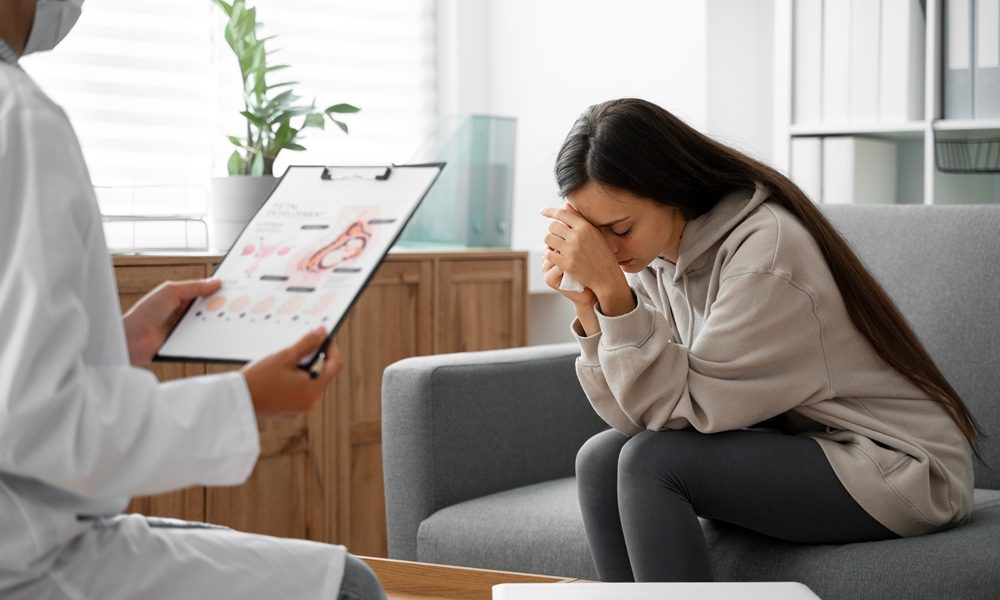
Parents who have experienced pregnancy loss are contributing data from apps and fitness trackers to help shape future support and improve maternal care services.
The initiative aims to create a new model giving families more control over how personal data — such as entries from wellbeing apps and diaries — is used to support others.
While the NHS routinely collects medical data to improve care, it rarely includes day-to-day information from people’s lives. The project seeks to change that, with safeguards for consent and transparency.

Led by researchers at the University of Southampton, the Roberta Project is being delivered through the National Institute for Health and Care Research’s Southampton Biomedical Research Centre.

Professor Age Chapman is head of the university’s digital health and biomedical engineering research group.
Chapman said: “Health-related data outside of the NHS is increasingly important for improving health and wellbeing, but how can we be sure it is being handled with care, transparency and consent?”
“The Roberta Project is about empowering communities to say where they want data to be used, so their voices and experiences can be at the very core of maternal support.”
The team plans to create a ‘data trust’ — a governance framework that gives families who have experienced early pregnancy loss a collective say in how their information is used.
Professor Dame Wendy Hall is director of the university’s Web Science Institute and lead of the NIHR Southampton BRC’s data, health and society theme.
She said: “Data collected with consent is more inclusive and, above all, impactful for new research or improving care,” said
“We ultimately want to develop a ‘data trust’ – a framework for data governance – which puts families who have experienced early pregnancy loss at its centre.
“It would allow them to collectively decide how their information is used to shape support for those who may be affected by miscarriage in the future.”
Workshops are being held with parents who have lived experience of loss, alongside clinicians, policymakers and legal experts.
These sessions explore scenarios featuring a fictional character named Roberta, who navigates pregnancy after loss using digital tools.
“Sadly, some tools fail to account for pregnancy loss, often continuing to send notifications after a miscarriage,” said Professor Michael Boniface, project co-lead and associate director of the Web Science Institute.
“Roberta’s story helps participants surface these challenges and reimagines what respectful, inclusive digital health design might look like.”
Pregnancy
£50m initiative aims to tackle disparities in maternal healthcare
Entrepreneur
Liverpool uni secures £18.m for women’s health studio and life-saving tech

The University of Liverpool has secured £1.8m to test a device for postpartum bleeding and launch a new women’s health studio.
The PPH Butterfly is designed to help control postpartum haemorrhage, which is severe bleeding after childbirth and a leading cause of maternal death worldwide.
The funding will support research into how the device can be used in clinical practice and generate evidence to inform its wider adoption.
The university has launched the Women’s Health Innovation Studio, known as the WIN Studio, alongside the project.
The £1.8m initiative is predominantly funded by the National Institute for Health and Care Research, which is providing £1.5m, with additional support from the university.
The PPH Butterfly project will involve a multi-centre clinical trial across the UK and a global feasibility study looking at how practical it would be to use the device in different healthcare settings.
The WIN Studio is led by Andrew Weeks, professor of international maternal health care at the University of Liverpool and a senior investigator at the National Institute for Health and Care Research, and Dr Teesta Dey, a tenure track fellow in the department of women’s and children’s health.
Dr Dey will also lead the PPH Butterfly project.
Its work will cover conditions linked to female biology, including endometriosis, menopause and pregnancy-related complications.
It will also support technologies for diseases that affect women differently or disproportionately, even when they are not usually classed as gender-specific conditions.
Dr Dey said: “Women’s health has often been marginalised within healthcare systems and innovation markets, resulting in treatments, devices and care models that fail to adequately account for women’s specific needs. WIN Studio seeks to change this status quo and reconfigure how health technologies are conceived and delivered.
“The funding from NIHR for this £1.8m project is precisely the kind of innovation the WIN Studio exists to foster: clinically urgent, women-centred, and with the potential to save lives at scale.”
The studio recently hosted an event at Liverpool Women’s University Hospital as part of the Liverpool City Region Combined Authority’s Innovation Investment Fortnight.
Seven innovations are currently undergoing clinical testing through the studio, with three developed internally.
The studio will work closely with NHS University Hospitals Liverpool Group and provide clinical, regulatory and commercial support to people developing women’s health technologies.
It will also involve patients and members of the public in shaping research priorities and product development.
Its wider programme includes collaborations involving clinicians, engineers, economists, academics and policymakers.
The project team says the PPH Butterfly is a simple, low-cost device designed to control severe bleeding quickly and with minimal training.
According to the team, postpartum haemorrhage causes around 70,000 deaths globally each year, equal to about one death every seven minutes.
The device previously received £1.1m in funding from the National Institute for Health and Care Research.
The latest £1.5m grant will support a randomised UK trial, in which participants are allocated to different treatment groups by chance, and a global feasibility assessment.
Weeks said: “In an area where women face deep health inequalities, WIN Studio has a vital role to play. By working in partnership with the NHS, local government and communities, we can ensure that research leads to real-world impact.
“Liverpool has a highly integrated ecosystem of academic, clinical and commercial expertise. By bringing these together under a single platform, the WIN Studio aims to act as a national exemplar for equitable health innovation. Transforming the way medical technologies are developed is essential to addressing gender disparities in healthcare outcomes.”
Another product supported by the university, the LifeStart Trolley, has already reached commercialisation.
The small mobile resuscitation trolley allows newborn care to be carried out at the bedside while the baby’s umbilical cord remains intact, enabling delayed cord clamping.
Delayed cord clamping means waiting before cutting the cord so blood can continue flowing from the placenta to the baby after birth.
Clinical trials conducted around 10 years ago found that life-saving care could be provided successfully at the bedside using the trolley.
It was later commercialised by Inspiration Healthcare and is now used in more than 70 UK maternity units and in 36 countries, including Norway, Italy and the US.
Pregnancy
Type 2 diabetes raising twice as fast in younger womem, research finds
Hormonal health2 weeks agoPerimenopause misinformation ‘putting women at risk’
Hormonal health3 weeks agoNHS urged to update website following renaming of PCOS
News2 weeks agoWomen still being failed when they reach menopause, experts say
Insight4 weeks agoPCOS renamed after decade-long campaign to end ‘cyst’ misconception
Entrepreneur2 weeks agoWomen’s Health Innovation Summit opens submissions for 2026 Innovation Showcase
Mental health1 week agoBritish women among angriest in Europe, health survey reveals
Fertility4 weeks agoAI could transform ovarian care through personalisation, study finds
News2 weeks agoThree menopause innovators shortlisted for Femtech World Award



