




Menopause
CBT shows promise for menopause insomnia and hot flashes


Cognitive behavioural therapy (CBT) may offer short-term relief for menopause insomnia and night-time hot flushes, a pilot study suggests.
CBT is a structured, short-term talking treatment that helps people change thoughts and behaviours that can worsen sleep problems.
Researchers found the intervention was linked to meaningful short-term improvements in insomnia severity, hot flush interference, sleep self-efficacy, or confidence around sleep, and depressive symptoms.
The Menopause Society said insomnia affects an estimated 20 to 60 per cent of perimenopausal and postmenopausal women in the US.
Ongoing research is focusing on effective treatments because insomnia can have serious physical and psychological effects.
Dr Monica Christmas, associate medical director for The Menopause Society, said: “Nocturnal hot flushes (night sweats) and sleep disruption can have a significant effect on the quality of life with many women claiming extreme impairment due to symptoms that often start in early perimenopause and last 10 or more years.”
“Sleep disturbances can persist even in those using pharmacological therapy to manage hot flushes.
“The study’s findings highlight the utility of cognitive-behavioural therapy as a standalone treatment for insomnia and hot flushes, offering women an alternative or adjunct to pharmacological treatments.”
Insomnia is defined as disturbed sleep associated with distress or impaired daily functioning and is one of the most common complaints in perimenopause and postmenopause.
It can reduce quality of life and is linked to higher healthcare use and costs, disability, depression and cardiovascular disease.
Hot flushes occur in 60 to 80 per cent of women during the menopause transition and can persist for four to five years on average.
Night-time hot flushes are linked to sleep disruption, and women may respond by napping or spending longer in bed, which can help keep insomnia going.
Previous studies have shown that cognitive behavioural therapy is an effective treatment for insomnia and may also help women cope with hot flushes and other menopause symptoms.
However, few trials have looked at both insomnia and hot flushes together.
Insomnia during and after the menopause transition is complex and can have many causes, including ageing, hormone fluctuation, hot flushes, other sleep disorders, psychiatric and medical conditions and psychosocial stressors.
Because women with acute and sustained insomnia can experience greater negative health effects, effective treatment is important.
The pilot study concluded that CBT was feasible and may be a promising approach for menopause-related insomnia and nocturnal hot flushes, although the benefits appeared to lessen after three months.












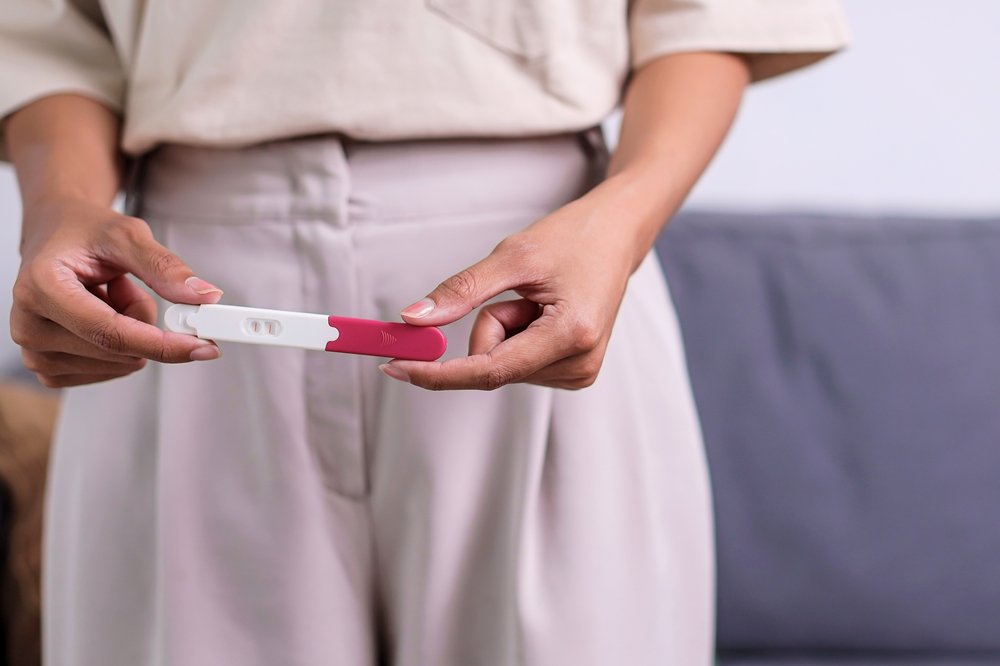
Immunotherapy may temporarily restore fertility in women with autoimmune premature ovarian insufficiency, a pilot study suggests.
Three of the 10 women who received treatment later gave birth to healthy babies.
Premature ovarian insufficiency, or POI, affects just over three per cent of women worldwide and occurs when the ovaries stop functioning before the age of 40.

The condition significantly reduces fertility and can have several causes, including autoimmune processes and genetics.
Researchers at Karolinska Institutet examined whether immunotherapy could make the ovaries temporarily responsive to hormonal stimulation in women with POI caused by autoimmunity.
The study included 12 women aged between 18 and 35 with autoimmune POI.
Two withdrew before treatment began. The remaining 10 underwent ovarian hormone stimulation before receiving rituximab and again four to six months after treatment.
Rituximab is an approved and well-established medicine used to treat several autoimmune conditions and cancers.
None of the women responded to ovarian stimulation before receiving the drug.
After treatment, six developed follicles that made it possible to retrieve eggs in response to ovarian stimulation.
Follicles are small sacs within the ovaries where eggs develop.
Professor Angelica Lindén Hirschberg, the study’s first author and a professor at Karolinska Institutet’s Department of Women’s and Children’s Health, said: “The results show that in some women there remains an egg reserve that can be activated when the autoimmune process is suppressed.”
In five women, mature eggs could be frozen or fertilised.
Three later had embryos transferred and all three gave birth to healthy babies.
For safety reasons, the embryo transfers took place no earlier than one year after treatment.
One serious side effect was reported and was linked to the hormone stimulation rather than the immunotherapy.
Women with autoimmune POI commonly have other autoimmune diseases.
All six women who responded to the treatment also had autoimmune Addison’s disease, a condition in which the immune system destroys the adrenal glands.
The study was a proof-of-concept investigation without a control group and involved a small number of participants, meaning the findings must be interpreted cautiously.
A proof-of-concept study is an early investigation designed to assess whether an approach could work before it is tested more widely.
Professor Lindén Hirschberg said: “This is a first step. To determine whether the method is effective and safe, larger, randomised studies are required.”
The research team has launched a larger randomised study.
The work was carried out by researchers at Karolinska Institutet, Karolinska University Hospital and the University of Bergen.
It was funded by organisations including the Swedish Research Council, the Knut and Alice Wallenberg Foundation, the Novo Nordisk Foundation and Region Stockholm.
The researchers reported no conflicts of interest.
POI is also linked to long-term health risks caused by oestrogen deficiency, including osteoporosis, an increased risk of cardiovascular disease, cognitive decline and poorer mental and sexual wellbeing.
Hormone replacement therapy can relieve menopausal symptoms and reduce many of these risks, but no treatment has been reliably shown to restore fertility in women with POI.
Egg donation was previously the only option for women with the condition who wanted to become pregnant.

An EU committee has backed a report warning of systemic inequalities in women’s health research, diagnosis and treatment across Europe.
The European Parliament’s Committee on Women’s Rights and Gender Equality approved the report, which was initiated by Renew Europe.
Women remain under-represented in medical research and clinical trials.

Around 72 per cent of drug trials do not provide data separated by sex and gender, while only five per cent of global research and development funding is dedicated to women’s health.
The report was led by Renew Europe rapporteur Billy Kelleher MEP of Fianna Fáil in Ireland.
It calls for greater investment in women’s health research, stronger inclusion of women in clinical trials and gender-sensitive diagnostics and treatments, particularly for endometriosis, menopause and cardiovascular disease.
Kelleher, first vice-president of Renew Europe, said: “Women’s health remains one of medicine’s biggest blind spots.
“When research, clinical trials and medical data fail to reflect women’s experiences, the result is poorer diagnosis, treatment and care.”
The report also calls for improved access to sexual and reproductive healthcare, including follow-up to the successful European Citizens’ Initiative “My Voice, My Choice”.
Its recommendations include better support for women’s physical and mental health and access to high-quality care throughout pregnancy, childbirth and the postnatal period, free from discrimination.
It also highlights additional healthcare barriers faced by LGBTQI+ people and women in marginalised communities or vulnerable situations.
Kelleher said: “This report is about closing those gaps and ensuring that women’s health is recognised as a core measure of the quality and fairness of our healthcare systems.”
By placing women’s health higher on the political agenda, the report aims to support the implementation of the EU Gender Equality Strategy and shape future European health policies.
A final vote by the European Parliament is expected in September 2026.

Statins have been linked to more severe menopause symptoms and a higher risk of muscle loss in postmenopausal women, a study suggests.
The medicines are among the most widely prescribed in the world, with strong evidence supporting their use to lower cholesterol and reduce cardiovascular risk.
However, some recognised side effects may resemble symptoms associated with menopause, raising questions about how the two could interact.

The US Food and Drug Administration has flagged potential adverse effects linked to statin treatment, some of which overlap with menopausal complaints.
Researchers examined data from 1,184 postmenopausal women across nine Latin American countries, assessing menopausal symptoms, sarcopenia risk and cognitive function.
They compared women taking statins with non-users after accounting for factors including age and body weight.
As the study was cross-sectional, meaning it examined information collected at one point in time, it could identify associations but could not prove that statins caused the outcomes.
Women taking statins were 56 per cent more likely to have severe menopausal symptoms than those who were not using the medicines.
The difference remained after researchers accounted for other variables.
Statin users were also 65 per cent more likely to be at risk of sarcopenia.
Sarcopenia is the gradual loss of muscle mass and physical function, which tends to accelerate after menopause.
Declining oestrogen levels already make muscle loss a concern at this stage of life. It is linked to a higher risk of falls, fractures and reduced quality of life.
Musculoskeletal symptoms were reported by 53.1 per cent of statin users, compared with 33.9 per cent of non-users.
Researchers said this was separate from the finding on sarcopenia risk and may point to a wider pattern of physical discomfort among women taking the medicines.
Women taking statins also recorded slightly lower scores in tests of delayed memory recall and visuospatial function.
Visuospatial function is the ability to understand the position of objects and their relationship to one another.
The study found no overall association between statin use and mild cognitive impairment, so the differences in individual tests are early signals rather than firm conclusions.
Researchers said effects associated with statins may overlap with menopausal symptoms and add to the overall symptom burden during midlife.
This means symptoms attributed to menopause and possible statin side effects may look similar and, in some cases, could compound one another.
Further research is needed to separate the possible effects of the medicines from symptoms linked to menopause.
The findings are not a reason for women to stop taking statins.
Their cardiovascular benefits are well established, and stopping treatment without medical guidance can carry serious risks.
The study provides more information about what statin treatment may mean specifically for postmenopausal women, who have historically been under-represented in cardiovascular research.
Women who notice more severe menopausal symptoms or changes in muscle strength or physical function while taking statins should discuss them with a doctor.
A healthcare professional may consider whether the symptoms could be related to the medication and whether screening for muscle loss is appropriate.
They may also review whether the current statin remains the most suitable option, as different statins can have different side-effect profiles.
Resistance training and consuming enough protein are well-supported ways to help preserve muscle mass during midlife.
Statins can be life-saving, but the findings suggest their possible side effects should receive greater attention in postmenopausal women.
The study adds to evidence supporting more individualised care for women during midlife.











 Mental health4 weeks ago
British women among angriest in Europe, health survey reveals

 Menopause3 weeks ago
Apple Health adds menopause and perimenopause tracking

 News3 weeks ago
Femtech World Awards 2026: Winners revealed

 News4 weeks ago
Elation Health acquires EHR startup Aster

 News3 weeks ago
Menopause workplace toolkit launched to help UK employers support staff
 News4 weeks ago
Endometriosis documentary profiles stars including Marilyn Monroe and Amy Schumer

 Menopause4 weeks ago
Smartwatch data helps researchers study menopause transition

 Motherhood4 weeks ago
Natural birth pressure harming new mothers’ mental health, research finds