




Insight
Finding each other: Peer recognition as a clinical intervention in chronic illness


By Morgan Rose, chief science officer, Ema and Erlyn Macarayan, PhD, vice president, data science at PatientsLikeMe
May is Mental Health Awareness Month.
Most of the conversation this month treats depression and anxiety as standalone conditions, things people experience independently of their physical health.
For the patients we serve through the PLM platform, that framing leaves out something important.
Mental health in chronic illness functions as an overlay on a condition that does not end. It runs alongside the disease for as long as the disease lasts.
We have been analysing anonymised, aggregated conversational data from Ema, our agentic AI for patient support, and PLM users.
One pattern stands out across the dataset: what people are reaching for when they reach out.
The single most common behavior in the data, appearing in nearly 500 unique conversations, is the search for someone with the same diagnosis.
“Can you connect me with an MS group?” “Are there other people here with fibromyalgia?” “Does anyone in my city have what I have?” “I am looking for people like me.”
That request has a name in the research literature. It is peer support, and in the context of chronic illness, it functions as a mental health intervention.
The clinical case for peer recognition
The literature on peer support in chronic illness is well-developed.
Connection with others who share your diagnosis is associated with reduced depression severity, better treatment adherence, and a measurable drop in perceived isolation.
The mechanism behind those outcomes is recognition.
Someone else has lived inside the same symptom, navigated the same medication side effect, sat with the same diagnostic delay, and that recognition closes a specific gap that conventional therapy alone often cannot reach.
Therapists matter.
So do the people who know what an MS fatigue day actually feels like, what a fibro flare does to a person’s sense of self, what it is to be 34 and on a chemo regimen your friends cannot picture.
In clinical terms, that community is part of the care infrastructure for chronic illness, alongside medications, specialists, and labs.
PLM was built around this insight.
What Ema adds is a conversational layer that can route someone toward that community at the moment of need, before they have finished learning a platform.
“The PatientsLikeMe community has made living with MS manageable and in some bizarre way, even enjoyable sometimes because I’ve garnered these friendships and I am no longer afraid because all these other people are doing it with me.”
- PLM member living with MS
Why the burden is hard to address inside a clinical visit
There is a structural reason the mental health weight of chronic illness routinely goes undertreated. The visit is consumed by the physical condition.
The provider’s task list is long, the slot is short, and there is rarely a person in the room whose role is to ask how the patient is actually doing.
Some of that weight is also biological.
Depression in MS, for example, is roughly twice as common as in the general population, and is frequently undiagnosed because fatigue, cognitive change, and social withdrawal can be read as MS symptoms.
Similar overlap exists across cancer, autoimmune disease, and chronic pain.
Two systems run in parallel, shaped in part by the same underlying biology, yet routinely treated as separate.
That gap is where unguarded conversation tends to appear, and where the PLM data gets revealing.
The disclosure pattern
When mental health is mentioned in the PLM dataset, it rarely appears at the start of a conversation.
It surfaces sideways, after trust has been established by a clinical or logistical question.
One thread opens with questions about gabapentin and how PatientsLikeMe works.
A few exchanges later, the same user asks whether Ema has crisis resources. The conversation moves to feeling anxious, then depressed, then “I don’t know how I feel.”
Another thread spends several turns on MS management, medication questions, and which groups exist on PLM. Then the user writes, “My MS is making me feel overwhelmed and like everything is just too much. I’m not sure how to go on.”
Ema’s response in moments like that one matters.
She receives what was actually said, validates its weight, offers concrete steps for support, and connects the user back to the PLM community for the kind of isolation a clinical encounter cannot address.
The conversation pivoted because the user needed it to, and Ema followed.
That arc, the one that begins with a logistical question and ends in a disclosure about feeling unable to go on, is one of the clearest pictures we have of what the untreated chronic illness mental health burden looks like from the inside.
Crisis in the middle of an ordinary conversation
In 25 separate conversations in the PLM dataset, the mental health weight rose to the level of crisis. Users disclosed suicidal ideation directly.
One wrote, “I’m thinking of suicide.” Another asked what to do “if having a crisis and feeling suicidal.”
These conversations were happening on a patient platform, amid otherwise routine exchanges about a chronic condition.
The disclosures came in mid-thread, with no triage process to queue them.
Ema’s response was immediate and grounded. Hotline numbers, emergency services, an acknowledgment of the seriousness, and a reminder that the person is not alone.
The infrastructure to capture a moment like that at any hour, with no wait time, is something the conventional care system struggles to provide at scale. People are reaching for something in those moments.
Ema is built to be the thing they reach toward, and to hand them off to the human resources they need next.
What the data points toward
Pulling the patterns together, a coherent picture emerges.
People living with chronic illness carry a real and persistent mental health burden, and the burden tends to surface in the same conversations where they are managing medications, asking about treatment, and looking for others who share their diagnosis.
The most common request across the dataset is the request for community.
For PLM, that is the platform’s foundational thesis turning up in every dataset.
The platform was built on the premise that finding others with your condition is therapeutic. The conversation data confirms this, with patients explicitly asking for the connection.
For Ema, the implication is a design constraint.
We need to recognise when a question about gabapentin is an entry point into a question about feeling overwhelmed.
The route to peer recognition has to be as accessible as the route to clinical information.
And a moment of disclosure, whenever it arrives, has to land somewhere it can be received and responded to with care.
For Mental Health Awareness Month, the implication for chronic illness patients is direct.
Mental health in this population does not require a separate appointment that most patients will not make. It requires the people who already share the diagnosis to be part of the conversation, and it requires the platform to make that connection fast.
That is the work. It is what the data is asking us to build.
About Morgan Rose
Morgan Rose is chief science officer at Ema, an AI platform for patient health engagement.
Ema partners with health platforms and life sciences organisations to deliver clinically grounded, emotionally intelligent AI support where patients already are.
Learn more about Ema at emahealth.ai















Chest Heart & Stroke Scotland has launched a three-year Women’s Health Plan setting out actions to improve prevention, diagnosis, treatment and support for women in Scotland.
The 2026 to 2029 plan includes commitments on health information, prevention and early detection, professional training, peer support, post-diagnosis care, policy and research.
It comes amid disparities affecting women with chest, heart and stroke conditions, including differences in diagnosis, testing and treatment.

Figures cited by the charity show women in Scotland are 50 per cent more likely than men to receive an initial misdiagnosis after a heart attack.
Jane-Claire Judson, chief executive of Chest Heart & Stroke Scotland, said: “Women have been telling us for years that their symptoms aren’t being taken seriously, and the evidence backs them up.
“When we talk about women’s health, we need to look beyond reproductive and maternal health alone.
“Women experience inequalities across a wide range of conditions, including chest, heart, stroke and Long Covid conditions, and they deserve equitable access to the information, support and care they need.
“Our CHSS Women’s Health Plan is about listening to those experiences and turning them into meaningful action.”
Across the UK, women are twice as likely to be misdiagnosed with heart failure, with many waiting an average of 20 weeks for a diagnosis, compared with 3.6 weeks for men.
There are more than 4,600 incidences of stroke in women in Scotland each year, with more than 1,200 dying as a result.
Asthma and chronic obstructive pulmonary disease (COPD) are also more common among women, while women are nearly twice as likely as men to die from asthma.
Women are less likely to be offered diagnostic testing within 72 hours of a heart attack and less likely to be prescribed medication that reduces the risk of a second heart attack, according to the charity.
CHSS also said conditions that predominantly affect women, including Long Covid and heart conditions such as coronary microvascular dysfunction, remain under-researched and under-diagnosed.
Four in five women say they are not listened to by healthcare professionals, while UK female life expectancy has fallen from 20th to 26th place among 38 OECD countries in recent years.
The Women’s Health Plan includes developing women-specific health information and launching a prevention and early detection programme through CHSS’s Health Defence and Community Healthcare Support Service.
Other commitments include raising the visibility of women’s health, strengthening training for healthcare professionals, CHSS colleagues and volunteers, expanding peer support and post-diagnosis care, and campaigning for changes to policy, funding and women’s inclusion in research.
The charity also plans to drive continuous improvement in its women’s health work, shaped by lived experience.
CHSS said it will seek to address inequalities through prevention programmes, professional education, policy influence and improved support for women across Scotland.
The plan builds on CHSS’s women’s health work launched in 2021 and its wider No Life Half Lived strategy. It also aligns with phases one and two of the Scottish Government’s Women’s Health Plan.
More than 140 responses to a national survey helped shape the plan, alongside consultation with health and social care professionals and people with lived experience through CHSS’s Voices of Experience Panel.
Judson said: “By improving awareness, supporting earlier detection and diagnosis, and ensuring women are heard when they seek help, we can begin to address inequalities that have persisted for far too long.
“Our first plan, launched in 2021, established important foundations.
“This next phase builds on that progress and reflects our commitment to a Scotland, where nobody is left behind because of their sex or gender.
“At Chest Heart & Stroke Scotland, our No Life Half Lived mission means working towards a future where everyone can live well with their condition. By bringing together women with lived experience, health professionals, policymakers and partners, we can create lasting change and help build a fairer, healthier Scotland for women.”

Women in Europe’s health and care sector face a 19 per cent hourly gender pay gap, according to a new World Health Organization (WHO) report.
Women account for 77 per cent of the sector’s workforce, compared with 45 per cent across all other sectors combined, but make up only 55 per cent of its top earners.
The hourly gender pay gap widens at higher wage levels, from 2 per cent among the lowest earners to more than 22 per cent at the top.
The WHO report found that health and care accounts for almost 17 per cent of all women’s employment in its European Region, compared with 5 per cent of men’s employment.
The sector is the fourth-largest employer overall and the single largest employer of women in the region.
Natasha Azzopardi Muscat, director of the Division for Health Systems at WHO Europe, said: “Women make up the majority of the people who keep Europe’s health systems running, yet they’re paid less than their male counterparts, a gap that compounds over a lifelong career.”
The findings follow a pattern seen across the wider labour market, with structural inequality increasing at higher wage and seniority levels.
Globally, women working in health earn an average of 24 per cent less than men, according to the report, a wider gap than in many other industries.
Some of the difference in pay could be explained by work-related factors, including age, education, public or private sector employment and whether people worked full-time or part-time.
After adjusting for those four factors, the hourly pay gap fell from 19 per cent to 6 per cent, while the monthly gap declined from 28 per cent to 10 per cent.
The remaining difference could not be explained by factors measured in the data.
“Most of this gap isn’t down to women working fewer hours, being younger or working in different parts of the sector,” Azzopardi Muscat said.
“It comes down to how the sector values women’s work. Age, education, working hours and public versus private sector employment only helps explain some of it.”
WHO said the findings point to factors including the undervaluation of care work, occupational segregation and potential discrimination in pay-setting practices.
Occupational categories with a higher proportion of women paid less across managerial, professional and technical roles.
Management jobs in health and care employ more women than management roles in other sectors and pay an average of €22 per hour, compared with €24.70 in comparable roles elsewhere.
WHO described the gender pay gap as one of the most persistent forms of labour market inequality. Given the number of women working in health and care, it said the gap could have important economic and social consequences.
The report said the inequality may lead to lower lifetime earnings and pension entitlements, increase women’s risk of poverty, reduce returns to education and undermine sustainable economic growth.
“It means lower pensions, less financial security in older age, and a higher risk of poverty for women who’ve spent their working lives caring for others,” said Azzopardi Muscat.
“This isn’t a coincidence, and it isn’t about qualifications. Women are being paid less for the same work and passed over for the roles that pay more.”
WHO said closing gender pay gaps was both an equity imperative and an investment in a stronger and more sustainable health workforce.
It suggested measures including greater salary transparency, increased female representation in decision-making roles and action to address gender norms and stereotypes.
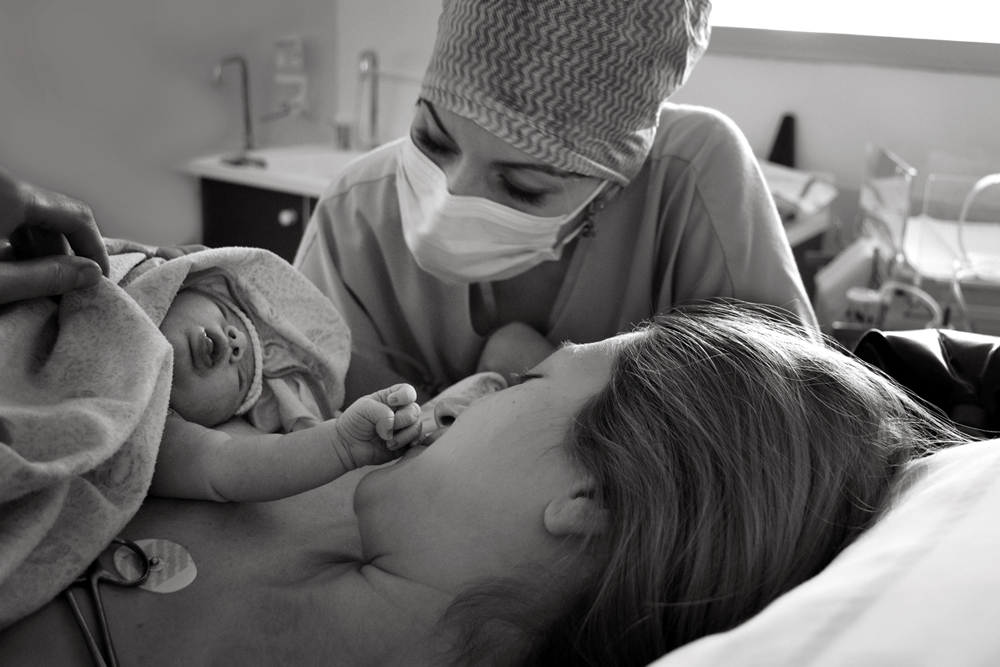
Women with childbirth-related PTSD had healthcare costs 2.5 times higher than women without PTSD from six to 12 months after birth, a report found.
The analysis estimated that early prevention of traumatic births and childbirth-related post-traumatic stress disorder (PTSD) could save the NHS around £26m each year.
Women with PTSD were also less likely to have returned to work by 12 months after giving birth, suggesting potential longer-term employment and economic effects.
The report from City St George’s, University of London was launched at an All-Party Parliamentary Group (APPG) on Birth Trauma event on 10 September 2026.
Researchers calculated the potential NHS savings using the number of births reported in NHS hospitals in 2024-25 and the UK prevalence of childbirth-related PTSD.
Around one in 20 women in the UK develop PTSD following childbirth, while recent research has shown that the condition remains underdiagnosed.
The findings draw on research that tracked more than 2,000 women in England and Scotland from pregnancy to two years after birth. Researchers assessed mental health, use of health services and employment outcomes.
The research included assessments of childbirth-related PTSD and PTSD arising from other traumatic experiences. It also included a separate Birth Trauma Association survey examining women’s experiences of birth trauma.
Between six and 12 months after birth, healthcare and support service costs for women with childbirth-related PTSD were 2.5 times those of women without PTSD.
Women with low or moderate symptoms, including those reporting one or two PTSD symptoms, also had higher healthcare service costs than women without PTSD.
Just over half, 53 per cent, of women with PTSD had returned to work by 12 months after giving birth, compared with 68 per cent of women without symptoms.
Women with PTSD were more likely to be referred for mental health support, but more than half received no referral.
Those whose PTSD followed a traumatic birth also had slightly higher healthcare costs than women whose PTSD resulted from other traumatic experiences.
The researchers called for routine PTSD assessment and treatment during pregnancy and after childbirth, alongside greater access to specialist perinatal mental health services.
They also recommended training healthcare staff in perinatal trauma, trauma-informed care and identifying women at risk of PTSD.
The report said further research was needed to establish whether screening, treatments and trauma-informed care pathways are effective and evidence based.
The work follows the APPG’s 2024 Birth Trauma Inquiry, which highlighted the effects of birth trauma on women and families and called for evidence on its wider public health and societal costs.
The report focused primarily on healthcare use and did not attempt to calculate all costs associated with birth trauma and postnatal PTSD, including wider employment, family and societal effects.






 Menopause1 week ago
Menopause may not explain rising heart condition in women – study

 Fertility2 weeks ago
Paracetamol use may impact future fertility, studies suggest

 Insight1 week ago
Women with birth trauma face 2.5x higher healthcare costs – study

 Menopause2 weeks ago
Cancer drug could tackle osteoporosis menopause weight gain

 pain conditions1 week ago
Medical cannabis may improve endometriosis symptoms – study
 Cancer1 week ago
Study could explain why obesity is a breast cancer risk factor

 Menopause2 weeks ago
Menopause hormone therapy may improve cardiovascular health outcomes, study suggests

 AI1 week ago
Evvy secures US$40m for AI-powered vaginal microbiome testing