




Fertility
The future of family: unveiling 45 cutting-edge advancements in IVF
By FinDBest IVF


The past couple of years have witnessed exciting advancements in the IVF/ART space, driven by cutting-edge technologies and a relentless pursuit of improving fertility outcomes. Here, FinDBest IVF offers a glimpse into some notable breakthroughs.

1. EMBRYOSCOPE (VITROLIFE) – iDAScore
- Area: Artificial Intelligence (AI) in Embryo Selection
- Description: Time-lapse imaging AI platform analysing embryo development for improved selection.
- Impact: Predicts implantation potential, increasing pregnancy rates and reducing miscarriages.
- URL: Vitrolife iDAScore
2. EXAMEN – SpermComet
- Area: Non-invasive Sperm Selection
- Description: DNA fragmentation assay for improved sperm selection.
- Impact: Identifies sperm with minimal DNA damage, potentially increasing fertilisation and implantation rates.
- URL: Examen SpermComet
3. EXCELLENT SCIENCE (Cherry Biotech) – MicroFSMA
- Area: Microfluidics-based Sperm Analysis
- Description: Automated method for semen analysis and quality sperm isolation.
- Impact: Improves detection of male infertility and quality sperm isolation.
- URL: MicroFSMA

4. OVERTURE LIFE – DaVitri, m|z, and ICSI.A
- Area: Automation of Full ART Cycle
- Description: Automated IVF process technologies to enhance consistency and affordability.
- Impact: Reduces variability in outcomes and makes IVF more affordable.
- URL: Overture Life
5. IVF 2.0 – SiD
- Area: Computer-enabled Sperm Quality Tracker
- Description: Computer vision-based sperm selection tool.
- Impact: Analyses sperm motility more accurately than the human eye.
- URL: IVF 2.0 SiD
6. IVF 2.0 – ERICA
- Area: AI and Machine Learning for Embryo Selection
- Description: Prioritises euploid embryos using AI without sampling or biopsy.
- Impact: Enhances embryo selection for higher success rates.
- URL: IVF 2.0 ERICA

7. TMRW LifeSciences – CryoRobot Select
- Area: Automation of Tracking, Monitoring, and Storing of Frozen Embryos
- Description: AI-integrated platform for tracking and storing frozen eggs and embryos.
- Impact: Improves clinical outcomes and optimises treatment costs.
- URL: TMRW CryoRobot Select
8. LIFE WHISPERER – Life Whisperer Genetics (LWG)
- Area: AI-powered Euploid Pre-screening of Embryos
- Description: AI evaluation of genetic normality in embryos.
- Impact: Non-invasive pre-screening of embryos for genetic normality.
- URL: Life Whisperer Genetics
9. LIFE WHISPERER – Life Whisperer Viability (LWV)
- Area: AI-powered Embryo Selection
- Description: AI evaluation of embryo viability for clinical pregnancy.
- Impact: Enhances embryo selection for better pregnancy outcomes.
- URL: Life Whisperer Viability

10. INITO – Inito
- Area: Point-of-Care Fertility Testing
- Description: Home-based hormone testing kit for fertility assessment.
- Impact: Provides affordable and convenient fertility screening.
- URL: Inito
11. Cooper Surgical Fertility Companies – RI Witness ART Management System
- Area: Witness System for Monitoring ART Cycles
- Description: Automated control system for monitoring sample and embryo handling.
- Impact: Standardises the environment and minimises human error.
- URL: RI Witness
12. HAMILTON THORNE, MICROPTIC – CASA (Computer-Assisted Sperm Analysis), SCA (Sperm Class Analyzer)
- Area: Advanced Sperm Motility Analysis
- Description: Enhanced motility and morphology assessment systems.
- Impact: Provides detailed sperm quality data for better selection.
- URL: Hamilton-Thorne CASA
- URL: SCA

13. AVA WOMEN – The Ava Bracelet
- Area: Wearables
- Description: Predicts optimal implantation window through cervical secretion analysis.
- Impact: Identifies the most receptive time for embryo transfer.
- URL: Ava Women
14. NATERA – Panorama™ Test
- Area: Non-invasive Preimplantation Genetic Testing (PGT)
- Description: NIPT-based analysis of foetal DNA for genetic abnormalities.
- Impact: Safer and less invasive option for PGT.
- URL: Natera Panorama
15. CONCEPTION BIO – Invitro Gametogenesis (IVG)
- Area: Human Eggs from Stem Cells
- Description: Generates eggs from induced pluripotent stem cells.
- Impact: Potential breakthrough in fertility preservation.
- URL: Conception Bio
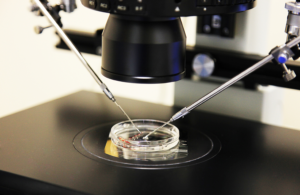
16. KITAZATO – Soft Microrobot
- Area: Microrobot-guided Embryo Transfer
- Description: Controls the implantation position during embryo transfer.
- Impact: Increases pregnancy rates and prevents ectopic pregnancy.
- URL: Kitazato Microrobot
17. OURA – Oura Ring
- Area: Wearable Health and Fertility Trackers
- Description: Tracks biometric data relevant to fertility cycles.
- Impact: Provides personalised insights into menstrual cycles and ovulation windows.
- URL: Oura Ring
18. FERTILIS – Micro Devices for IVF Techniques
- Area: General Automation of ART Process
- Description: Micro medical devices for enhancing IVF treatment quality.
- Impact: Improves oocyte retrieval, ICSI performance, and more.
- URL: Fertilis
19. EMBL-EBI – AlphaFold DB
- Area: AI-powered Sperm Morphology Analysis
- Description: AI-based protein structure prediction for sperm morphology assessment.
- Impact: Offers high-resolution analysis of sperm structure.
- URL: AlphaFold
20. OVAREPRED (Pekin University Third Hospital) – OvaRePred
- Area: Online Model for Ovarian Reserve Assessment
- Description: Predicts the quantity of potential female eggs suitable for fertilisation.
- Impact: Aids in treatment planning and optimising outcomes.
- URL: OvaRePred
21. IGENOMIX (VITROLIFE) – WES
- Area: IVF Genomics
- Description: Whole exome sequencing for analysing gene coding sequences.
- Impact: Cost-effective technique for genetic analysis.
- URL: Igenomix WES

22. VISCOFAN, IT3D GROUP, TISSUELABS, ADVANCED SOLUTIONS
- Area: 2D and 3D Printing of Biomaterials with Applications in IVF/ART
- Description: Technologies for developing biomaterials using 2D and 3D printing.
- Impact: Enhances the development and application of biomaterials in IVF/ART.
- URL: Viscofan Bioengineering, Advanced Solutions, TissueLabs, IT3D Group
23. FERTIL IBÉRICA – SpermVD
- Area: Next-Generation Sperm Cryopreservation Techniques
- Description: Vitrification process for improved sperm survival and motility.
- Impact: Offers potential for longer sperm storage and improved fertilisation rates.
- URL: Fertil Ibérica SpermVD
24. FLUIGENT – Microfluidics for Cell Biology
- Area: Microfluidics for Cell Analysis
- Description: Cell biology is crucial for medical innovation. Fluigent’s microfluidics technology integrates precise fluid flow control with microscopy, creating automated platforms for cell growth in physiologically relevant environments. This minimises error manipulation by automating fluid delivery at controlled rates.
- Impact: Enhances accuracy and efficiency in cell biology experiments, facilitating better understanding and treatment of diseases.
- URL: FLUIGENT – Microfluidics for Cell Biology
25. MICRONIT – Organ-on-a-Chip (OOC)
- Area: Organ-on-a-Tube Microdevices
- Description: Organ-on-a-chip devices simulate biological systems for in-vitro drug testing. Cells are cultured on membranes with separately controllable fluid flows, leading to more accurate biological representations than traditional methods. These resealable OOC flow cells allow cell seeding through standard protocols.
- Impact: Provides more precise drug testing results, enhancing the drug development process.
- URL: MICRONIT – Organ-on-a-Chip
26. ONI, BRUKER, WASATCH PHOTONICS, MALVERN PANALYTICAL, SPECTRA SOLUTIONS – Ultrasound-Guided TESA
- Area: Non-invasive Testicular Sperm Extraction (TESA) with Ultrasound Guidance
- Description: This technology offers a minimally invasive alternative to traditional sperm retrieval methods, using multiphoton microscopy, Raman spectroscopy, and optical coherence tomography for better visualisation and retrieval of sperm.
- Impact: Potentially less painful and more efficient sperm retrieval method, improving patient comfort and outcomes.
- URL: ONI, Bruker, Wasatch Photonics, Malvern Panalytical

27. MIM FERTILITY – FolliScan
- Area: AI-powered Follicle Tracking and Ovulation Prediction
- Description: AI software that analyses transvaginal ultrasound images to identify and measure follicles with high precision.
- Impact: Improves accuracy in tracking ovulation, enhancing the chances of successful fertilisation.
- URL: MIM FERTILITY – FolliScan
28. BERRY GENOMICS – NIPT-Based Analysis
- Area: Non-invasive Prenatal Screening for Multiple Genetic Diseases
- Description: Advanced NIPT technology that screens foetal DNA for a wide range of genetic abnormalities, beyond traditional panels.
- Impact: Provides comprehensive prenatal genetic screening, leading to early detection and better management of genetic conditions.
- URL: BERRY GENOMICS
29. Fairtility – CHLOE™
- Area: Transparency in AI
- Description: CHLOE™ is a transparent AI-based decision support tool that provides visibility into clinical and laboratory data to help improve IVF outcomes.
- Impact: Enhances IVF success rates by offering detailed insights and data transparency to clinicians and prospective parents.
URL: Fairtility – CHLOE™ 30. ARWorks and The IVF Company – IVF Sim Pro
- Area: Educational Tools with Virtual Reality (VR)
- Description: VR software designed for technical training in ICSI and embryo biopsy, aimed at professionals, universities, and clinics.
- Impact: Improves technical skills and training efficiency in IVF procedures through immersive virtual reality.
- URL: IVF Sim Pro
31. Eggschain – Eggschain
- Area: Blockchain Technology for IVF Patient Data
- Description: Blockchain-integrated system for genomics, medical records, and biospecimen tracking, enabling patients to have greater control over their healthcare data.
- Impact: Enhances data security and patient empowerment in managing healthcare information.
- URL: Eggschain
32. Ovogene – Ovogene
- Area: AI-Driven Donor Bank
- Description: An international egg donor bank offering Genetically Certified Oocyte® technology, providing oocyte NGS screening and 100% euploid oocytes.
- Impact: Increases success rates and reduces the need for multiple IVF attempts by ensuring high-quality oocytes.
- URL: Ovogene

33. IVF-assistants.com – Skillsets
- Area: AI-Driven Digital Assistants for Fertility Clinics
- Description: Provides personalised access to information about ART and IVF services, helping patients understand their options and book consultations.
- Impact: Enhances patient engagement and trust, improving consultation bookings and clinic-patient communication.
- URL: IVF-assistants.com
34. inviTRA – Eeva Test
- Area: Genomics for Optimal Embryo Selection
- Description: Eeva test predicts which embryos have the greatest developmental potential using a time-lapse system attached to the incubator.
- Impact: Improves embryo selection for transfer, enhancing the success rates of assisted reproduction treatments.
- URL: inviTRA – Eeva Test
35. Lumiris – Metaphor™
- Area: Embryo selection with metabolism data.
- Description: Using metabolic imaging with AI-hyperspectral microscopy, the metabolic stress of embryos is assessed to determine its quality.
- Impact: Improve selection of optimal embryos and therefore transfer success and fertilziation ratios.
- URL:IBEC-Metaphor

36. Clue – Clue Birth Control, Clue Conceive
- Area: Self-Managed Patient Care Using Smartphones (mHealth)
- Description: App-based system for monitoring menstrual periods, ovulation, and PMS, offering numerous educational resources.
- Impact: Empowers female patients to manage their reproductive health effectively using smartphone technology.
- URL: Clue
37. ViOHealthTech – OvuSense OvuFirst, OvuSense OvuCore, and OvuSense Pro
- Area: App-Based Patient Health Monitoring
- Description: An app-based platform that helps screen for common health issues related to reproductive health, including ovulation tracking and fertility monitoring.
- Impact: Provides comprehensive health monitoring, improving fertility tracking and assisting in managing reproductive health.
- URL: ViOHealthTech
38. HERA Biotech – MetriDx
- Area: Non-Surgical (Non-Invasive) Diagnostic Test for Endometriosis
- Description: The world’s first non-surgical test for definitive diagnosis and staging of endometriosis.
- Impact: Offers a less invasive and more accessible option for diagnosing and managing endometriosis.
- URL: HERA Biotech

39. Labcorp – Preeclampsia Test
- Area: Blood-based Screening Test
- Description: The first screening test for assessing preeclampsia risk in the first trimester of pregnancy.
- Impact: Enables early detection and management of preeclampsia, potentially improving maternal and fetal outcomes.
- URL: Labcorp
40. EVOLUTIVE MEDICA – BreastDS, MiniPc Koios Medical, InferScholar, Airs Medical
- Area: AI for Medical Image Analysis (Rx)
- Description: AI-driven analysis and diagnostic technology for early and precise cancer detection.
- Impact: Enhances accuracy and efficiency in cancer diagnostics, improving early detection and treatment outcomes.
- URL: EVOLUTIVE MEDICA
41. Rhea – RheaLabs (including recently acquired Embryonics for AI-Driven Diagnostics)
- Area: Technology Integration for Improved Patient Experience
- Description: Integrated approach to patient engagement using AI and machine learning, enhancing clinic workflow and patient case management.
- Impact: Provides a more seamless and meaningful patient experience, improving care quality and operational efficiency.
- URL: Rhea – RheaLabs

42. AIVF – EMA Platform, ART Compass by AIVF
- Area: AI Technology for Improved IVF Cycle Success and Management
- Description: AI-powered IVF solutions for clinics, labs, and patients, including embryo evaluation, patient communication, and analytical tools.
- Impact: Increases the certainty of successful IVF cycles by enhancing evaluation and communication processes.
- URL: AIVF
43. Nilotech – Nilochecker
- Area: State-of-the-Art Lab Equipment Calibration
- Description: All-in-one reference instrument for controlling and calibrating critical laboratory equipment, such as incubators and warming systems.
- Impact: Ensures accurate calibration and control, improving laboratory efficiency and reliability.
- URL: Nilotech – Nilochecker
44. IBM and Ovum Health – IBM Watsonx Assistant
- Area: Chatbot Assistant for Patient Communication and Management
- Description: Custom AI applications for managing data sources and accelerating AI workflows, designed for enhanced patient communication and management in fertility clinics.
- Impact: Streamlines patient interaction and clinic management, improving overall efficiency and patient satisfaction.
- URL: IBM Watsonx
45. Spring Molecular Diagnostics – IVFinfo.AI
- Area: ChatGPT-Like Site for IVF/ART Questions
- Description: Multilingual website featuring an AI chatbot that answers questions about assisted reproduction (ART) and fertility.
- Impact: Provides accessible and reliable information to patients, enhancing their understanding and decision-making in fertility treatments.
- URL: AI

Pioneering frontiers in reproductive medicine
As the field of reproductive medicine continues to evolve, several pioneering areas of research are emerging. These cutting-edge advancements have the potential to revolutionise infertility treatments and offer new hope to individuals and couples facing reproductive challenges. Below, we highlight some of the most promising developments currently under investigation:
- Mitochondrial Replacement Therapy: This experimental technique aims to prevent the transmission of mitochondrial diseases by replacing the mother’s mitochondria in the egg with healthy ones from a donor.
- Artificial Womb Development: Artificial womb technology is under exploration for potential use in certain cases of infertility or high-risk pregnancies.
- In Vitro Gametogenesis (IVG): Researchers are exploring ways to create sperm and egg cells from stem cells, which could offer new possibilities for infertile individuals and couples.
- Nanotechnology in Reproductive Medicine: Nanotechnology holds promise in enhancing drug delivery systems, improving embryo culture conditions, and developing novel diagnostic tools for infertility.
- 3D Bioprinting of Reproductive Tissues: Researchers are exploring the use of 3D bioprinting technology to create reproductive tissues, such as ovaries and uterine scaffolds, for transplantation or in vitro study, offering potential solutions for fertility preservation and restoration.
- Non-Invasive Embryo Assessment Techniques: Non-invasive imaging modalities, such as optical coherence tomography (OCT) and time-lapse microscopy, are being explored for real-time monitoring and assessment of embryo development within the incubator, reducing the need for invasive embryo biopsy procedures.
These innovative approaches represent the forefront of reproductive research, promising to expand the possibilities of assisted reproduction and improve outcomes for patients worldwide.
The future is now: partnering with FinDBest IVF to realise your vision

The advancements outlined in this article paint a hopeful picture for the future of IVF/ART. While some technologies are still under development, many are already being implemented or can be brought to market faster through the right partnerships. This is where FinDBest IVF steps in.
FinDBest IVF: your partner for global expansion and innovation in IVF/ART
FinDBest IVF goes beyond connecting you with distributors; we’re your gateway to a world of possibilities. Our platform curates a network of service providers specializing in:
- Market expansion services: Leverage market research firms to identify regions with the highest demand for your innovations.
- Clinical trial management: Partner with experienced firms to navigate regulatory hurdles and conduct successful trials with leading fertility clinics.
- Marketing and communication experts: Craft targeted campaigns that resonate with fertility clinics and healthcare professionals, ensuring your technology reaches the right audience.
The benefits of a comprehensive approach
Partnering with FinDBest IVF offers numerous advantages:
- Faster time to market: Identify the right partners and navigate market complexities with greater efficiency.
- Enhanced innovation: Collaborate with leading research institutions to bring groundbreaking technologies to market faster.
- Streamlined communication: Connect with fertility clinics seeking solutions and build lasting relationships with key stakeholders.
FinDBest IVF: your partner in progress
The future of IVF/ART is bright. FinDBest IVF empowers you to foster innovation, build strong partnerships, and ensure your life-changing technologies reach the patients who need them most.
Join us and unlock the full potential of your IVF/ART solutions on a global scale. Let’s revolutionise the path to parenthood, together.








AI could transform ovarian care by personalising cancer and fertility treatment, but more clinical validation is needed before routine use.
A systematic review and meta-analysis found AI models showed high diagnostic accuracy for ovarian cancer when combining data such as ultrasound scans and blood test results.
Across 81 studies, AI models correctly identified ovarian cancer in around nine out of 10 cases, with pooled rates of 89 to 94 per cent.

They were also highly accurate at ruling out ovarian cancer when it was not present, with specificity of 85 to 91 per cent.
The analysis also found that explainable AI tools could predict complete surgical cytoreduction in advanced ovarian cancer.
Complete surgical cytoreduction means removing all visible cancer during surgery, which can be an important goal in treatment planning.
The tools achieved a pooled AUC of 0.87. AUC is a measure of how well a model distinguishes between different outcomes, with higher scores showing stronger performance.
In reproductive medicine, AI algorithms helped physicians optimise ovarian stimulation protocols and predict follicular growth during IVF.
Ovarian stimulation is the use of hormones to encourage the ovaries to produce eggs, while follicles are the small sacs in the ovaries where eggs develop.
The review found AI could reliably model ovarian response in IVF with a pooled AUC of 0.81.
However, researchers said challenges remain in translating promising research findings into routine clinical practice.
They identified substantial variation across studies, driven by retrospective study designs, variable AI systems and a lack of standardised validation.
Only 22 per cent of analysed studies reported prospective, multicentre external validation, where models are tested forward in time across multiple healthcare settings.
The authors called for rigorous validation to help close the gap between research and routine clinical practice, alongside standardised methodological and reporting frameworks, smooth integration with clinical workflow and robust governance to support responsible and ethical AI use.
They concluded: “Artificial intelligence is a transformative force in the management of ovarian conditions.
“In gynaecologic oncology, AI enhances every phase of care, from early detection and accurate diagnosis to prognostic stratification and surgical planning.”
In reproductive medicine, AI personalises ovarian stimulation and refines the diagnosis of heterogenous endocrine disorders such as PCOS.
PCOS, or polycystic ovary syndrome, is a hormonal condition that can affect periods, skin, weight and fertility.













 Opinion4 weeks ago
What Maternal Mental Health Month reveals about where postpartum support actually breaks down

 News3 weeks ago
NIH Grant terminations disproportionately impact minority scientists, research finds

 Menopause4 days ago
Perimenopause misinformation ‘putting women at risk’

 Adolescent health3 weeks ago
WUKA brings Period-Positive Pool Party to London Aquatics Centre to keep girls swimming through puberty

 Insight2 weeks ago
PCOS renamed after decade-long campaign to end ‘cyst’ misconception

 Events4 weeks ago
WHIS 2026 unveils agenda and first speakers for the leading women’s health summit

 Menopause3 weeks ago
CBT shows promise for menopause insomnia and hot flashes

 Insight4 weeks ago
Online abuse and deepfakes ‘pushing women out of public life’
1 Comment