Fertility
Artificial insemination kit granted FDA clearance
Mosie Baby becomes the first company to receive FDA clearance for at-home intravaginal insemination
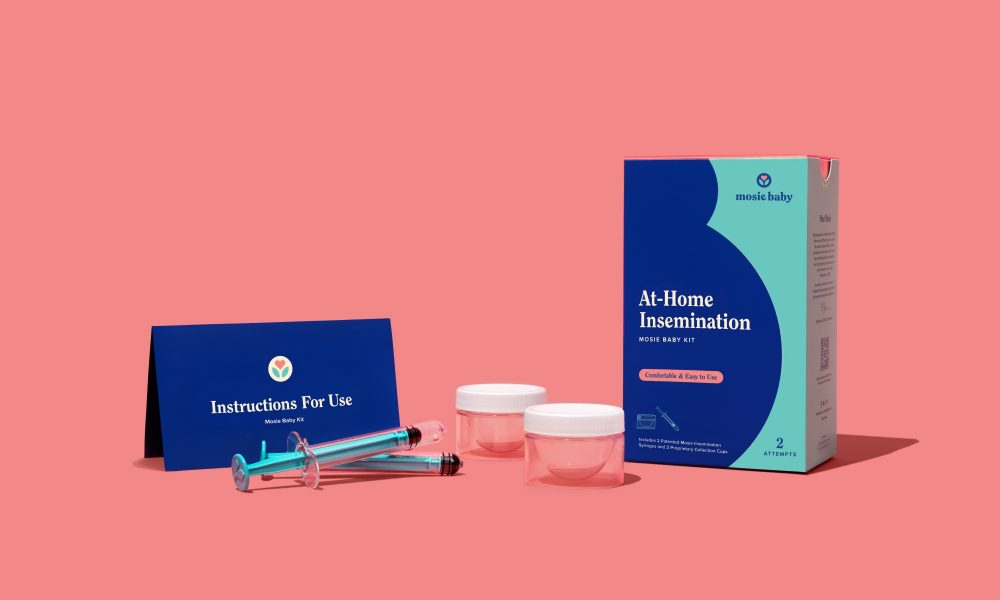
The US fertility start-up Mosie Baby has received FDA Class II clearance for its at-home insemination kit.
The kit, selected by the Bill and Melinda Gates Foundation to be part of the Designing Motherhood exhibition at the Discovery Center Museum in Seattle, aims to support those unable to conceive with intercourse or for whom intercourse is not an option.
Designed to be used with either a fresh or cryogenically frozen donor semen sample, each kit includes two syringes for at-home insemination and two collection cups for semen collection. The product is the first and only FDA-cleared over-the-counter kit for use in intravaginal insemination (IVI).
“Nearly 10 years ago, my husband and I were devastated by a diagnosis of unexplained infertility and were desperate for options that were safe, financially accessible and easy to use at home,” said co-founder and CEO Maureen Brown.

“Since inventing the Mosie Baby Kit in 2014, we realised we weren’t alone in our fertility journey as it is reported that one in six people experience infertility. To date, we’re very proud to share that Mosie Baby has helped more than 100,000 families inseminate from the comfort of their own home.
“We are now thrilled to offer our device as an FDA reviewed option for families looking to inseminate at home.”
Kwame Ulmer, managing partner at MedTech Impact Partners and former deputy director at FDA, said: “The recent Mosie Baby clearance means hundreds of thousands of underserved people now benefit from an at home option.
“The technology adheres to the highest FDA recognised test standards and is supported by robust clinical performance testing. The team took the time and care to manufacture a quality product.
“I am delighted to see it become accessible to countless future parents on their fertility journey. The team at Mosie Baby is on a path to becoming the at home gold standard fertility option.”
Following its FDA 510k Class II clearance, Mosie Baby is planning to expand access to its insemination kit, aiming to democratise access to family building and eliminate stigma associated with insemination.
The Mosie Baby insemination kit is available for purchase at mosiebaby.com, CVS.com or at select CVS stores nationwide. The kit is expected to launch with additional retailers and healthcare partners in 2024.
To receive the Femtech World newsletter, sign up here.

Fertility
France urges 29-year-olds to start families now
France is urging 29-year-olds to have children as part of a 16-point plan to boost fertility and raise birth rates.
Health officials say the aim is to prevent men and women facing fertility problems later in life and thinking “if only I had known”.
The strategy comes as the country, like many western nations including the UK, faces tumbling birth rates.
The trend is creating concerns about how governments can fund pensions and healthcare for ageing populations with fewer younger working people paying taxes.
But policies to raise fertility rates globally have produced limited results, and critics of the scheme suggest better housing and maternity provision could be more effective.
The government will send out “targeted, balanced, and scientifically sound information” to young people on issues including sexual health and contraception.
The material “will also reiterate that fertility is a shared responsibility between women and men,” the country’s health ministry said.
The plan includes efforts to increase the number of egg-freezing centres from 40 to 70. The process involves extracting and storing a woman’s eggs for potential future use.
The country’s health system already provides free egg-freezing for people aged 29 to 37, a service that costs about £5,000 per round in the UK.
The country’s fertility rate of 1.56 children per woman is below the 2.1 needed to maintain a stable population.
However, it is higher than rates in China, Japan and South Korea, and the UK, where the latest figures show it dropped to a record low of 1.41 in England and Wales by 2024.
Professor François Gemenne, who specialises in sustainability and migration at HEC Paris Business School, told Sky News: “This is something that demographers had known for a long time, but the fact that there were more deaths than births in France last year created a shock effect.”
He said the country’s “demographic worry” is exacerbated by the design of its pensions system and its “obsession with immigration and the fear of being ‘replaced'”.
The plan also includes a new national communication campaign, a “My Fertility” website advising on the effects of smoking, weight and lifestyle, and school lessons for children about reproductive health.
The health ministry has acknowledged its maternal and infant mortality rates are higher than neighbouring countries and is beginning a review of perinatal care to address the “concerning” situation.
Channa Jayasena, professor in reproductive endocrinology at Imperial College London, told Sky News: “On the female side, societal changes leading to older age of motherhood are certainly important.
He said obesity was also a problem as it increased women’s risk of polycystic ovary syndrome and endometriosis.
Allan Pacey, professor of andrology (male reproductive health) at Manchester University, said for most people globally, deciding to have children was “down to [non-medical] factors such as better access to education, career opportunities, taxation, housing, mortgages, finance, etc.”
“Medicine can’t help with those things,” Pacey added.
Insight
Covid vaccine not linked to decrease in childbirth, study finds
Insight
Parents sue IVF clinic after delivering someone else’s baby
A Florida couple have sued an IVF clinic after giving birth to a baby who is not genetically related to either of them.
Tiffany Score and Steven Mills hired IVF Life, which operates as the Fertility Center of Orlando in Longwood to help them conceive about five years ago using in vitro fertilisation.
The couple had an embryo implanted in April and welcomed a baby girl nine months later, but soon suspected the clinic had made an error.
Both Score and Mills are white, but the baby had the appearance of a racially non-Caucasian child, according to the lawsuit.
Genetic testing confirmed that the baby is not biologically theirs. The couple filed the lawsuit on 22 January after allegedly trying to contact the clinic multiple times without getting a response.
Jack Scarola, one of the couple’s lawyers, told the Orlando Sentinel: “They have fallen in love with this child. They would be thrilled in the knowledge that they could raise this child.
“But their concern is that this is someone else’s child, and someone could show up at any time and claim the baby and take that baby away from them.”
Score and Mills are also concerned that one of the three fertilised eggs they had frozen at the clinic may have been mistakenly implanted into someone else.
They have demanded that the clinic share what happened with all other patients who had embryos stored at the facility during the year before Score gave birth. They also want IVF Life to pay for genetic testing of every child born as a result of its services over the last five years, and to account for their remaining embryos.
The couple said in a statement: “We love our little girl. We would hope to be able to continue to raise her ourselves with confidence that she won’t be taken away from us.
“At the same time, we are aware that we have a moral obligation to find and notify her biological parents, as it is in her best interest that her genetic parents are provided the option to raise her as their own.”
A family spokesperson said: “Based upon leads discovered to date, and despite the lack of help or cooperation from the clinic, there is hope that we will be able to introduce our daughter to her genetic parents and to find our own genetic child soon.”
The lawsuit names IVF Life LLC and Dr Milton McNichol, who runs the clinic.
The Fertility Center of Orlando had posted a notice on its website stating it is “actively cooperating with an investigation to support one of our patients in determining the source of an error that resulted in the birth of a child who is not genetically related to them.”
The notice was removed after a court hearing on Wednesday.
During the hearing, the judge ordered the clinic to submit a thorough plan for handling the situation by Friday.
McNichol was reprimanded by Florida’s Board of Medicine in May 2024 after an inspection of the clinic in June 2023 revealed several issues, including equipment that did not meet current performance standards, failure to comply with a risk-management plan and missing medication.
He was fined US$5,000.
-
Features4 weeks agoWomen’s health enters a new era – the trends shaping femtech in 2026
-
Insight4 weeks agoDesigner perfumes recalled over banned chemical posing fertility risk
-
Features4 weeks agoBest menopause apps and products for 2026
-
Insight2 weeks agoParents sue IVF clinic after delivering someone else’s baby
-
Insight3 weeks agoWomen’s health could unlock US$100bn by 2030
-
Insight4 weeks agoHigher maternal blood pressure increases risk of pregnancy complications, study finds
-
Entrepreneur4 weeks agoXella Health closes US$3.7 million in pre-seed financing
-
Events4 weeks agoInside the first wave of speakers confirmed for Women’s Health Week USA 2026


1 Comment