News
Thousands of Brits seek IVF alternatives to get pregnant, survey finds
The findings come amid fresh scrutiny of the significant inequalities in access to IVF

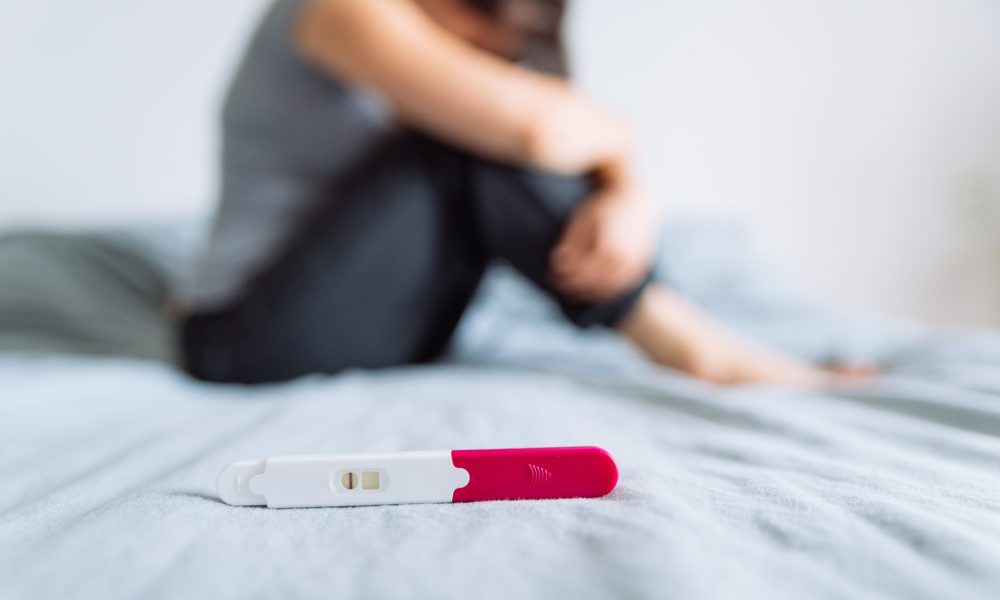
Thousands of Brits are turning away from IVF to seek alternative fertility treatments, a new survey has shown.
The research, carried out by Béa Fertility, surveyed over 4,000 UK adults who are currently trying or struggling to conceive and are open to exploring new treatment options.
The survey found that 46 per cent of respondents are actively “looking for something new to try” on their fertility journey, with more than half (51 per cent) wanting to have access to treatments they can carry out at home. Two-fifths of the people surveyed said they wanted access to cheaper fertility treatment options.
In the UK, a single round of IVF can cost up to and above £5,000. Other treatments, such as intrauterine insemination (IUI) also carry a high fee, and clinical consultation and support can pose additional costs.
More than half of respondents had already been trying to conceive for more than two years before exploring new treatment options. Two-fifths had undergone fertility investigations on the NHS and more than one in ten (14 per cent) had tried IVF.
When asked why they were considering different methods or treatments, one-third cited looking for an option that meant they didn’t have to join a waitlist.
Others reported having been excluded from treatments on the NHS, with some failing restrictive eligibility criteria for reasons including their age and BMI.
The findings come amid fresh scrutiny of the significant inequalities in access to IVF, and advancements in new care alternatives.
Access to traditional treatments such as IVF and IUI is particularly inhibitive for minority groups including single parents, LGBTQ+ couples and those experiencing secondary infertility.
Same-sex female couples are currently required to self-fund at least six rounds of intrauterine insemination (IUI) before they can qualify for IVF on the NHS. Heterosexual couples have to have been trying to conceive naturally for two years to reach the same threshold.
“As a GP, I see countless patients struggling to navigate their fertility treatment and care options,” said Dr Hannah Allen, NHS GP and m
“It’s often equally difficult for us as doctors to help these patients to access the right support, thanks to growing pressure on resources and lengthy wait times for care. It’s not a surprise, therefore, that many fertility patients are seeking alternative treatment options.
“We need to make sure these alternatives are safe and can provide the necessary level of wraparound support to help patients achieve a healthy pregnancy. As these treatments become increasingly popular, doctors must also be prepared to help guide patients in navigating and choosing the best option for them, and supporting them to use it safely.”
Tess Cosad, co-founder and CEO at Béa Fertility, said: “While up to one in six of us will experience problems with our fertility, seeking effective and affordable treatment in the UK remains a minefield for many.
“Inhibitive costs, lengthy wait lists and an NHS postcode lottery are making traditional treatments like IVF increasingly difficult to access.
“Around 55,000 people in the UK underwent IVF or donor insemination in 2021, according to the HFEA – yet three and a half million people are estimated to be struggling with fertility across the country.
“We desperately need safe and effective alternative treatments for those struggling to access IVF, or for when it’s not a viable option.”

Cancer
Three cancer innovators shortlisted for Femtech World Award

Femtech World is delighted to reveal the shortlist for this year’s Women’s Cancer Innovation award.
The award, sponsored by Endomag, will honour a groundbreaking innovation dedicated to the prevention, early detection treatment or ongoing care of cancers that uniquely or disproportionately affect women.
Endomag is a medical technology company devoted to improving the global standard of cancer care.
Its Sentimag system, Magseed marker and Magtrace lymphatic tracer are used by thousands of the world’s leading physicians and cancer centres.
After careful review of this year’s submissions, we are delighted to announce the three shortlisted entries for the Women’s Cancer Innovation Award 2026.

Auria is tackling one of the most stubborn problems in breast cancer screening: the 66 per cent of women who simply don’t participate.
Rather than improving existing imaging pathways, Auria is creating an entirely new access layer: a non-invasive, at-home test that detects protein biomarkers for breast cancer in tears.
Auria’s test, a CLIA-certified Lab Developed Test, has been validated across more than 2,000 patients in multiple clinical studies with collaborators including MD Anderson Cancer Center and Stanford University.
It reports a sensitivity of 93 per cent and a negative predictive value of 98 per cent.

Founded on six years of combined research at the University of Barcelona and UC Irvine, The Blue Box has developed a non-invasive, urine-based test that detects breast cancer by analysing volatile organic compound (VOC) signatures – no radiation, no compression, no imaging facility required.
The test achieves a sensitivity of 88.42 per cent, outperforming mammography by 15 per cent overall, and by 30 per cent specifically in women with dense breasts.
The technology could function as a first-line screening tool in primary care settings, as a complement to mammography for high-density patients, or as an accessible alternative in healthcare systems where imaging infrastructure is limited.

Celbrea is a disposable and affordable thermal screening device that empowers women of all ages to stay on top of monitoring their breast health.
The device aims to add to doctors’ existing standard evaluation protocols with a quick, painless examination. Celbrea does not replace a mammogram but simply provides an additional way to screen for breast disease, including breast cancer.
The device consisting of two disposable pads with photochromic sensors. The pads are self-applied to each breast for 15 minutes.
1188 nano-sensors are embedded within a biocompatible multilayer pad, accurately measuring any temperature differences on the surface of the breast using liquid crystal thermographic technology.
What happens next
The shortlisted entries will now be judge by an Endomag representative who will reveal the winner at a virtual awards event on June 19.
Winners will receive a trophy and will be interviewed by a Femtech World journalist.
Cancer
Common cancer marker may play active role in preventing the disease, study finds

Ki-67, a protein used to measure tumour growth, may also help prevent chromosome errors that drive cancer, a study suggests.
The findings could change how scientists view Ki-67, a marker commonly used in breast cancer and other tumours to assess how quickly cancer cells are growing.
Researchers found the protein may help preserve genome stability by maintaining the structural integrity of centromeres, key parts of chromosomes that help ensure DNA is shared correctly during cell division.
The research was led by professor Paola Vagnarelli at Brunel University of London in collaboration with scientists at the University of Edinburgh and the Technical University of Berlin.
Professor Vagnarelli said: “Doctors already measure Ki-67 to see how aggressive a cancer might be. But our results suggest it is actually helping maintain genome stability.
“That means it may be more than a marker. It could potentially also be a therapeutic target.”
The study examined three proteins that attach to chromosomes during cell division and help rebuild the molecular system that tells each new cell what kind of cell it is.
Every human cell carries identical DNA. What makes a liver cell different from a brain cell is which genes are switched on and which are kept inactive.
When a cell divides, that entire system of switches must be rebuilt. The three proteins involved in this process were Ki-67, Repo-Man and PNUTS.
Vagnarelli’s team developed a method that individually removes each protein from a living cell at the precise point of division. Older techniques could not isolate that moment cleanly.
They found that cells rely on all three proteins to reset themselves after division, but each failed in a different way when removed.
Without PNUTS, gene activity spiralled out of control and thousands of genes switched on at once.
Without Repo-Man, cells escaped safety checkpoints that usually stop damaged or abnormal cells from continuing to divide.
“What we didn’t expect was how clean the separation was,” said Vagnarelli.
Each protein fails in its own specific way. There is no redundancy, no safety net. Which means there are three separate points at which this process can go wrong.
“When the system breaks down, cells can emerge with the wrong number of chromosomes. That condition, called aneuploidy, is seen in disorders such as Down syndrome and in many cancers.
“We also found that these chromosome errors can trigger inflammatory signals inside the cell.”
Aneuploidy means a cell has too many or too few chromosomes, which can disrupt normal growth and function.
Inflammatory signals are chemical messages that can make a cell behave as if it is responding to injury or infection.
“These cells behave almost as if they are under attack,” said Vagnarelli.
“The immune response switches on because the genome is unstable.
“That link between chromosome imbalance and inflammation could help explain patterns we see in several diseases.”
The researchers said the findings may help cancer scientists better understand how chromosome instability, loss of gene regulation and cells dividing before they are ready contribute to tumour growth.
They said understanding the normal machinery that prevents these errors may help researchers find ways to push cancer cells into making mistakes they cannot survive.
“We now have a clearer map of the machinery that resets the cell after division,” said Vagnarelli.
“That knowledge gives us a starting point for thinking about new therapeutic approaches.”
News
Abdominal obesity may lead to more severe menopause symptoms – study

Abdominal obesity may lead to worse menopause symptoms, including forgetfulness, irritability and night sweats, a new study suggests.
The findings point to a possible link between fat stored around the waist and more severe midlife symptoms.
Researchers said waist-to-height ratio could help identify women who may benefit from more targeted support.
Dr Monica Christmas is associate medical director for The Menopause Society.
Christmas said: “Unintended weight gain during the menopause transition, especially in the midsection, is one of the most commonly reported complaints, with the most significant gains experienced in the years leading up to the final menstrual period and a couple of years after.
“This not only affects self-image but also imposes negative health risks and, as the study highlights, is associated with higher prevalence and severity of menopause symptoms.”
The study used data from more than 1,100 women who took part in the Study of Women’s Health Across the Nation.
Abdominal obesity is a build-up of fat around the waist. It often includes visceral fat, which is deep, active fat surrounding internal organs.
This type of fat releases inflammatory proteins and toxic fatty acids that can contribute to insulin resistance, cardiovascular disease, high blood pressure and a higher risk of some cancers.
Insulin resistance means the body does not respond properly to insulin, the hormone that helps control blood sugar.
The Menopause Society said abdominal obesity is estimated to affect more than 60 per cent of menopausal women.
As oestrogen levels fall during menopause, women tend to store more fat around the waist rather than the hips, even if their overall weight does not change.
The researchers noted that obesity patterns and menopause symptom burden can vary by region, but research into the effect of abdominal obesity on these symptoms remains limited.
They also said earlier studies have mainly looked at single symptoms, rather than how symptoms connect with each other.
In this study, researchers used network analysis, a method that looks at how symptoms are linked, to compare symptom patterns in women with and without abdominal obesity.
They identified abdominal obesity using waist-to-height ratios, which compare waist size with height and can be used as a simple measure of health risk linked to body fat around the middle.
The researchers concluded that women with abdominal obesity had both a higher prevalence and greater severity of a range of symptoms, as well as a distinct symptom network structure.
In particular, women with abdominal obesity reported a higher prevalence and greater severity of dizziness, hot flashes and night sweats than women without abdominal obesity.
Sleep disturbances and palpitations were also reported more often in women with abdominal obesity. Palpitations are feelings of a fast, fluttering or pounding heartbeat.
The researchers said assessment of abdominal obesity using waist-to-height ratios may help stratify women who are likely to benefit from targeted, network-based interventions rather than isolated symptom management.
Christmas said: “Educating women early about healthy lifestyle interventions to prevent midlife weight gain is key to improving mental and physical well-being during a tumultuous time frame.”
Entrepreneur3 weeks agoFuture Fertility raises Series A financing to scale AI tools redefining fertility care worldwide
News2 weeks agoWomen’s digital health market set to reach US$5.28 billion in 2026 – report
Fertility4 weeks agoFuture Fertility partners with Japan’s leading IVF provider, Kato Ladies Clinic
Diagnosis3 weeks agoNew meta-analysis further supports low re-excisions and high placement accuracy with the Magseed marker
Mental health3 weeks agoLifting weights shows mental health and cognitive benefits in older women, study finds
News3 weeks agoResistance training has preventative effects in menopause, study finds
Pregnancy3 weeks agoNIPT or NT scan? Why the 2026 evidence supports doing Both
Hormonal health4 weeks agoRelaunched women’s health strategy aims to tackle ‘medical misogyny’