




Menopause
Radiofrequency treatment aids vaginal health


A non-hormonal radiofrequency treatment improved sexual function and vaginal health in postmenopausal women, according to results from a small randomised study.
The study assessed nonablative capacitive-resistive monopolar radiofrequency, an energy-based treatment that delivers controlled heat to vaginal tissue to improve blood flow and tissue health. It was tested as a potential treatment for genitourinary syndrome of menopause, a condition linked to reduced oestrogen that can cause dryness, irritation and pain during sex.
In the trial, 62 women with genitourinary syndrome of menopause were randomly assigned to receive either six weekly sessions of the active treatment, involving 32 women, or a sham procedure involving 30 women.

Women who received the radiofrequency treatment recorded larger improvements in sexual function, measured using the Female Sexual Function Index, than those in the sham group, both immediately after treatment and at a 12-week follow-up. Average scores increased by 5.86 points after treatment compared with 1.33 in the control group, and by 4.41 points at follow-up, while scores in the sham group declined slightly.
Vaginal health scores showed a similar pattern, with improvements of 4.75 points after treatment and 6.90 points at follow-up, compared with little or no change among women who received the sham procedure.
The research was carried out by scientists at the University of Castilla-La Mancha in Toledo, Spain. They reported no adverse events during the study and found no significant changes in participants’ oestrogen levels.
Stephanie Faubion, medical director for The Menopause Society, said: “This small study provides preliminary evidence on the effectiveness of nonablative radiofrequency on vaginal health and sexual function in postmenopausal women. Additional studies in larger and more diverse cohorts with multidimensional outcome assessments and longer-term follow-up are needed to confirm clinical applicability.”










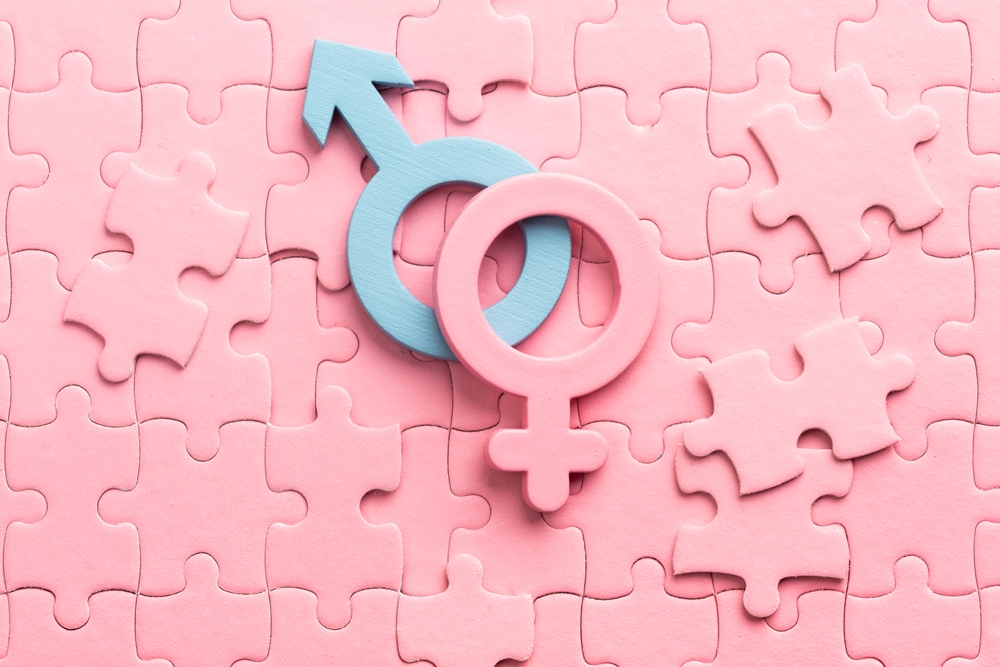
Men and women with early Lyme disease show different symptoms, test results and clinical signs, according to a new study.
The research analysed data from 243 adults aged 20 to 84, including 118 women and 125 men, diagnosed with early Lyme disease before and after treatment.
Researchers found men were more likely to have a positive laboratory test and to show more obvious, severe indicators of disease at diagnosis, including other laboratory abnormalities.

However, there was no difference between men and women in how long they had been ill.
The study also identified symptoms reported more often by women, including heart palpitations, reported by 11.9 per cent of women compared with 4 per cent of men, vomiting, 7.6 per cent versus less than 1 per cent, and light sensitivity, 17 per cent versus 8.8 per cent.
Sleep difficulty was the only symptom reported more frequently by men, affecting 40 per cent compared with 24.6 per cent of women.
Men were found to have a disease pattern more similar to post-menopausal women than to pre-menopausal women, suggesting sex hormones may influence how early Lyme disease presents.
John Aucott, director of the Johns Hopkins Lyme Disease Clinical Research Center, said: “Males and females are different.
“For both findings, the male group was more similar to females who had undergone menopause and more different from females who had not.”
Further research is needed to determine the cause of these differences and their impact on time to diagnosis and the risk of developing later conditions after treatment.
Aucott said the next step will be to identify the mechanisms, such as hormone levels, underlying these differences.

Menopause hair loss trial data showed what the company called clinically meaningful regrowth from a scalp system in a phase II study of menopausal women.
The four-month independent trial evaluated Prevention and Treatment Serums in 43 menopausal-aged women with androgenetic alopecia.
Androgenetic alopecia is a common form of hair thinning.

The trial was announced by dermatologist-founded brand KilgourMD.
Dr James Kilgour, board-certified dermatologist, founder and chief executive of KilgourMD, said: “Menopausal women have been largely excluded from rigorous hair loss research, despite experiencing some of the most challenging and persistent forms of thinning.
“This study validates not only the performance of the KilgourMD System, but also the importance of designing and testing solutions specifically for this population.
“These results represent a meaningful step forward in how menopausal hair loss is treated.”
Unlike many studies in this category, eligibility required a clinically significant level of hair loss, and outcomes were objective and dermatologist-evaluated rather than consumer perception surveys.
By day 120, the company said 53 per cent of participants achieved at least a half-grade improvement on the modified Female Ludwig scale, a clinical scale used to rate the severity of female hair loss.
This threshold is considered by dermatologists to represent a meaningful visual change. A further 26 per cent showed a full one-grade improvement.
KilgourMD said this level of improvement is comparable to, and in some cases exceeds, results typically reported after six to 12 months of conventional pharmaceutical therapies such as minoxidil or finasteride.
Across the full study population, participants experienced an average 11.1 per cent improvement in Ludwig score within four months, the company said.
The trial also reported a 60 per cent reduction in hair shedding by month four, measured through standardised combing and washing assessments.
Reductions were seen as early as day 45, when more than 95 per cent of participants showed a decrease from baseline in terminal hair shedding count, measured by standardised hair washing studies in the lab.
Regrowth outcomes were graded by two independent board-certified dermatologists, with high-resolution imaging used to confirm visible improvements in hair density and scalp coverage over time.
More than 80 per cent of participants reported noticeable improvements in hair density, health and overall appearance by the end of the study.
The full results are currently undergoing peer review and are expected to be published later this year.












 Insight4 weeks ago
Parents sue IVF clinic after delivering someone else’s baby
 Entrepreneur2 weeks ago
US startup builds wearable hormone tracker

 Menopause4 weeks ago
HRT linked to greater weight loss on tirzepatide

 Menopause4 weeks ago
Flo Health and Mayo Clinic publish global perimenopause awareness study
 Fertility2 weeks ago
France urges 29-year-olds to start families now

 Menopause3 weeks ago
Study reveals gap between perimenopause expectations and experience

 Menopause2 weeks ago
Menopause specialist Haver joins Midi Health

 Menopause2 weeks ago
Women with ADHD almost twice as likely to experience perimenopause symptoms, study finds