




Insight
Parents sue IVF clinic after delivering someone else’s baby


A Florida couple have sued an IVF clinic after giving birth to a baby who is not genetically related to either of them.
Tiffany Score and Steven Mills hired IVF Life, which operates as the Fertility Center of Orlando in Longwood to help them conceive about five years ago using in vitro fertilisation.

The couple had an embryo implanted in April and welcomed a baby girl nine months later, but soon suspected the clinic had made an error.
Both Score and Mills are white, but the baby had the appearance of a racially non-Caucasian child, according to the lawsuit.
Genetic testing confirmed that the baby is not biologically theirs. The couple filed the lawsuit on 22 January after allegedly trying to contact the clinic multiple times without getting a response.
Jack Scarola, one of the couple’s lawyers, told the Orlando Sentinel: “They have fallen in love with this child. They would be thrilled in the knowledge that they could raise this child.
“But their concern is that this is someone else’s child, and someone could show up at any time and claim the baby and take that baby away from them.”
Score and Mills are also concerned that one of the three fertilised eggs they had frozen at the clinic may have been mistakenly implanted into someone else.
They have demanded that the clinic share what happened with all other patients who had embryos stored at the facility during the year before Score gave birth. They also want IVF Life to pay for genetic testing of every child born as a result of its services over the last five years, and to account for their remaining embryos.
The couple said in a statement: “We love our little girl. We would hope to be able to continue to raise her ourselves with confidence that she won’t be taken away from us.
“At the same time, we are aware that we have a moral obligation to find and notify her biological parents, as it is in her best interest that her genetic parents are provided the option to raise her as their own.”
A family spokesperson said: “Based upon leads discovered to date, and despite the lack of help or cooperation from the clinic, there is hope that we will be able to introduce our daughter to her genetic parents and to find our own genetic child soon.”
The lawsuit names IVF Life LLC and Dr Milton McNichol, who runs the clinic.
The Fertility Center of Orlando had posted a notice on its website stating it is “actively cooperating with an investigation to support one of our patients in determining the source of an error that resulted in the birth of a child who is not genetically related to them.”
The notice was removed after a court hearing on Wednesday.
During the hearing, the judge ordered the clinic to submit a thorough plan for handling the situation by Friday.
McNichol was reprimanded by Florida’s Board of Medicine in May 2024 after an inspection of the clinic in June 2023 revealed several issues, including equipment that did not meet current performance standards, failure to comply with a risk-management plan and missing medication.
He was fined US$5,000.
















Insight
The RESIL-Card tool launches across Europe to strengthen cardiovascular care preparedness against crises

By Women As One
Women As One is proud to have contributed to the development of the RESIL-Card tool as an active Advisory Board member, ensuring that gender equity and the perspectives of women cardiologists were embedded from the outset.
Through strategic input on the project’s design, formal support of its EU4Health funding application, and ongoing participation in advisory activities, Women As One has helped shape both the direction and implementation of this initiative.
By amplifying awareness, facilitating engagement from our global community, and advocating for inclusive representation, we have worked to ensure that RESIL-Card reflects the diverse realities of cardiovascular care and supports more equitable, resilient health systems in times of crisis. Read more about our involvement here.
On the European Day for Prevention of Cardiovascular Risk (March 14), the RESIL-Card consortium proudly announces the official launch of the RESIL-Card tool, a free online resource designed to help hospital cardiovascular professionals and other stakeholders assess and strengthen the resilience of their care pathways — ensuring that lifesaving care remains accessible even during times of crisis.
Available now at https://www.wecareabouthearts.org/resil-card/online-tool/, the RESIL-Card tool offers a structured self-assessment framework for evaluating the preparedness of cardiovascular services and identifying concrete actions to maintain continuity of care when health systems face disruption.
“Cardiovascular care must remain uninterrupted regardless of the challenges health systems face,” said Professor William Wijns, Research Professor in Interventional Cardiology, University of Galway, Ireland, and We CARE – RESIL-Card Coordinator.
“The RESIL-Card tool provides healthcare teams with a practical way to assess preparedness, identify improvement opportunities, and ultimately ensure that patients continue to receive lifesaving care when it matters most.”
Why the RESIL-Card tool was developed
Cardiovascular diseases remain the leading cause of death in Europe, making the continuity and resilience of care pathways a public health priority.
Despite advances in diagnosis and treatment, recent crises – from pandemics to geopolitical instability – have exposed the vulnerability of healthcare systems.
In today’s increasingly uncertain health landscape and global environment, proactive preparedness is no longer optional – it is essential.
The RESIL-Card tool was developed as part of an EU4Health-funded initiative to support organisations providing lifesaving cardiovascular care in strengthening their preparedness, improving coordination, and safeguarding patient outcomes in times of disruption.
The initiative focuses on practical resilience strategies to help health systems anticipate challenges rather than simply react to them.
“Healthcare systems today operate in an increasingly complex and unpredictable environment,” said Ariadna Sanz, Health Policy Manager at the Catalan Health Service (CatSalut).
“Tools like RESIL-Card help shift the focus from responding to crises toward proactively building strong, adaptable cardiovascular care pathways that protect patients over the long term.”
A collaborative and evidence-based methodology
The RESIL-Card tool is grounded in a robust, multidisciplinary development process involving cardiovascular experts, healthcare professionals, public health specialists, patient organisations, and policy stakeholders from across Europe.
Its development combined comprehensive literature reviews and analysis of existing preparedness frameworks with extensive stakeholder consultations and co-creation workshops. Real-world insights from healthcare providers and patient representatives were integrated throughout the process to ensure the tool reflects the practical realities of cardiovascular care delivery. The methodology also included iterative testing and validation phases, allowing the consortium to refine the tool and ensure it is both scientifically rigorous and practical for everyday use.
“From the outset, RESIL-Card was co-created with clinicians, patient representatives, and health system experts to ensure it reflects real-world practice,” said Professor Niek Klazinga, Em. Professor of Social Medicine, Amsterdam University Medical Centre / University of Amsterdam.
“The result is a tool that combines scientific rigour with practical usability, enabling healthcare teams to translate resilience concepts into concrete action.”
What the RESIL-Card tool is and how it works
The RESIL-Card tool is a practical online self-assessment instrument designed for use by a multistakeholder resilience team led by cardiovascular care providers.
Through a structured four-step process, including a questionnaire and guided analysis, users assess the preparedness and resilience of their cardiovascular care pathways and gain a clear understanding of how well their services can maintain care continuity during periods of disruption.
The assessment process helps teams identify existing strengths as well as potential gaps in service delivery.
Based on the responses provided, the tool offers tailored recommendations and examples of best practices to support improvement.
These insights can then inform strategic planning, helping organisations prioritise actions that reinforce care continuity, strengthen patient safety, and optimise the long-term sustainability of cardiovascular services.
Benefits for Key Stakeholders
For healthcare professionals and organisations delivering cardiovascular care, the RESIL-Card tool provides a structured way to strengthen preparedness and crisis-response capacity.
By helping teams assess their existing systems and identify areas for improvement, the tool supports better coordination across services and clinical disciplines.
It also facilitates evidence-based planning and quality improvement initiatives, enabling healthcare organisations to enhance their operational resilience while maintaining efficient and manageable care processes.
“By promoting awareness about strengths and limitations of each system, the RESIL-Card tool will help physicians to understand where improvements are needed and strengthen coordination and planning to face crises,” said Doctor Alfredo Marchese, Chief of Interventional Cardiology Department at Santa Maria Hospital, Bari, Italy and President of the Italian Society of Interventional Cardiology (GISE).
For patients and patient organisations, the RESIL-Card tool contributes to improving the reliability and continuity of essential cardiovascular care.
By encouraging healthcare providers to proactively address vulnerabilities in care pathways, the tool helps promote uninterrupted access to diagnosis, treatment, and follow-up services.
It also supports a more patient-centred and equitable approach to care delivery, encouraging collaboration and transparency in preparedness planning.
Ultimately, these improvements can contribute to better health outcomes and increased safety for people living with cardiovascular disease.
“For people living with cardiovascular disease, continuity of care is not optional — it is essential,” said Teresa Glynn, Senior Executive Strategy & Partnerships at Global Heart Hub.
“By helping healthcare providers strengthen preparedness, RESIL-Card supports more reliable and equitable access to treatment and greater confidence for patients and their families.”
At the European level, the RESIL-Card initiative contributes to a shared effort to strengthen the resilience of health systems.
By providing a common framework for assessing and improving preparedness, the tool encourages cross-border learning and facilitates the exchange of best practices among healthcare providers and policymakers.
It also aligns closely with European Union priorities on health system preparedness, crisis response, and sustainability.
By helping healthcare organisations identify vulnerabilities and implement practical resilience measures, the RESIL-Card tool can support efforts to reduce inequalities in access to high-quality cardiovascular care across EU Member States.
“Strengthening the resilience of cardiovascular care is a shared European priority,” said Rachel Kenna, Ireland’s Chief Nursing Officer at the Department of Health.
“While the RESIL-Card tool has not yet been tested in an Irish setting we look forward to seeing how it can support the development of more sustainable and prepared healthcare systems.”
Call to Action
Cardiovascular care providers and other healthcare professionals are encouraged to explore the RESIL-Card tool at https://www.wecareabouthearts.org/resil-card/online-tool/.
By using it to assess their cardiovascular care pathways, they will identify areas where resilience can be strengthened and ensure that essential services remain accessible during times of disruption.
Patient organisations also play an important role in this effort. By engaging with healthcare providers and policymakers, they can help promote the use of the tool and ensure that patient perspectives are meaningfully incorporated into preparedness and response planning.
Policymakers and health authorities are invited to support the adoption of the RESIL-Card tool within regional, national and European strategies aimed at strengthening healthcare system resilience.
Integrating the tool into policy frameworks can help safeguard access to essential cardiovascular services and enhance the ability of health systems to respond effectively to future challenges.
Learn more about Women As One at womenasone.org



By Women As One
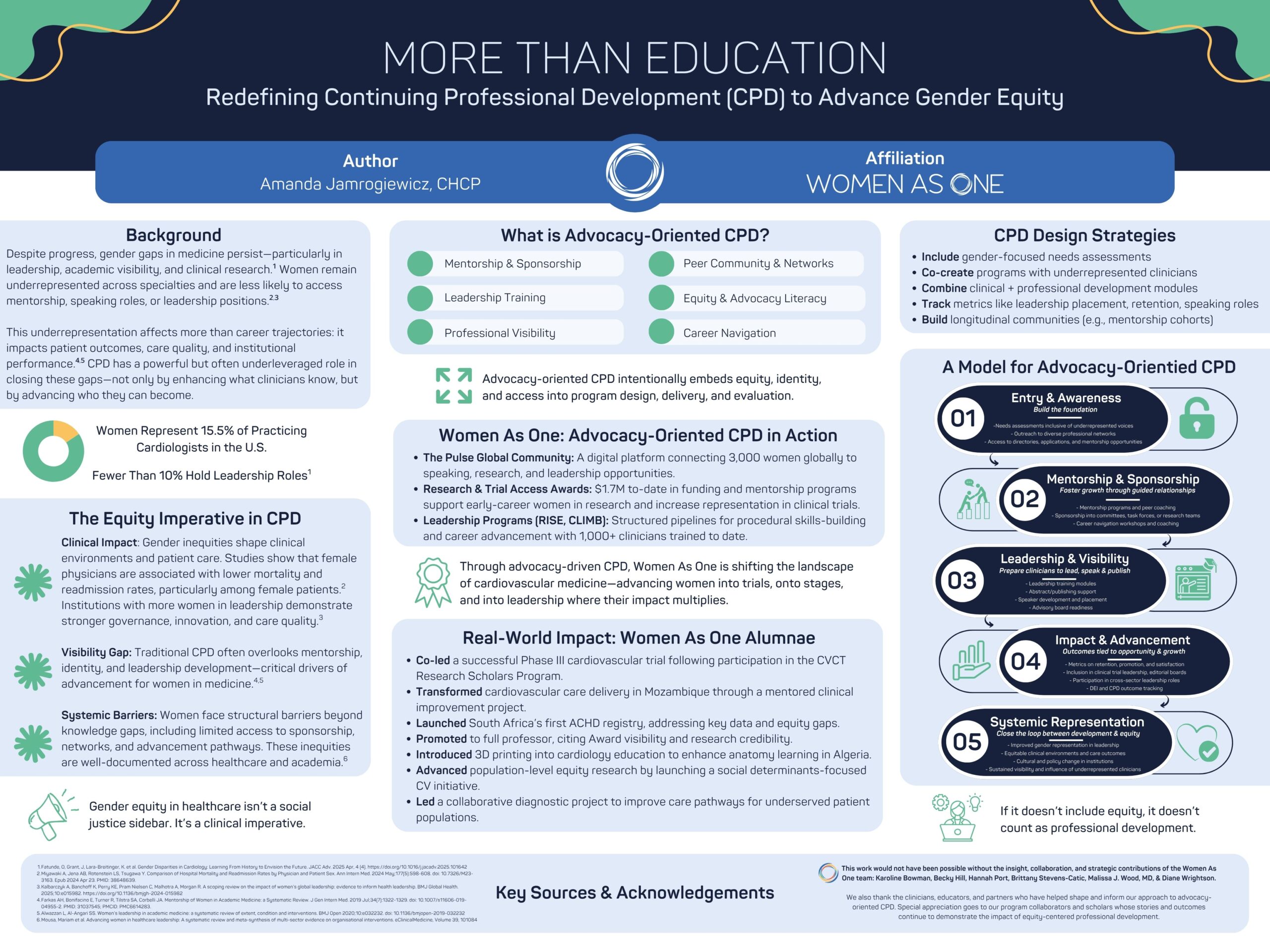
At the 2026 Alliance Annual Conference, Women As One presented a poster that asked a powerful question: What if continuing professional development (CPD) did more than teach clinical knowledge— and instead helped shape the future of the workforce itself?
For decades, professional education in medicine has focused primarily on what clinicians know and how they practice. That work remains essential.
But persistent gender gaps across cardiology—from leadership positions to research participation and speaking opportunities—demonstrate that knowledge alone is not enough to ensure equitable advancement.
To truly strengthen the field of cardiology, professional development must also support who clinicians become, the opportunities they access, and the voices that shape the future of cardiovascular medicine.
Our poster, More Than Education: Elevating Equity and Identity Through CPD, explores how a new model of advocacy-orientated CPD can help close these gaps.
Advocacy-orientated CPD expands the traditional model of professional education. In addition to building clinical expertise, it intentionally supports the structural elements that shape career advancement—mentorship, sponsorship, leadership development, visibility, and professional networks.
By integrating these elements into professional education, CPD can become a powerful engine for advancing equity—and ultimately improving patient care.
Why this matters
Gender inequities in medicine are not simply workforce issues. They influence research priorities, clinical trial representation, leadership decision-making, and ultimately the care patients receive.
When women clinicians have equitable opportunities to lead, research, and shape clinical practice, the entire healthcare system benefits.
Yet structural barriers remain. Women physicians often have less access to mentorship, sponsorship networks, and leadership pathways—factors that are critical for career advancement.
This is where advocacy-orientated CPD comes in.
By intentionally designing programs that foster mentorship, build leadership skills, create visibility, and support long-term professional growth, organizations can help ensure that the next generation of cardiovascular leaders reflects the diversity of the patients they serve.
Turning opportunity into impact
Since its founding, Women As One has supported thousands of women cardiologists across more than 100 countries, expanding access to mentorship, research opportunities, and leadership development.
Through programs like CLIMB, RISE, Mentorship Awards, and our global digital community, The Pulse, thousands of women cardiologists have gained mentorship, leadership training, and opportunities that accelerate their careers and expand their influence.
Today, the outcomes of these programs are shaping the field in tangible ways:
- Women As One alumnae are leading clinical trials and advancing cardiovascular research
- Clinicians supported through our programs are building registries, launching new care models, and expanding access to specialized care
- Women cardiologists are gaining greater representation on speaker panels, advisory boards, and leadership pathways
- A global community of more than 3,000 women cardiologists is strengthening collaboration, mentorship, and visibility across the profession
These outcomes demonstrate what becomes possible when professional development goes beyond traditional education to intentionally support leadership, identity, and community.
A call to the cardiovascular community
Advancing equity in cardiology is not the responsibility of one organization—it requires a collective effort across the entire ecosystem of clinicians, educators, institutions, and industry partners.
For women cardiologists, this means engaging in the programs, mentorship networks, and leadership opportunities that help shape the future of the field. Whether through CLIMB, RISE, research initiatives, or participation in The Pulse community, your involvement strengthens a growing movement dedicated to advancing women in cardiology.
For our partners and supporters, this work demonstrates the powerful impact that strategic investment in equity-focused professional development can have on the workforce and the patients we ultimately serve.
Together, we can redefine what professional development looks like in medicine—not just as a pathway for learning, but as a catalyst for leadership, opportunity, and lasting change.
Explore the poster
We invite you to explore the poster below (click here to download it) to learn more about the evidence, framework, and real-world impact behind this work—and to join us in continuing to expand what professional development can achieve for the future of cardiovascular medicine.
Learn more about Women As One at womenasone.org











 Entrepreneur3 weeks ago
Future Fertility raises Series A financing to scale AI tools redefining fertility care worldwide

 News2 weeks ago
Women’s digital health market set to reach US$5.28 billion in 2026 – report
 Diagnosis4 weeks ago
Future Fertility partners with Japan’s leading IVF provider, Kato Ladies Clinic
 Cancer3 weeks ago
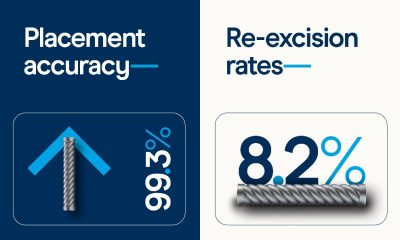
New meta-analysis further supports low re-excisions and high placement accuracy with the Magseed marker

 Menopause4 weeks ago
More research needed to understand link between brain fog and menopause, expert says

 Mental health3 weeks ago
Lifting weights shows mental health and cognitive benefits in older women, study finds

 News3 weeks ago
Resistance training has preventative effects in menopause, study finds

 Pregnancy3 weeks ago
NIPT or NT scan? Why the 2026 evidence supports doing Both
34 Comments