




Cancer
Common cholesterol drug shows ovarian cancer promise


A common cholesterol drug could help weaken a fluid shield that helps ovarian cancer tumours survive, early lab findings suggest.
The findings do not show the drug treats ovarian cancer. But they suggest changing the environment the cancer depends on could make it more vulnerable to existing treatment.

A federally funded study at Duke University School of Medicine found that ascites, a build-up of fluid in the abdomen, may do more than cause discomfort.
Doctors can drain ascites to ease pain, improve mobility and make breathing easier, but the fluid may also help cancer cells survive and spread. It occurs in 90 per cent of people with advanced ovarian cancer.
According to the study, ascites acts as a shield, helping cancer cells evade ferroptosis, a form of cell death.
Ferroptosis is a kind of cellular rusting. It happens when iron inside a cell reacts with certain fats, causing the cell membrane to break apart.
Many metastatic cancer cells, meaning cells that float freely through the abdomen looking for new places to grow, are naturally vulnerable to this kind of damage.
“Doctors have mostly viewed ascites as a symptom rather than an active driver of disease,” said Jen-Tsan Chi, professor in the department of molecular genetics and microbiology and co-leader of the Cancer Biology Program at the Duke Cancer Institute.
“We’ve learned it gives cancer a survival advantage, which fills a major gap in understanding how ovarian cancer spreads.”
Scientists bathed cancer cell lines and patient-derived tumour cells in ascites collected from patients and watched how they responded to ferroptosis triggers.
The fluid protected cancer cells by changing how they store fats and control iron levels, effectively blocking cell death.
The protection required only trace amounts, with as little as 2 per cent immersion shielding cancer cells from destruction.
“What surprised us was how selective this effect was,” said Yasaman Setayeshpour, first author and graduate student in molecular genetics and microbiology at Duke School of Medicine.
“Ascites didn’t protect the cancer cells from other well-known types of cell death, like apoptosis or necrosis, it only blocked ferroptosis.
“To figure out why, we broke ascites down into major parts, like lipids, proteins, and small molecules, and tested what happened when each was removed.
“When we took the lipids out, the protective effect disappeared. That told us lipids are the key reason ascites helps these cancer cells survive.”
But researchers found an unexpected helper in bezafibrate, an older cholesterol drug used to lower triglycerides by altering how the body processes fats.
The cholesterol drug restored sensitivity to ferroptosis, but only when ascites was present. On its own, the drug did not trigger cell death or slow tumour growth in mice.
The drug’s impact depended on the cancer’s surroundings, in this case the fat-rich fluid bathing the tumour. Researchers found that targeting this environment, using repurposed drugs like bezafibrate, could leave cancer cells more exposed to existing cancer treatments.
Chi said the finding could have implications beyond ovarian cancer. Other cancers, including colorectal and pancreatic cancers, can also spread within the abdominal cavity.
“This work shows how much the environment around a tumour matters,” Chi said.
“Biological fluids like ascites don’t just give cancer cells a place to move. They actively help drive how cancer spreads.”













Diagnosis
Where women live may influence ovarian cancer survival, especially among Black women – study


Women living in socially vulnerable neighbourhoods had a 20 per cent higher risk of death after an ovarian cancer diagnosis, a study found.
Black women also faced a 45 per cent higher risk of death than white women.
Researchers said the combination of being Black and living in a highly vulnerable neighbourhood was linked to a greater risk of death than would be expected from either factor alone.

Francesmary Modugno, professor in the Department of Obstetrics, Gynecology and Reproductive Sciences at the University of Pittsburgh and senior author, said: “We expected residential context to influence outcomes, but what surprised us was how much stronger the impact was for Black women.
“Our findings suggest that it’s not simply where someone lives. The interaction between a woman’s lived experience and her residential environment may be helping drive these persistent disparities.”
Modugno is part of the Women’s Cancer Research Center, a collaboration between UPMC Hillman Cancer Center and Magee-Womens Research Institute.
Epithelial ovarian cancer is the deadliest form of gynaecological cancer, with around half of patients surviving for five years after diagnosis.
Survival is lower among Black women, with fewer than 40 per cent alive five years after diagnosis.
Differences including age at diagnosis, cancer stage and tumour type explain some of the survival gap, but researchers said a substantial proportion remains unexplained.
Researchers examined whether social determinants of health, including conditions in the communities where patients live, could help explain the remaining difference in outcomes.
The study, carried out with researchers at the University of Alabama at Birmingham, analysed data from 2,544 women diagnosed with epithelial ovarian cancer and treated at the O’Neal Comprehensive Cancer Center.
The group included 509 Black women and 2,035 white women.
Researchers linked patients’ residential census tracts to the US Centers for Disease Control and Prevention’s Social Vulnerability Index.
The index measures neighbourhood factors including poverty, housing conditions, transport access, educational attainment and other socioeconomic challenges.
Black women in the study were more likely to live in highly vulnerable neighbourhoods.
However, where women lived did not fully explain the racial difference in survival.
Black women had poorer survival than white women even when they lived in similarly advantaged communities, while being Black and living in a highly vulnerable neighbourhood together was associated with a greater risk of death than expected from either factor alone.
Researchers said the findings could help health systems and cancer services identify women at greater risk and provide additional support.
Possible measures include patient navigation programmes, transport assistance, childcare support and survivorship services to help patients complete treatment and manage the challenges of cancer care.
Rebecca Arend, associate professor of gynaecology oncology at the University of Alabama at Birmingham, said: “Our findings reinforce that we must better understand and address the barriers patients face in their communities and ensure that every woman has equitable access to high-quality care.”
Arend, who is also associate director of clinical research at the O’Neal Comprehensive Cancer Center, added: “Translating research into meaningful improvements in cancer outcomes is only possible through strong collaborations among academic medical centres, researchers and community partners.”
The study builds on research published in 2025 led by Modugno and University of Pittsburgh colleagues using data from UPMC Hillman Cancer Center in western Pennsylvania.
That research also found an association between social vulnerability and ovarian cancer survival.
The latest analysis included a substantially larger group of Black women and examined more closely how residential conditions might contribute to racial inequalities in outcomes.
Researchers said the findings need to be replicated in other parts of the US and among additional racial and ethnic groups to determine how widely they apply.
Future work will examine other social and environmental factors that could affect ovarian cancer survival, including neighbourhood pollution, access to food and community resources.
Researchers hope the findings could lead health systems to develop more targeted support for patients at greatest risk of poor outcomes.
Adding neighbourhood measures such as the Social Vulnerability Index to cancer care planning could help health systems identify women facing barriers to care and connect them with support during treatment.


Weekly app monitoring can reduce fatigue and improve daily life for women with metastatic breast cancer, according to a study.
The approach involves regularly asking patients about their wellbeing through an app and responding quickly when problems are identified.
Germany’s Federal Joint Committee, known as the G-BA, has recommended that the treatment model be incorporated into standard care.
Professor Maria Karsten, senior attending physician at the Charité Breast Cancer Center and initiator of the PRO B project, said: “The new medications often no longer need to be administered at the hospital but can be taken at home.
“As a result, we see patients less frequently at the hospital, and our medical oversight has become somewhat incomplete.
“In order to close this gap and provide patients with close support in spite of the distance, we have developed the PRO B digital treatment concept.”
Around 68,000 women in Germany are living with metastatic breast cancer, meaning the disease has spread to other organs.
At this stage, the cancer is generally considered incurable. Modern treatments can, however, temporarily control the disease and extend life expectancy by several years, with some women able to continue working.
At the centre of PRO B is an app that asks women up to 52 structured questions once a week about their symptoms, daily life and emotional wellbeing.
Questions include whether they have experienced pain, felt too tired to carry out their usual activities or experienced shortness of breath.
An algorithm analyses the answers and immediately alerts the treatment team when relevant changes are detected.
The team then contacts the patient within 48 hours to decide whether any action is needed.
Karsten said: “During these phone calls, for example, we discuss whether the dosage of anti-nausea medication should be adjusted or offer practical tips for managing the various symptoms.
“But we also detect serious side effects more quickly – such as those indicated by a seemingly harmless symptom like fatigue – and can immediately schedule the patient for an appointment at the hospital.”
The study involved 909 women with metastatic breast cancer aged 19 to 81 across 52 breast cancer centres in Germany and followed them for one year.
Around half received PRO B care alongside drug-based cancer treatment.
The other half answered questions about their wellbeing once every three months and were not contacted by their treatment teams in response.
Women receiving PRO B care reported significantly less fatigue, which refers to physical, emotional or mental exhaustion that can severely restrict daily life.
They also rated their physical functioning more positively and required fewer hospital admissions.
Karsten said: “These are effects that have a noticeable impact on the patients’ daily lives; the women are more capable and better able to manage their lives.
“We even have evidence that the PRO B approach extends the remaining lifespan for some patients. We are achieving all of this not through a new medication, but simply by regularly and systematically assessing the women’s well-being and responding accordingly.”
More than 90 per cent of women in the PRO B group said after the study that they wanted the approach to become part of routine care.
Stephanie Neumann-Johnston, 51, who took part in the study, said: “I feel like the app has saved my life several times.
“There are so many situations and incidents that you can’t make sense of – you have so many questions.
“With the app, I can look up common problems and find medically reviewed information, for example, about fatigue. That way, I can help myself, also on the weekends.
“And the personal contact provides me with emotional and medical support.
“For example, I can find out whether I’m allowed to take certain medication for a fever, or get an assessment of my situation: Should I go to the emergency department with these symptoms or not? The app takes a huge weight off your shoulders.”
Based on the medical findings and a health economic analysis, the G-BA recommended in June that PRO B should be incorporated into standard care.
This would allow patients with statutory health insurance to access the model in future when they receive the relevant diagnosis.
PD Dr Christoph Kowalski, department director at the German Cancer Society and a co-author, said: “This recommendation must now be implemented as quickly as possible.
“If a new care concept offers medical and economic benefits, we should not withhold it from the most seriously ill women.”
The health insurance companies involved in the project are also planning further developments so affected women can receive routine PRO B care before its wider introduction into standard care, with access expected to begin this autumn.
The care model will continue under the name “ida”, led by Karsten and her team.
The PRO B project ran from 2020 to 2024 and received around €4.8m from the Innovation Committee of the Federal Joint Committee.
The project was led by Karsten, with consortium partners BARMER, mkk – meine krankenkasse, DAK-Gesundheit, the German Cancer Society and OnkoZert GmbH.
Breast cancer is the most common cancer among women in Germany, with around one in eight expected to develop the disease during their lifetime.
Worldwide, breast cancer is the leading cause of cancer-related deaths.
Despite advances in treatment, 30 per cent of women with early-stage breast cancer and up to 70 per cent of those with lymph node involvement in later stages develop distant metastases, which typically make the disease incurable.
For patients with metastatic breast cancer, treatment aims to prolong life while maintaining the best possible quality of life.
Since 2016, the G-BA has been responsible for supporting new forms of care that go beyond existing standards, as well as health services research aimed at improving healthcare quality in Germany.
Its Innovation Fund is financed through contributions from statutory health insurance plans and the Health Fund.

A woman with advanced ovarian cancer has become the first patient globally to receive an experimental off-the-shelf cell therapy.
Tracy Tomlinson, 58, was given the experimental drug ZI-MA4-1 at the Christie NHS Foundation Trust in Manchester.
The treatment forms part of a clinical trial evaluating its use against several cancer types, including ovarian, lung, head and neck cancers and sarcomas.
The Christie is leading the trial, with a second site at the Royal Marsden in London. It involves patients with advanced cancers who may have few other treatment options.
Tomlinson, from Chadderton in Greater Manchester, has undergone surgery and multiple rounds of chemotherapy since she was diagnosed in 2020.
She said: “They’ve got rid of the cancer twice but then it came back about two and a half years ago, and we’ve never seemed to get rid of it since then.
“The chemotherapy has shrunk it but when treatment stops, it has come back.
“It is a lot to live with and there’s been ups and downs – there’s been elation, there’s been disappointment, and bits in between.
“But I try very, very hard to remain very positive. Every day that I wake up is a positive. You’ve got to have hope.”
ZI-MA4-1 combines two approaches to cancer treatment.
It uses natural killer cells, known as NK cells, which are specialist immune cells that identify and destroy abnormal cells.
T-cell receptors on the donor cells are also engineered to recognise and target tumours producing a protein called Mage-A4.
Mage-A4 is found in several types of cancer and is considered by experts to be a potential target for attacking abnormal cells.
Unlike personalised treatments, ZI-MA4-1 is designed as an off-the-shelf therapy using immune cells from donors.
The treatment is manufactured in advance rather than being made separately for each patient, with hundreds of doses potentially produced from one manufacturing batch.
Experts believe this approach could make advanced cell therapies available to more patients, more quickly and at a lower cost.
Tomlinson was diagnosed with ovarian cancer that had spread shortly before Christmas 2020 and began treatment immediately.
By summer 2021, scans showed no evidence of disease, but the cancer returned around a year later.
Despite further treatment and 48 chemotherapy infusions, the cancer continued to return.
The former Civil Service manager was diagnosed with stage 3C ovarian cancer, meaning cancer growths had spread into the peritoneum, the tissue lining the abdominal cavity.
She currently has a tumour between her liver and kidney, as well as smaller tumours elsewhere.
She said: “They’ve got rid of the cancer twice but then it came back about two and a half years ago, and we’ve never seemed to get rid of it since then.
“The chemotherapy has shrunk it but when treatment stops, it has come back.
“It is a lot to live with and there’s been ups and downs – there’s been elation, there’s been disappointment, and bits in between.
“But I try very, very hard to remain very positive. Every day that I wake up is a positive. You’ve got to have hope.”
Tomlinson said she had been target-driven during her working life and had set herself high standards.
“But you can’t control cancer,” she said. “What I can control is how I look at it, how I deal with it, and trying to eat healthily and taking the positives in everything.
“And I’ve learned to appreciate the smallest of things that we take for granted – and the people around you and what they mean to you.
“Also, the beauty of outside and the trees and the colour of the trees and the birds singing.
“We just go from A to B, don’t we? Busy, busy, busy. But we never slow down and take in the wonder of what’s around us.
“I often think, ‘I’m still here’, and that’s helped me think, ‘Why can’t I still be here in 10 years?’, ‘Why can’t I still be here in 15 years?’
“And I believe taking all the treatments offered to me is helping me kick that can a bit further down the road.
“I don’t want to go anywhere. I’ve still got a lot of things I want to do and things I want to achieve.”
Tomlinson said her husband Paul, whom she married in 2022, is her “rock”. She is also close to her son Harry, 28.
Last year, she was referred to the Christie’s early-phase clinical trials team for extensive screening and learned she was eligible for the Zima-101 clinical trial.
She said: “I decided almost straight away that I was going to go for it.
“Then afterwards you think, ‘Am I doing the right thing?’, because it is a little bit scary being the first person in the world to have the treatment.”
She has received three infusions of the therapy, with the option of a fourth depending on her scan results.
She said: “If it benefits me, absolutely fantastic. But if it benefits other people in the future, that’s important too.
“I don’t want to have gone through everything I’ve gone through for nothing. I want to feel like I have made a difference.”
Professor Fiona Thistlethwaite, consultant medical oncologist at the Christie, said: “While this is an early-stage study primarily focused on safety, it represents an exciting step forward in efforts to develop new treatment options for people like Tracy with advanced solid tumours.
“We hope the knowledge gained will help shape future cancer treatments and ultimately improve outcomes for patients.”
Dr Jon Lim, consultant medical oncologist in advanced immunotherapy and cell therapy at the Christie, told PA: “What’s very exciting about this is that these are essentially not kind of antibody-based, but living cells.
“These are live immune cells that are infused in hundreds of millions back to the patient, and the idea of this is that it is a little bit more targeted.
“The reason this is very interesting is because this is the first of its kind globally in this approach, where it’s taking donor immune cells, manipulating or engineering them, and putting them into the recipient.
“Tracy is essentially getting somebody else’s immune cells that have been engineered to ‘see’ her cancer.
“We’re very excited. This is a novel approach in the cell therapy space. We are also really showcasing what we can do in the UK.”
Namir Hassan, chief executive of Norwegian company Zelluna, which makes ZI-MA4-1, described Tomlinson’s first dose as a “landmark moment”.
He said: “It represents the moment when years of research moved beyond the laboratory and into the clinic, offering a new potential treatment option for patients facing advanced cancers with limited alternatives.”
Only around 15 per cent of women survive ovarian cancer for five years or more after diagnosis.
Dr Diana Hernandez, director of immune and advanced therapies at Anthony Nolan, said: “NK cells have huge potential as off-the-shelf therapies, and this trial takes us one step closer to a wider application of engineered NK cells in the targeted treatment of cancers.”












 News4 days ago
UK femtech investment surges 194% in a decade, research finds

 Fertility2 weeks ago
Natural Cycles receives sixth FDA clearance for fertility algorithm
 Wellness1 week ago
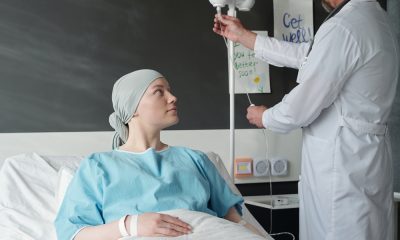
Cancer patient receives ‘landmark’ treatment in world-first

 Insight2 weeks ago
Experimental treatment significantly slows progression of fatal brain disease in women, study finds

 Sponsored Content2 weeks ago
The room is filling up at WHW Europe 2026 with super early bird pricing ending this Friday

 Entrepreneur5 days ago
TidalSense raises £14m to expand five-minute COPD test across NHS

 Insight2 weeks ago
Johnson & Johnson offers to pay US$5.5bn to settle talc cancer lawsuits

 Entrepreneur4 days ago
Cross-Border Impact Ventures raises US$58m for women and children’s health