




Wellness
Debunked: women do not get better muscles by timing workouts with menstrual cycle
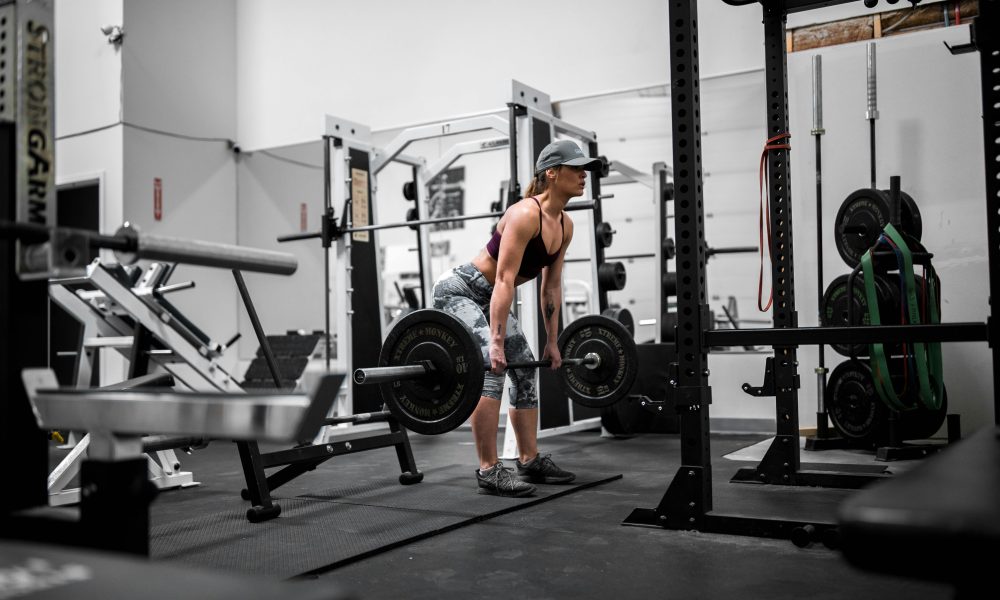
New research is debunking the internet belief that if women time their resistance training to specific phases of their menstrual cycle, it boosts the body’s ability to build muscle and strength.
In fact – the research ha shown that exercising at various points in the cycle had no impact, either positive or negative, on the synthesis of new muscle proteins, a process essential to building and maintaining muscle.
The results debunk the popularly touted practice of cycle syncing, or tailoring workouts to align with the way hormones change throughout a woman’s menstrual cycle.
“Our findings conflict with the popular notion that there is some kind of hormonal advantage to performing different exercises in each phase. We saw no differences, regardless of cycle timing,” explains Lauren Colenso-Semple, lead author of the study and a former graduate student in the Department of Kinesiology, who conducted the work while at McMaster.
For the study, researchers monitored the menstrual cycles of participants, all healthy young women, for three months to confirm their cycles were normal. Contrary to popular belief, only a small percentage of women, about 12 per cent, have a consistent 28-day cycle and ovulate regularly on day 14 or the ‘textbook’ menstrual cycle.
Participants then ingested a tracer molecule, a benign substance designed to track and monitor muscle protein levels. They performed heavy resistance exercise during two distinct phases of their menstrual cycles: the follicular phase, when oestrogen levels are at their peak, and luteal phase, characterized by peak progesterone levels.
Researchers observed no effect of either menstrual cycle phase on the production of muscle proteins.
Cycle syncing has been made popular by internet influencers to co-ordinate workouts, certain diets and lifestyle behaviours with the menstrual cycle. There are fitness apps for tracking cycles, and social media channels are rife with advice and recommendations.
Proponents routinely cite a handful of scientific studies on animals as evidence that fluctuations in ovarian hormones can affect how human muscles respond to exercise, but this study shows that not to be correct.
“Our work shows that women who want to lift weights and recondition their muscles should feel free to do so in any phase of their cycle. There is no physiological difference in response to the exercise,” said Stuart Phillips, the Canada Research Chair in Skeletal Muscle Health at McMaster who supervised the study. “It is important to tailor your training to how you feel.”
Scientists highlight the need for further research, particularly studies that focus on women’s health. This includes investigating how training, in relation to the menstrual cycle, affects women and how both oral and non-oral contraceptives influence their responses to exercise.
Fertility
Most NHS regions in England limit IVF to single cycle, research finds
Nearly 70 per cent of NHS regions in England fund only one IVF cycle for women under 40, breaking national guidelines, new research has found.
Twenty-nine of the 42 integrated care boards, which control local NHS budgets, now offer only one round of treatment, after four reduced access in the past year.
National Institute for Health and Care Excellence (Nice) guidelines recommend three full cycles for women under 40 who have been unable to conceive for two years.
Only two of England’s 42 integrated care boards have policies consistent with these guidelines, which they are not legally obliged to follow.
The research was conducted by the Progress Educational Trust, a fertility charity.
Sarah Norcross, the director of PET, said the impact was “devastating” for couples struggling with infertility.
She said: “Infertility is already incredibly stressful for people, and it puts them under even more pressure, because there is so much riding on whether that one NHS-funded cycle is going to work.
“And for some people, that will be their only chance, because private fertility treatment is so expensive.”
The data showed regional variations, with the whole of the north-west offering just one cycle.
“It’s a postcode lottery, and we’re seeing a race to the bottom,” said Norcross.
Of the 29 integrated care boards that offer a single cycle, 19 provide only a partial cycle, where not all viable embryos created are transferred.
There was just one recent example of improved services, from NHS South East London, which in July 2024 went from one partial to two full cycles.
The NHS estimates that about one in seven couples may have difficulty achieving a pregnancy. One cycle of IVF can cost from £5,000 at a private clinic.
Fertility rates in England and Wales have fallen since 2010 to 1.41 children per woman in 2024, the lowest on record and below the replacement level of 2.1 at which a population is stable without immigration.
Health minister Karin Smyth said in a written parliamentary answer last month that it was “unacceptable” that access to NHS-funded fertility services varied across the country.
Revised Nice fertility guidelines are due this spring, but Norcross said changing them seemed pointless.
She said: “Fertility treatment has always been a Cinderella service. It’s always been the one they’ve chosen to cut or to ignore.
“Nice has recommended three full NHS-funded cycles, for women under 40, for more than 20 years. This has never been implemented across England, unlike in Scotland.”
Norcross advocated centralised commissioning and replicating Scotland’s approach, which included financial modelling and a phased implementation starting with two cycles to avoid long waits, moving up to three once capacity was achieved.
“It is a tried and tested plan that England could follow,” Norcross added.
A Department of Health and Social Care spokesperson said: “We recognise access to fertility treatment varies across the country and we are working with the NHS to improve consistency.
“Nice provides clear clinical guidelines, and we expect integrated care boards to commission treatment in line with these.
“Updated Nice fertility guidelines are expected this spring and we will continue to support NHS England to make sure the guidance is fully considered in local commissioning decisions.”
An NHS England spokesperson said: “These clinical services are commissioned by integrated care boards for their area based on the needs of the local population and prioritisation of resources available.
“All ICBs have a responsibility to ensure services are provided fairly and are accessible by different population groups.”
Mental health
Fear of ageing may age women faster, study suggests
Insight
WUKA and Royal Yachting Association partner to support women and girls in sailing
WUKA has announced a groundbreaking partnership with the Royal Yachting Association (RYA), including RYA Scotland and RYA Northern Ireland, supporting women and girls in sailing.
Building on WUKA’s growing #TackleAnything campaign – which has already reached thousands of girls across sports in the UK – this collaboration brings practical period solutions into sailing.
Together, WUKA and the RYA are committed to breaking down barriers so periods never limit confidence, participation, or performance on the water.
Ruby Raut, WUKA founder & CEO, said: “Partnering with the RYA has been incredibly important for us at WUKA.
“Sailing is an amazing way for women and girls to build confidence, and periods shouldn’t hold anyone back from enjoying the water or reaching their full potential.
“Through this partnership and our #TackleAnything campaign, we’re proud to provide practical solutions and innovative products that help female sailors feel comfortable, confident, and free to focus on learning, performing, and having fun.
“Breaking down barriers and supporting women to tackle anything — on land, at sea, and everywhere in between – has never felt more meaningful.”
WUKA, which stands for Wake-Up Kick Ass, shares the RYA’s commitment to inclusivity and empowerment.
In 2023, WUKA launched #TackleAnything, a campaign supporting women, girls and sportspeople with periods. Since its launch, the initiative has reached 3,576 girls across 46 clubs and partnered with a range of sports across the UK – from Scottish Gymnastics to Titans wheelchair basketball – helping young athletes play without limits and stay confident, comfortable, and in the game.
The brand offers period-friendly aquatic apparel and practical solutions that help women train and compete with freedom of movement and total assurance.
Through this partnership, WUKA will provide innovative period swimwear for young sailors across key RYA programmes, including the NI Sailing Team, the RYA Scotland Performance Pathway Programme, and the British Sailing Pathways Talent Academies.
By combining WUKA’s mission to challenge stigma with the RYA’s commitment to inclusion, the partnership ensures young sailors can focus on what matters most – learning, performing, and enjoying their time on the water – with confidence and comfort. RYA members will also receive a 10 per cent discount on WUKA products.
Sailing offers incredible benefits for women and girls, but time on the water can present unique challenges -particularly during menstruation.
Together, WUKA and the RYA are providing practical solutions that remove these barriers, helping young sailors participate fully and confidently in the sport.
Sara Sutcliffe, RYA CEO, said: “At the RYA, we have been making strides to break down barriers for women of all ages to help ensure they can experience the water in a supportive and positive environment.
“From education workshops and practical sessions, we want to make sure our female sailors are empowered and this partnership is another great example of how we can demonstrate possible tools to equip them to succeed”.
This partnership is part of the RYA’s wider commitment to making sailing a sport where women and girls can thrive. Alongside initiatives such as the Female Futures Group, the Women’s Race Officials Programme and all new Talent Academy Female Future’s Camps; it demonstrates a continued focus on removing barriers and creating meaningful opportunities across every stage of the sailing.
WUKA’s involvement ensures that practical solutions are available on the water, from innovative period swimwear to support resources, helping young sailors feel fully equipped and confident during training and competition.
By integrating these tools into RYA programmes, WUKA brings a new level of comfort and assurance to female athletes, allowing them to focus entirely on performance, enjoyment, and growth in the sport.
For any women and girls looking to learn more about sailing, visit www.rya.org.uk.
For more information on WUKA visit www.wuka.co.uk.
-
Insight4 weeks agoDesigner perfumes recalled over banned chemical posing fertility risk
-
Insight2 weeks agoParents sue IVF clinic after delivering someone else’s baby
-
Insight3 weeks agoWomen’s health could unlock US$100bn by 2030
-
Wellness4 weeks agoChina’s birth rate hits record low despite government fertility efforts
-
Menopause3 weeks agoHRT linked to greater weight loss on tirzepatide
-
Entrepreneur6 days agoUS startup builds wearable hormone tracker
-
Menopause2 weeks agoFlo Health and Mayo Clinic publish global perimenopause awareness study
-
News4 weeks agoVerdane invest in Clue to accelerate the future of women’s health



