Connect with us

News

Clue teams up with Headspace to help women manage their mental health

Published

on

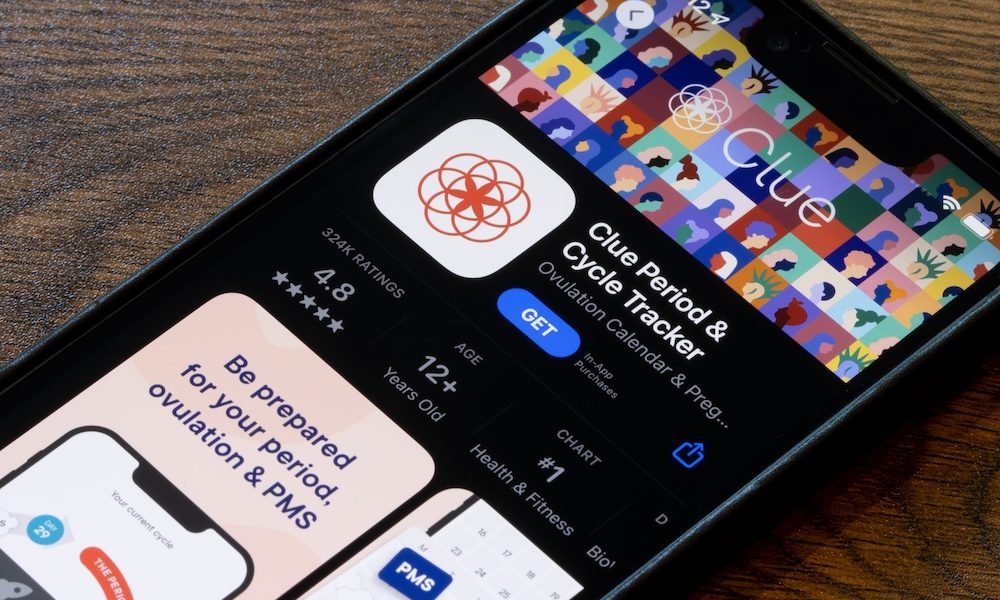
The reproductive health app Clue has announced a partnership with Headspace to help women “take control” of their mental health.

The Clue and Headspace partnership aims to offer targeted support for users at various cycle stages and shed light on the important but under-researched connection between menstrual and mental health.

Anxiety and depression are the top two most-common health conditions reported by Clue members, accounting for over 36 per cent of all confirmed health conditions recorded by members in the app.

Recent data from a survey of over 12,000 Clue members found that 62 per cent of those with cycle-related concerns reported that managing daily life while experiencing menstrual symptoms was one of their biggest challenges.
According to the findings, 75 per cent of those with concerns were worried about emotional symptoms such as sadness, anxiety, or mood swings.

“We consistently hear from our Clue community how symptom-tracking throughout their cycles helps them identify and validate cycle-related patterns – both physical and mental,” said Rhiannon White, chief product officer at Clue.

“After recently launching our new Feelings Analysis feature that helps members identify recurrent changes, our partnership with Headspace is a further step in providing evidence-based tools and guidance to help better manage their mental health.

“By combining Clue’s leading cycle tracking insights and predictions, with Headspace’s expert mental health resources, we can help members navigate changes throughout their cycle, and manage stress and feelings of everyday anxiety associated with big life changes like trying to conceive, pregnancy, and perimenopause.”

Clue Plus members will have access to 50 per cent off a Headspace subscription. According to Clue, members will be able to utilise these resources to help manage their daily life and better understand points of their cycle where their mental health is under the most stress.

“The connection between menstrual health and mental health isn’t talked about nearly enough,” said Emma Nemtin, head of consumer partnerships and distribution at Headspace. “Headspace is on a journey to provide our members with mental health support for all of life’s moments, both big and small.

“We’re thrilled to team up with Clue to empower women and others with cycles to take ownership over their mental wellbeing in addition to their physical health.”

To receive the Femtech World newsletter, sign up here.
Insight

Women’s health summit to tackle ‘enormous’ AI opportunity

Published

on

A sold-out summit at the London Institute for Healthcare Engineering will bring together clinicians, researchers, regulators, investors and founders to discuss how artificial intelligence is being applied to women’s health, and what responsible development of these tools should look like.

AI × Women’s Health: Innovation, Challenges and Opportunities takes place on 25 June.

It’s organised by MEGI Health, a femtech company building a digital cardiovascular platform aimed at supporting women’s heart health through pregnancy, postpartum and beyond.

All 140 places have gone, and there’s now a waiting list.

Nina Sesto, CEO of MEGI Health, said: “We are seeing a wave of innovation in women’s health, and AI has the potential to accelerate it.

“The opportunity is enormous, but it only pays off if these tools are built on representative data and designed around the realities of women’s health.

“That is exactly the conversation we wanted to convene, across clinicians, researchers, industry and regulators.”

AI is increasingly being applied across women’s healthcare, with proponents pointing to earlier diagnosis, better risk prediction and more personalised care.

The summit will look at tools in development across fetal and gynaecological ultrasound, maternal cardiovascular monitoring and clinical decision support, alongside the question of whether women risk being left behind as the technology develops.

The timing reflects wider momentum in the sector: women’s health has been drawing more investment and policy attention, and the World Economic Forum and McKinsey Health Institute have estimated that closing the women’s health gap could add at least $1 trillion a year to the global economy by 2040.

A recurring theme for the day is data.

Women have historically been under-represented in medical research, and organisers argue that AI tools trained on incomplete or unrepresentative datasets risk repeating those gaps rather than closing them.

Sessions on data, ethics, privacy and equity will run alongside the more technical and commercial discussions.

Dr Fran Conti-Ramsden is a clinician at Guy’s and St Thomas’ NHS Foundation Trust, academic at King’s College London and Chief Medical Officer of MEGI Health.

Conti-Ramsden said: “Working at the intersection of clinical practice, academia and industry, I see both the tremendous challenges we face in delivering clinical care for women and the need for innovation, alongside the rapid development of AI and digital health technologies.

“But bringing innovation into clinical practice is fraught with challenges.

“I hope this day brings together people from across the landscape to discuss and define those challenges as well as celebrate progress in the field, sparking dialogue on how we should innovate responsibly, and to make sure women’s health is not left behind.”

The half-day programme is split into four sessions, chaired respectively by Professor Eugene Oteng-Ntim, Professor Richard Dobson, an interactive breakout segment, and Professor Asma Khalil. Other speakers include MiRa Jacobs (MHRA), Professor Jane Hirst (The George Institute), Tulsi Patel (Hertility) and Dr Kimberley Peven (Scarlet), among others.

Organisers say they hope the event will help build a longer-term UK community around clinical AI in women’s health.

Continue Reading

Menopause

Hormone therapy users report healthier lifestyles

Published

on

Menopausal women using hormone therapy reported healthier diet, exercise and sleep habits than non-users in a study of more than 10,000 women.

The menopause transition is associated with a higher risk of chronic health conditions and symptoms including hot flushes and problems affecting the urinary and genital systems.

Hormone therapy is often used to manage these symptoms, but it remains unclear whether it affects health outcomes directly or indirectly through changes in health behaviours.

Previous research has produced mixed results, with some studies suggesting that postmenopausal women pay greater attention to maintaining a healthy lifestyle.


The cross-sectional analysis examined whether menopause status and hormone therapy use were linked to diet, physical activity and sleep duration.

A cross-sectional study assesses participants at one point in time. It can identify associations but cannot establish whether one factor directly caused another.

Diet, exercise and sleep are described as modifiable health behaviours because people may be able to change them to improve their health.

The researchers found that postmenopausal women who had never used hormone therapy reported eating less fruit and vegetables.

Women who had never used the treatment were also 19 per cent less likely to meet guidelines for muscle-strengthening activity.

Sleep duration was shorter among postmenopausal women who had never used hormone therapy.

Compared with premenopausal and perimenopausal women, the likelihood of meeting sleep guidelines was 14 per cent lower among never-users, 26 per cent lower among current users and 24 per cent lower among past users.

Perimenopause is the transitional period before menopause, when hormone levels and menstrual periods can change.

Researchers said these findings may be linked to higher levels of follicle-stimulating hormone among postmenopausal women who do not use hormone therapy.

They may also relate to lower levels of oestradiol, a form of oestrogen, which have previously been associated with poorer sleep.

Hot flushes and urogenital symptoms can also disrupt sleep, although hormone therapy may ease these symptoms.

Dr Stephanie Faubion, medical director for The Menopause Society, said: “This large observational study underscores that women who use hormone therapy tend to adopt overall healthier lifestyles.

“Although this association may partly reflect better symptom control enabling healthier behaviours, healthy-user bias is likely a significant contributor.

“Women who choose to use hormone therapy are often more proactive in their healthcare and may systematically differ from nonusers in socioeconomic resources, access to care, and health literacy.

“This largely explains why early observational studies of hormone therapy suggested cardiovascular benefits that were not confirmed in subsequent randomised, controlled trials.”

Continue Reading

Ageing

Strength training may lower heart disease risk in women, study suggests

Published

on

Women who do strength training may have a lower risk of major cardiovascular disease, particularly alongside aerobic activity, a study suggests.

Cardiovascular disease is the leading cause of death worldwide. Aerobic activities such as brisk walking, jogging, cycling and swimming are already established ways to help reduce the risk.

Strength or resistance training, also known as RT, is less established as a prevention strategy. It makes muscles work against a force and can involve body weight, free weights, resistance bands or machines.

Current US guidelines recommend at least two days of strength training and 150 minutes of moderate-to-vigorous aerobic activity each week.

They also recommend limiting sedentary behaviour, including prolonged television viewing, which is considered an independent risk factor for cardiovascular disease.

Dr Tianyue Zhang, lead study author and scientist in the department of nutrition at the Harvard T.H. Chan School of Public Health, said: “Despite its established health benefits, RT is often overlooked as a prevention strategy for CVD, and its impact on CVD risk, especially in middle-aged and older women, remains understudied.

“A key question is, how much does it add beyond aerobic activity alone?”

Researchers analysed data from 117,025 women participating in the Nurses’ Health Study and Nurses’ Health Study II.

The two groups had average starting ages of 66.8 and 48.1 years respectively.

The women reported their resistance training every four years, with exercises involving the arms and legs recorded separately.

Time spent watching television was used as the main measure of sedentary behaviour.

The researchers examined exercise and television-viewing habits alongside the incidence of major cardiovascular disease.

Major cardiovascular events included fatal or non-fatal heart attacks, strokes, coronary artery bypass surgery and percutaneous coronary intervention.

Coronary artery bypass surgery redirects blood around narrowed or blocked heart arteries. Percutaneous coronary intervention uses a small balloon, often followed by a stent, to open a narrowed artery.

Higher levels of strength training were associated with a lower risk of major cardiovascular disease, particularly heart attacks.

No statistically significant link with stroke was found when resistance exercise was considered separately.

Women completing at least two hours of strength training a week had a 20 per cent lower risk of major cardiovascular disease and a 44 per cent lower risk of heart attack than those doing none.

Each additional hour a week was associated with a five per cent lower risk of major cardiovascular disease and a 14 per cent lower risk of heart attack.

The associations weakened somewhat after researchers accounted for body mass index and conditions including diabetes, high blood pressure and high cholesterol, but remained clear.

Body mass index, or BMI, compares weight with height and is commonly used to assess whether someone is within a healthy weight range.

Strength training was also linked to additional benefits among women who did aerobic activity.

Women completing at least two hours of strength training and 150 minutes of aerobic activity each week had a 45 per cent lower risk of heart attack than those reporting no physical activity.

Women who met recommendations for strength training, aerobic activity and reduced television viewing had the lowest risks of major cardiovascular disease, heart attack and stroke compared with those who met some or none of the recommendations.

Zhang said: “These findings suggest that, within an already active population, RT is associated with additional reductions in CVD risk above and beyond overall aerobic activity.

“Alongside aerobic activity and reductions in sedentary behaviour, RT may be an important component of public health strategies for cardiovascular prevention in women.”

The study relied on participants reporting their own resistance training, meaning the data may not always have been precise.

Researchers also noted the possible influence of unmeasured factors and the limited diversity of participants.

They were unable to fully separate the effects of the type of resistance training performed from the overall amount completed.

Dr Harlan M. Krumholz, professor at Yale School of Medicine, said: “We have long encouraged resistance training, and this study provides strong evidence to reinforce that message.

“It should be included in a well-rounded health routine to support function and longevity.”

Continue Reading

Trending

Copyright © 2025 Aspect Health Media Ltd. All Rights Reserved.