




Connect with us

Pregnancy

Women in the UK less likely to have kids because of their experience of maternity care, report finds
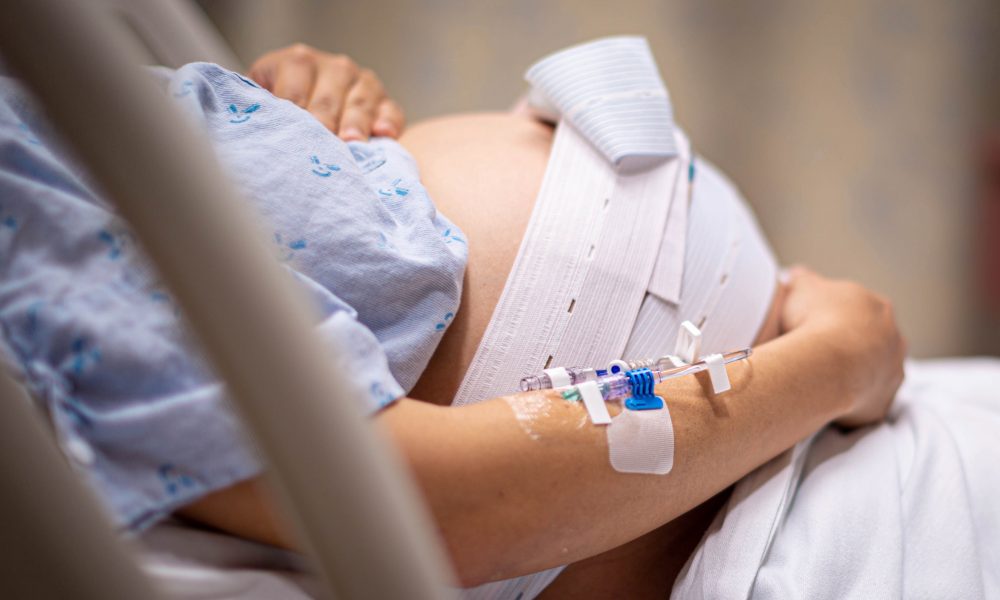
Nearly a fifth of the women surveyed said they were not offered a six-week check by their GP

Published

on

The vast majority of mothers in the UK have experienced physical or psychological birth trauma, with more than half saying they are less likely to have more children because of their experience of maternity care, new research has shown.

The survey, conducted by the UK parenting forum Mumsnet, found that 79 per cent of women experienced birth trauma, with 53 per cent experiencing physical trauma and 71 per cent experiencing psychological or emotional trauma.

Nearly three quarters (72 per cent) of those who experienced trauma said it took more than a year to resolve or was still ongoing.

The survey also found that women who experience birth trauma are not being appropriately supported by health service staff.

  • 86 per cent of women who experienced birth trauma agreed that healthcare providers are desensitised to birth trauma and 75 per cent of women feel healthcare providers do not do everything they can to prevent birth trauma occurring.
  • 46 per cent who experienced birth trauma said providers used language “which implied I was a failure or to blame”.
  • 65 per cent of women who had experienced birth trauma previously said it was not acknowledged by staff.

The research also exposed substandard postnatal care for new mums. Nearly a fifth of women were not offered a six-week check by their GP.

Of those that had a six-week check, only 37 per cent of GPs covered both mental and physical health, despite 78 per cent of women experiencing struggles with mental health postnatally. Nearly half of women said they felt unsafe during postnatal care.

Justine Roberts, Mumsnet founder and CEO, said: “We hear daily on Mumsnet from women who have had deeply upsetting experiences of maternity care, and this latest research underlines that the majority of mothers experience birth trauma – whether physical or psychological.

This trauma has long lasting effects and it’s clear that women are being failed at every stage of the maternity care process – with too little information provided beforehand, a lack of compassion from staff during birth, and substandard postnatal care for mothers’ physical and mental health.

“This is not solely an issue of staffing or funding. It is a cultural problem which sees women belittled and undermined, with their choices and experiences ignored.”

She added: “These failures of care would not be tolerated in any other part of the health service, and it is no coincidence that they repeatedly occur in a section of the NHS which exclusively treats women and their babies.”

Insight

Higher nighttime temps linked to increased risk of autism diagnosis in children – study

Published

on

Nighttime temperatures during pregnancy may be linked to a higher chance of an autism diagnosis in children, a recent study suggests.

The research tracked nearly 295,000 mother-child pairs in Southern California from 2001 to 2014 and linked warmer overnight temperatures with higher risk in early and late pregnancy.

Children of mothers exposed to higher than typical nighttime temperatures during weeks one to 10 of pregnancy had a 15 per cent higher risk of an autism diagnosis.

Exposure during weeks 30 to 37 was linked to a 13 per cent higher risk.

 Lead author David Luglio, a post-doctoral fellow at Tulane University, said: “A key takeaway is that we identified specific windows when a mother and her developing child can be most affected by exposures to higher nighttime temperatures.

“This is critical and hopefully can help mothers prepare accordingly.”

The study is described as the first to examine how temperature may affect fetal neurodevelopment, the process by which a baby’s brain and nervous system form during pregnancy.

Extreme temperatures linked to increased risk were classified as above the 90th percentile, meaning 3.6°F hotter than average, and the 99th percentile, 5.6°F above average.

The association held even after researchers accounted for factors such as neighbourhood conditions, vegetation and fine-particle air pollution.

The study could not account for other factors such as access to air conditioning. Researchers did not find the same association with daytime temperatures, potentially because people spend more time away from home during the day.

“Heat waves are becoming more frequent, and people may only think of the dangers of daytime heat exposure,” said Mostafijur Rahman, assistant professor of environmental health sciences at Tulane University.

“These results indicate a strong association between high nighttime temperatures during pregnancy and autism risk in children and show that we need to think about exposure to heat around the clock.”

The study did not examine how higher temperatures at night might affect prenatal development, though Luglio said it is possible that warmer nights disrupt sleep for pregnant mothers.

Previous research has suggested insufficient sleep during pregnancy may be linked to a higher risk of neurocognitive delays in children.

“Extreme heat exposure during pregnancy has been linked to a range of adverse health outcomes, including prenatal neurodevelopment delays and complications with an embryo’s development of a central nervous system,” Luglio said.

“The goal of our study was to specifically explore the link between prenatal heat exposure and autism diagnoses for the first time.”

Continue Reading

Fertility

Most NHS regions in England limit IVF to single cycle, research finds

Published

on

Nearly 70 per cent of NHS regions in England fund only one IVF cycle for women under 40, breaking national guidelines, new research has found.

Twenty-nine of the 42 integrated care boards, which control local NHS budgets, now offer only one round of treatment, after four reduced access in the past year.

National Institute for Health and Care Excellence (Nice) guidelines recommend three full cycles for women under 40 who have been unable to conceive for two years.

Only two of England’s 42 integrated care boards have policies consistent with these guidelines, which they are not legally obliged to follow.

The research was conducted by the Progress Educational Trust, a fertility charity.

Sarah Norcross, the director of PET, said the impact was “devastating” for couples struggling with infertility.

She said: “Infertility is already incredibly stressful for people, and it puts them under even more pressure, because there is so much riding on whether that one NHS-funded cycle is going to work.

“And for some people, that will be their only chance, because private fertility treatment is so expensive.”

The data showed regional variations, with the whole of the north-west offering just one cycle.

“It’s a postcode lottery, and we’re seeing a race to the bottom,” said Norcross.

Of the 29 integrated care boards that offer a single cycle, 19 provide only a partial cycle, where not all viable embryos created are transferred.

There was just one recent example of improved services, from NHS South East London, which in July 2024 went from one partial to two full cycles.

The NHS estimates that about one in seven couples may have difficulty achieving a pregnancy. One cycle of IVF can cost from £5,000 at a private clinic.

Fertility rates in England and Wales have fallen since 2010 to 1.41 children per woman in 2024, the lowest on record and below the replacement level of 2.1 at which a population is stable without immigration.

Health minister Karin Smyth said in a written parliamentary answer last month that it was “unacceptable” that access to NHS-funded fertility services varied across the country.

Revised Nice fertility guidelines are due this spring, but Norcross said changing them seemed pointless.

She said: “Fertility treatment has always been a Cinderella service. It’s always been the one they’ve chosen to cut or to ignore.

“Nice has recommended three full NHS-funded cycles, for women under 40, for more than 20 years. This has never been implemented across England, unlike in Scotland.”

Norcross advocated centralised commissioning and replicating Scotland’s approach, which included financial modelling and a phased implementation starting with two cycles to avoid long waits, moving up to three once capacity was achieved.

“It is a tried and tested plan that England could follow,” Norcross added.

A Department of Health and Social Care spokesperson said: “We recognise access to fertility treatment varies across the country and we are working with the NHS to improve consistency.

“Nice provides clear clinical guidelines, and we expect integrated care boards to commission treatment in line with these.

“Updated Nice fertility guidelines are expected this spring and we will continue to support NHS England to make sure the guidance is fully considered in local commissioning decisions.”

An NHS England spokesperson said: “These clinical services are commissioned by integrated care boards for their area based on the needs of the local population and prioritisation of resources available.

“All ICBs have a responsibility to ensure services are provided fairly and are accessible by different population groups.”

Continue Reading

Fertility

France urges 29-year-olds to start families now

Published

on

France is urging 29-year-olds to have children as part of a 16-point plan to boost fertility and raise birth rates.

Health officials say the aim is to prevent men and women facing fertility problems later in life and thinking “if only I had known”.

The strategy comes as the country, like many western nations including the UK, faces tumbling birth rates.

The trend is creating concerns about how governments can fund pensions and healthcare for ageing populations with fewer younger working people paying taxes.

But policies to raise fertility rates globally have produced limited results, and critics of the scheme suggest better housing and maternity provision could be more effective.

The government will send out “targeted, balanced, and scientifically sound information” to young people on issues including sexual health and contraception.

The material “will also reiterate that fertility is a shared responsibility between women and men,” the country’s health ministry said.

The plan includes efforts to increase the number of egg-freezing centres from 40 to 70. The process involves extracting and storing a woman’s eggs for potential future use.

The country’s health system already provides free egg-freezing for people aged 29 to 37, a service that costs about £5,000 per round in the UK.

The country’s fertility rate of 1.56 children per woman is below the 2.1 needed to maintain a stable population.

However, it is higher than rates in China, Japan and South Korea, and the UK, where the latest figures show it dropped to a record low of 1.41 in England and Wales by 2024.

Professor François Gemenne, who specialises in sustainability and migration at HEC Paris Business School, told Sky News: “This is something that demographers had known for a long time, but the fact that there were more deaths than births in France last year created a shock effect.”

He said the country’s “demographic worry” is exacerbated by the design of its pensions system and its “obsession with immigration and the fear of being ‘replaced'”.

The plan also includes a new national communication campaign, a “My Fertility” website advising on the effects of smoking, weight and lifestyle, and school lessons for children about reproductive health.

The health ministry has acknowledged its maternal and infant mortality rates are higher than neighbouring countries and is beginning a review of perinatal care to address the “concerning” situation.

Channa Jayasena, professor in reproductive endocrinology at Imperial College London, told Sky News: “On the female side, societal changes leading to older age of motherhood are certainly important.

He said obesity was also a problem as it increased women’s risk of polycystic ovary syndrome and endometriosis.

Allan Pacey, professor of andrology (male reproductive health) at Manchester University, said for most people globally, deciding to have children was “down to [non-medical] factors such as better access to education, career opportunities, taxation, housing, mortgages, finance, etc.”

“Medicine can’t help with those things,” Pacey added.

Continue Reading

Trending

Copyright © 2025 Aspect Health Media Ltd. All Rights Reserved.

