Mental health
Black and Latinx women more likely to experience serious complications in planned repeat caesareans
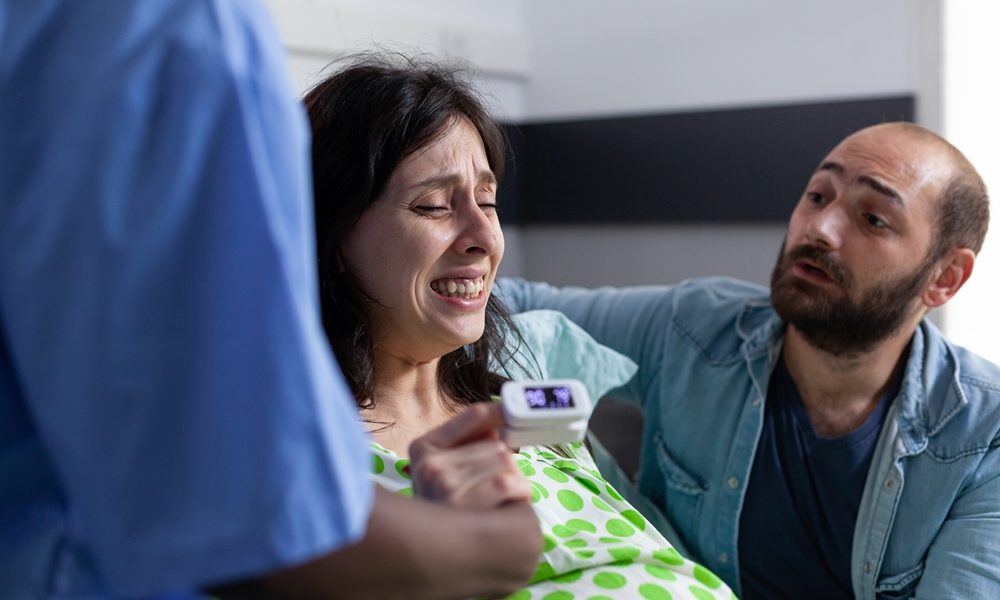
Black and Latinx women are more likely to face serious complications during planned repeat caesareans than White women, new US research has found.
While complication rates were similar across all racial and ethnic groups for vaginal births after a previous caesarean, disparities emerged in outcomes for those having planned repeat surgery.
Researchers examined severe maternal morbidity – serious complications during childbirth that can have lasting health effects – across 72,836 births between 2012 and 2021 among people who had previously delivered by caesarean.
The team analysed data from the Massachusetts Pregnancy to Early Life Longitudinal Data System, focusing on births following an earlier caesarean.

The 21 complications tracked include outcomes such as hysterectomy (removal of the womb), heart attack, embolism (blood vessel blockage), kidney failure, eclampsia (seizures in pregnancy linked to high blood pressure), sepsis (a life-threatening infection), and complications related to anaesthesia.
Laura Attanasio is associate professor of health policy and management and lead author of the study.
She said: “There’s been increasing recognition in recent years that the US has this rising rate of severe maternal morbidity, which can have a negative impact on one’s health in the future.”
It also can be considered a near miss for maternal mortality, or death, which is also high in the US relative to other wealthy countries, though rare.
The study examined three birth scenarios: vaginal birth after caesarean (VBAC), planned repeat caesarean, and unplanned repeat caesarean – where someone intends to deliver vaginally but ultimately requires surgery.
Attanasio said: “Among White birthing people, severe maternal morbidity rates were similar for VBAC and for planned repeat caesarean.
“But for Black and Latinx birthing people, planned repeat caesarean had a higher rate of severe maternal morbidity compared to VBAC.”
Among all groups, the highest rate of complications occurred during unplanned repeat caesareans.
In this category, however, disparities between racial and ethnic groups were not observed.
The study population was 56.8 per cent White, 20.1 per cent Latinx, 11 per cent Black and 12.1 per cent who identified as another race or ethnicity.
The researchers used hospital discharge and birth records to identify medical issues and demographic data including race, ethnicity and parental birthplace.
They adjusted for medical risk factors more commonly associated with marginalised groups, suggesting other influences may be contributing to the differences in outcomes.
Attanasio hypothesised that “quality of clinical care can be worse for people from marginalised racial and ethnic groups, either because they’re being cared for in settings that are lower resourced and less able to provide quality care, or in some cases they could be receiving worse care in the same setting as White birthing people due to structural or interpersonal racism.”
The findings suggest the need to identify and address factors contributing to higher complication rates among Black and Latinx individuals during planned repeat caesareans.
“Future work should identify interventions to improve quality of care and promote equity for this population,” the researchers said.
Motherhood
Natural birth pressure harming new mothers’ mental health, research finds

Pressure to have a natural birth can cause lasting psychological harm when labour does not go to plan, new research shows.
The study found that the messages women receive during pregnancy are directly linked to the shame and self-blame many feel when those expectations are not met.
For the first time, the research provides an explanation for why unmet birth expectations contribute to psychological harm.
Several women involved in the research said they felt they had not given birth “properly”, even when medical intervention had saved their lives.
Rebecca Matthews, lead author and PhD researcher at the University of Reading, said: “These women were not failed by their bodies, they were failed by the messages they were given.
“Birth trauma does not begin with birth. It begins in the ideology sold to women throughout pregnancy.
“For the first time we can explain precisely how, by showing how birth culture creates a moral standard for women that defines what a good mother does and then leaves them to blame themselves when birth does not match that.
“Until we reform the way we prepare women for birth, we will keep seeing the same devastating consequences for mothers and their babies.”
The researchers interviewed 21 first-time mothers in the UK whose births did not go as planned.
From NCT and hypnobirthing classes, to social media to midwives, the researchers heard how women are surrounded by messaging that frames natural, unmedicated vaginal birth as the “gold standard”, not just medically preferable, but as a mark of being a good mother and the first test of maternal worth.
Research shows around half of women report their birth differed significantly from their expectations, and for the women in this study, all of whom experienced exactly that, the psychological consequences were profound.
Women judged themselves against the internalised moral standard that this ideology had created.
The researchers are calling for antenatal education to stop treating one kind of birth as the goal and to present all birth outcomes as equally valid routes to motherhood.
They also call for better postnatal screening for women whose births did not go as expected, specifically targeting the shame, self-blame and identity disruption that this research identifies as mechanisms underlying birth trauma.
The findings align with and extend the conclusions of the Kirkup, Ockenden and Birth Trauma Inquiry reports, all of which documented how the institutional pursuit of “normal birth” contributed to preventable harm.
This research provides the first theoretical explanation of how that ideology generates individual psychological harm and points to antenatal messaging as the primary site of such preventable harm.
Mental health
Dr-Julian helps deliver breakthrough mental health support for Black and ethnically minoritised mothers

A groundbreaking digital perinatal mental health pilot for Black and ethnically minoritised women has helped women access support faster, complete therapy at higher rates, and recover more successfully than national averages.
The partnership between digital tech company Dr-Julian and The Essential Baby Company Ltd within a new model of mental health care named haPPIE SHE Cares – who offer personalised support for women sharing their healthcare experiences, showed results well above NHS benchmarks for Black and ethnically minoritised women.
The pilot was created to help women who are less likely to use traditional mental health services during pregnancy and in the first year after giving birth.
By combining trusted community referrals, culturally aware support, and fast access to therapy through Dr-Julian’s online and virtual care platform, the programme delivered standout results.
Every woman who joined the pilot started therapy, 90 per cent completed treatment, and 74 per cent recovered; well above the NHS benchmark of around 52 per cent.
Women referred through community organisations accessed support in just one day on average, compared with around 21 days through many standard services.
Even the programme’s regular referral route reduced waits to 13 days.
The findings come as NHS leaders continue to focus on maternity inequalities and unequal access to mental health care.
Black and ethnically minoritised women can face barriers including stigma, language needs, lack of trust in services, childcare pressures, and difficulty navigating complex systems.
The haPPIE SHE Cares model was designed to break down those barriers by working with trusted community groups, offering culturally informed support, and where possible matching women with therapists who understood their background or language.
Gemma Poole for The Essential Baby Company said: “Too many women who need help feel unseen, unheard or unable to get support when they need it most.
“This project shows that when services are built around trust, culture and community, women engage, recover and thrive.
“This early success could provide a blueprint for reducing inequalities in maternal mental health care across the UK. Behind every statistic is a mother who felt supported, a family that benefited and a woman who found her voice.
“Mental healthcare must work for every community. This partnership shows that when high-quality therapy is combined with culturally responsive support, outcomes improve and women get help faster.
We are proud to have provided the therapists, virtual care systems and digital pathways behind this programme. We believe this model could help NHS organisations nationwide cut waiting times and improve recovery rates.”
Women who took part described the programme as life-changing, saying it reduced isolation, gave them confidence speaking with healthcare professionals, and made them more willing to seek help.
With growing pressure on maternity and mental health services, leaders behind the project say the pilot offers a practical solution that improves care while helping cut long waiting lists.
Plans are now being explored to expand the model through training, regional partnerships, and future funding.
Mental health
Poor sleep linked to Alzheimer’s risk in older women – study

Poor sleep may signal higher Alzheimer’s risk in older women with greater genetic risk, a study suggests.
Older women who reported poorer sleep also showed greater memory difficulties and more Alzheimer’s-related brain changes, the study found.
That pattern appeared only in women with higher genetic risk, suggesting sleep complaints may be a stronger warning sign for some women than for others.
Researchers examined 69 women aged 65 years and older taking part in the Women Inflammation Tau Study, an ongoing project focused on ageing and Alzheimer’s disease risk.
Participants completed questionnaires about their sleep quality, underwent memory testing and received brain scans measuring tau. Tau is a protein that accumulates abnormally in Alzheimer’s disease.
The study found that poorer self-reported sleep was associated with worse visual memory performance and greater tau accumulation in brain regions affected early in Alzheimer’s disease, but only among women with higher genetic risk.
Women with lower genetic risk did not show the same relationship between sleep complaints, memory and tau build-up. The finding was specific to visual memory and was not observed for verbal memory.
Researchers said the results add to growing evidence that sleep disturbances and Alzheimer’s disease may reinforce one another over time.
Previous studies have suggested that disrupted sleep can contribute to the build-up of abnormal tau proteins, while Alzheimer’s-related brain changes may also interfere with healthy sleep patterns.
Because women account for nearly two thirds of Alzheimer’s cases and frequently report poorer sleep quality than men, the researchers said sleep may represent an important and potentially modifiable risk factor in older women.
The authors noted that self-reported sleep assessments are inexpensive and easy to administer, raising the possibility that sleep complaints could help identify people who may benefit from closer monitoring or early intervention.
They also suggested that improving sleep could become a target for future Alzheimer’s prevention strategies, particularly for women at elevated genetic risk.
Menopause1 week agoPerimenopause misinformation ‘putting women at risk’
News4 weeks agoNIH Grant terminations disproportionately impact minority scientists, research finds
Adolescent health4 weeks agoWUKA brings Period-Positive Pool Party to London Aquatics Centre to keep girls swimming through puberty
Insight3 weeks agoPCOS renamed after decade-long campaign to end ‘cyst’ misconception
Events4 weeks agoWHIS 2026 unveils agenda and first speakers for the leading women’s health summit
Menopause4 weeks agoCBT shows promise for menopause insomnia and hot flashes
Hormonal health2 weeks agoNHS urged to update website following renaming of PCOS
News6 days agoThree menopause innovators shortlisted for Femtech World Award