Mental health
Childhood trauma linked to higher risk of endometriosis, study finds
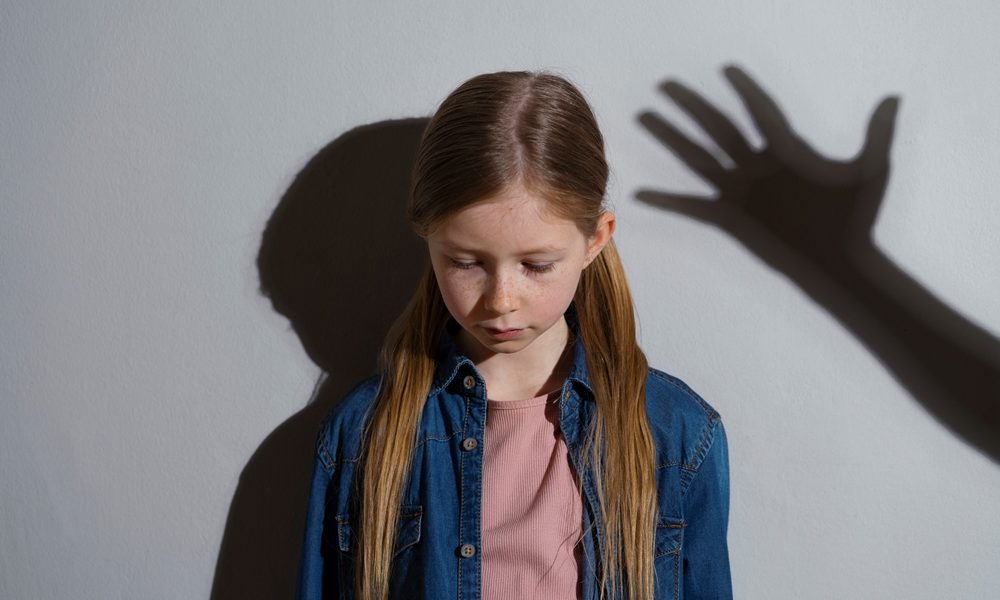
Women who experience trauma or hardship in childhood may have up to twice the risk of developing endometriosis later in life, new research has found.
A study involving more than 1.3 million women found those exposed to violence in childhood were over twice as likely to be diagnosed with the condition compared to those who were not.
The risk of endometriosis was 20 per cent higher in women who experienced any form of childhood adversity and rose to 60 per cent among those with five or more adverse experiences.
The research, conducted in Sweden, analysed data from women born between 1974 and 2001. More than 24,000 of them had received a diagnosis of endometriosis.

Researchers used national health and social records to examine childhood circumstances.
Factors included having parents with mental illness, intellectual disability, financial hardship or substance misuse, being born to a teenage parent, experiencing bereavement, or being exposed to violence or sexual abuse.
All factors studied—except bereavement—were linked to an increased risk of developing endometriosis in later life.
Marika Rostvall is first author of the study and a physician and doctoral student at the Department of Global Public Health at Karolinska Institutet.
The researcher said: “We also saw that the more adverse experiences in childhood, the higher the risk. Among those who had five or more factors, the risk increased to 60 per cent.”
The most significant increase was seen in women who had been exposed to violence, who had more than double the risk of being diagnosed with endometriosis.
Rostvall said: “The results suggest that early life experiences can affect the body’s health much later in life and highlight the importance of looking at the whole person, not just the symptoms.
“The findings are also in line with previous research showing that difficulties in childhood have profound consequences for future health.”
While the biological mechanism is not yet fully understood, Rostvall suggested two possible explanations.
One is that stress during childhood may impair immune system function, reducing its ability to remove endometrial tissue from the body.
Another is that trauma could increase sensitivity to pain, making symptoms more likely to be noticed and diagnosed.
Rostvall said: “I hope that the findings can be used to improve both preventive measures and treatment in healthcare,” she added.
As the study is observational, it does not establish a direct cause-and-effect relationship.
Opinion
What Maternal Mental Health Month reveals about where postpartum support actually breaks down

By Morgan Rose, chief science officer at Ema, and Lauren Scocozza, vice president of product at Willow
May is Maternal Mental Health Month, and every year it surfaces a familiar set of statistics: 1 in 5 new mothers experiences postpartum depression or anxiety, most go unscreened, and the majority who are screened don’t receive adequate follow-up care.
The conversation is important. But the numbers obscure something that anyone who has worked in this space knows to be true: postpartum mental health distress rarely arrives with a label.
It arrives as exhaustion. As “I’m not sure I’m doing this right.”
As a question about supply, pumping, whether it’s okay to feel this disconnected from something you were supposed to love immediately.
Willow integrated Ema, AI built for women’s health, with the goal of closing the maternal care and data gap.
The pattern mentioned above appears consistently in Ema’s conversational data through the Willow app.
A mother reports mastitis symptoms.
Ema walks her through the clinical presentation, confirms she should keep pumping, and then she questions if she is using her pump correctly. In the same thread, within a few exchanges, she says she’s “feeling too sad.” Then: “I don’t know. I think I’m depressed. I am not enjoying my postpartum.”
She did not come to the app to talk about her mental health.
She came about a breast infection. The mental health disclosure came through the already-opened door.
The Weight Underneath the Technical Question
New motherhood involves an enormous amount of problem-solving at a time when cognitive and emotional reserves are depleted. The pump has to work. The baby has to eat. The body has to recover.
Work comes back. Sleep doesn’t. Feeding their babies requires skill, and the learning curve sits atop it all.
What Ema’s conversation data shows is that the emotional load of navigating these challenges is not separate from mental health. It is mental health.
When a mother writes, “I’m postpartum and overwhelmed and tired,” and then, in the same breath, asks about flange sizing, she is telling us what the postpartum experience actually feels like from the inside.
The technical question and the emotional state are one and the same.
Breastfeeding carries particular weight here.
The desire to breastfeed, the guilt when it doesn’t go as planned, and the identity questions that come with feeding choices are not peripheral to the postpartum mental health conversation.
In our conversations, women navigating supply concerns often reveal deeper anxieties: about whether they are good mothers, whether their bodies are “working,” and whether the difficulty they are experiencing means something about them.
These are the signals worth asking about.
What Screening Looks Like in Practice
Ema is trained on the Edinburgh Postnatal Depression Scale and is equipped to offer the EPDS when a conversation warrants it.
The value is being present for the moment when a woman is ready to name what she’s feeling.
That moment rarely comes as a direct request for mental health support. It comes when someone is already in a conversation about something else, and something shifts.
A woman dealing with mastitis says she feels sad. A woman worried about supply says she doesn’t feel like herself. A woman managing the logistics of going back to work with a wearable pump says she’s not sure she can keep up with it all — and the “it all” isn’t about the pump.
Ema is designed to hear that. She doesn’t stay on the clinical or technical track when the conversation moves. She follows the person.
And when the moment is right, she offers the screening as a natural next step.
In one exchange, a woman was offered the EPDS after disclosing depressive feelings. She declined.
Ema acknowledged that and asked if she wanted to talk about something else. That’s the right response. The offer was made without pressure. The door stays open.
Sometimes what matters most is that someone asked at all.
The Continuity Problem
One of the most persistent structural failures in maternal mental health care is fragmentation.
A woman sees her OB at six weeks postpartum for a brief screening. She may get a call from a nurse. She may be given a referral she never follows up on because she doesn’t have the capacity to navigate a new care relationship while managing a newborn.
The clinical touchpoints are too few, too far apart, and too often siloed from one another.
The postpartum period lasts far longer than the six-week checkup implies. Mental health symptoms can emerge weeks or months after delivery, shift in character over time, and interact with physical challenges in ways that don’t fit neatly into any single provider’s lane.
A lactation concern becomes an anxiety spiral. A supply drop triggers a grief response. A difficult return to work surfaces a postpartum depression that wasn’t fully recognized at six weeks.
Ema sits inside these moments because she’s embedded in the platform women are already using. She doesn’t require a separate appointment, a referral, or the cognitive bandwidth to seek out a new resource.
She’s in the Willow app that mom is already using multiple times a day to manage her pump.
When Ema identifies a woman who may need more support than she can provide, she routes to the right resource — whether that’s a SimpliFed lactation consultant for feeding-related concerns or a clinical professional for mental health follow-up.
The conversation leads to the handoff with someone who can do more.
What the Month of May Means for the Rest of the Year
Maternal Mental Health Month is a useful moment of attention. The awareness campaigns, the social media posts, and the statistics shared in newsletters matter.
But the gap in postpartum mental health care is not really an awareness problem.
Most people in the perinatal space and beyond know the statistics. The problem is access, timing, and continuity.
AI doesn’t close that gap on its own.
What it can do is be present in the spaces where women already are, at the times when they need something, and attentive enough to recognise that a conversation about a pump, a clogged duct, or a supply concern is also a conversation about how someone is doing.
The question behind the question is often the more important one.
For Willow, the conversation data Ema generates is a map of where mothers are struggling, what they reach for when they need help, and when they are ready to say more than they came to say.
That information, used well, shapes better resources, better onboarding, and a more connected experience across the full arc of the postpartum year and beyond.
Building the infrastructure to support maternal mental health is a year-round project.
Willow is doing one part of that, and the conversations happening on the Willow platform every day are evidence that women want support that meets them where they are… in their app, in their moment, without having to ask for it twice.
About the authors
Morgan Rose is Chief Science Officer at Ema, an AI platform for women’s health. Ema partners with healthcare organisations and femtech companies to deliver clinically grounded AI support across the perinatal journey.
Lauren Scocozza is the Vice President of Product at Willow Innovations, Inc. For women by women, Willow is building a maternal care platform to address the interconnected challenges of postpartum.
Mental health
Online abuse and deepfakes ‘pushing women out of public life’

Deepfakes, AI-assisted rape and unwanted advances are pushing women out of public life, a report has found.
Online violence against women in public life is becoming increasingly technologically sophisticated, with perpetrators able to use AI tools to fabricate intimate images of their targets.
Survey responses suggest these attacks are often deliberate and coordinated, aiming to silence women in public life while undermining their professional credibility and personal reputations.
The report, “Tipping point: Online violence impacts, manifestations and redress in the AI age”, was published by UN Women and produced in partnership with City St George’s, University of London, and TheNerve, a digital forensics lab founded by Nobel laureate Maria Ressa.
It analysed the experiences of 641 women journalists and media workers, activists and human rights defenders from 119 countries. The women were surveyed between 27 August and 13 November 2025.
Researchers found that 27 per cent of women respondents were targeted with unsolicited sexual advances via direct message, receiving unwanted intimate images, “cyberflashing”, sexual innuendos or non-consensual sexting.
A further 12 per cent had their personal images, including those of an intimate nature, shared without their consent, while 6 per cent had been subjected to deepfakes or manipulated images and videos.
The impacts included an alarming rate of mental health diagnoses and self-censorship. Nearly one-quarter, or 24 per cent, of respondents had experienced anxiety and/or depression linked to online violence, while 13 per cent reported being diagnosed with post-traumatic stress disorder, or PTSD.
The findings also pointed to widespread self-censorship, with 41 per cent of respondents saying they self-censored on social media to avoid being abused, and 19 per cent doing so at work.
The study found that while 25 per cent of respondents had reported incidents of online violence to the police and 15 per cent had taken legal action, justice still eluded them. Some 24 per cent of the women who had reported online violence felt victim-blamed by the police, having been asked questions such as “What did you do to provoke the violence?” The same proportion said the police made them feel responsible for shielding themselves from further violence.
Julie Posetti, professor of journalism and chair of the Centre for Journalism and Democracy at City St George’s, is the project’s principal researcher and the report’s lead author.
She said: “AI-assisted ‘virtual rape’ is now at the fingertips of perpetrators. This phenomenon accelerates the harm from online violence inflicted on women in public life.”
“This violence serves to fuel the reversal of women’s hard-won rights in a climate of rising authoritarianism, democratic backsliding and networked misogyny.”
“The rollback of women’s rights is enabled and exacerbated by technologies which, by design, amplify misogynistic hate speech for profit.”
Co-author Lea Hellmueller, associate professor of journalism and associate dean for research and innovation at City St George’s, added: “The chilling effect of online violence is pushing women out of public life.”
“Law enforcement is outsourcing the responsibility for protection to the survivors by telling women to remove themselves from social media, to avoid speaking publicly about controversial issues, to move into less visible roles at work, or to take leave from their respective careers.”
“This shows that avoidance techniques, self-censorship or quitting, are still significantly more likely to be used by women rather than resistance techniques such as reporting online attacks to the police.”
Pauline Renaud, lecturer in journalism at City St George’s and fellow co-author of the study, said: “Going to the police or taking legal action do not necessarily lead to justice for survivors.”
“We need more effective education and training of law enforcement and judicial actors to support action in cases of technology-facilitated violence against women and girls.”
“This needs to be matched by political will to effectively regulate Big Tech companies that use their outsized financial and political power to undermine progress in this area.”
Pregnancy
More than half of women with gestational diabetes face harmful stigma, research reveals

More than half of women with gestational diabetes report stigma from healthcare staff, family, friends and wider society, new research shows.
A survey of 1,800 UK women found widespread emotional distress at diagnosis of the condition, a form of high blood sugar that develops during pregnancy, with effects lasting beyond birth.
Gestational diabetes affects around one in 20 pregnancies in the UK, and the findings highlight the wider toll on women diagnosed with the condition.
The study was funded by Diabetes UK and led by researchers at King’s College London and University College Cork.
Dr Elizabeth Robertson, director of research and clinical at Diabetes UK, said: “Stigma can have a dangerous and devastating impact on pregnant women diagnosed with gestational diabetes, particularly at a time when emotions and anxieties may already be heightened.
“We know that stigma can lead to shame, isolation and poorer mental health, and may discourage people from attending healthcare appointments, potentially increasing the risk of serious complications.
“This research highlights the urgent need for better support systems, based on understanding and empathy to ensure no one feels blamed or judged during their pregnancy.”
More than two-thirds of women, 68 per cent, reported anxiety at diagnosis, while 58 per cent felt upset and 48 per cent experienced fear.
The psychological impact continued beyond birth, with 61 per cent saying the condition negatively affected their feelings about future pregnancies.
Nearly half of women, 49 per cent, felt judged for having gestational diabetes, while 47 per cent felt judged because of their body size.
More than 80 per cent felt other people did not understand gestational diabetes, and more than a third, 36 per cent, concealed their diagnosis from others.
Gestational diabetes stigma was also common in healthcare settings, with 48 per cent reporting that professionals made assumptions about their diet and exercise, and more than half, 52 per cent, feeling judged based on their blood glucose results.
Many women described a loss of control and a sense of disruption during pregnancy.
Nearly two-thirds, 64 per cent, felt they were denied a normal pregnancy, while 76 per cent reported a lack of control over their pregnancy.
More than a third, 36 per cent, felt abandoned by healthcare services after giving birth, and one in four, 25 per cent, continued to experience depression or anxiety postpartum.
Focus group participants described harmful stereotypes, including assumptions that they were ‘lazy’, had ‘poor eating habits’ or ‘lacked willpower’.
Comments from family and friends included remarks such as “should you be eating that?” and “you must have eaten too much, that’s why you have gestational diabetes.”
The researchers are calling for targeted interventions alongside structured emotional support for women during and after pregnancies affected by gestational diabetes, to improve both mental and physical health outcomes.
Professor Angus Forbes, lead researcher from King’s College London, said: “Stigma and emotional distress are far more common in women diagnosed with gestational diabetes than many realise.
“Everyday interactions, even with those who mean well, can deepen this harm, shaping women’s emotional wellbeing and the choices they feel able to make.
“It’s clear that meaningful action is needed to protect women’s mental and physical health.”
Risk factors for gestational diabetes include living with overweight or obesity, having a family history of type 2 diabetes, and being from a South Asian, Black or African Caribbean or Middle Eastern background.
Fertility2 weeks agoFuture Fertility raises Series A financing to scale AI tools redefining fertility care worldwide
News1 week agoWomen’s digital health market set to reach US$5.28 billion in 2026 – report
Fertility3 weeks agoFuture Fertility partners with Japan’s leading IVF provider, Kato Ladies Clinic
Menopause3 weeks agoMore research needed to understand link between brain fog and menopause, expert says
Mental health2 weeks agoLifting weights shows mental health and cognitive benefits in older women, study finds
News4 weeks agoSelf-employment linked to better cardiovascular health outcomes in Hispanic women
Entrepreneur3 weeks agoFlora Fertility closes US$5m seed round
News2 weeks agoResistance training has preventative effects in menopause, study finds