




Mental health
Call for NHS-backed period tracking app to protect women’s data from commercial misuse


Public health bodies should create official period tracking apps to compete with commercial versions, experts say, amid rising concerns over how private companies collect and sell women’s sensitive health data.
Cycle tracking apps (CTAs), often presented as tools for empowerment or managing fertility, are a “goldmine” for advertisers, according to research from the University of Cambridge.
Many collect details ranging from diet and medication to sexual activity and contraception use—often without users realising how the data is used.
The report, by Cambridge’s Minderoo Centre for Technology and Democracy, warns that the business model behind most CTAs is built on profiting from personal health data. It says the lack of regulation leaves users exposed to risks.

Dr Stefanie Felsberger, the report’s lead author, said: “There are real and frightening privacy and safety risks to women as a result of the commodification of the data collected by cycle tracking app companies.”
She warned that data could be used to affect job prospects, allow workplace surveillance, increase the risk of health insurance discrimination, or limit access to abortion.
Although the apps are marketed as health tools—particularly for those trying to conceive—the report says they operate in a system where user data is routinely shared with third parties for profit.
Information about pregnancy is particularly valuable for targeted advertising—estimated to be worth more than 200 times as much as data on age, gender or location.
The report notes that data could also be used to target women depending on the stage of their cycle.
The three most-used period tracking apps were downloaded globally around 250 million times in 2024.
The wider femtech market—which includes digital tools aimed at women’s health—is expected to exceed US$60bn by 2027.
The authors call for stronger oversight of the growing femtech sector and clearer consent options for users.
They argue that public health agencies should offer transparent alternatives to commercial apps, with clearer data use policies.
Felsberger said: “The UK is ideally positioned to solve the question of access to menstrual data for researchers, as well as privacy and data commodification concerns, by developing an NHS app to track menstrual cycles.”
She noted that the US reproductive health provider Planned Parenthood already has its own app, while the UK currently lacks a comparable public option.
Felsberger said: “Apps situated within public healthcare systems, and not driven primarily by profit, will mitigate privacy violations, provide much-needed data on reproductive health, and give people more agency over how their menstrual data is used.”
Professor Gina Neff, executive director of the Minderoo Centre, added: “The use of cycle tracking apps is at an all-time high.
“Women deserve better than to have their menstrual tracking data treated as consumer data.”









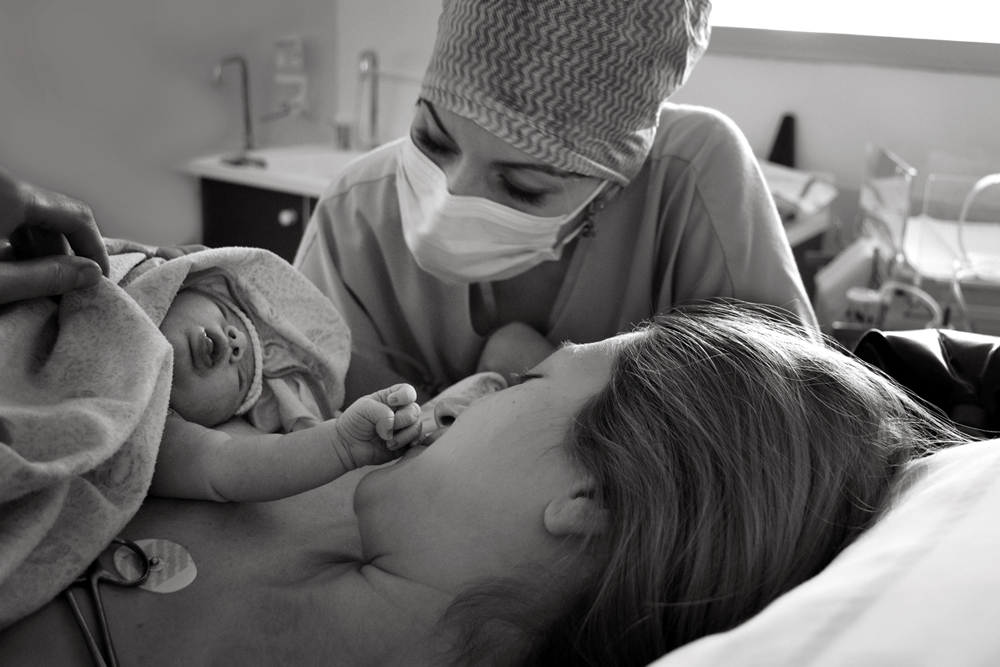
Women with childbirth-related PTSD had healthcare costs 2.5 times higher than women without PTSD from six to 12 months after birth, a report found.
The analysis estimated that early prevention of traumatic births and childbirth-related post-traumatic stress disorder (PTSD) could save the NHS around £26m each year.
Women with PTSD were also less likely to have returned to work by 12 months after giving birth, suggesting potential longer-term employment and economic effects.

The report from City St George’s, University of London was launched at an All-Party Parliamentary Group (APPG) on Birth Trauma event on 10 September 2026.
Researchers calculated the potential NHS savings using the number of births reported in NHS hospitals in 2024-25 and the UK prevalence of childbirth-related PTSD.
Around one in 20 women in the UK develop PTSD following childbirth, while recent research has shown that the condition remains underdiagnosed.
The findings draw on research that tracked more than 2,000 women in England and Scotland from pregnancy to two years after birth. Researchers assessed mental health, use of health services and employment outcomes.
The research included assessments of childbirth-related PTSD and PTSD arising from other traumatic experiences. It also included a separate Birth Trauma Association survey examining women’s experiences of birth trauma.
Between six and 12 months after birth, healthcare and support service costs for women with childbirth-related PTSD were 2.5 times those of women without PTSD.
Women with low or moderate symptoms, including those reporting one or two PTSD symptoms, also had higher healthcare service costs than women without PTSD.
Just over half, 53 per cent, of women with PTSD had returned to work by 12 months after giving birth, compared with 68 per cent of women without symptoms.
Women with PTSD were more likely to be referred for mental health support, but more than half received no referral.
Those whose PTSD followed a traumatic birth also had slightly higher healthcare costs than women whose PTSD resulted from other traumatic experiences.
The researchers called for routine PTSD assessment and treatment during pregnancy and after childbirth, alongside greater access to specialist perinatal mental health services.
They also recommended training healthcare staff in perinatal trauma, trauma-informed care and identifying women at risk of PTSD.
The report said further research was needed to establish whether screening, treatments and trauma-informed care pathways are effective and evidence based.
The work follows the APPG’s 2024 Birth Trauma Inquiry, which highlighted the effects of birth trauma on women and families and called for evidence on its wider public health and societal costs.
The report focused primarily on healthcare use and did not attempt to calculate all costs associated with birth trauma and postnatal PTSD, including wider employment, family and societal effects.


Young women are more likely than young men to get health and wellness information from social media influencers, a US survey has found.
Among adults aged 18 to 29, 57 per cent of women said they received health and wellness information from influencers, compared with 47 per cent of men.
The Pew Research Center study surveyed 5,023 US adults and examined how young people consume health and wellness content online.
Local university students said influencer content frequently appeared in their social media feeds.
Kabija Koroma, a local university student, said: “It’s more exercise stuff, more like protein and like meals and like how to get ready and like the outfits of the day of videos on TikTok or lately. My favourite ones.”
About 51 per cent of women under 30 said they often consumed influencer content focused on beauty and personal appearance, compared with 18 per cent of men.
The study also found that 21 per cent of women often saw content about therapies outside mainstream medicine, compared with 10 per cent of men.
At least one-third of both young women and young men often encountered influencer content about mental health and weight loss. Around half or more of both groups regularly saw fitness-related content.
Another local university student, Ania Davis, said: “I see a lot like how to meal prep and how to get your morning started. Affirmations stuff. But I do also ask the adults around me because sometimes the internet is not right.”
Researchers also looked at why young adults sought health and wellness information from influencers.
About 51 per cent of young women said they watched the content because they wanted to change their health or lifestyle.
Women were also more likely than men to say they enjoyed hearing from people who shared their background or beliefs, at 23 per cent compared with 14 per cent.
Nineteen per cent of young women said they used influencer content to learn about topics they did not want to ask their doctors about, compared with 10 per cent of young men.
Despite regularly using social media, some students said they did not rely solely on influencer content when making decisions about their health and wellness.
Koroma said: “I’m always on TikTok 24/7 and Instagram, but I also like to ask people older than me because I don’t know everything.”

A new UK study aims to improve maternity care for pregnant women living with multiple long-term health conditions.
The three-year project, led by the University of Aberdeen and Birmingham City University, brings together experts from academia and the NHS, including King’s College London, the University of Birmingham, Manchester University, Barts Health NHS Trust, Newcastle-upon-Tyne NHS Foundation Trust and Guy’s and St Thomas’ NHS Foundation Trust.
The research is supported by a £1.3m award from the National Institute for Health and Care Research (NIHR), with £70,000 of the funding going to King’s College London.
Recent figures show that more than 80 women die each year in the UK due to complications arising from pregnancy, while more than one in six pregnant women are living with multiple long-term conditions such as diabetes, high blood pressure, heart disease and mental health disorders.
These conditions are becoming increasingly common and are considered an important contributor to poor maternal outcomes.
There are currently no defined care requirements for pregnant women living with more than one long-term health condition.
Women living with multiple conditions can face changes to medication, disjointed care from multiple teams, conflicting advice between healthcare professionals and a lack of appropriate follow-up for their health conditions after birth.
Pregnant women with multiple long-term health conditions are at twice the risk of preterm birth and nine times more likely to die during pregnancy than those without these health complications.
Researchers will develop a “care bundle”, a package of evidence-led care designed to guide safe maternity care for women living with multiple long-term health conditions throughout pregnancy, birth and the postnatal period.
At King’s, Professor Krishnarajah Nirantharakumar and Professor Jane Sandall will be co-investigators on the project, contributing expertise in implementation research and continuity of maternity models of care. Zoe Vowles, an NIHR-funded midwife PhD student, will contribute expertise from her research into the contribution of midwifery to care for women with multiple long-term health conditions.
Sandall, professor of social science and women’s health at King’s College London, said: “Too many women living with more than one long-term health condition are falling through the gaps between different parts of the health system during pregnancy, when they most need coordinated support. This research will bring together expertise from across maternity and specialist care to build a care bundle that gives women and health professionals clear, consistent guidance, before, during and after birth.”
Nirantharakumar, clinical professor of public health and health data science at King’s College London, said: “Our MRC-funded MuM-PreDiCT programme worked directly with women living with multiple long-term conditions and with maternity clinicians to identify the elements of care that matter most in pregnancy. This award takes those elements and builds them into a care bundle that can be tested and delivered in the NHS.”
Over three years, the team will be led by Dr Mairead Black, clinical reader in obstetrics at the University of Aberdeen and honorary consultant obstetrician at NHS Grampian. It will address the challenges these women face and create a package of care aimed at reducing the risks they encounter in pregnancy.
The care bundle will include guidance on medication management, communication between healthcare teams, midwifery care and postnatal handovers. Researchers will also work with people with lived experience of maternity care to help shape and test it.
The researchers hope the project will provide an evidence-led care bundle specifically designed for women living with multiple long-term health conditions and, for the first time, clear guidance to support their complex needs throughout pregnancy and beyond.







 Entrepreneur2 weeks ago
KOVE Medical raises €1.7 million to improve safety of foetal surgery
 Ageing1 day ago
Menopause may not explain rising heart condition in women – study

 Pregnancy2 weeks ago
UK study aims to transform maternity care for high-risk pregnancies

 Fertility5 days ago
Paracetamol use may impact future fertility, studies suggest

 Entrepreneur1 week ago
Last chance to save on Women’s Health Week and Women’s Sport Summit: Early Bird pricing ends 11 September

 Hormonal health2 weeks ago
Menopause hormone treatment may ease brain fog, study suggests

 Menopause1 week ago
Cancer drug could tackle osteoporosis menopause weight gain

 Insight1 day ago
Women with birth trauma face 2.5x higher healthcare costs – study