




Connect with us

News

Researchers expose security, privacy and safety issues in femtech

Experts are calling on policymakers to acknowledge and accommodate the risks of femtech technologies in the relevant regulations

Published

on

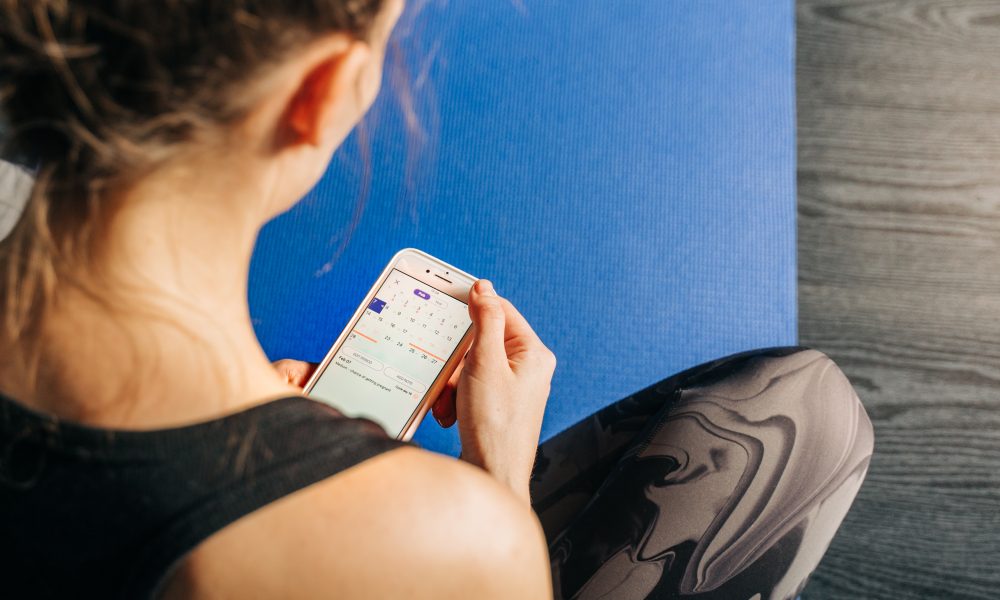
Academics are calling for regulatory action after unveiling security, privacy and safety issues in femtech.

Researchers at Royal Holloway, University of London, Newcastle University, University of London and ETH Zurich, have identified “significant” security, privacy and safety issues surrounding women’s health technologies, such as period tracking apps and fertility smart devices.

These threats, the experts said, included the apps accessing users’ personal contacts, camera, microphone, location and other personal data, as well as system settings and other accounts that expose security and privacy risks.

Femtech apps and devices collect a wide range of data about users, their relatives, their bodies and environments.

The reserach showed that such practices can reveal sensitive and intimate information about users, such as gender, fertility, and medical data, to third parties.

The study, published in the journal Frontiers in the Internet of Things and Symposium on Usable Privacy and Security Workshop, analysed several femtech products, including a breast smart pump, cycle and fertility trackers, a smart bottle, Kegel trainers, sex toys, menopause management solutions, a digital pill organiser and general health trackers.

The research team reviewed the existing regulations related to femtech in the UK, EU and Switzerland to identify gaps in regulations, compliance practices of the industry and enforcements by running experiments on a range of femtech smart devices, apps and websites.

Their analysis of femtech-related regulations showed they are inadequate in addressing the risks associated with these technologies.

It found that EU and UK medical devices regulations do not currently have any references to femtech data and user protection.

The GDPR and Swiss FADP have references to sensitive and special category data, which overlap with femtech data, according to the research. However, the industry practices include many non-complaint practices in data collection and sharing.

The study also looked at industry non-compliance. The team identified a range of inappropriate security and privacy practices in a subset of femtech systems. The research showed that these systems do not brand as medical devices, do not present valid consent and do not give extra protection to sensitive data, and track users without consent.

The authors revealed that, not only is such intimate data collected by femtech systems, but also this data is processed and sold to third parties.

The findings have exposed a lack of research and guidelines for developing cyber-secure, privacy-preserving and safe products, they wrote.

Dr Maryam Mehrnezhad, lead author of the research and senior lecturer at Royal Holloway said: “We have identified multiple threat-actors interested in femtech data such as fertility and sex information.

“We have been conducting security and privacy research on this topic since 2019. Apart from our system studies, our user studies also highlight that end-users are indeed concerned about their intimate and sensitive data being handled by femtech products.”

She continued: “We constantly share our research results with the industry and related regulatory bodies, such as the Information Commissioner’s Office.

“We hope to see better collaborative efforts across the stakeholders to enable the citizens to use femtech solutions to improve the quality of their lives without any risk and fear.”

Professor Mike Catt of Newcastle University, one of the study authors, added: “We urge regulatory bodies to update and strengthen guidelines to ensure the development and use of secure, private and safe femtech products.

“Many of the apps surveyed access mobile and device resources too. Some of these permissions are marked as dangerous, according to Google’s protection levels. Such access potentially exposes contacts, camera, microphone, location and other personal data. Some specific permissions, such as access to system settings and other accounts on the device, also impose security and privacy risks.

“Access to sensors on the mobile phone can also be used to break user privacy. Users deserve better protection, especially where this relates to sensitive personal health and gender data.”

To receive the Femtech World newsletter, sign up here.

Wellness

Resistance training has preventative effects in menopause, study finds

Published

on

Resistance training improves hip strength, balance and flexibility during menopause and may also improve lean body mass, research suggests.

A study of 72 active women aged 46 to 57 found those who completed a 12-week supervised programme saw greater gains than those who kept to their usual exercise routines.

None of the participants were taking hormone replacement therapy.

The supervised, low-impact resistance exercise programme focused on strength at the hip and shoulder, dynamic balance and flexibility.

Participants used Pvolve equipment, including resistance bands and weights around the hips, wrists and ankles, and also lifted dumbbells of varying loads.

Women in the resistance training group showed a 19 per cent increase in hip function and lower-body strength, a 21 per cent increase in full-body flexibility and a 10 per cent increase in dynamic balance, meaning the ability to stay stable while moving.

Those in the usual activity group did not show any significant improvements.

Previous studies have assessed the decline in lower limb strength and flexibility during menopause, but this is said to be the first study to compare the effect of resistance training on muscle strength and mass before, during and after menopause.

This was done by including participants in different phases of menopause rather than following the same participants over a long timeframe.

Francis Stephens, a researcher at the University of Exeter Medical School in the UK, said: “These results are important because women appear to be more susceptible to loss of leg strength as they age, particularly after menopause, which can lead to increased risk of falls and hip fractures.

“This is the first study to demonstrate that a low-impact bodyweight and resistance band exercise training programme with a focus on the lower limbs, can increase hip strength, balance, and flexibility.

“Importantly, these improvements were the same in peri- and post-menopausal females when compared to pre-menopausal females, suggesting that changes associated with menopause do not mitigate the benefits of exercise.”

Although one of the researchers sits on Pvolve’s clinical advisory board, the researchers said the company did not sponsor the study or influence its results.

Stephens added that any progressive resistance exercise training focused on lower-body strength is likely to yield the same results.

He said: “The important point is for an individual to find a type of exercise, modality, location, time of day etc., that is enjoyable, sustainable, and improves everyday life.

“The participants in the present study reported an improvement in ‘enjoyment of exercise,’ and some are still using the programme since the study finished.”

Kylie Larson, a women’s health and fitness coach and founder of Elemental Coaching, who was not involved in the study, said the results were compelling.

She said: “This is particularly exciting for those that tend to think of menopause as ‘the end’. The study proves that if you incorporate strength training you can still make improvements to your muscle mass and strength, which will also have a positive ripple effect to your ability to manage your body composition.

“In addition, staying flexible and being able to balance are both keys to a healthy and functional second half of life.”

Participants in the study did four classes a week for 30 minutes each session, but Larson said even half that amount of strength training can go a long way, particularly if you emphasise progressive overload, which means gradually increasing muscle challenge through more weight.

Larson said: “Gradually increasing the challenge is what drives real change.

“Lifting heavier over time is what builds strength, protects your bones, and keeps your body resilient through menopause and beyond.”

Continue Reading

Adolescent health

France to reimburse young women for cost of reusable period products

Published

on

France will reimburse reusable period products for women under 26 and those on low incomes, in a move aimed at tackling period poverty.

The measure is expected to help 6.7m people, almost a tenth of France’s population of 69m, from the start of the next academic year in the autumn.

Women under 26 with a state health insurance card, as well as women of all ages who receive special healthcare support because of limited income, will be able to claim reimbursement after buying the products from a pharmacy. The cost will be covered through the country’s social security system.

Parliament approved the measure as part of the country’s social security budget for 2024. However, no decree was issued to bring it into force, prompting anger among feminist groups and companies making the sustainable sanitary items.

A survey of 4,000 women in France in November found that one in ten had used alternatives to mainstream period products, such as ripped-up clothes, because of tight budgets, according to French charity Dons Solidaires.

France cut sales tax on period products from 20 per cent to 5.5 per cent in 2016. In 2020, Scotland became the first country in the world to sign into law free universal access to period products in public buildings.

Continue Reading

News

Condé Nast to close women’s health magazine after 47 years

Published

on

Condé Nast will close its women’s health publication Self after 47 years, with unprofitable editions of Glamour and Wired also set to shut.

In a memo published on the magazine giant’s website on Thursday, the media company’s chief executive, Roger Lynch, said: “As audience behaviours shift, we have not seen a path for Self to continue in its current form as a digital publication.”

“Going forward, health and wellness content will be integrated into our other brands, including Allure and Glamour,” Lynch said, referring to Condé Nast’s other beauty and wellness titles.

Self, which moved to an online-only format in 2017, still reaches more than 20m people each month.

The publication has also earned significant recognition over the years, including a National Magazine award and a Webby’s People’s Voice award.

The closure is part of a wider set of operational changes across the company. Lynch also announced the end of Wired’s Italy edition, noting that while the brand “remains a strong global brand, the Italian edition has not kept pace with growth in our other markets”.

Condé Nast will also wind down Glamour’s publishing operations in Germany, Spain and Mexico.

Lynch said: “Taken together, Wired in Italy, Self and the affected Glamour markets represent a little over 1 per cent of our overall revenue.

“They also remain unprofitable, and continuing to operate them in their current form limits our ability to invest in the ideas and areas that will drive future growth.”

Beyond editorial changes, the company is also restructuring internally to adapt to technological shifts.

Lynch said Condé Nast would make “changes within our technology organisation, reflecting the rapid advancement of AI and its impact on our ability to innovate and build products faster”, adding: “Teams will be restructured to be more agile and to work more closely with our brands and customers, reducing barriers to execution.”

The latest moves follow a series of transformations at Condé Nast in recent years.

Glamour ended its print edition in 2018, followed by Allure moving to a digital-only format in 2022.

In 2024, music publication Pitchfork was folded into GQ, the company’s men’s style magazine.

More recently, last November, Vogue, one of Condé Nast’s key revenue drivers, announced it would absorb Teen Vogue to create a more “unified reader experience across titles”.

The media industry has been shrinking steadily over the years.

From 2010 to 2017, the industry lost an average of 7,305 jobs annually, according to data from Challenger, Gray & Christmas published in December 2025.

Since 2018, the average number of job cuts in the industry has risen to 14,298 a year.

Continue Reading

Trending

Copyright © 2025 Aspect Health Media Ltd. All Rights Reserved.

