




Connect with us

News

One in five women conceive naturally after giving birth with fertility treatment
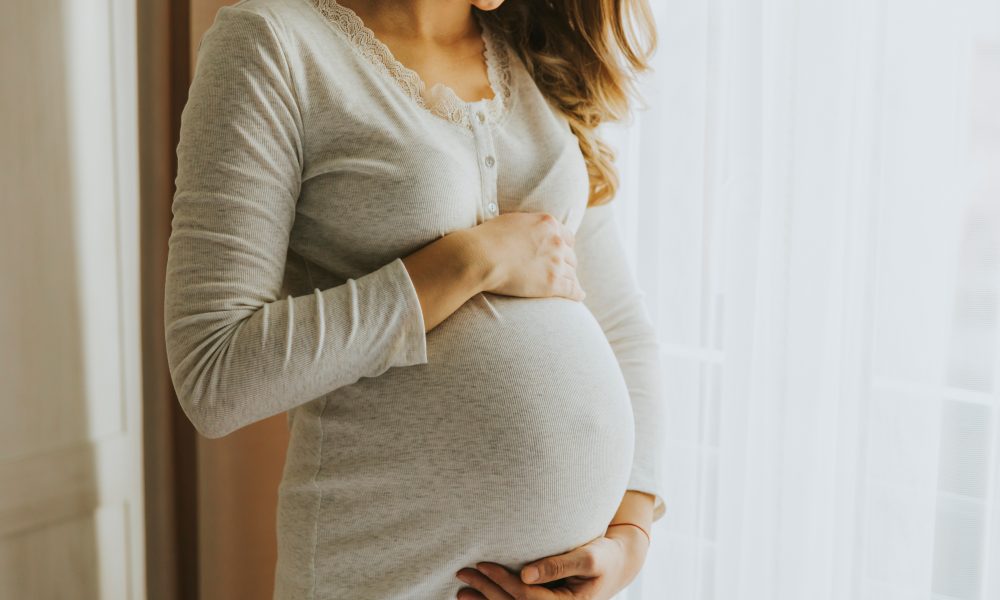
Many women may not realise that they could conceive naturally following fertility treatment, say experts

Published

on

One in five women who underwent fertility treatment such as IVF to conceive their first child are likely to get pregnant naturally in the future, researchers have found.

The first-of-its-kind research, conducted by the University College London (UCL) and published in the scientific journal Human Reproduction, analysed data from 11 studies of over 5,000 women around the world between 1980 and 2021, to evaluate how common it is to get pregnant naturally after having a baby conceived by fertility treatment.

It found that at least one in five women conceived naturally after having had a baby using fertility treatment such as IVF mostly within three years. This figure remained unchanged, even when taking into account the different types and outcome of fertility treatment – alongside length of follow up.

Infertility is defined by the failure to achieve a pregnancy after 12 months or more of regular unprotected sexual intercourse, and it is estimated to affect one in seven heterosexual couples.

However, not all women seeking and undergoing fertility treatment are absolutely or permanently infertile. Half of couples who struggle to conceive naturally in the first year of trying will go on to do so in the second year.

Although it is typically considered ‘rare’ for a woman to get pregnant naturally if she has previously had fertility treatment, the researchers highlighted that this is not an unusual event.

Lead author, Dr Annette Thwaites from the UCL EGA Institute for Women’s Health, said: “Our findings suggest that natural pregnancy after having a baby by IVF is far from rare.

“This is in contrast with widely held views – by women and health professionals – and those commonly expressed in the media, that it is a highly unlikely event.”

The team consider the findings to be particularly important, as many women may not realise that they could conceive naturally following fertility treatment.

This, experts say, could lead to them becoming pregnant again quickly or when they are not ready ready which could be problematic for both the health of the mother and child.

“Knowing what is possible would empower women to plan their families and make informed choices regarding further fertility treatment and/or contraception,” added Thwaites.

Patient stories

Shema Tariq, a doctor and academic from London, was diagnosed with low ovarian reserve and told that her chances of conceiving without IVF were almost zero. She now has two children aged three and four.

“It took six rounds of IVF to conceive our son, who was born in 2018,” she said.

“My GP briefly mentioned contraception to me after he was born, but we both laughed and agreed that it wasn’t relevant. It never occurred to me that I might get pregnant, despite being a sexual health doctor.  I was 43 and had been told that my chances of conceiving naturally were less than one per cent.

“Eight months later I was unexpectedly, and naturally, pregnant with our daughter. She has been the most wonderful surprise, but when we first found out I felt overwhelmed and unprepared for another pregnancy. If I’d known that one in five women conceive naturally after IVF I’d have used contraception until I was ready both emotionally and physically.”

After being diagnosed with endometriosis in her 20s, Sally Pearse was told by healthcare specialists that it was almost impossible that she’d ever conceive naturally.

Before having her first child she was told by a gynaecologist that due to endometriosis her only way to conceive was through IVF.

“After the birth of my first child though IVF, I met with the IVF consultant and asked if I may conceive naturally now I had had a successful pregnancy. I was told I had a one per cent chance of conceiving naturally so started plans for IVF again,” Sally explained.

“The next month I conceived naturally and went on to have my second child.

“I was not given a reason for the one per cent chance and feel that even experts in their role get these things wrong. If I hadn’t wanted another child I would have been shocked rather than pleasantly surprised.”

News

Why cardiovascular health deserves a spotlight in femtech

Published

on

When we think about women’s health innovation, certain categories immediately come to mind: fertility tracking, pregnancy care, menopause management.

These are vital areas that have long been neglected, and the femtech revolution has brought much-needed attention and resources to them.

But there’s another area of women’s health that remains dangerously overlooked, despite being the leading cause of death for women worldwide: cardiovascular disease.

Heart disease kills more women than all forms of cancer combined, yet most women don’t know this.

For decades, cardiovascular research has been designed around male bodies, male symptoms, and male experiences.

The result is a healthcare system that often fails to recognise when women are having heart attacks, misdiagnoses their symptoms and prescribes treatments that were never tested on female patients.

Women are more likely to die from their first heart attack or stroke than men, and they’re less likely to receive life-saving interventions in time.

This is precisely why the Femtech World Awards have teamed up with Women As One to create a dedicated category for cardiovascular health innovation.

With this award, we want to shine a light on the entrepreneurs, researchers, clinicians and advocates who are working to close not just a gap in care but a gap in innovation, research and recognition.

The cardiovascular health innovation award is an opportunity to celebrate this work and to call for more of it.

If you know of a company, researcher, or organisation doing groundbreaking work in cardiovascular health for women, now is the time to nominate them.

Perhaps it’s a startup developing wearable technology that predicts cardiac events in pregnant women. Maybe it’s a research team uncovering the links between hormonal health and heart disease.

It could be a community health initiative bringing cardiovascular screening to underserved populations of women.

Whoever they, or you are, submit your nomination here.

Continue Reading

News

WHO hosts parliamentary dialogue on women’s health

Published

on

The World Health Organization (WHO) welcomed a delegation of parliamentarians to its Geneva headquarters for a high-level dialogue on women’s health and sexual and reproductive health and rights.

The meeting on 20 January 2026 focused on women’s health, sexual and reproductive health and rights, noncommunicable diseases (long-term conditions such as cancer and diabetes) and global health cooperation.

The exchange was convened by the Konrad-Adenauer-Stiftung and the UNITE Parliamentarians Network for Global Health, bringing together parliamentarians from Albania, Germany, Georgia, Mexico, Slovakia, South Africa, Sri Lanka, Sweden and Zimbabwe.

A central theme was the need to move beyond fragmented approaches to women’s health.

Dr Alia El-Yassir, WHO director for gender, equity and diversity, highlighted that outcomes are shaped by gender inequalities, social norms and structural barriers across the life course, requiring coordinated action across health systems.

Thirty years after the Beijing Declaration and Platform for Action, a landmark framework adopted in 1995 to advance gender equality and women’s rights, Dr Anna Coates, WHO gender equality technical lead, noted that progress on women’s health remains uneven.

She called for health systems that are more gender-responsive and able to address women’s health holistically across the life course.

Parliamentarians stressed that health is inseparable from wider social and economic policies, and called for stronger links between evidence, legislation and measurable impact at country level.

The meeting also focused on sexual and reproductive health and rights, where parliamentarians expressed interest in engaging on issues that directly affect their constituents.

Dr Pascale Allotey, director of WHO’s Department of Sexual, Reproductive, Maternal, Child, Adolescent Health and Ageing, outlined WHO’s life-course approach to sexual and reproductive health and rights.

She highlighted how needs evolve from birth to older age and how these are shaped by social determinants, humanitarian crises and demographic trends.

Dr Allotey underscored the role of parliamentarians in advancing sexual and reproductive health and rights and the importance of continued engagement with WHO to support evidence-based policy-making.

The agenda highlighted cancer as a growing priority for women’s health and for health system sustainability. Dr Prebo Barango, lead for the Cervical Cancer Elimination Initiative, Dr Meghan Doherty, consultant for palliative care, and Santiago Milan, lead for the WHO Global Platform for Access to Childhood Cancer Medicine, presented WHO’s integrated approach to cancer control.

Palliative care is treatment and support that aims to improve quality of life for people with serious illness by managing pain and other symptoms.

The discussion underlined the need for sustained political commitment and domestic investment to address noncommunicable diseases.

Parliamentarians shared national experiences showing the social and economic impacts of cancer on families and caregivers, reinforcing the importance of improving health literacy, reducing stigma and delivering people-centred care.

The meeting also addressed the state of global multilateralism.

Dr Jeremy Farrar, assistant director-general for health promotion, disease prevention and care, outlined how WHO has restructured to enhance efficiency, impact and capacity to support countries.

He reaffirmed WHO’s commitment to more systematic engagement with parliaments, recognising their role in shaping health policy, legislation and budgets.

The exchange concluded with a call for continued collaboration, including through partnerships with the Konrad-Adenauer-Stiftung and the UNITE Parliamentarians Network for Global Health, ahead of the UNITE Global Summit 2026 on 6–7 March in Manila, the Philippines.

Continue Reading

News

Women’s health firms face banking barriers after being tagged as ‘adult services’

Published

on

Financial services providers across Europe and the UK are incorrectly classifying female-focused healthcare ventures as high risk enterprises, placing them in the same category as weapons dealers and tobacco companies.

As reported by The Banker, research by advocacy organisation CensHERship found that many women’s wellness technology companies are being denied standard banking services and payment processing facilities because of flawed classification protocols.

The investigation found significant inconsistencies in how financial institutions assess these businesses. 

SheSpot, a British company specialising in female intimate wellness, received conflicting decisions from different divisions within the same bank.

Co-founder Kalila Bolton, who took part in the study, explained that one department initially classified their venture as “higher risk” alongside firearms and tobacco, while another branch of the same bank later said they were “fine with it”.

Similarly, HANX, a manufacturer of condoms designed to support vaginal microbiome health, faced payment processing rejection after being incorrectly labelled as an “adult services business”.

Published this week, the CensHERship analysis links these barriers to “outdated classification systems, over-compliance and cultural discomfort” that together prevent legitimate healthcare enterprises from accessing essential financial infrastructure.

The findings suggest that women’s wellness ventures are “routinely flagged, delayed, rejected or deplatformed”, outcomes that stem not from actual regulations but from financial and ecommerce systems that “default to caution” when dealing with women’s health topics that remain poorly understood or culturally sensitive.

CensHERship co founder Anna O’Sullivan said these results usually arise from unfamiliarity rather than deliberate discrimination.

“In most cases, this isn’t malicious or intentional — it’s what happens when people and systems meet something unfamiliar,” O’Sullivan said in a statement. 

“But this unconscious bias can materially affect a founder’s ability to start, grow and scale a business.”

Investment platform The Case for Her, which partnered with CensHERship on the report, described the issue through co founders Wendy Anderson and Cristina Ljungberg as a clear “market failure” when founders cannot secure basic banking relationships.

“Fixing this issue is essential if we want to unlock one of the most promising growth markets in global health,” they said.

Risk consultant Aoife Mansfield, managing director at Athrú Group and a contributor to the report, said that terms such as “vagina” or “menstrual” trigger automated alerts within financial systems because they appear on the same watchlists as adult entertainment or pornography, raising a “red flag” in the systems used by banks and payment service providers.

O’Sullivan urged financial service providers to update their internal procedures, review their risk tolerance settings and explicitly include women’s healthcare within their approved client categories.

“They could remove this friction almost overnight,” she said.

The CensHERship analysis includes findings from across the UK and Europe, based on survey responses from more than 30 women’s health enterprises and interviews with founders, insurance underwriters, and compliance and risk professionals.

Continue Reading

Trending

Copyright © 2025 Aspect Health Media Ltd. All Rights Reserved.

