Fertility
How artificial intelligence is changing the IVF experience
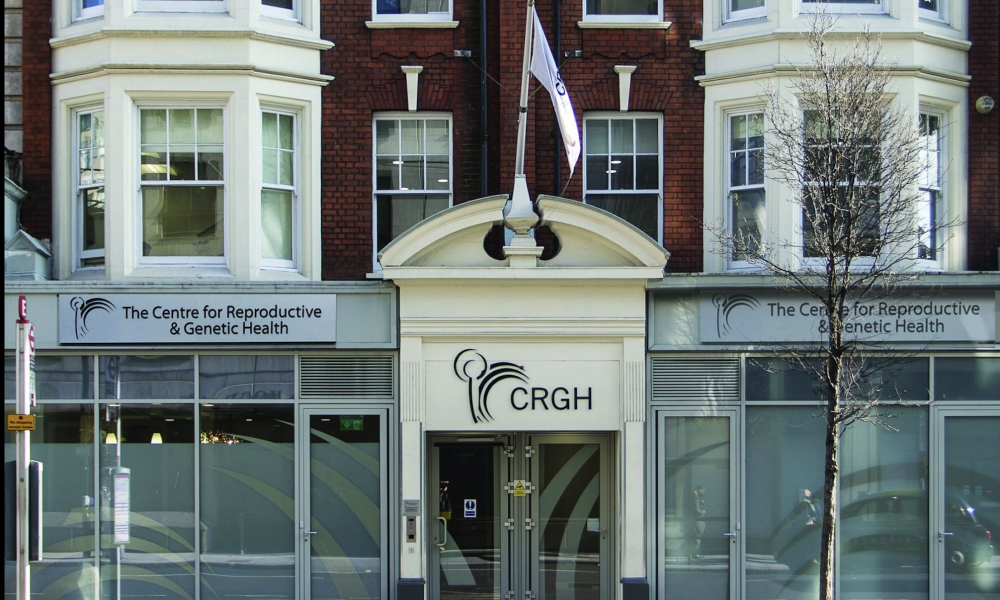
The Centre for Reproductive and Genetic Health is one the few UK providers that have introduced AI in its fertility clinics

With more studies showing that the use of AI has gained traction in its ability to predict clinical outcomes, it is undeniable the technology has a future role in IVF. Suzanne Cawood, director of embryology at the Centre for Reproductive and Genetic Health, tells us how adopting a new tool has helped her clinic.
For decades, IVF has offered those unable to conceive naturally the chance to have biological children. However, stressful treatment processes and the uncertainty of success have meant that, for many, the experience proved highly emotional and confusing.
“The IVF journey can be really difficult and quite traumatic emotionally, physically and financially,” says Suzanne Cawood, director of embryology at the Centre for Reproductive and Genetic Health.
“When patients have their own collection, there’s a whole week when they have no control over what’s going on. It can be a very distressing time.”

With more and more researchers exploring the potential role of AI in clinical decision-making, embryologists think the technology could soon redefine the IVF experience.
The CRGH is one the few UK providers that have introduced AI in its fertility clinics. In January, the centre adopted Fairtility’s AI-powered embryo quality assessment assistant as its exclusive decision support tool to improve the embryo quality assessment and selection process.
“CHLOE collects millions of data points for each embryo and analyses things that we couldn’t possibly gather manually,” Cawood explains.
“For the embryologist, it makes things a lot easier, because it automatically tells us whether the embryo has normally fertilised or not. Of course, we go and double check all of that to make sure that we agree with it, but overall, it saves us time and makes everything a lot more efficient.”
The tool also provides doctors with a score for each embryo, effectively estimating the likelihood of an embryo to implant.
“From the embryologist’s point of view, it makes our observations more accurate. It’s almost like we’ve always got a second opinion on hand,” says Cawood.
“From the patient’s perspective, the tool gives them complete transparency and full insight into their embryo development because they have access to a live feed where they can check the progress of their embryos in treatment.
“Having that video there gives them some of the power back. It also helps us counsel them with more confidence as to how likely that embryo is to be transferable.”
The team at CRGH say the technology has been very well received. With patients now following the stages of the embryo development, the phone calls have got shorter and less confusing.
“I think it is just a matter of time before every clinic adopts this type of technology. The information spreads quickly and patients will start wondering why some clinics have it and some don’t,” says Cawood.
“There’s also an enormous amount of research potential in AI. All the information these tools collect has a real potential to improve both the embryologist and the patient’s experience.”

Fertility
No clear evidence common embryo transfer techniques improve IVF success, review finds

Common IVF preparation techniques used before embryo transfer have no proven effect on pregnancy rates, according to a review.
Researchers said evidence for the widely used practices remains uncertain because available studies are limited and generally of low quality.
Embryo transfer is the final and most vulnerable stage of IVF, when an embryo is placed into the womb. Only around one in three transfers results in pregnancy.
Practice varies between clinics, with some routinely using preparation techniques such as adjusting bladder fullness while others do not consider them necessary.
Dr Ryosuke Akino, practising obstetrician-gynaecologist from Kato Ladies Clinic, said: “To an extent, this is a case of tradition driving practice rather than the evidence.
“Current practices in this area often reflect local protocols, clinician preference, and historical convention rather than strong, high-quality evidence.”
The Cochrane review analysed 11 studies involving 2,524 women undergoing embryo transfer.
Researchers looked at three preparation techniques used by fertility clinics: having women arrive with a full bladder to straighten the angle between the uterus and cervix, removing cervical mucus and using a technique called afterloading.
Afterloading is a technique used to guide the embryo through the cervix.
The review found no reliable evidence that any of the three approaches improved pregnancy rates compared with standard care.
Researchers rated the evidence as low or very low certainty because the trials were small and had methodological weaknesses. They found no grounds to recommend any of the techniques over standard care.
There was also limited information about possible side effects.
The review team, which included methodologists and practising obstetrician-gynaecologists, said full bladder preparation and cervical mucus removal were generally considered safe, with no clear evidence of harm or major complications.
Dr James Brown, obstetrician-gynaecologist from Women’s Health and Research Institute Australia, said: “While these techniques are generally considered safe, it’s still important to test their effectiveness.”
Akino and Brown added: “A full bladder can be uncomfortable, although it may ease catheter insertion in certain uterine positions and reduce procedural difficulty.
“Mucus removal is usually quick, but if done roughly and causes bleeding, it may affect the woman’s experience.
“Overall, the risks are minor and relate mostly to discomfort and procedural factors rather than clinical harm.”
The authors said embryo transfer has changed relatively little despite major advances elsewhere in IVF.
Research has instead focused more heavily on embryo quality and genetic factors, which have a greater bearing on treatment success than transfer technique.
Embryo transfer also depends heavily on the person carrying out the procedure and can be difficult to standardise, making large, rigorous clinical trials harder to design.
Researchers said women may also be reluctant to risk valuable embryos by taking part in randomised studies comparing different transfer techniques.
Dr Noyuri Yamaji from Showa Medical University in Japan said: “Sixteen years of research still haven’t answered a basic IVF technique question.
“This is a critical step in the IVF process and these small changes and techniques have the possibility to make a massive difference, but we won’t know more until more robust, better-quality trials are conducted.”
All the studies assessed were carried out in high-income countries, meaning the findings may not necessarily apply to other healthcare settings and populations.
The authors said further research could be particularly valuable in resource-limited settings, where these procedures are inexpensive and simple to change and basic procedural standardisation could matter more than advanced technical modifications.
Insight
Natural Cycles receives sixth FDA clearance for fertility algorithm

Natural Cycles has received its sixth FDA clearance for an updated fertility algorithm designed to personalise digital contraception.
The regulator cleared the company’s next-generation NC° Fertility Algorithm, which combines statistical modelling with machine learning to predict fertile and non-fertile days.
Natural Cycles said the algorithm was trained on tens of millions of real-world fertility data points and adapts to individual cycle patterns.
“People don’t just want effective birth control; they want a method that fits naturally into their lives,” said Dr Elina Berglund Scherwitzl, chief executive and co-founder of Natural Cycles.
“One of the unique advantages of a software-based contraceptive is that it can continue to evolve.
“As our scientific understanding of fertility grows and we continue to learn from more than a decade of real-world data, we can responsibly refine the technology through rigorous research, clinical validation, and FDA review.
“This latest clearance is the result of that work, helping us give many users more flexibility while maintaining the effectiveness they rely on.”
Evidence supporting the FDA clearance showed that the updated system maintained the app’s established safety and effectiveness while giving many users more Green Days.
Green Days are those on which the app confirms that pregnancy protection is not needed.
The birth control app remains 98 per cent effective when used as intended and 93 per cent effective with typical use, according to the company.
Natural Cycles said these rates place it in the same effectiveness category as the combined oral contraceptive pill.
Typical use includes mistakes or inconsistent use, while intended use means following the method correctly.
Digital contraception uses technology and physiological data, such as body temperature, to provide personalised fertility predictions.
Natural Cycles said its updated algorithm can identify fertile and non-fertile days more precisely than traditional fertility awareness methods, which may classify larger parts of the cycle as potentially fertile.
The changes provide more Green Days while maintaining effectiveness, improve performance for people with irregular cycles and better handle lower-quality temperature or biomarker data, the company said.
A biomarker is a measurable biological signal, such as body temperature, that provides information about processes taking place in the body.
Natural Cycles also said the system can personalise its predictions more quickly as a user’s menstrual cycle changes over time.
“Years ago, the question was whether digital contraception could work. Today, Natural Cycles has demonstrated robust clinical and real-world evidence that it can,” said Dr Kerry Krauss, senior medical adviser at Natural Cycles.
“The next chapter for digital contraception is making it more personalised and easier to use while maintaining the same high standard of safety.
“This FDA clearance demonstrates how advances in AI and machine learning can improve the user experience while preserving the scientific rigour expected of a regulated medical device.”
Natural Cycles has filed a patent application covering key innovations in the updated algorithm.
The decision follows the FDA’s first De Novo clearance of the company’s birth control app in 2018.
Later clearances allowed the app to integrate with the Oura Ring in 2021 and Apple Watch in 2023.
In 2024, the FDA cleared a Predetermined Change Control Plan, creating a regulatory pathway for future hardware integrations.
Natural Cycles said the plan has since enabled the launch of its NC° Band and other hardware integrations, including a Garmin connection introduced in March 2026.
A further clearance in 2025 allowed the birth control app to be offered both over the counter and by prescription.
The company has also received regulatory authorisations in more than eight markets worldwide, including Europe, Canada, Brazil, Australia, South Korea and Singapore.
Entrepreneur
Fertility startup American Baby Company secures US$4m

A fertility startup has raised US$4m and will open its first lower-cost IVF clinic in West Palm Beach later this year.
It will offer a full IVF cycle, including medications, for US$8,995.
Around 12 per cent of American couples struggle with infertility, according to the company, but only 14 per cent of them receive IVF because of the cost.
A single IVF cycle costs an average of US$23,500, it said, with the cost nearly doubling if further cycles are needed.
Co-founder and chief executive Van Spina said: “We’re building ABC around a straightforward premise: IVF has become unnecessarily expensive, and many patients are priced out before they ever have a real chance to start a family.”
“This is personal for me. My fiancée and I went through IVF ourselves, including multiple failed cycles,” Spina continued, citing Jamie Rapp.
“That experience pushed me to build the kind of fertility company we wished had existed when we began treatment.”
The US$4m seed round was led by Wormhole Capital and Tower Research Ventures.
In a blog post, New York-based Tower Research described ABC as a new model for fertility care, praising its “evidence-based protocols, AI-assisted intake, and modern lab workflows.”
“When we met the team at The American Baby Company (ABC), we saw an opportunity to rethink how fertility care is delivered in the US from the ground up,” the post said.
Co-founder and chief medical officer Dr Paul Magarelli is a board-certified reproductive endocrinologist and one of the most prominent voices in the US on expanding access to fertility care, according to Tower.
Reproductive endocrinology is a branch of medicine concerned with hormones and fertility.
Magarelli developed the Clinical Fertility Physician certification programme, which trains generalist clinicians to deliver routine fertility procedures under specialist oversight.
Spina spent his early career as a technology investor at Warburg Pincus before founding an institutionally backed data business in private credit.
“We’re on a mission to become the place Americans go to start their families,” Spina said.
“Our 10-year goal is to help make 250,000 babies per year.”
Entrepreneur2 weeks agoFertility startup American Baby Company secures US$4m
News2 days agoUK femtech investment surges 194% in a decade, research finds
Insight2 weeks agoNatural Cycles receives sixth FDA clearance for fertility algorithm
Wellness6 days agoCancer patient receives ‘landmark’ treatment in world-first
Insight2 weeks agoExperimental treatment significantly slows progression of fatal brain disease in women, study finds
Sponsored Content2 weeks agoThe room is filling up at WHW Europe 2026 with super early bird pricing ending this Friday
Cancer1 week agoJohnson & Johnson offers to pay US$5.5bn to settle talc cancer lawsuits
News2 weeks agoPlanetary Health Diet lowers heart risk in older women, study finds


Pingback: AI to be rolled out more widley across the NHS - FemTech World
Pingback: How IVF is being transformed by artificial intelligence -
Pingback: Artificial intelligence is transforming IVF treatment, but will it actually lead to more babies being born? - Rapid Telecast