




Connect with us

News

IVF success rates higher if egg collection is done in the summer, say researchers
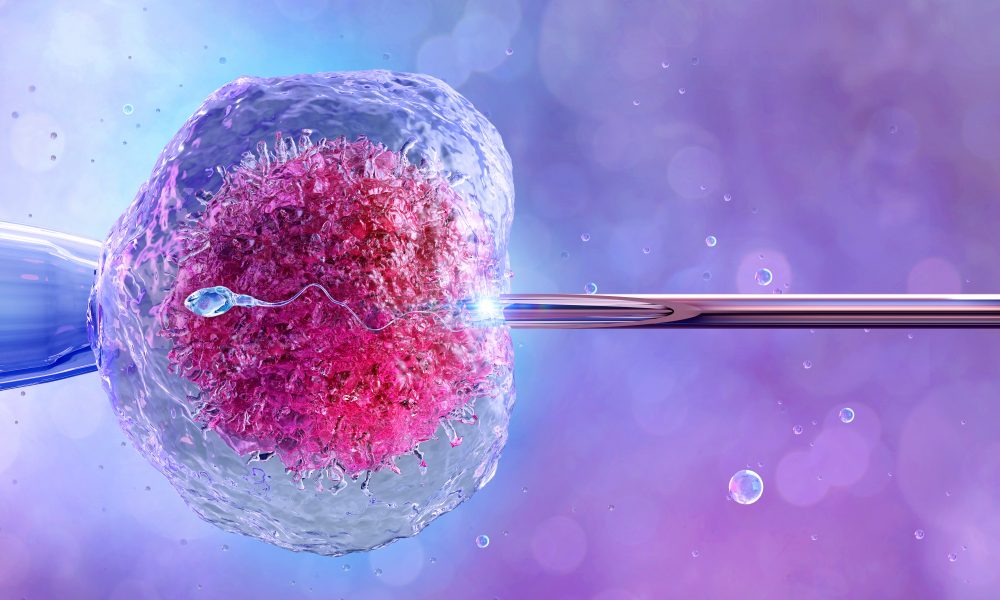
New study suggests the best conditions for live births appear to be associated with summer

Published

on

The time of year when eggs are collected from women’s ovaries during fertility treatment could make a difference to live birth rates, new research has found.

Australian researchers have found that transferring frozen then thawed embryos to women’s wombs from eggs collected in the summer resulted in a 30 per cent higher likelihood of babies born alive than if the eggs had been retrieved in the autumn.

The team found a 28 per cent increase in the chances of a live birth among women who had eggs collected during days that had the most sunshine compared to days with the least sunshine.

“Over the duration of our study, the average live birth rate following frozen embryo transfer in Australia was 27 births per 100 people. In our study, the overall live birth rate following frozen embryo transfer was 28 births per 100 people,” said Dr Sebastian Leathersich, an obstetrician, gynaecologist and fellow in reproductive endocrinology and infertility at Fertility Specialists of Western Australia, City Fertility Centre, and the King Edward Memorial Hospital in Perth, Australia, who led the study.

“If eggs were collected in autumn, it was 26 births per 100 people, but if they were collected in summer there were 31 births per 100 people. This improvement in birth rates was seen regardless of when the embryos were finally transferred to the women’s wombs.

“The live birth rates when eggs were collected in spring or winter lay between these two figures, and the differences were not statistically significant.”

Until now, there have been conflicting findings on the effects of the seasons on pregnancies and live birth rates following egg collection and embryo freezing.

“It’s long been known that there is seasonal variation in natural birth rates around the world, but many factors could contribute to this including environmental, behavioural and sociological factors,” Leathersich explained.

“Most studies looking at IVF success rates have looked at fresh embryo transfers, where the embryo is put back within a week of the egg being collected. This makes it impossible to separate the potential impacts of environmental factors, such as season and hours of sunshine, on egg development and on embryo implantation and early pregnancy development.

“These days, many embryos are ‘frozen’ and then transferred at a later date. We realised this gave us an opportunity to explore the impact of environment on egg development and on early pregnancy separately by analysing the conditions at the time of egg collection independently from the conditions at the time of embryo transfer.”

Leathersich and his colleagues analysed outcomes from all frozen embryo transfers carried out at a single clinic in Perth over a period of eight years, from January 2013 to December 2021.

During this time there were 3,659 frozen embryo transfers with embryos generated from 2,155 IVF cycles in 1,835 patients. Information on outcomes was missing for two frozen embryo transfers and so these were excluded, leaving 3,657 for analysis.

The researchers looked at birth outcomes according to season, temperatures, and the actual number of hours of bright sunshine, as opposed to calculating hours from sunrise to sunset. They obtained the data on weather from the Australian Bureau of Meteorology. They created three groups for duration of sunshine on days when eggs were collected: low sunshine days, medium sunshine days and high sunshine days.

“When we looked specifically at the duration of sunshine around the time the eggs were collected, we saw a similar increase to that seen for egg collection during the summer,” Leathersich explained.

“The live birth rate following a frozen embryo transfer from an egg that was collected on a day with fewer hours of sunshine was 25.8 per cent.

“This increased to 30.4 per cent when the embryo came from an egg that was collected on days with the most hours of sunshine. When we took into account the season and conditions on the day of the embryo transfer, this improvement was still seen.”

The temperature on the day of egg collection did not affect the chances of a live birth. However, the chances of a live birth rate decreased by 18 per cent when the embryos were transferred on the hottest days compared to the coolest days and there was a small increase in miscarriage rates.

The study suggests that the best conditions for live births appear to be associated with summer and increased sunshine hours on the day of egg retrieval, Leathersich said.

“There are many factors that influence fertility treatment success, age being among the most important. However, this study adds further weight to the importance of environmental factors and their influence on egg quality and embryonic development,” he added.

“We effectively separated the conditions at the time of egg collection from the conditions at the time of transfer, demonstrating that environmental factors when the eggs are developing are as, if not more, important than environmental factors during implantation and early pregnancy.

“Optimising factors such as avoiding smoking, alcohol and other toxins and maintaining healthy activity levels and weight should be paramount. However, clinicians and patients could also consider external factors such as environmental conditions.”

Factors that may play a role in the increased live birth rates after egg collection in the summer and during more sunshine hours include melatonin. Levels of this hormone are usually higher in winter and spring, and eggs take three to six months to develop before they are released from the ovaries.

Differences in lifestyles between winter and summer months may also play a role, scientists say. The finding that miscarriage rates were highest when embryo transfer took place on the hottest days are consistent with epidemiological studies that show higher rates of miscarriage in the summer months.

“This suggests that the negative effects of high temperature are more likely related to early pregnancy rather than egg development,” said Dr Leathersich.

Limitations of the study include the fact that it is a retrospective rather than prospective study: looking back at what had already happened. For this reason, it can’t show that conditions at the time of egg collection cause the difference in live birth rates, only that they are associated with them.

“Ideally, these findings should be replicated in other sites with different conditions and different treatment protocols to confirm the findings,” Leathersich concluded.

“It would also be interesting to look at the impact of season and environmental factors on sperm parameters, as this could have contributed to our observations. We are now planning to analyse this same group of patients using air quality data, as there may be seasonal changes in exposure to harmful pollutants which could negatively affect reproductive outcomes.

“Finally, given the huge increase in so-called ‘social egg freezing’ for fertility preservation and the fact that this group generally have flexibility about when they choose to undergo treatment, it would be very interesting to see if these observations hold true with frozen eggs that are thawed and fertilised years later.

“Any improved outcomes in this group could have big impacts for women making decisions about their future fertility, but the long-term follow-up required means it is likely to be some time before we can draw any conclusions for this population.”


Diagnosis

Lung cancer drug shows breast cancer potential

Published

on

Ovarian cancer cells quickly activate survival responses after PARP inhibitor treatment, and a lung cancer drug could help block this, research suggests.

PARP inhibitors are a common treatment for ovarian cancer, particularly in tumours with faulty DNA repair. They stop cancer cells fixing DNA damage, which leads to cell death, but many tumours later stop responding.

Researchers identified a way cancer cells may survive PARP inhibitor treatment from the outset, pointing to a potential way to block that response. A Mayo Clinic team found ovarian cancer cells rapidly switch on a pro-survival programme after exposure to PARP inhibitors. A key driver is FRA1, a transcription factor (a protein that turns genes on and off) that helps cancer cells adapt and avoid death.

The team then tested whether brigatinib, a drug approved for certain lung cancers, could block this response and boost the effect of PARP inhibitors. Brigatinib was chosen because it inhibits multiple signalling pathways involved in cancer cell survival.

In laboratory studies, combining brigatinib with a PARP inhibitor was more effective than either treatment alone. Notably, the effect was seen in cancer cells but not normal cells, suggesting a more targeted approach.

Brigatinib also appeared to act in an unexpected way. Rather than working through the usual DNA repair routes, it shut down two signalling molecules, FAK and EPHA2, that aggressive ovarian cancer cells rely on. FAK and EPHA2 are proteins that relay survival signals inside cells. Blocking both at once weakened the cells’ ability to adapt and resist treatment, making them more vulnerable to PARP inhibitors.

Tumours with higher levels of FAK and EPHA2 responded better to the drug combination. Other data link high levels of these molecules to more aggressive disease, pointing to potential benefit in harder-to-treat cases.

Arun Kanakkanthara, an oncology investigator at Mayo Clinic and a senior author of the study, said: “This work shows that drug resistance does not always emerge slowly over time; cancer cells can activate survival programmes very early after treatment begins.”

John Weroha, a medical oncologist at Mayo Clinic and a senior author of the study, said: “From a clinical perspective, resistance remains one of the biggest challenges in treating ovarian cancer. By combining mechanistic insights from Dr Kanakkanthara’s laboratory with my clinical experience, this preclinical work supports the strategy of targeting resistance early, before it has a chance to take hold. This strategy could improve patient outcomes.”

Continue Reading

Insight

Higher nighttime temps linked to increased risk of autism diagnosis in children – study

Published

on

Nighttime temperatures during pregnancy may be linked to a higher chance of an autism diagnosis in children, a recent study suggests.

The research tracked nearly 295,000 mother-child pairs in Southern California from 2001 to 2014 and linked warmer overnight temperatures with higher risk in early and late pregnancy.

Children of mothers exposed to higher than typical nighttime temperatures during weeks one to 10 of pregnancy had a 15 per cent higher risk of an autism diagnosis.

Exposure during weeks 30 to 37 was linked to a 13 per cent higher risk.

 Lead author David Luglio, a post-doctoral fellow at Tulane University, said: “A key takeaway is that we identified specific windows when a mother and her developing child can be most affected by exposures to higher nighttime temperatures.

“This is critical and hopefully can help mothers prepare accordingly.”

The study is described as the first to examine how temperature may affect fetal neurodevelopment, the process by which a baby’s brain and nervous system form during pregnancy.

Extreme temperatures linked to increased risk were classified as above the 90th percentile, meaning 3.6°F hotter than average, and the 99th percentile, 5.6°F above average.

The association held even after researchers accounted for factors such as neighbourhood conditions, vegetation and fine-particle air pollution.

The study could not account for other factors such as access to air conditioning. Researchers did not find the same association with daytime temperatures, potentially because people spend more time away from home during the day.

“Heat waves are becoming more frequent, and people may only think of the dangers of daytime heat exposure,” said Mostafijur Rahman, assistant professor of environmental health sciences at Tulane University.

“These results indicate a strong association between high nighttime temperatures during pregnancy and autism risk in children and show that we need to think about exposure to heat around the clock.”

The study did not examine how higher temperatures at night might affect prenatal development, though Luglio said it is possible that warmer nights disrupt sleep for pregnant mothers.

Previous research has suggested insufficient sleep during pregnancy may be linked to a higher risk of neurocognitive delays in children.

“Extreme heat exposure during pregnancy has been linked to a range of adverse health outcomes, including prenatal neurodevelopment delays and complications with an embryo’s development of a central nervous system,” Luglio said.

“The goal of our study was to specifically explore the link between prenatal heat exposure and autism diagnoses for the first time.”

Continue Reading

Entrepreneur

Kindbody unveils next-gen fertility platform

Published

on

Kindbody has launched a fertility platform integrating AI with clinical care and patient support for employers and health plans.

The platform will enter a pilot with select Kindbody employer clients in 2026, covering over three million lives, ahead of wider availability in 2027.

Building on the company’s clinical model, the platform aims to improve outcomes and cost efficiency across family-building journeys. It connects Kindbody-owned clinics, partner clinics and an integrated clinical app.

The app offers virtual care across conception, pregnancy and reproductive health, extending through the menopause transition.

Launch features include updates in medication management, third-party reproduction, adoption, pregnancy, men’s health and global programme design.

David Stern, chief executive of Kindbody, said: “With our next-generation fertility platform, Kindbody is redefining what comprehensive, intelligent and affordable family-building care looks like for employers, health plans and patients.

“By unifying best-in-class clinical care, AI-driven intelligence and whole-person support, we are making it easier and more cost-effective for more people to build the families they envision.”

Kindbody has expanded access via its national network of IVF centres, including IVIRMA, Inception Fertility and Ivy Fertility.

A new Fertility Medication Portal is designed to streamline authorisations so medicines can be dispensed on time, giving patients visibility from prescription to coverage, pharmacy fulfilment and delivery tracking.

Through KindMan, men’s health education, digital resources and integrated clinical care are expanding, including hormone management programmes.

Services cover andropause (age-related testosterone decline), erectile dysfunction, low testosterone and other male reproductive conditions.

Specialist fertility care includes semen analysis, diagnostic testing, male hormone panels, genetic testing, surgical sperm extraction and sperm cryopreservation.

Launching in the second quarter, a pregnancy support app will act as a digital companion for expecting and new parents, with resources, interactive tools and clinical assessments to identify social drivers of health and mental health needs during pregnancy and beyond.

Kindbody’s physician-led menopause programme provides consultations with board-certified obstetricians and gynaecologists to diagnose, treat and manage menopausal symptoms, including hormone replacement therapy where appropriate, with support from nutritionists, mental health therapists and pelvic floor specialists.

AI and analytics will be embedded across the care journey. An AI care navigator will guide employees from benefit activation through intake, triage and scheduling.

Tools will track benefits and treatment plans, showing coverage and expected out-of-pocket costs at each step.

AI-supported scribing will assist clinicians with documentation, and a predictor tool will estimate a patient’s likelihood of having a baby across different treatment paths.

In 2027, Kindbody plans a savings model for eligible large employers that it says will guarantee lower total fertility spend while improving clinical efficiency and patient experience.

Continue Reading

Trending

Copyright © 2025 Aspect Health Media Ltd. All Rights Reserved.

