





Connect with us

Fertility

Fertility: Why no one talks about ICI

ICI is being brought back by Béa Fertility in an attempt to level the playing field

Published

on

Tess Cosad, co-founder & CEO of Béa Fertility

Equal and equitable access to fertility care remains a challenge for the over 48 million couples struggling to conceive. We meet Tess Cosad, co-founder and CEO of Béa Fertility, and deep dive into the world of ICI. 

IVF treatment is booming all over the world and according to the European Society of Human Reproduction and Embryology (ESHRE), IVF has even started to play a role in demographic analyses.

Since the world’s first successful cycle, the global IVF market has grown and is currently valued at around US$15bn.

But while IVF and IUI remain the most popular forms of assisted conception, they are not the only ones out there.

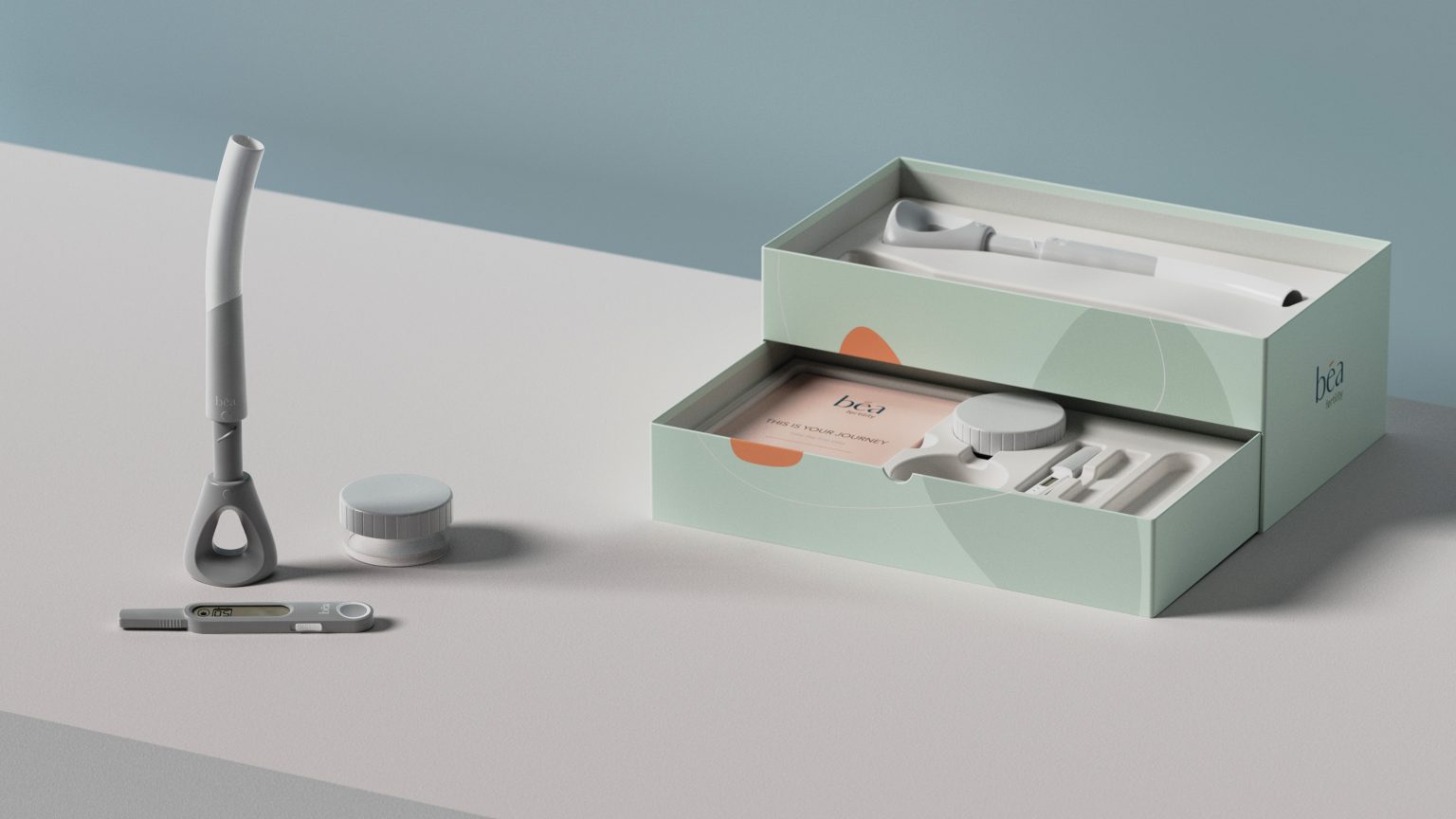
Intracervical insemination, known as ICI, is a form of home insemination treatment that, unlike IVF where the egg is fertilised with sperm in a laboratory, uses a silicone cap to hold the sperm against the cervix for an extended amount of time.

“ICI used to be the de facto fertility treatment, but when IVF and IUI came along, it fell out of favour,” says Tess Cosad, co-founder of Béa Fertility.

ICI is now being brought back by Béa in an attempt to level the playing field when it comes to assisted conception and provide access to affordable fertility treatment.

“The human, exciting journey of creating a family often becomes the source of stress, shame, struggle and desperation,” says Cosad. “Our idea is to empower people with something that they can do in the comfort, safety, privacy, intimacy of their home because that family-building journey should start in your home not in the clinic.

“For us, the very nature of the product is such that we hope it is a less stressful experience. In addition to the kit we provide, we’re also building a digital product to support people’s mental health and give them access to coaches who can be there for them and answer their questions.”
According to the World Health Organisation (WHO), between 48 million couples and 186 million individuals struggle with infertility globally.

But while vital for some patients, IVF and similar treatments currently account for less than three per cent of infertility services, deepening global inequalities in fertility care.

“The delta between who is getting IVF and who really is struggling to create a family is so significant because most people can’t afford it,” explains Cosad.

“In the US there are 510 fertility clinics as of this year. That’s about 10 per state which means that some would have to travel for more than 24 hours to get to a fertility clinic.

“Because going through fertility treatment can be deeply stressful, our goal is to take out some of the stress by allowing people to use the kit in the privacy of their home as well as taking out the financial stress.”

Currently, IUI, although less expensive than IVF, is estimated to be between four to six times the cost of ICI.

Analysis suggests that procedures including egg freezing, IVF and surrogacy have become a top workplace perk as companies try to attract talent and remain competitive in a tight labor market.

However, Cosad is hopeful that, by expanding access to fertility care to everybody who needs support, Béa will make a difference in this space.

“The clinics know that they’re not helping enough people,” says the founder. “They’re looking for ways to reach out and support more families and we’re one of those ways.

“We won NIHR funding from the National Institute for Health Research and that is the beginning of us starting to do the trials needed to get into the NHS. But we are also looking at partnering with clinics to be able to support our users if the treatment doesn’t work for them.

“There are so many other countries in the world where there’s a lot of cultural shame and stigma around fertility care and I believe we can really support them.

“We’re launching in the UK next year,” Cosad continues. “Nine months after that, hopefully the first baby will come along and in five years, I hope we will be able to proudly look back at the number of people we’ve helped.”




Fertility

AI could transform ovarian care through personalisation, study finds

Published

on

AI could transform ovarian care by personalising cancer and fertility treatment, but more clinical validation is needed before routine use.

A systematic review and meta-analysis found AI models showed high diagnostic accuracy for ovarian cancer when combining data such as ultrasound scans and blood test results.

Across 81 studies, AI models correctly identified ovarian cancer in around nine out of 10 cases, with pooled rates of 89 to 94 per cent.

They were also highly accurate at ruling out ovarian cancer when it was not present, with specificity of 85 to 91 per cent.

The analysis also found that explainable AI tools could predict complete surgical cytoreduction in advanced ovarian cancer.

Complete surgical cytoreduction means removing all visible cancer during surgery, which can be an important goal in treatment planning.

The tools achieved a pooled AUC of 0.87. AUC is a measure of how well a model distinguishes between different outcomes, with higher scores showing stronger performance.

In reproductive medicine, AI algorithms helped physicians optimise ovarian stimulation protocols and predict follicular growth during IVF.

Ovarian stimulation is the use of hormones to encourage the ovaries to produce eggs, while follicles are the small sacs in the ovaries where eggs develop.

The review found AI could reliably model ovarian response in IVF with a pooled AUC of 0.81.

However, researchers said challenges remain in translating promising research findings into routine clinical practice.

They identified substantial variation across studies, driven by retrospective study designs, variable AI systems and a lack of standardised validation.

Only 22 per cent of analysed studies reported prospective, multicentre external validation, where models are tested forward in time across multiple healthcare settings.

The authors called for rigorous validation to help close the gap between research and routine clinical practice, alongside standardised methodological and reporting frameworks, smooth integration with clinical workflow and robust governance to support responsible and ethical AI use.

They concluded: “Artificial intelligence is a transformative force in the management of ovarian conditions.

“In gynaecologic oncology, AI enhances every phase of care, from early detection and accurate diagnosis to prognostic stratification and surgical planning.”

In reproductive medicine, AI personalises ovarian stimulation and refines the diagnosis of heterogenous endocrine disorders such as PCOS.

PCOS, or polycystic ovary syndrome, is a hormonal condition that can affect periods, skin, weight and fertility.

Continue Reading

Fertility

Housing, work and fertility stop Britons having the families they want – research

Published

on

Housing, work and fertility pressures are stopping many Britons growing the families they want, new research suggests.

A UK fertility report found that 79 per cent of people surveyed who had tried to conceive in the past five years would like more children than they currently have.

Among parents with one child, that figure rises to 88 per cent.

The report surveyed more than 1,000 people across the UK who had tried for a baby in the past five years.

While birth rates continue to fall, the findings suggest it is not because people no longer want children. Instead, many respondents said external pressures are making it harder to grow their families.

The findings, from wellness brand Wild Nutrition’s Fertility Disconnect report, highlight how financial pressures, fertility struggles and gaps in reproductive health knowledge are shaping modern family life in the UK.

Gail Madalena, fertility nutritional therapist at Wild Nutrition, said: “People often assume fertility begins the moment they decide to try [for a baby].

“In reality, egg and sperm health are shaped months and years earlier.

“By the time someone starts thinking about fertility, their body has already been responding to its environment for a long time.”

Among the biggest barriers, 26 per cent said career progression affected their family plans, 25 per cent cited housing affordability and lack of space, and 52 per cent said they required medical intervention during their fertility journey.

The report also found that almost a quarter of respondents had spent more than two years trying to conceive.

Trying for a baby can take a significant toll on mental health and relationships, especially for those navigating fertility treatment.

According to the research, 38 per cent of respondents said trying to conceive had negatively affected their mental health. That figure rose to 99 per cent among people undergoing fertility treatment.

Julianne Boutaleb is a perinatal psychologist.

She said: “Navigating a fertility journey is about so much more than medical appointments and procedures.

“It’s an emotional marathon that can take a huge toll on your mental wellbeing.

“Sadly, the stats show that 15 per cent of couples going through fertility treatment say their relationship has been irrevocably impaired.”

The report also highlighted the realities of secondary infertility, which affects around one in 20 people, challenging the assumption that having one child means conceiving again will be straightforward.

Researchers found many people felt under-informed about fertility, particularly younger adults.

Ten per cent of Gen Z respondents said they “know nothing” about fertility, while only one in five respondents said they know “a lot” about egg health.

The report also found that 60 per cent of women were unaware of fertility testing options, and one in five Gen Z respondents said they felt uncomfortable discussing fertility, even with their partner.

Around 40 per cent of those surveyed supported fertility education being included in schools, covering topics such as egg health, sperm health and hormonal health.

The report also explored how lifestyle and long-term health may influence fertility outcomes.

Many respondents said they only made changes once they started trying to conceive.

Some 44 per cent improved their diet when trying for a baby, while 32 per cent reduced alcohol intake at that stage.

The report also referenced emerging research that suggests ultra-processed foods and microplastics could have an impact on reproductive health.

While fertility conversations often focus on women, the findings showed male fertility issues are also affecting many families.

Seventeen per cent of respondents cited sperm health issues as a barrier to conception, while male factors contribute to around half of all fertility challenges.

Only one in four men said they would share fertility struggles with friends.

“Many causes of male infertility are entirely treatable yet so often the last resort is the first response,” said Ian Stones, co-founder at Test Him Ltd.

The findings come as UK birth rates remain below replacement level.

The report noted that the UK fertility rate is now 1.41, meaning that on average women give birth to 1.41 children over their lifetimes. The replacement rate, or rate that maintains population numbers, is 2.1.

It also said the average age of mothers has risen to 31, while birth rates are falling across most age groups except among over-40s.

“There is no single fertility story, and it is rarely a simple, linear narrative,” said Dr Zeynep Gurtin, lecturer in women’s health at UCL.

Dr Gurtin added that better fertility education, fairer access to treatment and more open conversations around infertility and pregnancy loss are needed.

Continue Reading

Fertility

Femtech World reveals fertility innovation award shortlist

Published

on

Femtech World is thrilled to reveal the shortlist for the Fertility Innovation Award.

The award, sponsored by FinDBest IVF, celebrates a pioneering product, service or initiative that is transforming fertility care and support.

FinDBest IVF is a global B2B digital platform created to simplify and accelerate how IVF and ART manufacturers connect with trusted, pre-vetted distributors around the world.

This year’s nominees represent a remarkable breadth of approaches to fertility care: from clinic-floor breakthroughs to at-home hormone intelligence to truly borderless access.

Three companies made the cut, with each tackling a real, persistent barrier in reproductive health.

Congratulations to the shortlist and many thanks to everyone who entered.

Fertility Innovation Award Shortlist


HRC Fertility’s Needle-Free IVF is a pioneering advancement designed to transform one of the most challenging aspects of fertility treatment: daily hormone injections.

Developed by board-certified reproductive endocrinologist Dr Rachel Mandelbaum, this innovative approach reimagines how stimulation medications are delivered during IVF and egg freezing, dramatically improving the patient experience while maintaining the same trusted clinical outcomes.

Inspired by feedback from patients who struggled with the injection process, Dr Mandelbaum adapted an innovative drug-delivery system commonly used in other areas of medicine and applied it to reproductive care

Mira is a hormonal health technology company that provides lab-grade hormone testing and AI-driven insights to help women and couples understand their fertility. 

The platform has already supported more than 200,000 couples on their fertility journeys worldwide, helping over 60,000+ users achieve pregnancy.

For some users, pregnancy rates have reached up to 89 per cent within six months, demonstrating how accurate hormone data can significantly improve fertility outcomes.


Founded in 2021 by Marija Skujina, a Certified Fertility Nurse Specialist accredited by the European Society of Human Reproduction and Embryology, with nearly 15 years of clinical experience at one of the world’s top IVF clinics, and having navigated her own fertility journey as a patient, Marija built the clinic she had always wished existed.

Plan Your Baby began with a bold, but simple mission – make best quality fertility and pregnancy available anywhere.

Plan Your Baby has created a new generation fertility and pregnancy clinic with patients accessing expert consultations remotely, while blood tests and ultrasound scans are available at over 450 locations across the UK, eliminating the exhausting travel burden that often forces people to take days off work, relocate appointments, or abandon treatment altogether

What happens now

The shortlist will be judged by a representative from category sponsor FindBestIVF, with the winner announced at a virtual event on June 19.

Winners will receive a trophy and be interviewed by a Femtech World journalist.

Continue Reading

Trending

Copyright © 2025 Aspect Health Media Ltd. All Rights Reserved.

