




Events
Five ideas shaping the future of women’s health: Insights from Women’s Health Week Europe 2025


By Femi Adetoro, marketing manager, Women’s Health Week
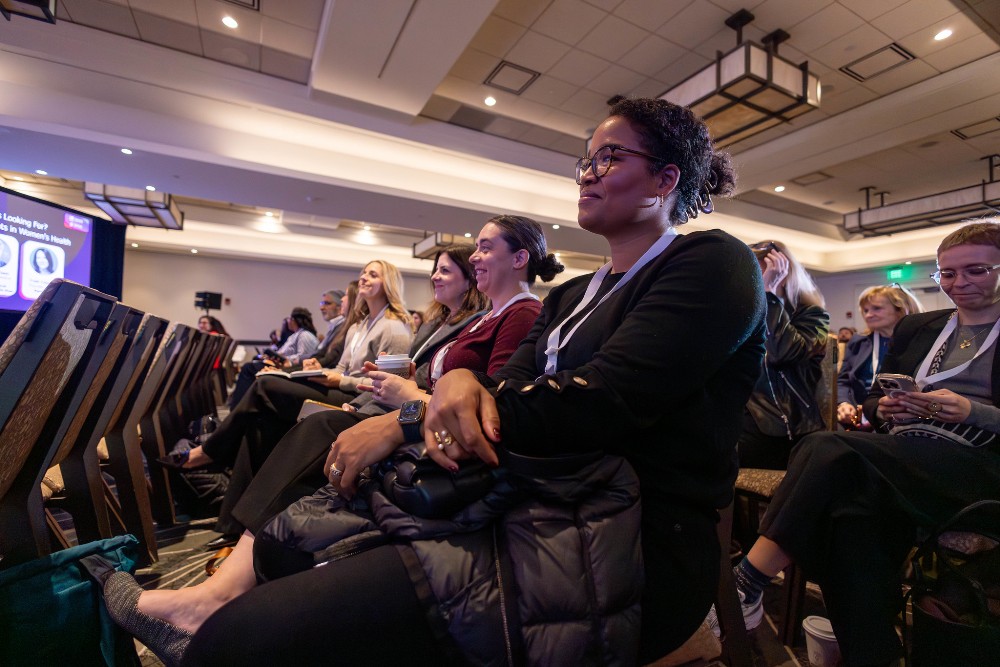
Women’s Health Week Europe 2025 brought 400 investors, innovators, corporates, clinicians, and policymakers together at the beautiful Barbican Centre in London for three days of big thinking and real partnership-building.
This was my first Women’s Health Week, and over a month later, the conversations are still shaping how we think about scale, innovation, and the future of women’s health. Here are 5 of my favourite takeaways that stayed with us long after the doors closed at the Barbican.
1. The future of AI in women’s health depends on responsible development.
AI’s potential to transform women’s health was one of the week’s central themes, but experts were clear that progress must be deliberate.
From diagnostic algorithms to clinical decision-support tools, the priority is shifting toward safe, bias-aware, evidence-led AI models built on representative data.
Speakers warned that poorly designed systems risk reinforcing existing inequities, while well-designed systems could help close diagnostic delays and improve care quality worldwide.
2. Investment momentum is accelerating and becoming more diverse.
Investors from Octopus Ventures, Cross Border Impact Ventures, THENA Capital, Sie Ventures and the British Business Bank highlighted a notable shift: women’s health is now delivering competitive returns across both early-stage and growth-stage portfolios.
With more institutional capital entering the space and a growing appetite from LPs, the sector is beginning to build the depth of financing required to support scale-stage companies.
3. Health system redesign is unlocking measurable impact.
One of the most actionable insights came from discussions around care delivery.
Panels examining system reform, including the UK’s Women’s Health Hubs model, showed how reorganising pathways can significantly reduce clinical burden and improve access without requiring new infrastructure or technology.
It was a strong reminder that innovation is as much about redesigning care systems as it is about creating new solutions.
4. Women’s sport is driving research and accelerating product innovation.
The intersection of sport and women’s health emerged as a compelling focal point.
Athletes and performance teams shared how elite sport is becoming a proving ground for new diagnostics, pelvic floor solutions, menstrual health tools, and research collaborations with insights increasingly informing mainstream healthcare.
5. Collaboration is becoming the sector’s defining strength.
Across clinical, commercial, and research-focused sessions, the same message surfaced: the most meaningful progress happens when stakeholders work together.
Founders are partnering earlier with health systems and research institutions, corporates are opening their innovation channels, and investors are playing a more active strategic role.
This shift toward cross-sector collaboration is accelerating the pace of solutions reaching patients.
A Sector Moving Into Its Next Phase
Women’s Health Week Europe 2025 underscored the sector’s momentum from scientific discovery and diagnostics to investment, care delivery, and public policy.
As the community looks toward our New York meeting 2026, the themes emerging from London offer a clear picture of where women’s health is heading next. Learn more about Women’s Health USA 2026 – Women’s Health 2.0: The Era of Scale here: https://www.womenshealthweek.com/usa/2026











The Women’s Health Innovation Summit (WHIS) has announced that submissions are open for the 2026 Innovation Showcase, giving early and growth-stage start-ups the chance to present their solutions to the most influential audience in women’s health.
Taking place October 13–15 at Encore Boston Harbor in Everett, Massachusetts, WHIS brings together more than 1,000 decision-makers from across the women’s health ecosystem — investors, payers, health systems, pharma leaders, and employers — all under one roof.
Selected companies will pitch live on stage to an audience with the funding, expertise, and connections to accelerate their growth.
Past participants have walked away with investor introductions, commercial partnerships, and clinical collaborations that moved from conversation to contract.
WHIS is where the women’s health ecosystem comes together to get deals done,” said Sarah Rowlands, marketing director.
“The Innovation Showcase puts promising start ups directly in front of the people who can take them to the next level.”
The showcase sits at the heart of a three-day programme spanning digital health, therapeutics, diagnostics, and consumer health.
Previous attendees have included representatives from Mayo Clinic, CVS Health, Eli Lilly, Brigham and Women’s Hospital, Alumni Ventures, Muse Capital, and Maverick Ventures, among hundreds of others.
Applications are open now. Start-ups can submit at
www.whisusa.com/attend/start-ups
About WHIS
Now in its eighth year, the Women’s Health Innovation Summit is the largest global gathering of senior leaders shaping the future of women’s health.
Organised by Kisaco Research, WHIS unites providers, health plans, employers, regulators, pharma, investors, and innovators to increase deal flow, expand reimbursement, improve access, and deliver better health outcomes for women at every stage of life.
WHIS 2026 takes place October 13–15 at Encore Boston Harbor, Everett, MA.
Learn more at www.whisusa.com

The third annual Femtech World Awards ceremony is almost here. And today, we’re excited to reveal the shortlist for Company of the Year, sponsored by Femovate.
This award exists to recognise a company that doesn’t just build a product, but shifts the entire landscape of women’s health.
The winner will be an organisation that has demonstrated exceptional leadership in addressing women’s health needs through groundbreaking products, services, or platforms – one that is not only advancing care today but actively shaping the future of global femtech.
Femovate, our sponsor for this category, knows this territory well.
As the global femtech incubator and a true catalyst for change in women’s health, Femovate uses design to fuel innovation across every stage of a woman’s health journey, from proactive prevention to early detection and personalised treatment.
With over US$2 million in design capital invested, 30 products launched, and 7 FDA clearances supported across their portfolio, they are uniquely placed to champion the kind of bold, rigorous company-building this award celebrates.
Congratulations to the shortlist and thank you to everyone who entered or nominated.
Company of the Year Shortlist
Founded by physicist Dr Elina Berglund Scherwitzl, Co-Founder and CEO, Natural Cycles created the world’s first FDA-cleared and CE-marked contraceptive app, establishing digital contraception as a credible and regulated category in women’s healthcare.
Achieving these clearances required extensive clinical trials and rigorous scientific validation, setting a new benchmark for digital products in the femtech space.
In doing so, Natural Cycles helped define the regulatory pathway for the industry — meaning any company looking to develop digital contraceptives today must meet the same high scientific and regulatory standards that Natural Cycles pioneered.

ŌURA, the creator of Oura Ring, stands at the forefront of global femtech, redefining how women understand and manage their health through continuous innovation, research, and responsible AI.
Oura exemplifies what it means to drive meaningful impact in a historically underserved space by delivering personalised insights across women’s health – from menstruation, to pregnancy, perimenopause, and beyond.
That leadership is visible across ŌURA’s growing women’s health ecosystem. Features such as Cycle Insights, Period Prediction, Fertile Window, and Pregnancy Insights are designed to help women interpret changes across different life stages using continuous signals including temperature trends, sleep, stress, activity, and recovery.
Rather than offering one-size-fits-all tracking, ŌURA brings context to the complexity of women’s physiology—helping members see how hormonal shifts can shape readiness, sleep quality, recovery, and daily wellbeing.
Youterus Health is transforming how uterine health is understood, diagnosed, and treated across underserved markets.
Operating at the intersection of research, technology, and care delivery, the company has built an integrated platform that converts women’s lived experiences into structured health data, enabling earlier diagnosis, improved care pathways, and more equitable access to treatment,
At the core of this innovation is the WOMB Index—a first-of-its-kind, narrative-based diagnostic tool that captures both quantitative and experiential data on uterine health conditions such as fibroids, endometriosis, and heavy menstrual bleeding.
This is complemented by an AI-enabled platform that supports multilingual data collection, real-time symptom tagging, and population-level insights, creating a new standard for how women’s health data is generated and used.
Events
WUKA brings Period-Positive Pool Party to London Aquatics Centre to keep girls swimming through puberty


This summer, WUKA and triple Olympian Hannah Miley MBE are bringing their Period-Positive Pool Party to London Aquatics Centre with one clear mission: to prove that periods should never keep anyone out of the water
At a time when 84 per cent of teenage girls in the UK say their interest in sport declines after starting their period – and nearly 70 per cent report skipping sports or swimming due to menstruation – WUKA’s immersive community event is tackling one of the most overlooked barriers to girls’ participation head-on.
WUKA’s Period-Positive Pool Party was created as a safe, inclusive space for teens to swim on their periods with confidence.
Following a series of sold-out events across the UK, including Eastleigh and Stonehaven in Hannah Miley’s hometown of Aberdeen, the London-based Olympic venue is a result of growing demand from teens and parents seeking supportive, stigma-free spaces to stay active during menstruation.
Why This Matters?
For many young people – particularly those who are not ready to use tampons due to age, comfort, cultural reasons, or parental guidance – swimming during their period can feel inaccessible.
WUKA’s period swimwear offers an alternative designed to provide comfort, coverage, and confidence, helping ensure that periods don’t mean sitting on the sidelines.
The new one-hour London takeover combines swimming, education, and empowerment in one of the UK’s most iconic sporting venues.
Breaking The Stigma While Making A Splash
So much more than a product event, WUKA’s Period-Positive Pool Party is a fully immersive experience featuring a DJ-approved summer playlist, inflatable pool installations, and professional underwater photography capturing barrier-free swimming moments. Every teen will also receive a curated £80 wellness goodie bag, including free WUKA swimwear.
But more than anything, they’re about freedom, confidence, and belonging, ensuring the confidence to swim, period, or not, continues long after they leave the water.
Hannah Miley MBE says: “Being an athlete taught me that your cycle isn’t a weakness, it’s just something to manage.
“Partnering with WUKA for this Pool Party is about showing young swimmers that with the right support and the right kit, they don’t have to press pause on their lives or their sport because of their period.”
WUKA Founder Ruby Raut says: “This is about more than a pool party – it’s about changing what inclusion in sport actually looks like.
“Too many girls step back from swimming and physical activity because of period stigma or lack of options.
“Through community-led events like this, we’re breaking barriers, building confidence, and making sure no one feels excluded from sport because of their cycle.”
Saturday 30th May 2026 | 5–6pm | London Aquatics Centre
Want to join the pool party? Follow this link to buy your tickets











 Menopause1 week ago
Perimenopause misinformation ‘putting women at risk’

 Insight4 weeks ago
NIH Grant terminations disproportionately impact minority scientists, research finds

 Events4 weeks ago
WUKA brings Period-Positive Pool Party to London Aquatics Centre to keep girls swimming through puberty
 Insight3 weeks ago
PCOS renamed after decade-long campaign to end ‘cyst’ misconception

 Events4 weeks ago
WHIS 2026 unveils agenda and first speakers for the leading women’s health summit

 Menopause4 weeks ago
CBT shows promise for menopause insomnia and hot flashes

 Diagnosis2 weeks ago
NHS urged to update website following renaming of PCOS
 News6 days ago
Three menopause innovators shortlisted for Femtech World Award
1 Comment