



AI may help accelerate breast cancer diagnosis for high-risk women – study
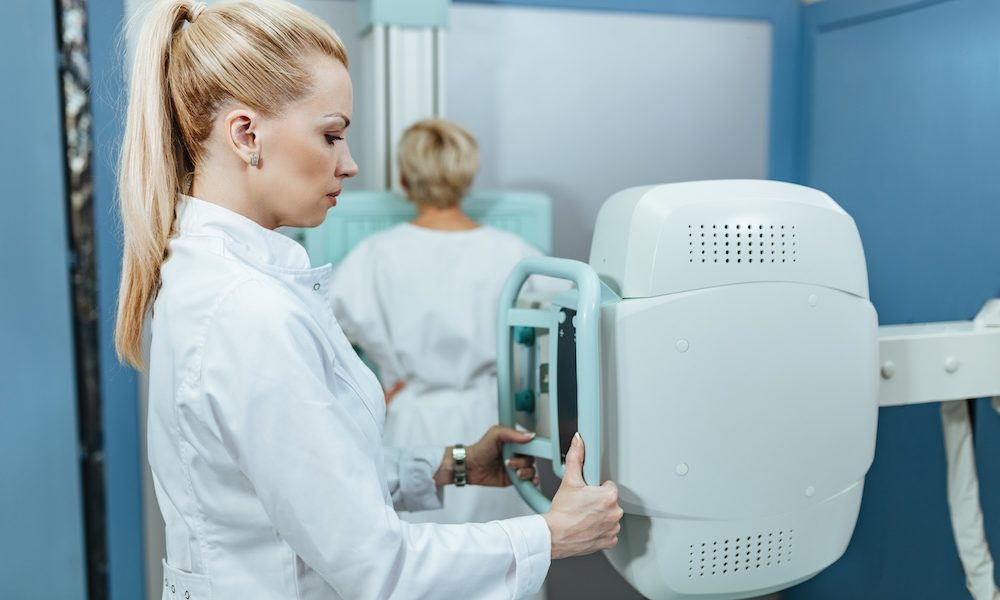
AI may help speed breast cancer diagnosis for high-risk women after abnormal mammograms, a study suggests.
Women with abnormal mammograms often wait weeks to learn whether they have breast cancer.
Researchers at UC San Francisco and UC Berkeley said an AI-guided workflow could help reduce that wait by quickly identifying those most likely to have the disease. Some women could move from imaging to evaluation, and sometimes biopsy, in a single day.

Dr Maggie Chung, first author of the study, said: “This is a really an exciting time.
“This moves us closer to personalised care, where we can tailor a plan so that each patient gets the right intervention at the right time.”
The study used an open-source AI model called Mirai.
The model was trained on hundreds of thousands of mammograms linked to patients’ cancer outcomes.
A mammogram is an X-ray scan of the breast used to look for signs of cancer. A biopsy involves taking a small tissue sample to test for disease.
The AI tool is designed to detect subtle patterns in screening mammograms and predict a woman’s cancer risk.
Researchers at UC San Francisco and UC Berkeley applied the model to more than 4,100 screening mammograms at Zuckerberg San Francisco General Hospital and Trauma Center.
Mirai identified 525 women, about 12.7 per cent of screened patients, as high risk.
Those patients could receive an interpretation of their mammograms immediately after the scan and have additional diagnostic imaging for suspicious areas on the same day.
Some women who needed biopsies were also able to have them on the same day.
The researchers said Mirai reduced the wait time for diagnostic evaluation from several weeks to about an hour.
For women who were ultimately diagnosed with breast cancer, it reduced the average wait for biopsy from more than two months to fewer than 10 days.
The researchers stressed that Mirai does not replace radiologists or make diagnoses on its own.
Instead, it acts as a triage tool to help physicians identify the patients who can benefit most from accelerated care.
The team analysed more than 114,000 archival mammograms before launching the programme, to ensure the model would capture enough high-risk patients without overloading the clinic with too many expedited evaluations.
The researchers said they hope AI will support a more personalised approach to breast cancer screening tailored to each patient’s breast cancer risk.
Chung said: “Right now, many women follow the same screening schedule but their individual risk can be very different.
“AI risk assessment gives us the chance to identify the women most likely to benefit from expedited care and get them what they need.”
Adam Yala, senior author of the study and a data scientist at UC Berkeley, said: “This is a powerful example of how AI can be a collaborative partner for physicians.
“It shows how we can improve care when we bring clinicians and data scientists together to design these systems.”


Newsletter
Sign up for free weekly updates
The latest femtech news, research and investment, straight to your inbox.



