Connect with us

Entrepreneur

Why less is more when it comes to skincare

How multi-use products could simplify skincare and tackle over-consumption

Published

on

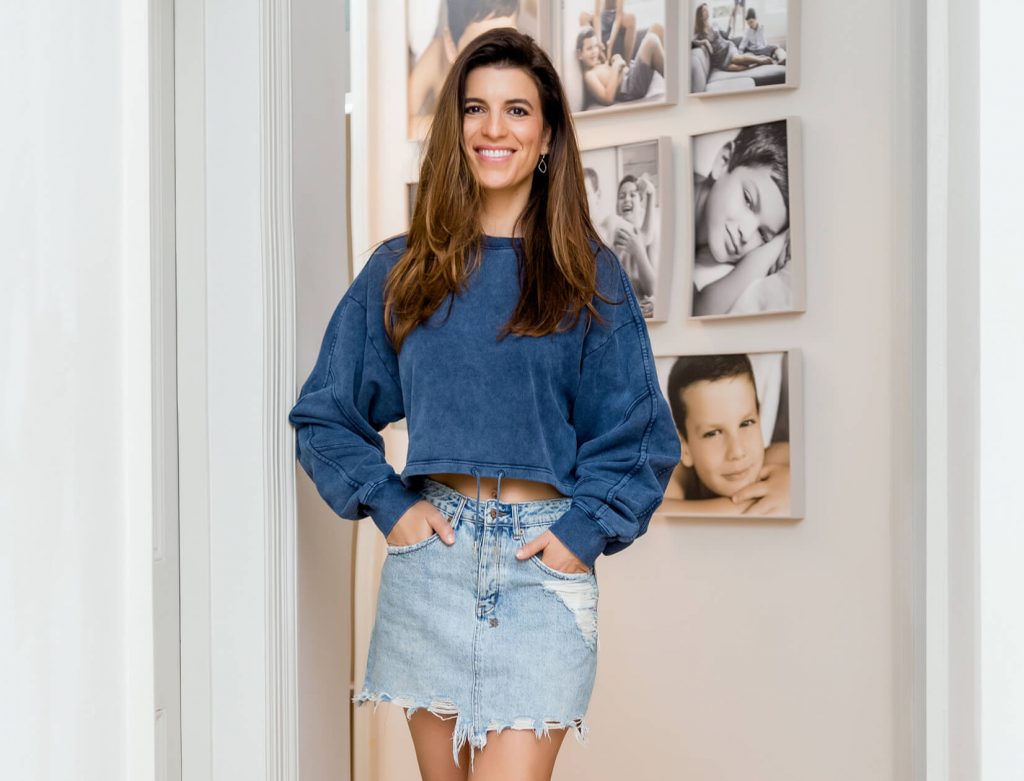
The skin is a direct mirror of how our body feels. Why not simplify our skincare routine and reduce waste, asks Pontine Paus, investor and entrepreneur.

Skincare products have the largest market share of all beauty industry segments and reports have shown that ‘skinimalism’ has various benefits.

Pontine Paus, entrepreneur and founder of Dr Lipp, says: “Indeed, the focus and knowledge we have today on how to live a healthy life has increased. It’s definitely good that we have this knowledgeable and know how to look after our skin, but I think it’s bad that we’re still using too many products that are not necessarily making a big a difference, but cause a lot of pollution in the world.”

Paus has launched her skincare brand 18 years ago when the multitude of brands and social media platforms we have today did not exist.

She started off with the original nipple balm that later became the signature product of the brand. “I used to have a lot of dry skin and a lot of eczema myself and I couldn’t find anything that worked until somebody said ‘why don’t you try some nipple balm’”, Paus remembers.

“I started doing a lot of research and there was just one ingredient, that’s been around since ancient Greek times and that is lanolin. So, I had this idea of taking the nipple balm out of the breastfeeding market and introducing it into the beauty market,” the founder explains.

Her main aim was to build a brand in which every product was multi-use with a maximum of 10 ingredients. “The average is 30 to 40 ingredients. So, we’ve reduced that massively. That’s probably the most effective and most important contribution that we can make when it comes to reducing our carbon footprint and helping with the biodiversity. I think if we can all consume more consciously, then that will have a big long-term impact.”

The nipple balm was just the start of her commitment to offer multi-use products in order to simplify people’s skincare routine and encourage a minimalistic approach.

“There are some great creams to help reduce wrinkles and pigmentation, for example, but the basic daily products, like hand cream, body lotion or any other cream, could all be one. In terms of washing, your makeup remover, your shampoo, your body wash, your shaving cream gel could all be one,” she says.

“I feel very strongly about the waste we’re creating and the big floating islands of plastic in the ocean,” she continues. “I’m horrified by how much rubbish every household produces every week, and where that goes and equally horrified about how polluted our food and water systems are. So, as a brand owner, I really looked at how to really make a difference.”

Statistics report that 120 billion units of packaging are produced every year by the global cosmetics industry, including lids, multi-layered boxes and cellophane that are most of the time non-recyclable.

“Everybody’s getting becoming more aware [of the environmental impacts], but we’ve got to think differently,” the founder insists. “Brands have got to offer products that reduce our waste rather than just recycling them. Nobody’s going to make it perfect, but we can improve on where we are at.”

With Latin words governing long ingredient lists, simple multi-use products can also give consumers a better understanding of what they are putting on their skin, the entrepreneur tells me. “I wanted something simple and 100 per cent natural,” she says. “A lot of brands do natural, but there’s no real big brands out there that do 100 per cent natural. But I think when it comes to these basic steps in our daily life, it’s much easier to make things simple.”

Paus’ hope is that more companies will come up with compostable packaging in the future.

“It would really make a huge difference, but sadly, the technology isn’t there yet. I hope at least we at Dr Lipp could make everything much simpler for both the people and the environment.”


Shop: The best-selling multi-use products from Dr Lipp

Dr Lipp Original Nipple Balm £12

Dr Lipp CBD Calm Balm £10.99

Dr Lipp Superfood Tint Pack for Lips Cheeks and Eyelids £18

News

Sun Pharma to acquire Organon in US$11bn deal

Published

on

Indian pharmaceutical giant Sun Pharma has agreed to buy Organon for US$11.75bn in a deal aimed at expanding its women’s health and biosimilars business.

Organon, which was spun out of Merck in 2021, has built a portfolio of more than 70 women’s health and general medicines products, including biosimilars, sold in the US and about 140 other countries.

The acquisition would give Sun Pharma a broader presence in biosimilars, which are medicines designed to be highly similar to existing biological drugs, and strengthen its position in women’s health.

Dilip Shanghvi, executive chairman of Sun Pharma, said: “Organon’s portfolio, capabilities, and global reach are highly complementary to our own, and we believe that bringing the two organizations together can create a stronger and more diversified platform.”

The companies said the combined business would generate annual revenue of US$12.4bn, operate across 150 countries and rank among the top three companies globally in women’s health.

They also said it would become the seventh largest biosimilar player.

Sun Pharma said the deal would help grow its innovative medicines business and expand its biosimilars offering.

It added that the combined company would have 18 large markets each generating more than US$100m in revenue.

Organon’s largest markets include the US, Brazil, Canada, China and countries in the European Union. The company also has six manufacturing facilities across the EU and emerging markets.

The deal follows market speculation that began on 10 April, when Indian media reported that Sun Pharma had submitted an all-cash offer for Organon.

A later report said the offer had been revised to US$13bn. Sun Pharma shares rose about 7 per cent on India’s National Stock Exchange after the announcement.

Sun Pharma said it would acquire all of Organon’s issued and outstanding shares in cash, using a combination of available cash and committed bank financing. It also estimated synergies of about US$350m within two to four years of completion.

The company said the acquisition would strengthen its cash generation, with EBITDA and cash flow set to nearly double, supporting efforts to reduce the net debt to EBITDA ratio of 2.3 times resulting from the deal. EBITDA is a measure of operating performance before certain costs are deducted.

Organon reported revenue of US$6.2bn last year and adjusted EBITDA of US$1.9bn. It also reported debt of US$8.64bn, down from US$9.5bn when it separated from Merck, and a cash balance of US$574m.

In November, Organon announced plans to sell its JADA System, designed to control and treat abnormal postpartum uterine bleeding or haemorrhage, to Laborie Medical Technologies for up to US$465m. Net proceeds from the sale will contribute to Organon’s cash balance as of 31 March 2026.

Organon will merge with a subsidiary of Sun Pharma, with Organon surviving the merger. The boards of both companies have approved the transaction.

Carrie Cox, executive chair of Organon, said: “Following a comprehensive review of strategic alternatives, our Board determined that this all-cash transaction offers compelling and immediate value to Organon stockholders.”

The transaction is expected to close in early 2027, subject to regulatory approvals and Organon stockholder approval.

Continue Reading

News

Women’s digital health market set to reach US$5.28 billion in 2026 – report

Published

on

The women’s digital health market is set to reach US$5.28bn in 2026, up from US$4.36bn in 2025, according to a new report.

That would represent annual growth of 20.9 per cent, driven by factors including greater smartphone use among women, wider uptake of telehealth and a stronger focus on preventive care.

The report said the market could reach US$11.47bn by 2030, with projected annual growth of 21.4 per cent over the forecast period.

It also pointed to rising awareness of gender-specific health needs, expansion among digital health start-ups, growing demand for personalised healthcare, investment in femtech innovation and the spread of AI-enabled diagnostics.

Wearables linked to health apps and wider use of remote monitoring tools are also expected to play a larger role, as companies focus on more preventive and joined-up care.

Smartphone use was highlighted as a major driver because mobile apps are increasingly being used for women’s health services, from menstrual cycle tracking to pregnancy support.

The report cited Eurostat data showing that in 2023, 89 per cent of EU residents aged 16 to 74 in urban areas accessed the internet via smartphones.

The report also said companies in the sector are developing new technology aimed at improving access to more personalised healthcare.

One example it gave was a 2024 collaboration between Algorand and the Self-Employed Women’s Association to launch a digital health passport for women in India’s informal economy using blockchain technology.

Recent mergers and acquisitions were also noted. In March 2023, Maven Clinic acquired Naytal to expand its services in the UK and Europe.

North America was identified as the largest market in 2025, while Asia-Pacific is expected to be the fastest-growing region.

Companies named as key players included Flo Health Inc, Natural Cycles, Elvie, Bellabeat, Clue by Biowink, MobileODT Ltd., Glow, Veera Health, Biowink GmbH, Ava AG, Hims & Hers Health, Inc., The Women’s Wellness Centre, Elara Health, myGynaeDoc, Maven Clinic, Kindbody, Allara Health, Tia and Hera Med Ltd.

Continue Reading

Entrepreneur

Future Fertility raises Series A financing to scale AI tools redefining fertility care worldwide

Published

on

Future Fertility Inc. has announced the closing of a US$4.1 million Series A financing round.

The round was led by M Ventures (the corporate venture capital arm of Merck KGaA, Darmstadt, Germany) and Whitecap Venture Partners, with participation from new investors Sandpiper Ventures, Gaingels, and Jolt VC.

The financing will accelerate Future Fertility’s commercial expansion into Asia-Pacific and support its entry into the United States, including planned FDA 510(k) clearance for additional products as part of a broader U.S. market entry strategy.

Proceeds will also advance the development of a broader AI platform, from egg assessment through to embryo transfer, designed to support clinicians, embryologists, and patients across the full IVF journey.

M Ventures and Whitecap have supported Future Fertility’s mission to translate AI innovation into meaningful clinical outcomes since the company’s earliest stages.

Oliver Hardick, investment director, M Ventures, said: “Future Fertility is addressing a critical unmet need in reproductive medicine with a differentiated AI platform grounded in clinical data and real-world workflow integration.

“We are excited to continue supporting the company and team because we believe its technology has the potential to improve decision-making for clinicians, bring greater clarity to patients, and help advance a more personalised standard of care in fertility treatment.”

Future Fertility’s AI platform addresses a long-standing gap in fertility care: historically, there has been no objective, clinically validated method for assessing egg quality (Gardner et al., 2025), despite it being one of the most important drivers of reproductive success.

The company’s suite of deep learning tools includes VIOLET™, MAGENTA™, and ROSE™, purpose-built for egg freezing, IVF, and egg donation respectively.

The tools are based on AI models trained and validated on more than 650,000 oocyte images and are deployed in over 300 clinics across 35 countries.

Rhiannon Davies, founding and managing partner, Sandpiper Ventures, said:  “The best outcomes in fertility care globally come from better data and smarter tools. Future Fertility understands that, and they’ve built a platform that delivers on it.

“Sandpiper is proud to back a team turning rigorous science into real results for patients and clinicians alike.”

Partnerships with the world’s leading fertility networks – including IVI RMA and Eugin Group across Latin America and Europe, FertGroup Medicina Reproductiva in Brazil, and most recently announced Kato Ladies Clinic in Japan –  reflect growing demand for objective, AI-powered oocyte assessment in fertility care. In the United States, ROSE™ is newly available under an FDA 513(g) determination.

Research shows that approximately 50 per cent of IVF patients do not understand their likelihood of success, and many discontinue treatment prematurely, even though cumulative success rates improve significantly with multiple cycles (McMahon et al., 2024).

By delivering earlier clarity on egg quality, Future Fertility’s tools support more informed conversations between clinicians and patients, helping set realistic expectations and guide decisions about next steps.

Future Fertility’s growing evidence base spans seven peer-reviewed publications in Human Reproduction, Reproductive BioMedicine Online, Fertility & Sterility, and Nature’s Scientific Reports, and more than 70 scientific abstracts accepted and presented with partner clinics at conferences worldwide.

Christine Prada, CEO, Future Fertility, said: “Fertility treatment is one of the most emotionally and physically demanding experiences a person can go through.

“Every patient deserves objective data, not just a best guess, to support better decisions at critical moments in their care.

“This funding means we can bring that clarity to more patients, in more countries, at a moment when it matters most.”

Find out more about Future Fertility at futurefertility.com

Continue Reading

Trending

Copyright © 2025 Aspect Health Media Ltd. All Rights Reserved.