




To receive the Femtech World newsletter, sign up here.
Entrepreneur
‘There’s a lot of medical gaslighting’: the entrepreneur shaking up the fertility industry in South Asia


Fertility treatments can be unnecessarily complicated and out of reach but they shouldn’t be, Anna Haotanto told herself when she stepped down from ABZD Capital – an investment and advisory firm she co-established – looking for a fresh start.
Inspired by her own egg freezing experience and let down by the lack of innovation in reproductive care, she set up Zora Health, a Singapore-based digital platform that aims to simplify fertility care at no extra cost for the patients. Here, she tells us more.
Anna, tell us a bit about your background and what inspired you to create Zora Health.
My last role was the managing partner of ABZD Capital and I was on the board of directors for Gourmet Food Holdings after serving as the managing director and overseeing the company’s growth in technology, digital innovation, branding, marketing and human resources.
I also founded The New Savvy – Asia’s leading financial, investments and career platform for women. Before being a founder, I was in banking for 8 years in wealth management.
I’ve been working for 22 years, and I was ready for a break and a fresh start. I stepped down last year because we reached a big milestone and I was keen to explore more tech opportunities. In that period, I looked at a lot of ideas, but asked myself, “What problem do I feel passionate about? What is overlooked and underserved?”
It’s not about proving myself, but solving something I care deeply about. I’ve always been interested in healthcare. Throughout my journey, I’ve had a lot of health issues. Last year alone, I had five surgeries. I thought I was suffering from perimenopause and started learning more about the symptoms.
It was an interesting area that I didn’t know much about. I started deep diving, because if I have that problem, I might as well try to solve it or find somebody to help. I realised there were very few solutions here. However, I couldn’t find a single source of truth or a platform of trusted resources.
So, I went into fertility as egg freezing is a topic I’m familiar with as I’ve done it myself. It’s also a very overlooked US$54bn global market, and 44 per cent of treatments are in Asia.
Technology has changed a lot of the way we do things, the way we travel, the way we stay in hotels, and the way we commute. There are a lot of developments, but not in fertility care. In Southeast Asia, I believe, there are only three or four fertility tech companies, mostly hardware or e-commerce.
I thought it was a very interesting market: high quantum, underserved. But we don’t talk about it because there are barriers to entry, such as shame and guilt.
How would you describe Zora Health in a few words?
Zora Health is a one-stop reproductive health and family planning platform that integrates patients, corporate employers, and fertility care providers, simplifying the journey and enhancing accessibility for all parties.
Our comprehensive services include online and physical consultations with a global network of partner clinics, medical concierge services and expert support. We also provide corporate fertility education workshops to cultivate fertility-friendly work environments, which ultimately help companies attract and retain top talent.
What makes Zora Health different?
Our clients often encounter common barriers, such as lack of information, stigma surrounding fertility issues and concerns about the affordability of treatments. They are also unsure of their options, what the process is like and regulations in different countries. These barriers can significantly impact their family planning journey, leading to delays or hesitations in seeking care.
At Zora Health, we strive to address these challenges by providing personalised support, educational resources and partnerships with over 80 clinics across 16 countries to empower our clients to make informed decisions about their reproductive health.
We also provide corporate fertility education workshops to cultivate fertility-friendly work environments, which ultimately help companies attract and retain top talent.
Zora means light or dawn. To us, it signifies a new beginning, a new way of doing things. We are building solutions we wished existed.
Women’s health comes with a lot of stigma. How has this impacted you as a founder?
The more stigma and problems there are, the more opportunities we see for Zora Health. The more I speak to our patients and clients, the more I see how important the work is.
Over the past few months, I realised that fertility is a problem that people address when it’s a bit too late. A younger friend of mine was told that she could only retrieve one viable egg. She’s only 37, so I think it’s a real problem. It’s just a problem that has never been talked about.
How does it impact me? The work is very meaningful and honestly, I’m very surprised to have found something that I truly love and care deeply about. We have an opportunity to change lives and make an impact. Even when I pitch to investors, I tell them I’m not here for five years — I’m here for 10, 15 years. I hope this will be my last work because there’s nothing else I want in life.
What obstacles have you encountered on this journey?
I don’t like bringing up gender issues, but the problem exists. We know that two per cent of total funding goes to women. There are a lot of female analysts and associates, but they’re not the ones writing the cheques. When I fundraised, I experienced it myself.
One of the biggest challenges for femtech is that female healthcare is poorly understood. Most of the research money historically goes to male afflictions.
There’s also a lot of medical gaslighting. When my friends see doctors, they share their discomfort but are not understood. It’s not because doctors don’t want to solve the problem, but rather that they don’t understand it. There should be more research money spent on all this.
Two, if the people writing cheques are males, they may also need help understanding, not because they don’t want to, but because they are unaware. Many years ago, when speaking to a start-up founder in his office, I saw one of my friends who needed to pump breast milk.
She complained that she had to pump in the copier room. He was completely clueless when I asked the founder why he didn’t have a private room. He was only 33. It’s not necessarily a gender problem – at 33, I didn’t have kids and I didn’t know that you needed a room for privacy and pumping breast milk.
We’ve spoken to about 400 women now, and many women don’t know about the egg freezing process. I did it five years ago, and I still didn’t know the process until I wrote an article.
Where are you with Zora Health now?
We are serving our patients and have 80 clinic partners across 16 countries. In addition, we are currently focusing on working with corporations through corporate workshops and offering corporate benefits for reproductive health and family planning. This covers the whole spectrum of fertility, menopause, PCOS, endometriosis and more.
Where do you see the company in the future?
In the long term, our vision is to unlock possibilities for women’s healthcare in Asia. To provide women with choices so they can live their lives without limitations.
To do this, we need a few things. One: resources and knowledge. It’s about creating a knowledge platform for women. And then you need providers, and a large network of clinics. And last, which people don’t talk about, is financing.
When I was young, my mum had a few surgeries because of breast cancer. I was very scared because she was not eligible for insurance by the time I could buy her insurance.
Until today, I live with that fear. What happens if she has a life-threatening disease in the future? Can I afford it? Financing is very important, and that’s often something people miss.
Maybe one day I’ll have to use my service. I’m 40 this year. Struggling with PCOS for the past six years, it will be harder for me to get pregnant. If I ever want to have kids, I believe there is a high chance I need to have IVF and if I do, I will definitely be a Zora Health patient myself.








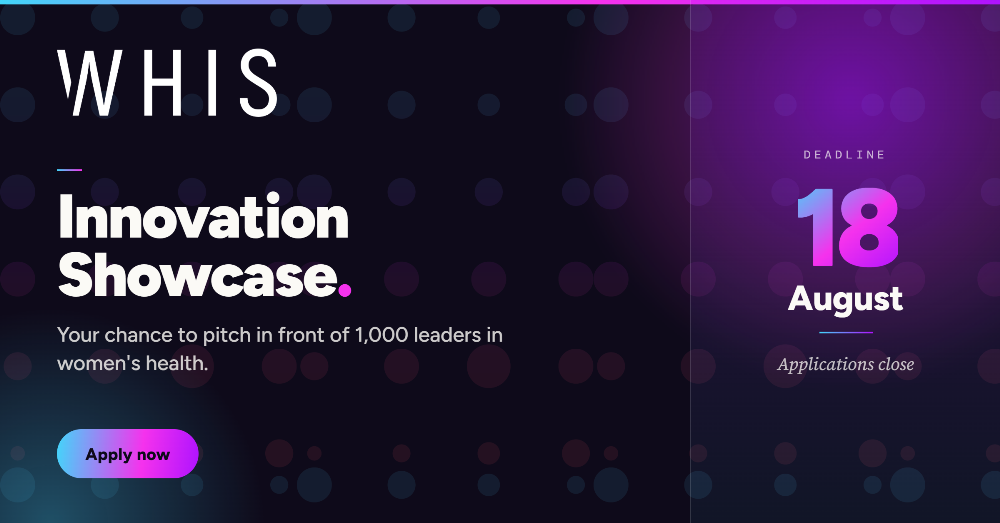
The Women’s Health Innovation Summit (WHIS) has reminded startups that applications for its 2026 Innovation Showcase close on Tuesday, August 18.
The Showcase gives early and growth-stage companies the opportunity to pitch live on stage to the most influential audience in women’s health, at a summit that convenes more than 1,000 senior decision-makers from across the ecosystem, including payers, providers, pharma, and investors.
Now in its eighth year, WHIS takes place October 13–15, 2026 at Encore Boston Harbor.
The event has built a reputation as the leading platform uniting the full women’s health ecosystem, from health systems and health plans to pharmaceutical leaders and the investors funding the next wave of innovation in the space.
A Direct Line to Funding, Partnerships and Adoption
Companies selected for the Innovation Showcase will present directly to an audience with the capital, clinical expertise and commercial relationships to move deals forward.
Past participants have gone on to secure investor introductions, commercial partnerships and clinical collaborations that started as presentations on the WHIS stage and turned into signed agreements.
Applications Reviewed by an Expert Selection Committee
Submissions are being reviewed by a selection committee of leading investors and industry operators, including:
- Parambir Bhangu, Executive Director, External Innovation & Emerging Science, Organon
- Elizabeth Bailey, Co-Founder & Managing Partner, Foreground Capital
- Karla Loken, Founder, Loken and Associates
- Mané Mikayelyan, Associate Partner, DeciBio
- Anna Valcheva, Founder, Managing Director & CEO, Astra Ventures
- Azin Radsan van Alebeek, Co-founder & General Partner, Emmeline Ventures
WHIS is where the women’s health ecosystem comes together to get deals done,” said Poppy Howard-Wall, Event Director of WHIS.
How to Apply
Early and growth-stage companies across digital health, therapeutics, diagnostics, med device and consumer health are encouraged to apply before the August 18 deadline.
Full details and the application form are available at whisusa.com/attend/start-ups.

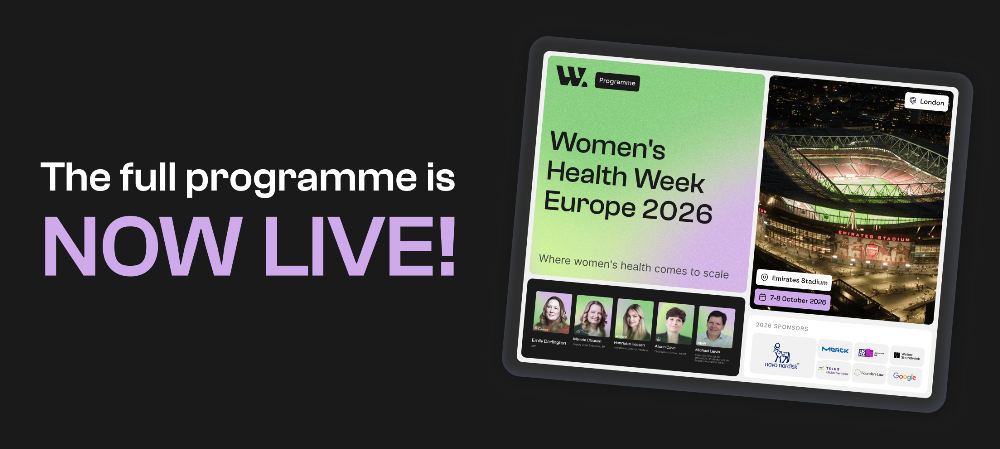
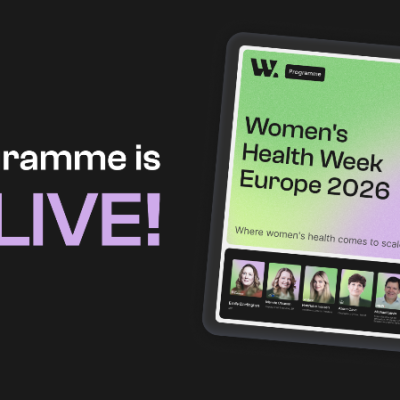
Women’s Health Week Europe 2026 has released its fully populated speaker and session lineup ahead of the event’s return to The Emirates Stadium in London on 7–8 October, with 80+ speakers now confirmed across two dedicated stages.
The programme
The agenda runs across two dedicated stages in parallel, plus two pitch competitions across both days.
The Global Stage opens with a keynote from Merete Clausen (EIF) before moving into sessions on funding trends, AI, the gender data gap, the wearable revolution, and European policy.
Standout sessions include The Age of Digital TransformAItion featuring Nichole Young-Lin (Google), Frida Polli (MIT), and Sapna Shah (Sie Ventures); Lone Wolf or Pack Leader on collaboration versus fragmentation, with Eirini Rapti (Inne), Tatum Getty (Thena Capital), Novo Nordisk, and Jen Roberts-Woods (Borski Fund); and a live debate on whether the women’s health label helps or hinders founders. Day one closes with a keynote from Alison Cave, Chief Safety Officer at the MHRA.
The Scale Stage runs a practical playbook track in parallel, with sessions covering regulatory approval pathways, international expansion, the founder’s legal playbook, PR strategy, and implementing AI into a women’s health business.
The Reverse Pitch flips the usual format: investors and corporates pitch the room on what they are actively looking to fund, acquire, or partner on right now.
Register here and receive a 15% discount on tickets. Redeem with code FEMTECHWORLD
Pitch competitions
The WHW Europe pitch competitions are back, taking place in front of the audience across both days on the mainstage. 16 finalists will compete across two categories: Consumer & Tech on day 1 and Medical Devices & Therapeutics on day 2.
Any company treating a condition that affects women exclusively, differently, or disproportionately is eligible to apply.
Applications and close 28 August 2026.
Previous alumni include Circe, who secured £100k from Innovate UK, BoobyBiome, who closed a £2.5M seed round post-WHW Europe, and Amilis, who secured £1M at London Tech Week after winning at WHW USA 2026.

UK femtech investment has risen by more than 194 per cent over the past decade, with deal activity and funding both increasing, new research has found.
The number of deals increased from 18 in 2015 to 53 in 2025, while total funding rose from £9.4m to more than £100m over the same period.
Despite the growth, deal volume and value remain relatively low compared with other parts of the health and care market. Healthcare recorded 69 deals in 2015 and 171 in 2025.

More companies have raised funding over the past decade, while investment values have also increased. Average deal size more than doubled from £527,000 in 2015 to £1.9m in 2025.
Some of the largest funding rounds last year included SheMed at more than £37m, Gaia at £12m, emm at £6.8m and Hertility at £5.9m, with the majority of investors based in the UK.
The research found femtech remains largely early-stage, with seed investments accounting for most deals.
However, venture capital involvement has increased over the past decade, which the research said showed the market was becoming more mature. The number of VC deals rose by 600 per cent.
Vicky Protano, corporate partner at Mills & Reeve, which conducted the research, said: “Over the last decade, the UK femtech ecosystem has expanded, both in terms of deal activity and funding levels. This positive upward trend demonstrates growing investor confidence in femtech and increasing institutional interest in the sector.
“Whilst companies in femtech have relied heavily on angel investors and angel networks to fund their growth ambitions, dynamics are shifting, with more venture capital and PE investors appearing in funding rounds. However, this is just the beginning and there is still more to do. While the sector has experienced strong growth, more work needs to be done to create the right funding environment that is balanced and evenly spread across the UK.”
The research found most deals had taken place in London. While the capital has strengthened its position as the UK’s main hub for femtech start-ups, regional clusters are gradually emerging elsewhere.
Protano said: “Whilst London clearly remains a dominant location for women’s health businesses and investment – both in terms of deal activity and total funding – there is a gradual move to regional expansion outside of the capital, with the South West, South East and the East of England showing increased investment activity in the femtech sector. What the data also highlights is a growing North/South divide, with areas such as the North East, North West, and Yorkshire & Humber significantly underrepresented in the national figures.
“As a national firm, we are also witnessing that similar divide. More investments are being made into women’s health businesses based in the South – and more businesses are, often as a result, locating themselves there, rather than in the North. This is representative of the investment landscape as a whole. However, growth in the femtech sector is being supported by growing regional innovation hubs, the increasing influence of university spin-outs, as well as improved support for start-ups at a regional level.”
She added: “Looking at the positives, we have advised and are continuing to advise on some significant investments in the sector. This further evidences the growing nature of femtech, with sector specific investors also coming to the market.”
Examples include Northern Gritstone’s investment in IVF technology business IVF Micro and Phoenix Private Equity’s investment in London Gynaecology, a provider of private gynaecology clinics.
Other deals include an EKA Ventures-led investment in tech-enabled postnatal care company Hesta Health and Amulet Capital’s acquisition of TFP Fertility.
September marks 10 years since the term “femtech” was coined by Ida Tin, co-founder and chief executive of Clue, one of the first period-tracking apps for women, and founder of think tank Femtech Assembly.
The global market grew to US$9.12bn in 2025 and is projected to reach US$41.4bn by 2034.
Despite that growth, women’s health is still not treated as a priority and significant gender inequalities remain globally in research, trials, diagnosis and treatment, continuing to disadvantage women.
Tin said: “I want men with money and power to get femtech on their radar. The business opportunity is there. The societal economic argument is there.”
Charlotte Lewis, commercial health lawyer at Mills & Reeve who specialises in healthtech and women’s health, said: “For far too long, ongoing disparities in women’s healthcare across the UK have adversely impacted women’s health outcomes, often resulting in prolonged diagnosis and treatment – some of which are well publicised, including the time it takes to diagnose women’s health issues such as endometriosis and rising maternal mortality rates.
“However, we are seeing the landscape beginning to shift in a more positive direction. Our experience is that this is helped by more open discussion and conversations which highlight the issues.
“The data around the sector is valuable and growing and demonstrates the progress that is being made from an investment point of view, creating a better environment where digital innovation can thrive, with a renewed focus on prevention through market-leading consumer-driven products.
“The UK has a real opportunity to transform women’s healthcare into a model of fairness, accessibility, and excellence, and femtech businesses have a crucial part to play in achieving this transformation. As a firm, Mills & Reeve is passionate and dedicated to continuing to influence and support this transformation.”










 News1 week ago
UK femtech investment surges 194% in a decade, research finds

 Entrepreneur1 week ago
TidalSense raises £14m to expand five-minute COPD test across NHS
 Wellness2 weeks ago
Cancer patient receives ‘landmark’ treatment in world-first

 Entrepreneur1 week ago
Cross-Border Impact Ventures raises US$58m for women and children’s health

 Menopause2 weeks ago
Women urged to be wary of menopause misinformation on social media

 Insight2 weeks ago
Johnson & Johnson offers to pay US$5.5bn to settle talc cancer lawsuits

 News1 week ago
Cultural stigma is a barrier to menopause help, black women say

 Motherhood1 week ago
One in eight mothers diagnosed with gestational diabetes, research finds