




Entrepreneur
Interview: Alisa Vitti on female biohacking, Cycle SyncingⓇ and being an early femtech founder


Two decades ago Alisa Vitti began a mission to find alternative treatments for her newly-diagnosed PCOS. Now a global expert in functional nutrition, hormonal health and female biohacking, one the sector’s early founders talks to Femtech World.
When Alisa Vitti was diagnosed with PCOS in her early 20s, like millions of other women, she was told birth control was the only possible solution. Having had no cycle since the age of 12, she was overweight and suffering from painful cystic acne, depression, anxiety and hair loss. Her future looked bleak, if her doctor’s advice was anything to go by.
Studying at Johns Hopkins at the time, this diagnosis sent Vitti on a quest to find alternative options. Two decades on, out of this journey Vitti has become a renowned global expert and thought leader in functional nutrition and women’s hormone health, as well as a pioneer in female biohacking as the founder of one Flo Living, one of the very first femtech companies in 2012.
“I’ve been on a mission for the past 20 years to transform first line hormonal healthcare,” Vitti tells Femtech World.
“As a former PCOS sufferer myself, I saw first-hand how the conventional model of care falls short not only for women with hormonal issues, due to the lack of understanding of root causes of hormonal dysregulation, the long lead to diagnosis – an average of seven years – and the one size fits all approach to treatment, for example, ubiquitous prescribing of birth control as a solution.
“Struggling with my hormones had a profound effect on me and as a result I have been building all the tools I wish I had had at the time. I wanted to help myself and then I wanted to help every woman going through these issues.”
Infradian rhythms
Vitti’s early research led her to the discovery that women have a second biological clock— the infradian rhythm— which they experience over the course of their monthly cycle.
“It affects way more than your period,” she explains.
“It affects key systems of your body from your metabolism, brain, immune response, stress response, libido, fertility, and your cycle.”
Like the circadian rhythm, the internal clock that controls the sleep-wake cycle and other bodily functions over a 24-hour period, the infradian rhythm needs to be supported for it to perform optimally.
Men’s hormonal patterns are in sync with the circadian rhythm, Vitti explains, which is why so much of the way we live is based around this.
“The world is oriented around a circadian only clock when women also have an infradian rhythm and as you can appreciate how negatively impactful it would be to have your circadian clock disrupted daily, no one is appreciating the impact of having your infradian clock disrupted daily for years,” she continues.
“Women are not taught exactly how their hormones work and how to care for them from a young age and so they go decades actively disrupting their hormonal cycles.”
This, Vitti says, is one of the key contributing factors to why around 40 per cent of women (around 3.2 billion) globally are experiencing chronic hormone issues, such as PCOS, painful periods, irregular cycles, mood swings and infertility.
“Everything women have been told to do, from eating the same calories daily, to working out the same way daily, to waking up at the same time every morning is not only based on research done on men that actively excluded women, but fundamentally disrupts this infradian rhythm and causes all sorts of hormone issues that affect a woman’s cycle, immune response, stress response, brain and metabolic health,” she says.
“You have to change your self-care routine to match your changing hormones, while men need to keep theirs the same daily to match their hormonal patterns”
The Cycle SyncingⓇ Method
Based on her research, Vitti developed the trademarked Cycle Syncing Method, a groundbreaking diet and lifestyle programme that aims to leverage women’s natural hormonal patterns to improve their health and wellbeing.
The Method is based on three key pillars—diet, exercise intensity and time management— and aims to help women live in sync with their natural infradian rhythms, adapting their diet and lifestyle throughout each of the four stages of the cycle.
“Hormones are a byproduct of our endocrine system, which is elegantly complex, the best way to interact with and improve these hormonal outputs is by dietary and lifestyle interventions,” Vitti explains.
Her patented period app, MyFLO, goes one step further as a practical tool to help women implement the Cycle Syncing Method into their lives. It supports users to change their diet and calorie intake in order to optimise blood sugar stability and hormonal balance; adapt their workout type and intensity to optimise metabolism and fat use as fuel; and organise their calendar around each phase to reduce cortisol and stress.
According to her website, of those who have completed the Cycle Syncing Method, 70% have experienced weight loss, 85% experienced mood improvements, 83% reduced PMS Symptoms and 91% feel more energised.
“The benefits of using The Cycle SyncingⓇ Method are enormous,” Vitti says.
“You can keep your blood sugar more stable, reduce stress levels, boost oestrogen elimination, improve bowel movements and gut health, clear skin, eliminate all PMS symptoms, eliminate cramps, promote cycle regularity, experience better moods, better sleep, better sex drive, lose weight more easily, and boost your productivity. Everything works better in your body when you support your biological rhythm properly.”
The secret to success— without burning out
Vitti herself has lived by the Method for the last 20 years. She tracks her symptoms daily, preps her meals based on what her body needs that week, and arranges her schedule around times of the month when she expects to be feeling more creative or focused, for example. She credits it with not only transforming her health, but also being key to her succeeding in the way she has without burning out.
“It’s the reason I’ve been able to keep my PCOS in remission and to get pregnant at an advanced maternal age, and even to be going through perimenopause more slowly,” she says.
“It is also how I’m able to do as much as I do as an entrepreneur, mother, wife, friend, author, speaker without burning myself out. I compare it to a yoga practice, it’s not about being perfect, it’s just about coming back to the practice every day and being willing to try and learn more about my cycle phases and myself.”
Vitti adds: “For myself and for so many women who use this method, it has an added benefit of being a practice that heals a lot of the cultural conditioning we receive as women around body image, toxic hustle culture, while helping us reclaim our cyclical identity. It has been a method that has both physical and emotional benefits.”
Changing how women think about their health
Having generated over 500m views on TikTok alone, Vitti’s message— and the practical tools she has developed to deliver it— is resonating widely. With almost half of the female population suffering with symptoms which until now they have been told there is no solution for, it’s not hard to see why.
“Women have been left out of medical, fitness, and nutrition research – we have centuries to make up for in terms of catching up to understand how to best support women’s health from a healthcare perspective,” she says.
“I believe as research catches up, the new standard of women’s hormonal healthcare will include pharmaceutical interventions with dietary and lifestyle interventions, much in the same way cardiovascular medicine evolved to include both.”
Vitti adds: “In the meantime, the only way for women to navigate this environment is to biohack and become fully versed in their own health metrics so they can better manage their health.”
With two best-selling books under her belt, TedTalks and her work featured everywhere from Forbes and the NYTimes, to Vogue and Women’s Health, Vitti is empowering women with the tools to do just that.
A quick glance at the comments on her social media posts will squash any doubt that Vitti is changing the narrative when it comes to how women think about their health.
In the Flo by Alisa Vitti is out now (HQ), paperback: £10.99.
Alisa’s five steps to getting started with Cycle SyncingⓇ
- Download the FREE official Cycle SyncingⓇ app MYFLO –https://floliving.com/app
it will tell you which phase you’re in and what to do in each phase for food, fitness, work, relationships and even provides recipes, grocery lists, workout videos, and a monthly calendar so you can sync everything up with your cycle.
- Pick up the book In the FLO – to dive deeper.
- Start with one aspect of the Cycle SyncingⓇ Method – like just start modifying workouts and build from there.
- This is not a diet – it’s a lifestyle – so pace yourself – go for whatever you can do each day – take the pressure off of yourself to get it right or be perfect with it.
- If you’re struggling with other hormone problems or other issues like PCOS, fibroids, heavy bleeding, infertility, perimenopause – go to FLOliving.com and get started with your free hormonal assessment.
Look out for our upcoming interview with Alisa on the Femtech World Podcast.



Entrepreneur
Future Fertility raises Series A financing to scale AI tools redefining fertility care worldwide

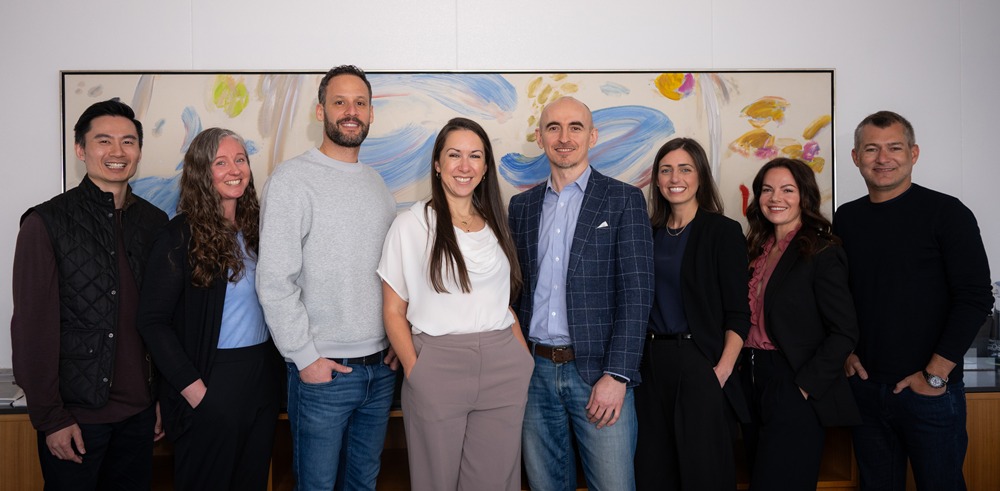
Future Fertility Inc. has announced the closing of a US$4.1 million Series A financing round.
The round was led by M Ventures (the corporate venture capital arm of Merck KGaA, Darmstadt, Germany) and Whitecap Venture Partners, with participation from new investors Sandpiper Ventures, Gaingels, and Jolt VC.
The financing will accelerate Future Fertility’s commercial expansion into Asia-Pacific and support its entry into the United States, including planned FDA 510(k) clearance for additional products as part of a broader U.S. market entry strategy.
Proceeds will also advance the development of a broader AI platform, from egg assessment through to embryo transfer, designed to support clinicians, embryologists, and patients across the full IVF journey.
M Ventures and Whitecap have supported Future Fertility’s mission to translate AI innovation into meaningful clinical outcomes since the company’s earliest stages.
Oliver Hardick, investment director, M Ventures, said: “Future Fertility is addressing a critical unmet need in reproductive medicine with a differentiated AI platform grounded in clinical data and real-world workflow integration.
“We are excited to continue supporting the company and team because we believe its technology has the potential to improve decision-making for clinicians, bring greater clarity to patients, and help advance a more personalised standard of care in fertility treatment.”
Future Fertility’s AI platform addresses a long-standing gap in fertility care: historically, there has been no objective, clinically validated method for assessing egg quality (Gardner et al., 2025), despite it being one of the most important drivers of reproductive success.
The company’s suite of deep learning tools includes VIOLET™, MAGENTA™, and ROSE™, purpose-built for egg freezing, IVF, and egg donation respectively.
The tools are based on AI models trained and validated on more than 650,000 oocyte images and are deployed in over 300 clinics across 35 countries.
Rhiannon Davies, founding and managing partner, Sandpiper Ventures, said: “The best outcomes in fertility care globally come from better data and smarter tools. Future Fertility understands that, and they’ve built a platform that delivers on it.
“Sandpiper is proud to back a team turning rigorous science into real results for patients and clinicians alike.”
Partnerships with the world’s leading fertility networks – including IVI RMA and Eugin Group across Latin America and Europe, FertGroup Medicina Reproductiva in Brazil, and most recently announced Kato Ladies Clinic in Japan – reflect growing demand for objective, AI-powered oocyte assessment in fertility care. In the United States, ROSE™ is newly available under an FDA 513(g) determination.
Research shows that approximately 50 per cent of IVF patients do not understand their likelihood of success, and many discontinue treatment prematurely, even though cumulative success rates improve significantly with multiple cycles (McMahon et al., 2024).
By delivering earlier clarity on egg quality, Future Fertility’s tools support more informed conversations between clinicians and patients, helping set realistic expectations and guide decisions about next steps.
Future Fertility’s growing evidence base spans seven peer-reviewed publications in Human Reproduction, Reproductive BioMedicine Online, Fertility & Sterility, and Nature’s Scientific Reports, and more than 70 scientific abstracts accepted and presented with partner clinics at conferences worldwide.
Christine Prada, CEO, Future Fertility, said: “Fertility treatment is one of the most emotionally and physically demanding experiences a person can go through.
“Every patient deserves objective data, not just a best guess, to support better decisions at critical moments in their care.
“This funding means we can bring that clarity to more patients, in more countries, at a moment when it matters most.”
Find out more about Future Fertility at futurefertility.com











 Entrepreneur3 weeks ago
Future Fertility raises Series A financing to scale AI tools redefining fertility care worldwide

 News3 weeks ago
Women’s digital health market set to reach US$5.28 billion in 2026 – report
 Diagnosis4 weeks ago
New meta-analysis further supports low re-excisions and high placement accuracy with the Magseed marker

 Pregnancy4 weeks ago
NIPT or NT scan? Why the 2026 evidence supports doing Both

 Mental health4 weeks ago
Lifting weights shows mental health and cognitive benefits in older women, study finds

 Menopause4 weeks ago
Resistance training has preventative effects in menopause, study finds

 Wellness2 weeks ago
Women’s HealthX unveils Northwell Health, Corewell Health, Biogen & more to headline Chronic Disease stage

 Insight3 weeks ago
Why the UK’s fertility rate keeps falling – and what it means if you’re trying now